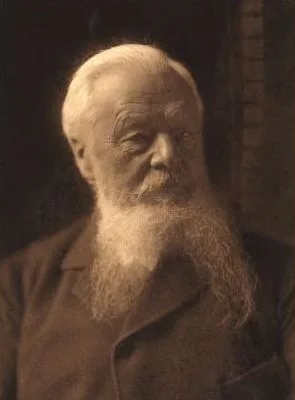
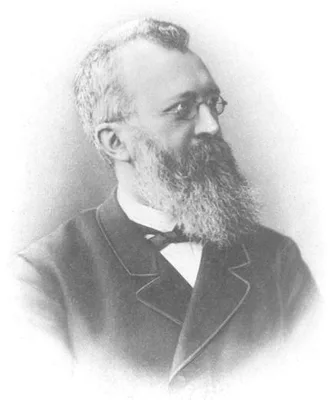
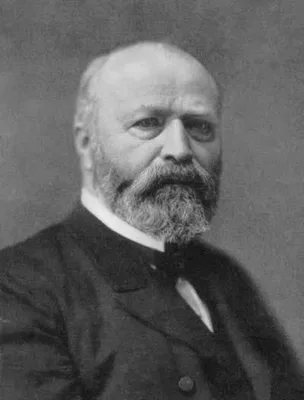
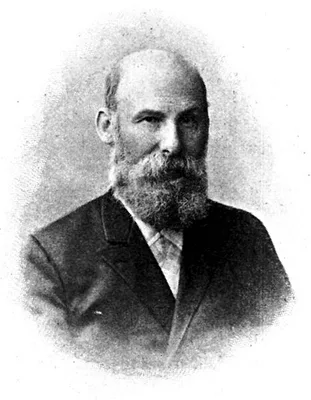
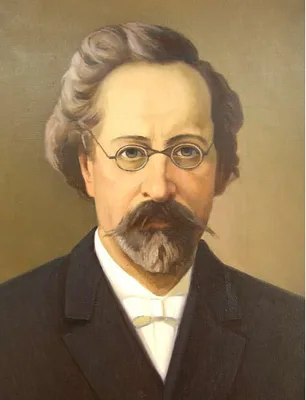
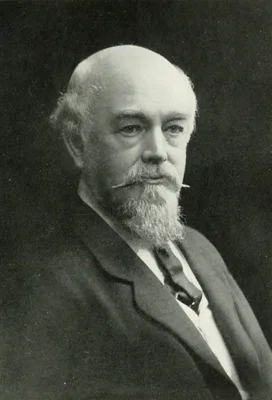
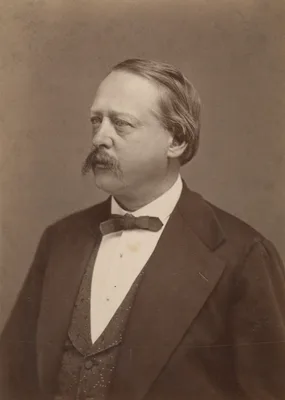
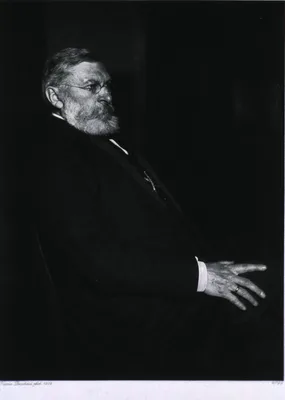
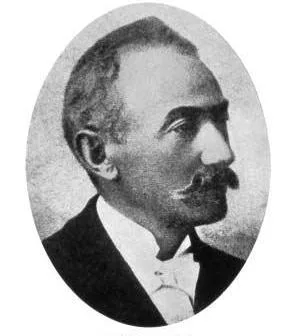
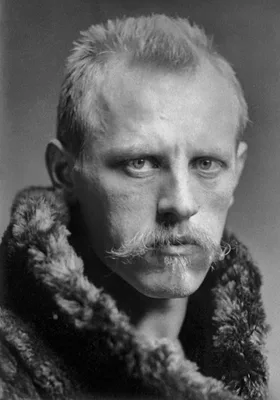
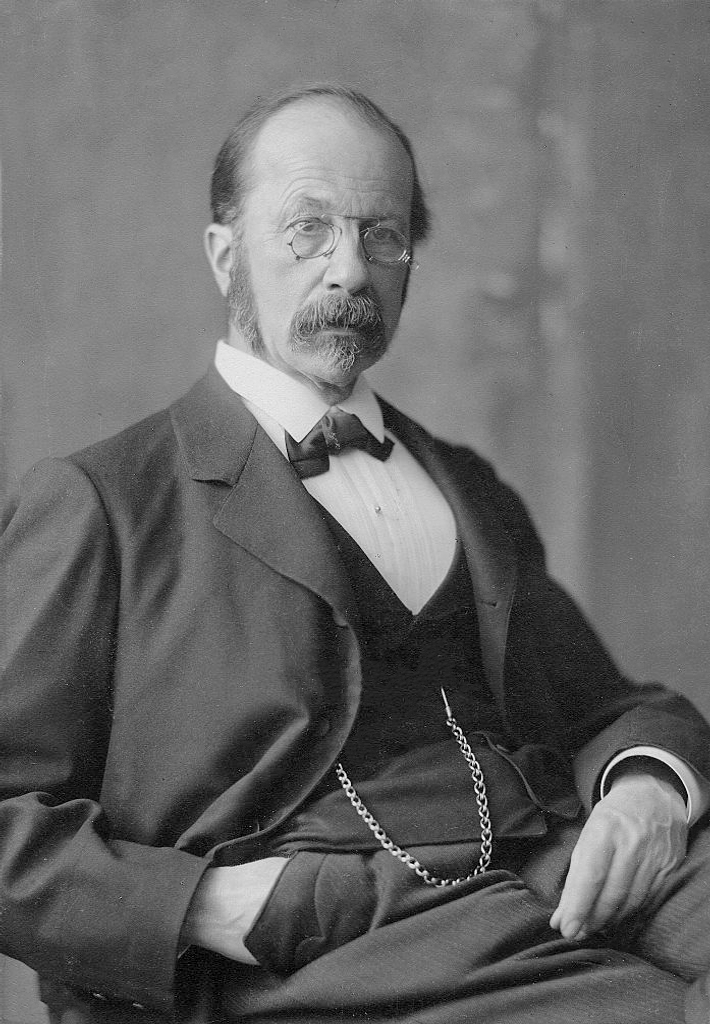
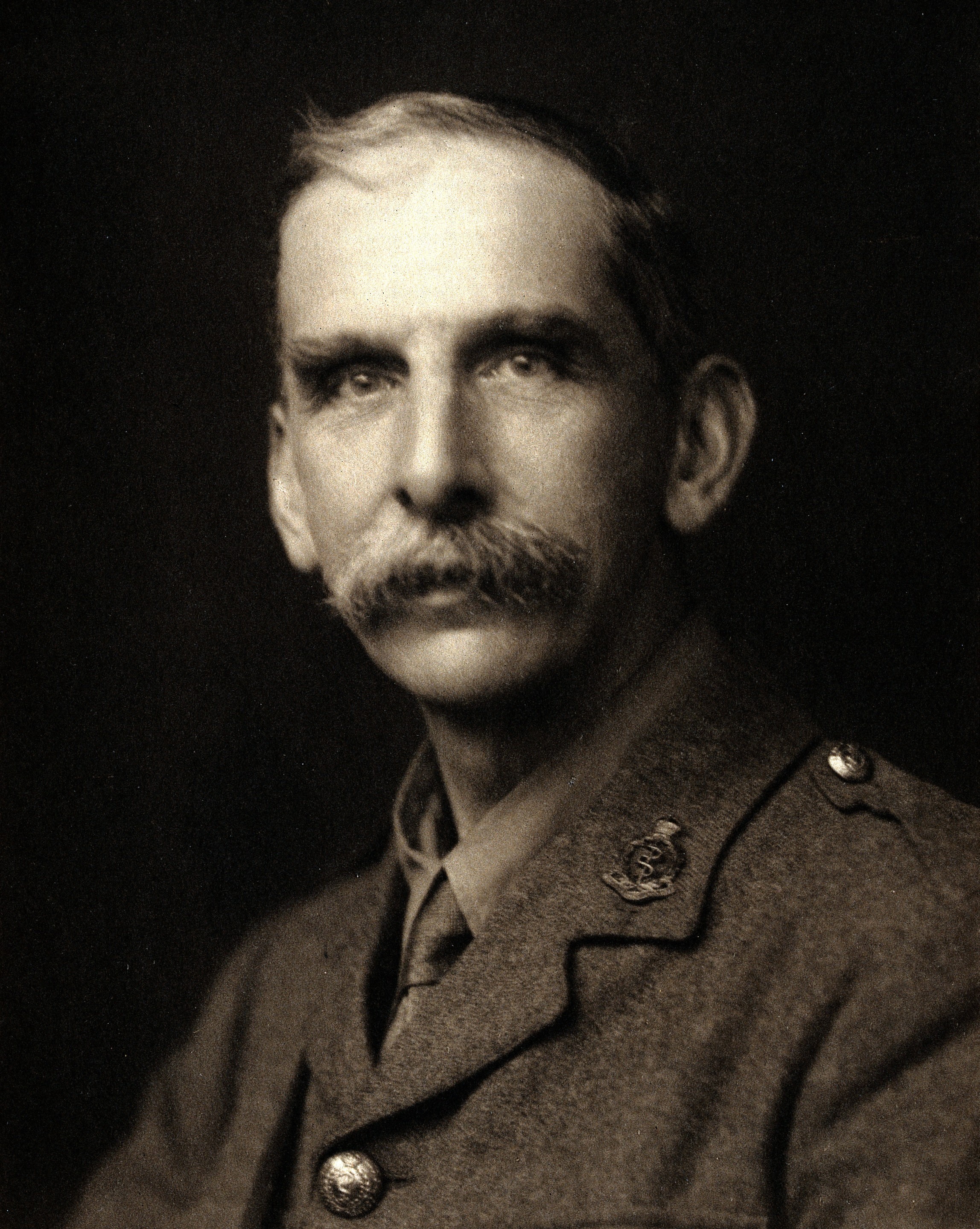
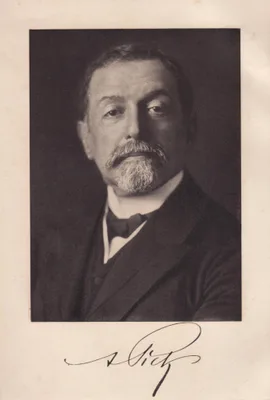
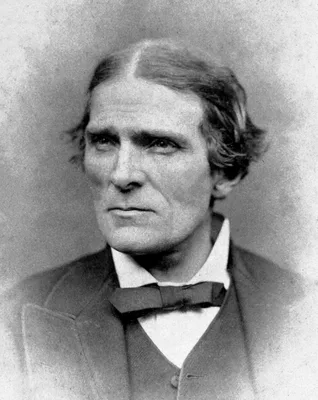
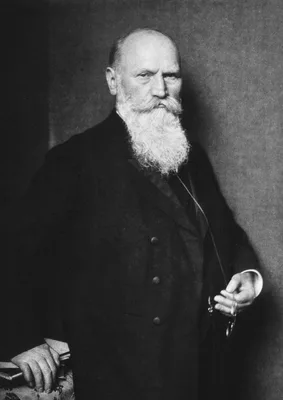
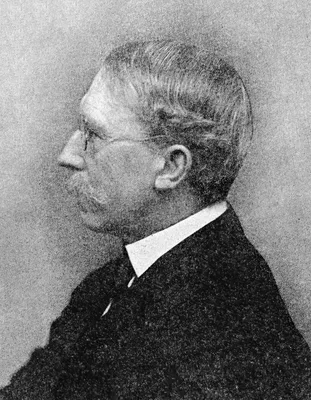
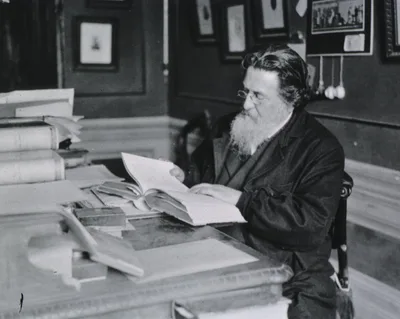
1870 FRITSCH, Gustav Theodor (1838 – 1891); HITZIG, Eduard (1838 – 1907)
Ueber die elektrische Erregbarkeit des Grosshirns.
These workers showed that electrical stimulation of the frontal cortex in various experimental animals caused movements of the extremities of the opposite side of the body, thus proving the existence of a motor area i…
GMN 1405 · https://historyofmedicine.com/id/2049
1870 GUDDEN, Bernhard Aloys von (1824 – 1886)
Experimentaluntersuchungen über das peripherische und centrale Nervensystem.
Modern study of the functions of the thalamus began with the important investigations of Gudden. He is remembered eponymically by “Gudden’s commissure” and “Gudden’s atrophy” – specific thalamic nuclei degenerate when…
GMN 1406 · https://historyofmedicine.com/id/2052
1871 BERNSTEIN, Julius (1839 – 1917)
Untersuchungen über den Erregungsvorgang im Nerven- und Muskelsysteme.
GMN 1273 · https://historyofmedicine.com/id/2268
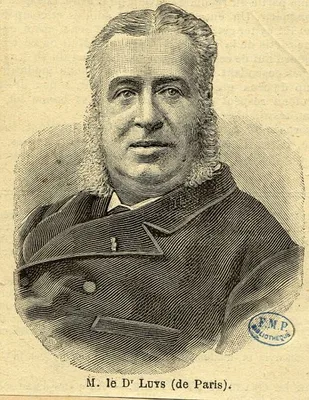
1873 LUYS, Jules Bernard (1828 – 1897)
Iconographie photographique des centres nerveux.
Contains 70 photographs of brain sections taken by Luys himself, with 64 lithographed schemas based on his drawings. Luys undertook this work when the evidence of his lithographs published in 1865 (No. 4012) was dispu…
GMN 1406.01 · https://historyofmedicine.com/id/2066
1873 FERRIER, Sir David (1843 – 1928)
Experimental researches in cerebral physiology and pathology.
Using a variety of experimental animals, Ferrier demonstrated that various neurologic functions were controlled by separate parts of the cerebrum and that damage or loss of that part created an irrevocable and particu…
GMN 7803 · https://historyofmedicine.com/id/9975
1874 GOLTZ, Friedrich Leopold (1834 – 1902)
Ueber die Functionen des Lendenmarks des Hundes.
GMN 1365 · https://historyofmedicine.com/id/1694
1874 BARTHOLOW, Roberts (1831 – 1904)
Investigations into the functions of the human brain.
Bartholow confirmed in man the findings of Fritsch and Hitzig (No. 1405) that electrical stimulus of the cortex on one side stimulated muscles on the other side of the body.
GMN 1406.1 · https://historyofmedicine.com/id/2070
1874 BETZ, Vladimir Alexeyevich (1834 – 1894)
Anatomischer Nachweis zweier Gehirncentra.
Discovery of the giant pyramidal cells of the motor cortex.
GMN 1407 · https://historyofmedicine.com/id/2072
1874 HITZIG, Eduard (1838 – 1907)
Untersuchungen über das Gehirn.
Hitzig accurately defined the limits of the motor area in the cerebral cortex of the dog and the monkey.
GMN 1408 · https://historyofmedicine.com/id/2075
1875 CATON, Richard (1842 – 1926)
The electric currents of the brain.
Caton succeeded in leading off action potentials from the brains of animals, a first step towards the development of the electroencephalograph. See also Brit. med. J., 1877, 1, Suppl. 62-75.
GMN 1408.1 · https://historyofmedicine.com/id/2077
1875 –1876 RETZIUS, Magnus Gustaf (1842 – 1919); KEY, Axel (1832 – 1901)
Studien in der Anatomie des Nervensystems und des Bindegewebes. Erste Hälfte und zweite Hälfte, erste und zweite Abtheilung. 2 vols.
One of the most strikingly beautiful neuroanatomies ever published, with exquisite reproductions of the color dye injection experiments. The authors confirmed the existence of the foramina of Magendie and Luschka, and…
GMN 1408.2 · https://historyofmedicine.com/id/2079
1876 FERRIER, Sir David (1843 – 1928)
The functions of the brain.
Ferrier may be said to have laid the foundations of our knowledge concerning the localization of cerebral function. His book includes his earlier work published in the West Riding Lunatic Asylum Reports. Digital facsi…
GMN 1409 · https://historyofmedicine.com/id/2082
1876 FLECHSIG, Paul Emil (1847 – 1929)
Die Leitungsbahnen im Gehirn und Rückenmark des Menschen auf Grund entwicklungsgeschichtlicher Untersuchungen dargestellt.
Flechsig mapped out the motor and sensory areas of the cerebral cortex, and named the “pyramidal tract”. See Clarke & O'Malley, The human brain and spinal cord, p. 857, and pp. 277-81. Digital facsimile from Bayerisch…
GMN 1410 · https://historyofmedicine.com/id/2083
1877 FOREL, Auguste Henri (1848 – 1931)
Untersuchungen über die Haubenregion und ihre oberen Verknüpfungen im Gehirne des Menschen und einiger Säugethiere, mit Beiträgen zu den Methoden der Gehirnuntersuchung.
Forel elucidated the subthalamic region, “campus Foreli”.
GMN 1411 · https://historyofmedicine.com/id/2086
1877 BERNSTEIN, Julius (1839 – 1917)
Ueber die Ermüdung und Erholung der Nerven.
After successfully tetanizing a nerve-muscle preparation, Bernstein inferred, from this and additional data, that nerve is exhausted in the process. This conflicted with the findings of Bowditch (No. 1281-82) and Vved…
GMN 1274 · https://historyofmedicine.com/id/2270
1878 LEWIS, William Bevan (1847 – 1929)
On the comparative structure of the cortex cerebri.
Lewis described the giant cells of the precentral convolution.
GMN 1412 · https://historyofmedicine.com/id/2090
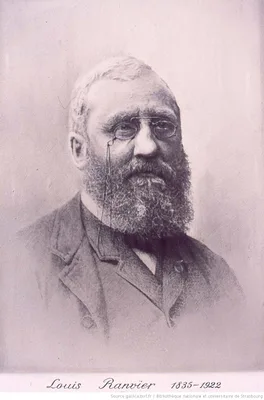
1878 RANVIER, Louis-Antoine (1835 – 1922)
Leçons sur l’histologie du système nerveux. 2 vols.
Includes his description of the “nodes of Ranvier”, interruptions of the medullary nerve sheaths.
GMN 1276 · https://historyofmedicine.com/id/2273
1880 GOWERS, Sir William Richard (1845 – 1915)
The diagnosis of diseases of the spinal cord.
Gowers demonstrated the dorsal spinocerebellar tract, “Gowers’s tract”, and introduced the terms myotatic and knee-jerk, which he elicited with the rubber edge of his stethoscope or a percussion hammer.
GMN 4562 · https://historyofmedicine.com/id/427
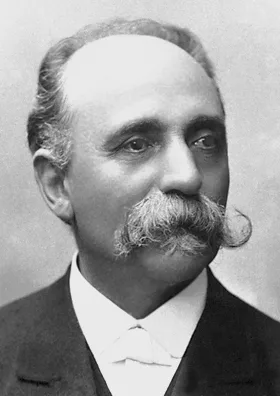
1880 GOLGI, Camillo (1844 – 1926)
Sulla struttura delle fibre nervosa midollate periferiche e centrali.
“Golgi cells” first described.
GMN 1277 · https://historyofmedicine.com/id/2276
1880 TIGERSTEDT, Robert Adolf Armand (1853 – 1923)
Studien über mechanische Nervenreizung.
Contains important work on the effects of mechanical stimulation of nerve.
GMN 1278 · https://historyofmedicine.com/id/2279
1880 MOSSO, Angelo (1846 – 1910)
Sulla circolazione del sangue nel cervello dell’uomo. Ricerche sfigmografiche.
In this work Angelo Mosso reported his discovery that blood circulation in the brain increases in certain discrete areas during mental activity, and published the records of this activity produced by the machine he in…
GMN 6838 · https://historyofmedicine.com/id/9002
1881 EXNER, Sigmund (Siegmund Ritter Exner von Ewarten) (1846 – 1926)
Untersuchungen über die Localisation der Funktionen in der Grosshirnrinde des Menschen.
Exner identified the superficial tangential fibers of the molecular layer of the cerebral cortex, known eponymically as “Exner’s plexus”. Exner’s book of 1881 on cortical localization contained maps based on the clini…
GMN 1413 · https://historyofmedicine.com/id/2094
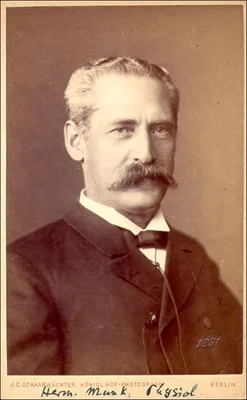
1881 MUNK, Hermann (1839 – 1912)
Ueber die Functionen der Grosshirnrinde.
Munk made important investigations on the functions of the temporal lobes.
GMN 1414 · https://historyofmedicine.com/id/2095
1882 BRAMWELL, Sir Byrom (1847 – 1931)
The diseases of the spinal cord.
GMN 4565 · https://historyofmedicine.com/id/431
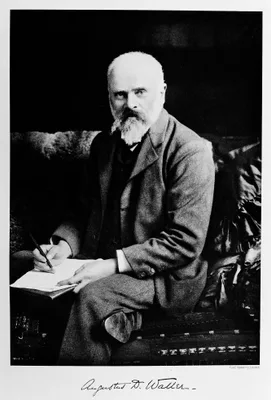
1883 WALLER, Augustus Désiré (1856 – 1922); WATTEVILLE, Armand de (1846 – 1925)
On the influence of the galvanic current on the excitability of the motor nerves of man.
GMN 1279 · https://historyofmedicine.com/id/2282
1884 OTT, Isaac (1847 – 1916)
The relation of the nervous system to the temperature of the body.
Ott studied the nervous regulation of body temperature. His papers on the heat-center in the brain and on the thermoinhibitory apparatus were published in the same journal, 1887, 14, 150-62, 428-38; 1888, 15, 85-104.
GMN 1415 · https://historyofmedicine.com/id/2098
1884 THUDICHUM, Johann Ludwig Wilhelm (1829 – 1901)
A treatise on the chemical constitution of the brain.
Thudichum, a German emigré, discovered cephalins and myelins in brain tissue. An enlarged German edition of his book was published at Tübingen, 1901. See biography by D. L. Drabkin, 1958, which includes an annotated b…
GMN 1415.1 · https://historyofmedicine.com/id/2101
1884 VVEDENSKII, Nikolai Evgenevich [WEDENSKII, Wedensky (1852 – 1922)
Wie rasch ermüdet der Nerv?
Although Bernstein considered that nerve could be exhausted, Vvedenskii was able, in this paper, to show that such is not the case. Further proof was supplied by Bowditch (No. 1281). Digital facsimile of Vvedenskii's …
GMN 1280 · https://historyofmedicine.com/id/2287
1885 LISSAUER, Heinrich (1861 – 1891)
Beitrag zur pathologischen Anatomie der Tabes dorsalis und zum Faserverlauf in menschlichen Rückenmark.
“Lissauer’s tract”, the marginal tract in the spinal cord.
GMN 1366 · https://historyofmedicine.com/id/1699
1885 BOWDITCH, Henry Pickering (1840 – 1911)
Note on the nature of nerve-force.
GMN 1281 · https://historyofmedicine.com/id/2296
1885 MARCHI, Vittorio (1851 – 1908); ALGERI, Giovanni
Sulle degenerazioni descendenti consecutive a lesioni sperimentale in diverse zone della corteccia cerebrale.
Marchi’s stain, osmic acid, for degenerating myelin sheaths.
GMN 1283 · https://historyofmedicine.com/id/2305
1886 GASKELL, Walter Holbrook (1847 – 1914)
On the structure, distribution, and function of the nerves which innervate the visceral and vascular system.
Gaskell established the origin of the preganglionic neurons (white rami).
GMN 1329 · https://historyofmedicine.com/id/1356
1886 NANSEN, Fridtjof (1861 – 1930)
The structure and combination of the histological elements of the central nervous system.
Nansen, better known for his Arctic explorations, was the first to point out that the posterior root fibers divide on entering the spinal cord into ascending and descending branches. Digital facsimile from the Hathi T…
GMN 1368 · https://historyofmedicine.com/id/1715
1886 GOLGI, Camillo (1844 – 1926)
Sulla fina anatomia degli organi centrali del sistema nervoso.
Golgi’s histological studies made a clear conception of the nervous system possible for the first time. He demonstrated the existence of multipolar nerve-cells (Golgi cells) by means of his silver nitrate stain, and d…
GMN 1416 · https://historyofmedicine.com/id/2103
1887 HIS, Wilhelm Sr. (1831 – 1904)
Zur Geschichte der menschlichen Rückenmarkes und der Nervenwurzeln.
This is generally considered the first clear statement that nerve cells in the brain might be independent units rather than forming an anastomotic network—as Gerlach, Golgi, and most others believed—although there are…
GMN 1368.1 · https://historyofmedicine.com/id/1720
1887 FOREL, Auguste Henri (1848 – 1931)
Einige hirnanatomische Betrachtungen und Ergebnisse.
Independently of His, Forel formulated the neuron theory.
GMN 1368.2 · https://historyofmedicine.com/id/1722
1887 HORSLEY, Sir Victor Alexander Haden (1857 – 1916); BEEVOR, Charles Edward (1854 – 1907)
A minute analysis (experimental) of the various movements produced by stimulating in the monkey different regions of the cortical centre for the upper limb, as defined by Professor Ferrier.
Beevor, physician to the National Hospital, Queen Square, London, collaborated with Horsley in an important series of investigations of the localization of cerebral function.
GMN 1416.1 · https://historyofmedicine.com/id/2106
1887 FRANÇOIS-FRANCK, Charles-Émile (1849 – 1921)
Leçons sur les fonctions motrices du cerveau.
François-Franck’s studies on the excitability of the cerebral cortex and the localization of function followed work in collaboration with Pitres; Charcot wrote the preface. See also No. 1423.
GMN 1417 · https://historyofmedicine.com/id/2109
1887 WESTPHAL, Carl Friedrich Otto (1833 – 1890)
Ueber einen Fall von chronischer progressiver Lähmung der Augenmuskeln (Ophthalmoplegia externa) nebst Beschreibung von Ganglien-zellengruppen im Bereiche des Oculomotoriuskems.
“Westphal’s nucleus” – for accommodation – in the third cranial nerve. Called also “Edinger’s nucleus” (see the same journal, 1885, 16, 858-89).
GMN 1418 · https://historyofmedicine.com/id/2112
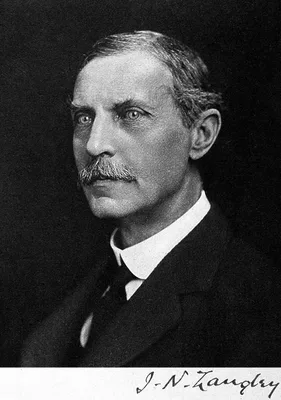
1889 LANGLEY, John Newport (1852 – 1925); DICKINSON, William Lee (1862 – 1904)
On the local paralysis of peripheral ganglia, and on the connexion of different classes of nerve fibres with them.
Langley and Dickinson studied the effect of nicotine on nerve fibers, and were able by this means to make a thorough investigation of the distribution of nerve fibers.
GMN 1329.1 · https://historyofmedicine.com/id/1372
1889 SHARPEY-SCHAFER, Sir Edward Albert (1850 – 1935); HORSLEY, Sir Victor Alexander Haden (1857 – 1916)
A record of experiments upon the functions of the cerebral cortex.
A detailed analysis, by means of faradic stimulation, of the motor responses of the cerebral cortex, internal capsule, and spinal cord of higher primates.
GMN 1419 · https://historyofmedicine.com/id/2115
1889 VAN GIESON, Ira Thompson (1865 – 1913)
Laboratory notes of technical methods for the nervous system.
Van Gieson’s acid fuchsin and picric acid stain for nerve tissue.
GMN 1419.1 · https://historyofmedicine.com/id/2120
1890 BASTIAN, Henry Charlton (1837 – 1915)
On the symptomatology of total transverse lesions of the spinal cord, with special reference to the condition of the various reflexes.
“Bastian’s law”, transverse lesion of the cord above the lumbar enlargement results in the abolition of the tendon reflexes of the lower extremities.
GMN 4577 · https://historyofmedicine.com/id/447
1890 PICK, Arnold (1851 – 1924)
Ueber ein abnormes Faserbündel der menschlichen Medulla oblongata.
“Pick’s bundle” of nerve fibres in the medulla oblongata.
GMN 1420 · https://historyofmedicine.com/id/2126
1890 BOWDITCH, Henry Pickering (1840 – 1911)
Ueber den Nachweis der Unermüdlichkeit des Säugethiernerven.
Bowditch demonstrated the indefatigability of nerve (“Bowditch’s law”).
GMN 1282 · https://historyofmedicine.com/id/2300
1890 BURDON-SANDERSON, Sir John Scott (1828 – 1905)
Photographic determination of the time-relations of the changes which take place in muscle during the period of so-called ‘latent stimulation.’
Measurement by means of photography, of the speed of the nervous impulse.
GMN 1284 · https://historyofmedicine.com/id/2307
1891 WALDEYER-HARTZ, Heinrich Wilhelm Gottfried von (1836 – 1921)
Ueber einige neuere Forschungen im Gebiete der Anatomie des Centralnervensystems.
A statement of the neuron theory, to which Waldeyer gave the name.
GMN 1369 · https://historyofmedicine.com/id/1725
1891 HORSLEY, Sir Victor Alexander Haden (1857 – 1916); GOTCH, Francis (1853 – 1913)
On the mammalian nervous system, its functions, and their localisation determined by an electrical method.
Gotch and Horsley showed that electric currents are produced in the mammalian brain, and they recorded them with the string galvanometer of the capillary electrometer. Their work led eventually to the development of t…
GMN 1420.1 · https://historyofmedicine.com/id/2137
1891 LUCIANI, Luigi (1840 – 1919)
Il cervelletto. Nuovi studi di fisiologia normale e patologica.
Luciani succeeded in keeping dogs alive after total extirpation of the cerebellum, and initiated the modern study of cerebellar function. Digital facsimile from Google Books at this link.
GMN 1421 · https://historyofmedicine.com/id/2144
1892 GOLTZ, Friedrich Leopold (1834 – 1902)
Der Hund ohne Grosshirn.
Goltz was able to keep dogs alive for eight months after he had performed subtotal decerebration. He found them incapable of purposive movements but able to walk with adequate co-ordination. Frontal decortication caus…
GMN 1370 · https://historyofmedicine.com/id/1726