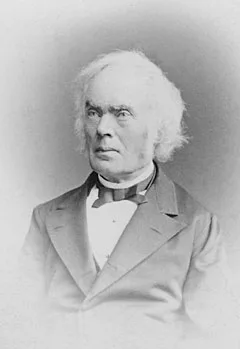
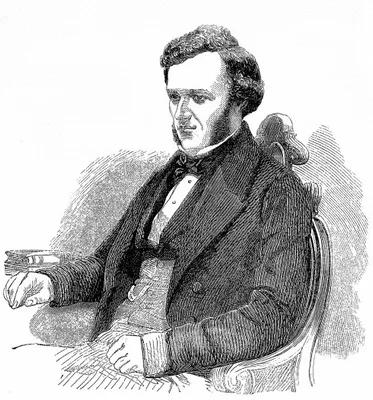
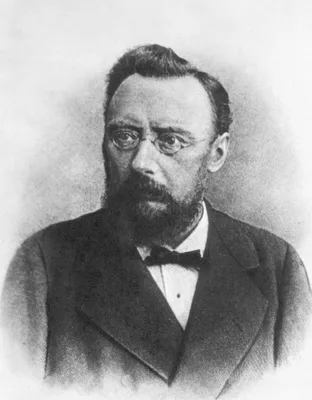
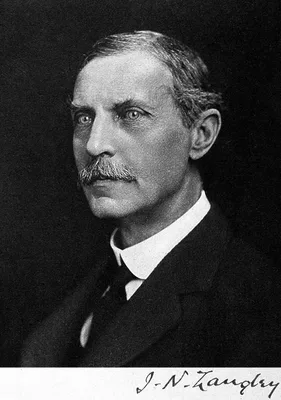
1684 WILLIS, Thomas (1621 – 1675); PORDAGE, Samuel (1633 – 1691)
Dr. Willis's practice of physick.
The only complete edition of Willis's works in English, translated by the poet Samuel Pordage. It contains the translations of all his works except his Affectionum quae dicuntur hystericae (1671). The collection inclu…
GMN 1311 · https://historyofmedicine.com/id/10280
1714 EUSTACHI, Bartolomeo [EUSTACHIUS] (1510 – 1574)
Tabulae anatomicae.
A romantic history attaches to this fine collection of plates, drawn by Eustachius himself and completed in 1552. They remained unprinted and forgotten in the Vatican Library until discovered in the early 18th century…
GMN 1312 · https://historyofmedicine.com/id/631
1727 POURFOUR DU PETIT, François (1664 – 1741)
Mémoire dans lequel il est démontré que les nerfs intercostaux fournissent des rameaux que portent des esprits dans les yeux.
By cutting the intercostal nerves in the neck, du Petit found that disturbances occurred in the eyes and face of the same side; this disproved earlier views of the cerebral origin of the intercostal nerves.
GMN 1313 · https://historyofmedicine.com/id/1213
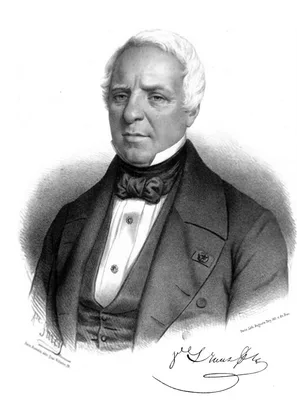
1732 WINSLOW, Jacques-Bénigne [Jacob Benignus Winsløw] (1669 – 1760)
Exposition anatomique de la structure du corps humain.
The foramen between the greater and lesser sacs of the peritoneum (described on pages 352-65), is named after Winslow. His Exposition is distinguished as being the first book on descriptive anatomy to discard physiolo…
GMN 1314 · https://historyofmedicine.com/id/664
1801 –1803 ROUX, Philibert Joseph (1780 – 1854); BICHAT, Marie François Xavier (1771 – 1802); BUISSON, Mathieu-François-Régis (1776 – 1806)
Traité d’anatomie descriptive. 5 vols.
Bichat was the creator of descriptive anatomy. He introduced the terms “animal” and “vegetative” system. This was his last work, unfinished at his death. Vol. 4 was prepared by Bichat's student and cousin, Mathieu-Fra…
GMN 1315 · https://historyofmedicine.com/id/10106
1817 WEBER, Ernst Heinrich (1795 – 1878)
Anatomia comparata nervi sympathici.
GMN 1316 · https://historyofmedicine.com/id/1256
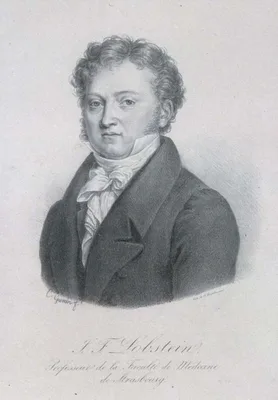
1823 LOBSTEIN, Jean Georges Chrétien Frédéric Martin (1777 – 1835)
De nervi sympathetici humani fabrica usu et morbis.
Includes description of “Lobstein’s ganglion”, an accessory ganglion of the sympathetic nerve above the diaphragm. English translation, 1831.
GMN 1317 · https://historyofmedicine.com/id/1264
1842 BIDDER, Friedrich Karl Heinrich von (1810 – 1894); VOLKMANN, Alfred Wilhelm (1800 – 1877)
Die Selbständigkeit des sympathischen Nervensystems durch anatomische Untersuchungen nachgewiesen.
These writers showed the sympathetic nervous system to consist largely of small, medullated fibers originating from the sympathetic and spinal ganglia.
GMN 1318 · https://historyofmedicine.com/id/1275
1846 BECK, Thomas Snow (1814 – 1877)
On the nerves of the uterus.
Beck showed that in man the thoracic sympathetic chain receives communications from the last cervical, thoracic, and upper 1 or 2 lumbar ganglia.
GMN 1319 · https://historyofmedicine.com/id/1300
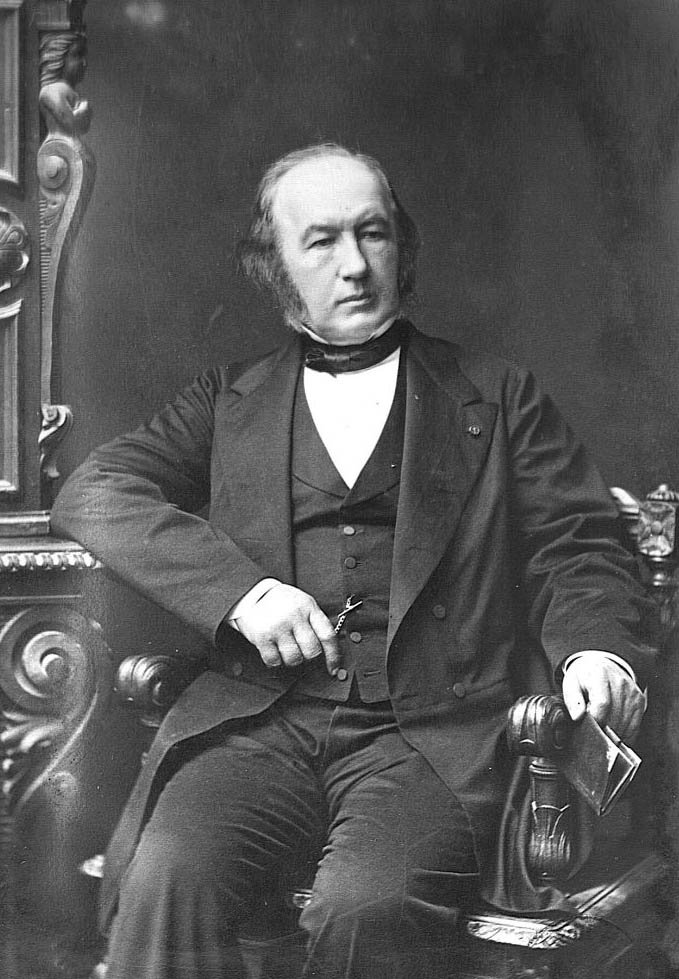
1852 BERNARD, Claude (1813 – 1878)
Influence du grand sympathique sur la sensibilité et sur la calorification.
Bernard discovered the existence of vasomotor nerves.
GMN 1320 · https://historyofmedicine.com/id/1307
1852 BROWN-SÉQUARD, Charles Édouard (1817 – 1894)
Experimental researches applied to physiology and pathology.
By applying a galvanic current to the superior part of the divided sympathetic nerve and causing vascular contraction and a fall in temperature, Brown-Séquard inferred that section of the sympathetic paralysed and dil…
GMN 1322 · https://historyofmedicine.com/id/1318
1852 BUDGE, Ludwig Julius (1811 – 1884)
Experimenteller Beweis, dass der Nervus sympathicus aus dem Rückenmark entspringt.
GMN 1323 · https://historyofmedicine.com/id/1328
1853 BERNARD, Claude (1813 – 1878)
Expérience sur les fonctions de la portion céphalique du grand sympathique.
GMN 1321 · https://historyofmedicine.com/id/1311
1854 BERNARD, Claude (1813 – 1878)
Recherches expérimentales sur le grand sympathique et spécialement sur l’influence que la section de ce nerf exerce sur la chaleur animal.
GMN 1324 · https://historyofmedicine.com/id/1333
1854 BROWN-SÉQUARD, Charles Édouard (1817 – 1894)
Note sur la découverte de quelques-uns des effets de la galvanisation du nerf grand sympathique au cou.
GMN 1325 · https://historyofmedicine.com/id/1337
1854 BROWN-SÉQUARD, Charles Édouard (1817 – 1894)
Sur les résultats de la section et de la galvanisation du nerf grand sympathique au cou.
GMN 1326 · https://historyofmedicine.com/id/1340
1857 CAMPBELL, Henry Fraser (1824 – 1891)
Essays on the secretory and the excito-secretory system of nerves.
Campbell saw in the sympathetic a nervous system related to secretion and nutrition and having intimate connexion with the sensory nerves. He coined the ter “excito-secretory” to designate his theory; although this te…
GMN 1327 · https://historyofmedicine.com/id/1346
1869 HORNER, Johann Friedrich (1831 – 1886)
Ueber eine Form von Ptosis.
“Horner’s syndrome”, due to lesion of the cervical sympathetic. The same syndrome was evoked in animals by Pourfour du Petit in 1727 (see No. 1313). It is a proof that the sympathetic governs the pupillary, vasomotor,…
GMN 1328 · https://historyofmedicine.com/id/1354
1886 GASKELL, Walter Holbrook (1847 – 1914)
On the structure, distribution, and function of the nerves which innervate the visceral and vascular system.
Gaskell established the origin of the preganglionic neurons (white rami).
GMN 1329 · https://historyofmedicine.com/id/1356
1889 LANGLEY, John Newport (1852 – 1925); DICKINSON, William Lee (1862 – 1904)
On the local paralysis of peripheral ganglia, and on the connexion of different classes of nerve fibres with them.
Langley and Dickinson studied the effect of nicotine on nerve fibers, and were able by this means to make a thorough investigation of the distribution of nerve fibers.
GMN 1329.1 · https://historyofmedicine.com/id/1372
1897 BETHE, Albrecht (1872 – 1954)
Ueber die Primitivfibrillen in den Ganglienzellen von Menschen und andern Wirbelthieren.
GMN 1330 · https://historyofmedicine.com/id/1376
1916 GASKELL, Walter Holbrook (1847 – 1914)
The involuntary nervous system. Part 1.
This book sums up the life work of Gaskell, who laid the histological foundation of the modern study of the autonomic nervous system. No more published.
GMN 1331 · https://historyofmedicine.com/id/1424
1921 LANGLEY, John Newport (1852 – 1925)
The autonomic nervous system.
Langley divided the autonomic nervous system into (1) the orthosympathetic, and (2) the parasympathetic; he defined it as an efferent system.
GMN 1332 · https://historyofmedicine.com/id/1426
1928 GAGEL, Otto (1899 – )
Zur Histologie und Topographie der vegetativen Zentren im Rückenmark.
Study of the cells of origin of the white rami.
GMN 1333 · https://historyofmedicine.com/id/1427

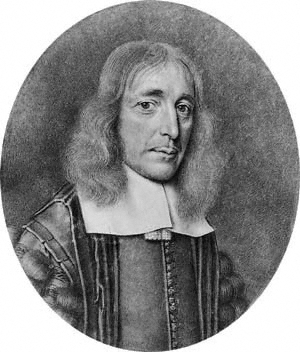
![WINSLOW, Jacques-Bénigne [Jacob Benignus Winsløw] (1669 – 1760)](/media/portraits/708)