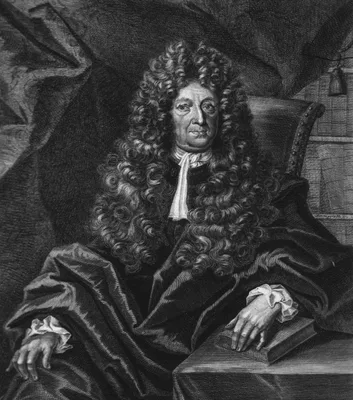
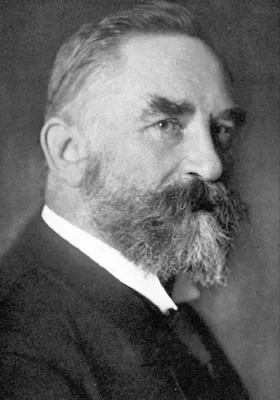
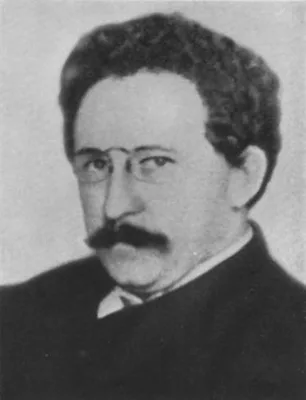
1666 BLASIUS, Gerard "Gerrit" Leendertszoon [Blaes] (162 – 1682)
Anatome medullae spinalis, et nervorum.
The first separate work on the spinal cord. Blasius “illustrated the separate origin of the anterior and posterior roots, the dorsal root ganglia and the differentiation between the gray and white matter of the spinal…
GMN 1354.9 · https://historyofmedicine.com/id/1626
1686 BOHN, Johannes (1640 – 1718)
Circulus anatomico-physiologicus.
Bohn's approach was mechanistic in that he grave predominately physical interpretations of vital processes. He experimented on the decapitated frog, declaring the reflex phenomena to be entirely material and mechanica…
GMN 1355 · https://historyofmedicine.com/id/1631
1710 POURFOUR DU PETIT, François (1664 – 1741)
Lettres d’un médecin des hôpitaux du Roy… contient un nouveau système du cerveau, etc.
Theory of contralateral innervation.
GMN 1356 · https://historyofmedicine.com/id/1641
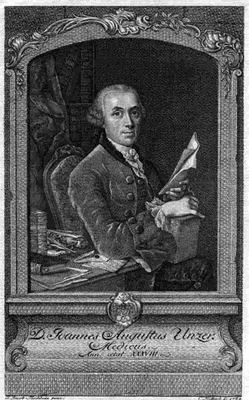
1771 UNZER, Johann Augustus (1727 – 1799)
Erste Gründe einer Physiologie der eigentlichen thierischen Natur thierischer Körper.
Unzer was probably the first to employ the work “reflex” in connection with sensory–motor reactions. T. Laycock translated his book into English for the Sydenham Society in 1851.
GMN 1357 · https://historyofmedicine.com/id/1649
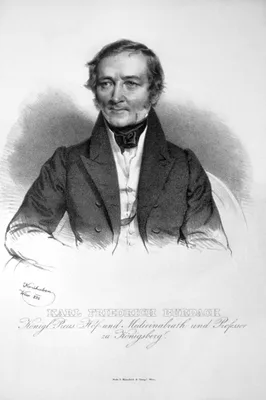
1819 –1826 BURDACH, Karl Friedrich (1776 – 1847)
Vom Baue und Leben des Gehirns. 3 vols.
Includes description of “Burdach’s column”, the posterior column of the spinal cord. This work is also “an unrivalled source of historical information on macroscopical neuroanatomy” (Meyer).
GMN 1358 · https://historyofmedicine.com/id/1661
1833 HALL, Marshall (1790 – 1857)
On the reflex function of the medulla oblongata and medulla spinalis.
“Hall showed that reflex activity could be distinguished from other types of movement, that it produced what today we call ‘muscle tone,’ that it included sneezing coughing, and vomiting, and that it could be influenc…
GMN 1359 · https://historyofmedicine.com/id/1668
1839 –1840 STANLEY, Edward (1793 – 1862)
A case of disease in the posterior columns of the spinal cord.
Stanley was the first to describe disease of the posterior columns of the spinal cord.
GMN 4525 · https://historyofmedicine.com/id/386
1851 CLARKE, Jacob Augustus Lockhart (1817 – 1880)
Researches into the structure of the spinal cord.
Clarke made important researches on the spinal cord. He described the nucleus dorsalis. He introduced the method of mounting sections with Canada balsam.
GMN 1360 · https://historyofmedicine.com/id/1671
1851 BROWN-SÉQUARD, Charles Édouard (1817 – 1894)
De la transmission croisée des impressions sensitives par la moëlle épinière.
“Brown-Séquard’s paralysis”. Lesion of one lateral half of the spinal cord causes paralysis of motion on one side and of sensation on the other. See also the writer’s later paper on pp. 70-73 of the same volume.
GMN 4530 · https://historyofmedicine.com/id/8892
1860 GOLL, Friedrich (1829 – 1903)
Beiträge zur feineren Anatomie des menschlichen Rückenmarks.
Includes description of “Golls column” or “tract”, the posterior column of the spinal cord.
GMN 1361 · https://historyofmedicine.com/id/1677
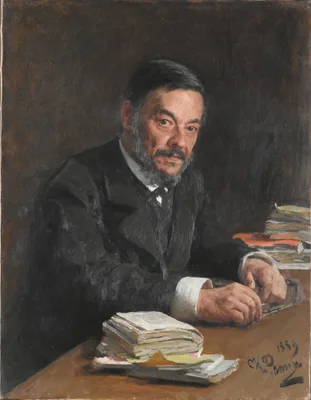
1863 SECHENOV, Ivan Mikhailovich (1829 – 1905)
Physiologische Studien über die Hemmungsmechanischen für die Reflexthätigkeit des Rückenmarks im Gehirn des Frosches.
Sechenov discovered the cerebral inhibition of spinal reflexes. He was Professor of Physiology at St. Petersburg and Moscow, and the “father of Russian physiology”.
GMN 1362 · https://historyofmedicine.com/id/1681
1863 BROWN-SÉQUARD, Charles Édouard (1817 – 1894)
Recherches sur la transmission des impressions de tact, de chatouillement, de douleur, de température et de contraction (sens musculaire) dans la moëlle épinière.
Among Brown-Séquard’s best work was his study of the pathways of conduction in the spinal cord.
GMN 1465 · https://historyofmedicine.com/id/2405
1866 LOVÉN, Otto Christian (1835 – 1904)
Ueber die Erweiterung von Arterien in Folge einer Nervenerregung.
The “Lovén reflex”, vasodilatation of an organ when its afferent nerve is stimulated.
GMN 1363 · https://historyofmedicine.com/id/1685
1869 GOLTZ, Friedrich Leopold (1834 – 1902)
Beiträge zur Lehre von den Functionen der Nervencentren des Frosches.
Goltz made important observations on the decerebrate frog. He showed it to possess no volitional powers except after stimulation, no memory and no intelligence. His experiments on frogs deprived of their spinal cords …
GMN 1364 · https://historyofmedicine.com/id/1686
1869 ROBERTSON, Douglas Moray Cooper Lamb Argyll (1837 – 1909)
On an interesting series of eye symptoms in a case of spinal disease, with remarks on the action of belladonna on the iris.
“Argyll Robertson pupil” first described. See also his later paper in the same journal, 1869, 15, 487-93. Reprinted in Med. Classics, 1937, 1, 851-76.
GMN 4540 · https://historyofmedicine.com/id/8902
1874 GOLTZ, Friedrich Leopold (1834 – 1902)
Ueber die Functionen des Lendenmarks des Hundes.
GMN 1365 · https://historyofmedicine.com/id/1694
1880 GOWERS, Sir William Richard (1845 – 1915)
The diagnosis of diseases of the spinal cord.
Gowers demonstrated the dorsal spinocerebellar tract, “Gowers’s tract”, and introduced the terms myotatic and knee-jerk, which he elicited with the rubber edge of his stethoscope or a percussion hammer.
GMN 4562 · https://historyofmedicine.com/id/427
1882 BRAMWELL, Sir Byrom (1847 – 1931)
The diseases of the spinal cord.
GMN 4565 · https://historyofmedicine.com/id/431
1885 LISSAUER, Heinrich (1861 – 1891)
Beitrag zur pathologischen Anatomie der Tabes dorsalis und zum Faserverlauf in menschlichen Rückenmark.
“Lissauer’s tract”, the marginal tract in the spinal cord.
GMN 1366 · https://historyofmedicine.com/id/1699
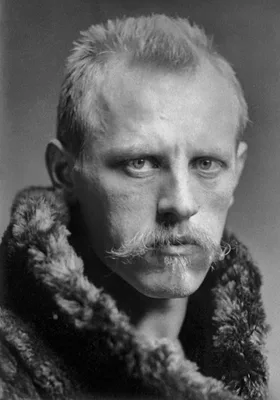
1886 NANSEN, Fridtjof (1861 – 1930)
The structure and combination of the histological elements of the central nervous system.
Nansen, better known for his Arctic explorations, was the first to point out that the posterior root fibers divide on entering the spinal cord into ascending and descending branches. Digital facsimile from the Hathi T…
GMN 1368 · https://historyofmedicine.com/id/1715
1887 HIS, Wilhelm Sr. (1831 – 1904)
Zur Geschichte der menschlichen Rückenmarkes und der Nervenwurzeln.
This is generally considered the first clear statement that nerve cells in the brain might be independent units rather than forming an anastomotic network—as Gerlach, Golgi, and most others believed—although there are…
GMN 1368.1 · https://historyofmedicine.com/id/1720
1887 FOREL, Auguste Henri (1848 – 1931)
Einige hirnanatomische Betrachtungen und Ergebnisse.
Independently of His, Forel formulated the neuron theory.
GMN 1368.2 · https://historyofmedicine.com/id/1722
1889 SHARPEY-SCHAFER, Sir Edward Albert (1850 – 1935); HORSLEY, Sir Victor Alexander Haden (1857 – 1916)
A record of experiments upon the functions of the cerebral cortex.
A detailed analysis, by means of faradic stimulation, of the motor responses of the cerebral cortex, internal capsule, and spinal cord of higher primates.
GMN 1419 · https://historyofmedicine.com/id/2115
1890 BASTIAN, Henry Charlton (1837 – 1915)
On the symptomatology of total transverse lesions of the spinal cord, with special reference to the condition of the various reflexes.
“Bastian’s law”, transverse lesion of the cord above the lumbar enlargement results in the abolition of the tendon reflexes of the lower extremities.
GMN 4577 · https://historyofmedicine.com/id/447
1891 WALDEYER-HARTZ, Heinrich Wilhelm Gottfried von (1836 – 1921)
Ueber einige neuere Forschungen im Gebiete der Anatomie des Centralnervensystems.
A statement of the neuron theory, to which Waldeyer gave the name.
GMN 1369 · https://historyofmedicine.com/id/1725
1892 GOLTZ, Friedrich Leopold (1834 – 1902)
Der Hund ohne Grosshirn.
Goltz was able to keep dogs alive for eight months after he had performed subtotal decerebration. He found them incapable of purposive movements but able to walk with adequate co-ordination. Frontal decortication caus…
GMN 1370 · https://historyofmedicine.com/id/1726
1894 FLATAU, Edward (1869 – 1932)
Atlas des menschlichen Gehirns und des Faserverlaufes.
Flatau’s law—“the greater the length of the fibers in the spinal cord the closer they are situated to the periphery”.
GMN 1372 · https://historyofmedicine.com/id/1775
1896 GOLTZ, Friedrich Leopold (1834 – 1902); EWALD, Ernst Julius Richard (1855 – 1921)
Der Hund mit verkürtzen Rückenmark.
Goltz and Ewald succeeded in impregnating a bitch after its spinal cord had been severed.
GMN 1371 · https://historyofmedicine.com/id/1728
1902 KIENBÖCK, Robert (1871 – 1953)
Kritik der sogenannten “traumatischen Syringomyelie”.
Traumatic cavity formation in the spinal cord, so well described by Kienböck, is known as “Kienböck’s disease”.
GMN 4591 · https://historyofmedicine.com/id/477
1902 BAYLISS, Sir William Maddock (1860 – 1924)
Further researches on antidromic nerve-impulses.
GMN 1373 · https://historyofmedicine.com/id/1776
1906 HEAD, Sir Henry (1861 – 1940); THOMPSON, Harold Theodore (1878 – 1935)
The grouping of afferent impulses within the spinal cord.
GMN 1374 · https://historyofmedicine.com/id/1777
1909 MONAKOW, Constantin von (1853 – 1930)
Der rote Kern, die Haube und die Regio hypothalamica bei einigen Säugetieren und beim Menschen.
“Monakow’s bundle”, the rubrospinal tract.
GMN 1375 · https://historyofmedicine.com/id/1778
1916 QUECKENSTEDT, Hans Heinrich Georg (1876 – 1918)
Zur Diagnose der Rückenmarkskompression.
“Queckenstedt’s test” for determining patency of the spinal subarachnoid space.
GMN 4600 · https://historyofmedicine.com/id/490
1917 HEAD, Sir Henry (1861 – 1940); RIDDOCH, George (1888 – 1947)
The automatic bladder, excessive sweating and some other reflex conditions, in gross injuries of the spinal cord.
Classic studies on “spinal man”. Republished in book form, 1918.
GMN 1376 · https://historyofmedicine.com/id/1779
1917 RIDDOCH, George (1888 – 1947)
The reflex functions of the completely divided spinal cord in man, compared with those associated with less severe lesions.
Riddoch described in detail the results of complete transection of the spinal cord in man. With Head (see No. 1376) he made one of the most painstaking investigations of this subject.
GMN 1377 · https://historyofmedicine.com/id/1780
1933 FOERSTER, Otfrid (1873 – 1941)
The dermatomes in man.
GMN 1377.1 · https://historyofmedicine.com/id/1781