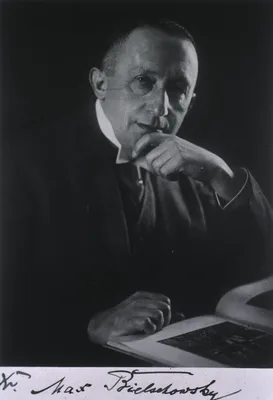
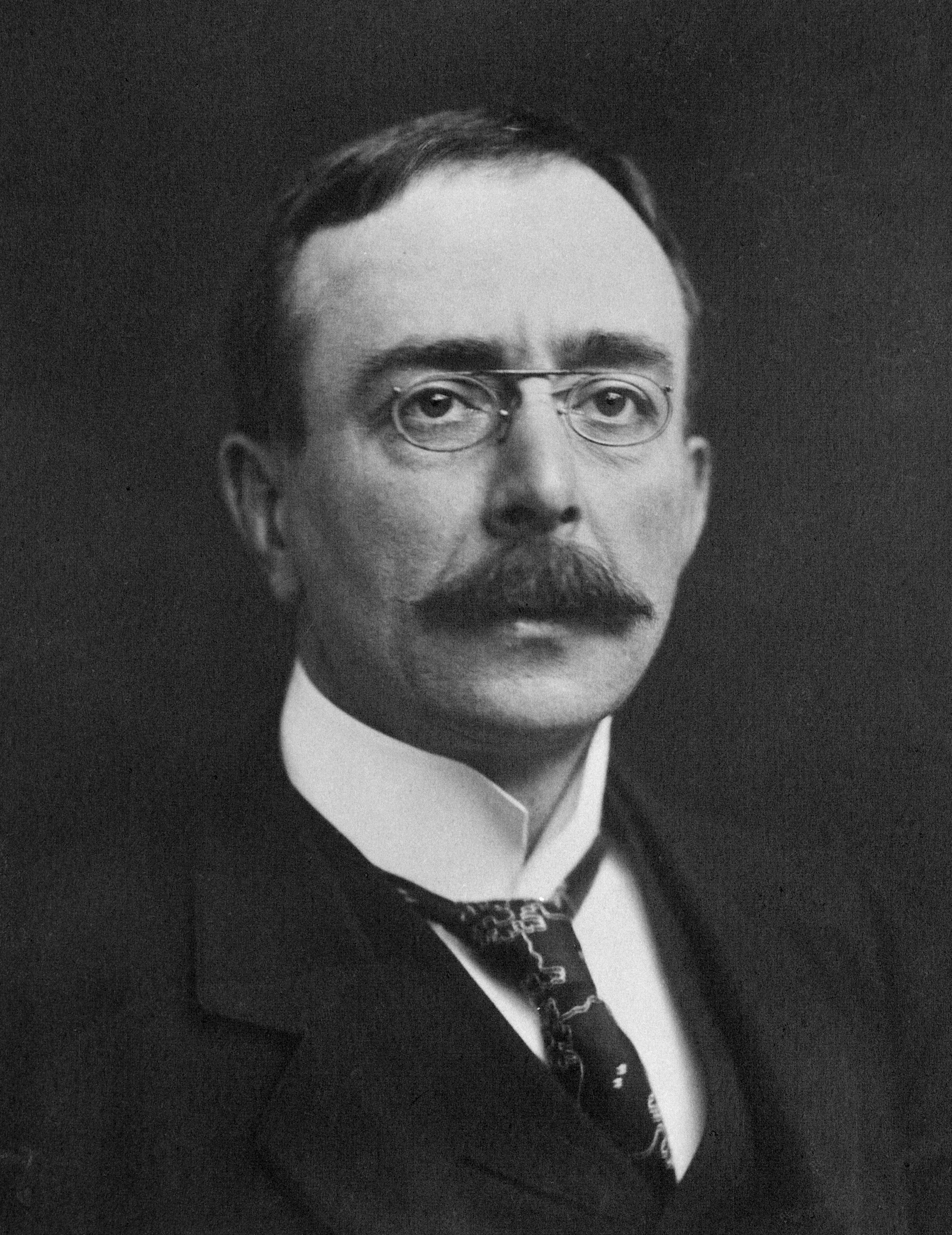
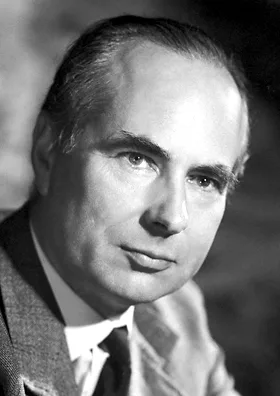
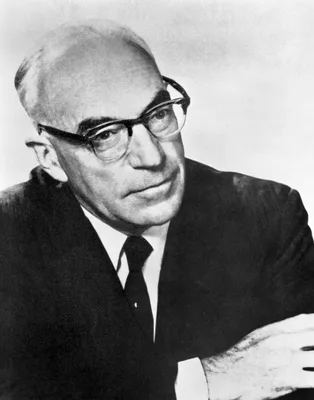
1902 BIELSCHOWSKY, Max (1869 – 1940)
Die Silberimprägnation der Axencylinder.
Bielschowsky’s method of silver staining of nerve fibers. Further paper in the same journal, 1903, 22, 997-1006.
GMN 1296 · https://historyofmedicine.com/id/2356
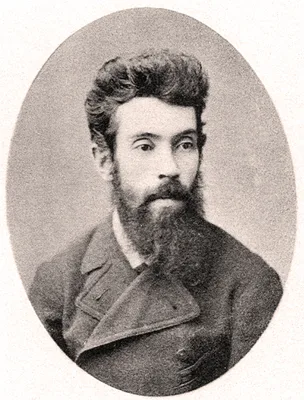
1903 HERRING, Percy Theodore (1872 – 1967)
The spinal origin of the cervical sympathetic nerve.
Section of the white rami caused retrograde degeneration of the lateral column cells.
GMN 1297 · https://historyofmedicine.com/id/2359
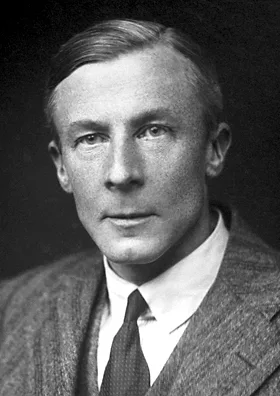
1905 HEAD, Sir Henry (1861 – 1940); SHERREN, James (1872 – 1945); RIVERS, William Halse Rivers (1864 – 1922)
The afferent nervous system from a new aspect.
This paper opened up a new field in the study of the sensory functions of the skin, and the theories put forward in it dominated neurological thought until 1940.
GMN 1298 · https://historyofmedicine.com/id/2364
1905 HEAD, Sir Henry (1861 – 1940); SHERREN, James (1872 – 1945)
The consequences of injury to the peripheral nerves in man.
GMN 1299 · https://historyofmedicine.com/id/2365
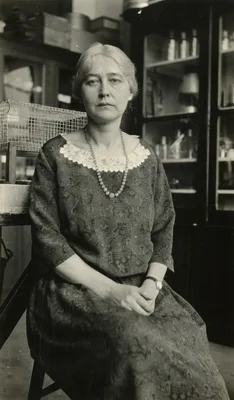
1906 MACALLUM, Archibald Byron (1858 – 1934); MENTEN, Maud Lenore (1879 – 1960)
On the distribution of chlorides in nerve cells and fibres.
GMN 1300 · https://historyofmedicine.com/id/2370
1906 SHERRINGTON, Sir Charles Scott (1857 – 1952)
On the proprio-ceptive system, especially in its reflex aspect.
Sherrington investigated and explained the proprioceptive system.
GMN 1300.1 · https://historyofmedicine.com/id/2372
1908 DOGIEL, Alexander Stanislovich (1852 – 1922)
Der Bau der Spinalganglien des Menschen und der Säugetiere.
GMN 1301 · https://historyofmedicine.com/id/2376
1908 HEAD, Sir Henry (1861 – 1940); RIVERS, William Halse Rivers (1864 – 1922)
A human experiment in nerve division.
Head submitted to the division of his own left radial and external cutaneous nerves. His subsequent study of the loss and restoration of sensation thus brought about, led to a reclassification of the sensory pathways.…
GMN 1302 · https://historyofmedicine.com/id/2380
1913 TASHIRO, Shiro (1882 – 1963)
Carbon dioxide production from nerve fibres when resting and when stimulated; a contribution to the chemical basis of irritability.
Tashiro showed that the production of the nervous impulse depends on the metabolic activity of the nerve fiber.
GMN 1302.1 · https://historyofmedicine.com/id/2381
1917 ADRIAN, Edgar Douglas (1889 – 1977); LUCAS, Keith (1879 – 1916)
The conduction of the nervous impulse.
Gotch (No. 1420.1), Adrian, and Keith Lucas made important discoveries concerning the “all-or-nothing” responses of individual nerve fibers. Their work is summarized in the above monograph. Digital facsimile from the …
GMN 1303 · https://historyofmedicine.com/id/2385
1920 HEAD, Sir Henry (1861 – 1940); THOMPSON, Harold Theodore (1878 – 1935); RIDDOCH, George (1888 – 1947); HOLMES, Sir Gordon Morgan (1876 – 1965); SHERREN, James (1872 – 1945); RIVERS, William Halse Rivers (1864 – 1922)
Studies in neurology. By Henry Head in conjunction with W.H.R. Rivers, James Sherren, Gordon Holmes, Theodore Thompson, George Riddoch. 2 vols.
Reprint, with modifications and additions, of seven papers published in the journal Brain between 1905 and 1918. Digital facsimile from the Internet Archive at this link.
GMN 1304 · https://historyofmedicine.com/id/1126
1924 ERLANGER, Joseph (1874 – 1965); GASSER, Herbert Spencer (1888 – 1963)
The compound nature of the action current of nerve as disclosed by the cathode ray oscillograph.
In 1944 Erlanger and Gasser shared the Nobel Prize in Physiology or Medicine "for their discoveries regarding the highly differentiated functions of single nerve fibers."
GMN 1305 · https://historyofmedicine.com/id/1130
1924 KATO, Genichi (1890 – 1979)
The theory of decrementless conduction in narcotised region of nerve.
Kato made valuable investigations on nerve conduction. A second volume, Further studies, appeared in 1926.
GMN 1306 · https://historyofmedicine.com/id/1137
1926 ADRIAN, Edgar Douglas (1889 – 1977); ZOTTERMAN, Yngve (1898 – 1982)
The impulses produced by sensory nerve-endings. Part 2. The response of a single end-organ.
The observations of Adrian and Zotterman on the response of single sensory end-organs to a natural stimulus led them to formulate their conception of “adaptation” of receptors to stimuli.
GMN 1307 · https://historyofmedicine.com/id/1141
1928 ADRIAN, Edgar Douglas (1889 – 1977)
The basis of sensation. The action of the sense organs.
In 1932 Adrian shared the Nobel Prize in Physiology or Medicine with Charles Scott Sherrington "for their discoveries about the function of neurons." See also Nos. 1307, 1528, and 1303.
GMN 1308 · https://historyofmedicine.com/id/1144
1931 MÜLLER, Ludwig Robert (1870 – 1962)
Lebensnerven und Lebenstriebe. 3te. Aufl.
GMN 1309 · https://historyofmedicine.com/id/1150
1936 YOUNG, John Zachary (1907 – 1997)
The structure of nerve fibres in cephalopods and crustacea.
Young’s discovery of the giant nerve fibers of the squid (squid giant axon) Loglio forbesi made possible the study of the electrical phenomena of the nervous impulse in the interior as well as on the surface of a nerv…
GMN 1309.1 · https://historyofmedicine.com/id/1152
1937 –1938 KIRKMAN, Hadley (1901 – 1997); SEVERINGHAUS, Aura Edward (1894 – 1979)
A review of the Golgi apparatus.
GMN 1310 · https://historyofmedicine.com/id/1159
1939 HODGKIN, Sir Alan Lloyd (1914 – 1998); HUXLEY, Sir Andrew Fielding (1917 – 2012)
Action potentials recorded from inside a nerve fibre.
Hodgkin and Huxley were the first to succeed in inserting electrodes into a living giant nerve fiber and to measure directly the action potential within it. In 1963 Hodgkin and Huxley shared the Nobel Prize in Physiol…
GMN 1310.1 · https://historyofmedicine.com/id/1165
1963 ECCLES, Sir John Carew (1903 – 1997)
The ionic mechanism of postsynaptic inhibition. IN: Prix Nobel in 1963, pp. 261-83.
Eccles shared the Nobel Prize with A. L. Hodgkin and A. F. Huxley in 1963. See No. 1310.1.
GMN 1310.2 · https://historyofmedicine.com/id/1182