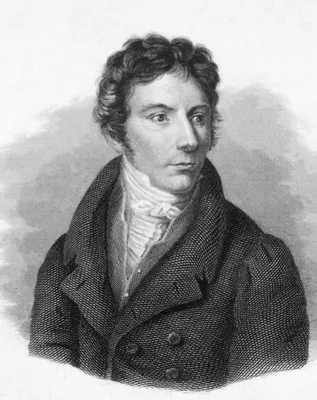
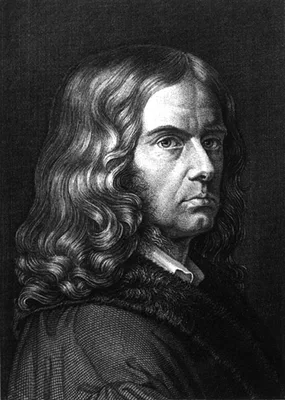
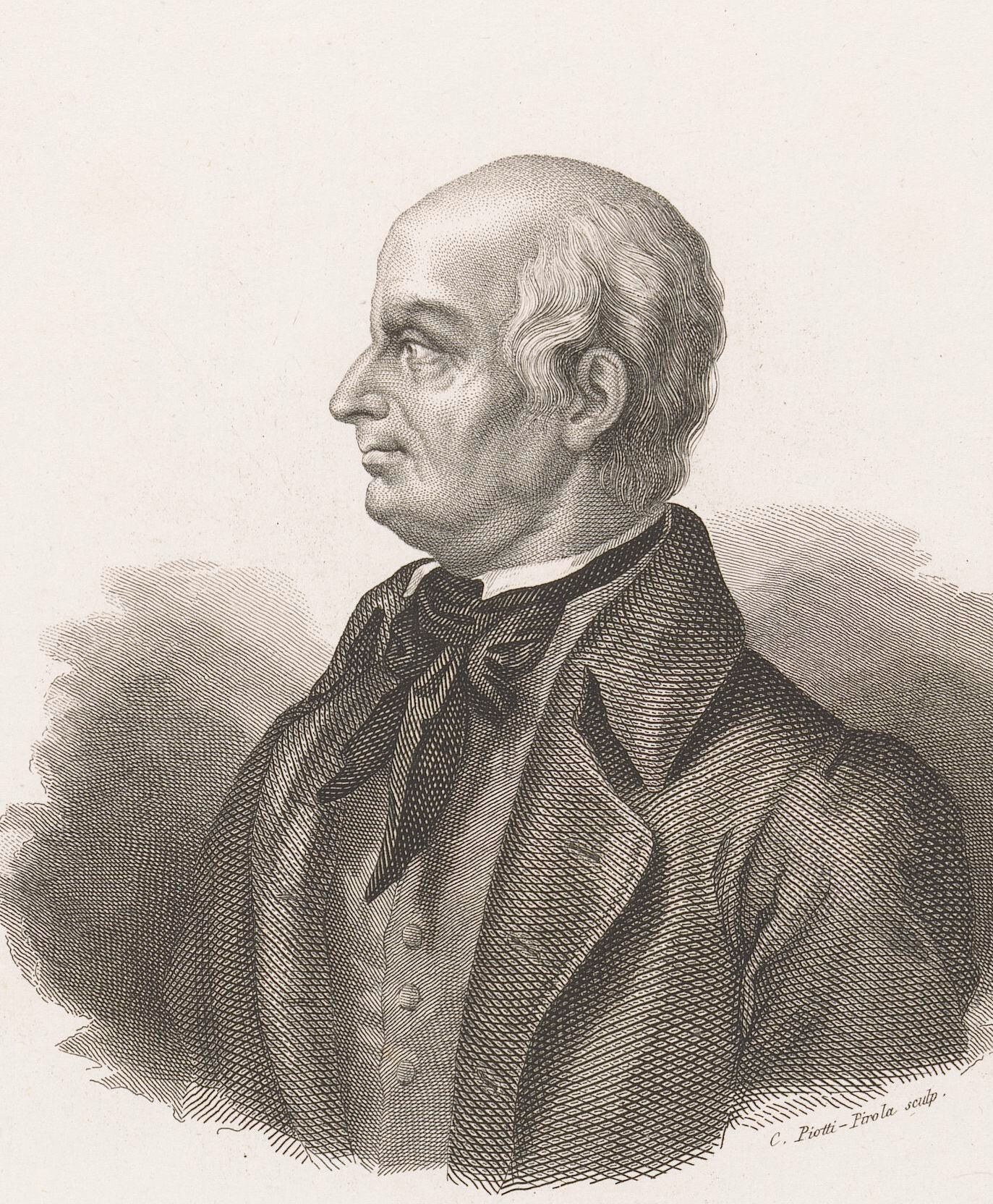
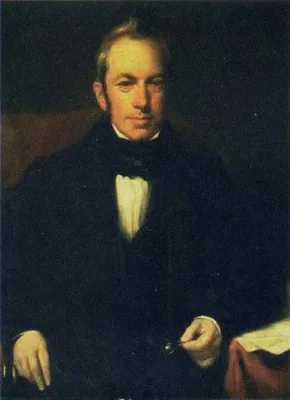
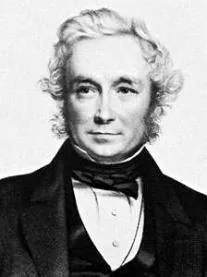
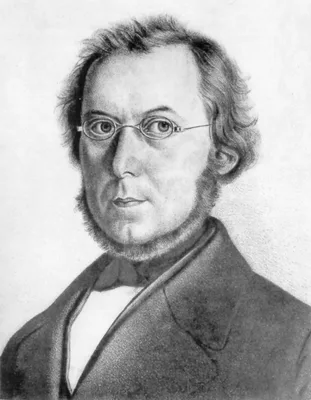
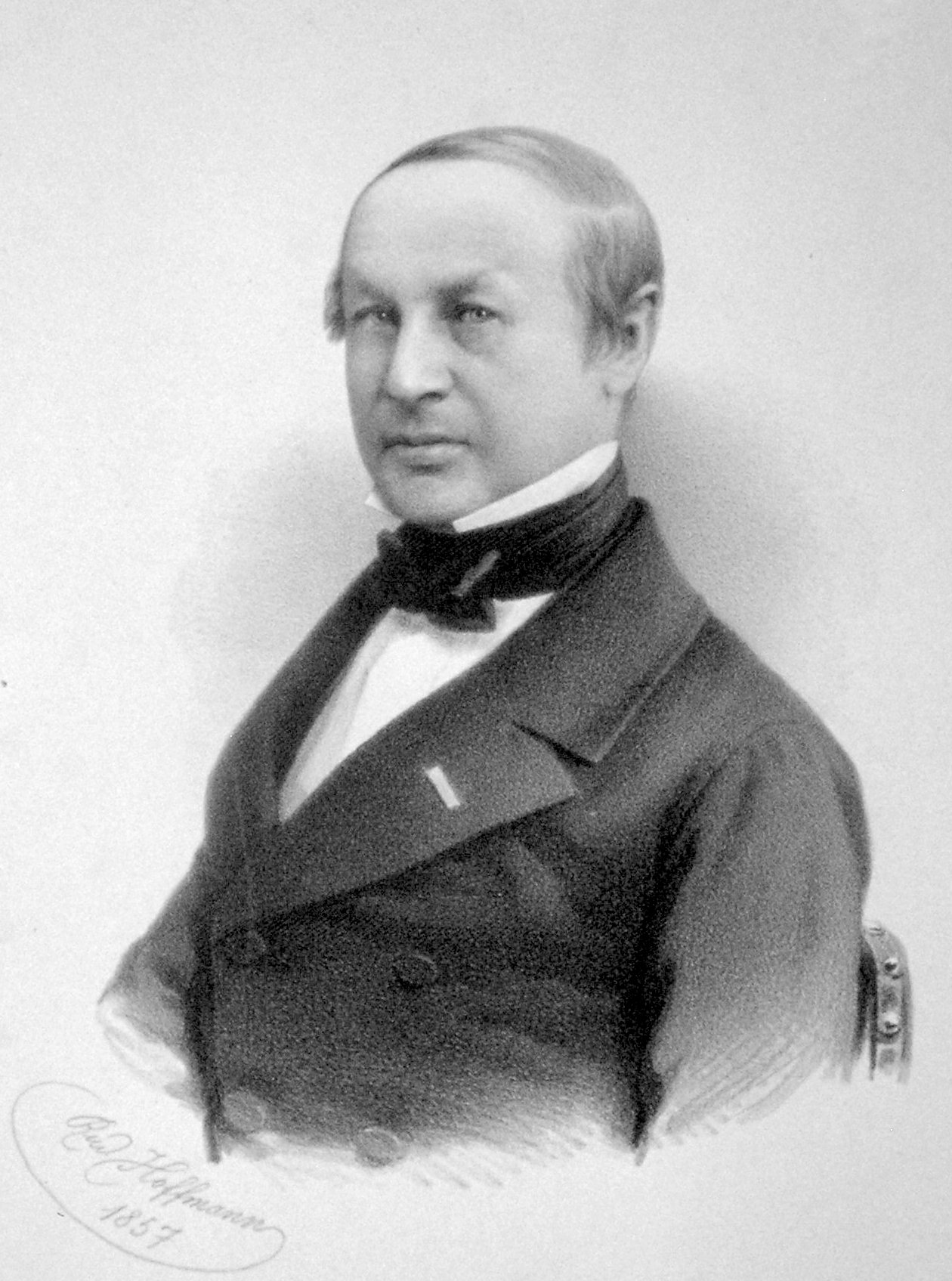
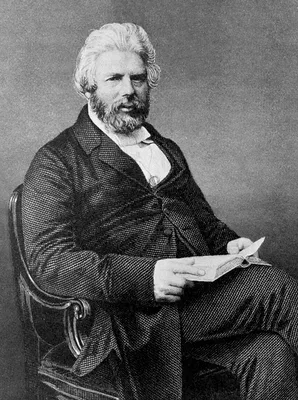
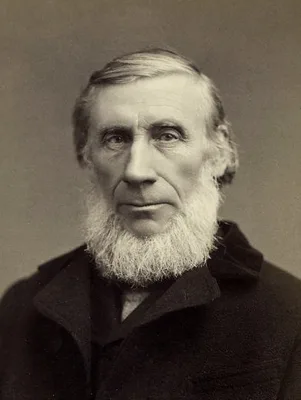
1817 –1848 OKEN, Lorenz (1779 – 1851)
Isis, oder encyclopädische Zeitung (verzüglich für Naturgeschichte, vergleichende Anatomie und Physiologie), VON OKEN. 41 vols.
Lorenz Oken, a leading light in the Nature-Philosophical School in Germany, produced important work in the field of biology. He founded the journal Isis, which published articles of great value; its incursion into the…
GMN 107 · https://historyofmedicine.com/id/8787
1819 CHAMISSO, Adelbert von (1781 – 1838)
De animalibus quibusdam e classe vermium Linneana in circumnavigator terra auspicante Comite N. Romanzoff duce Ottone de Kotzebue annis 1815, 1816, 1817, 1818. Fasciculus primus. De Salpa.
Chamisso was naturalist on the Kotzebue voyage of 1815-1818. This monograph on certain Vermes included the first description of several of the tunicates and the earliest use of the expression “alternation of generatio…
GMN 317 · https://historyofmedicine.com/id/151
1824 DUTROCHET, René Joachim Henri (1776 – 1847)
Recherches anatomiques et physiologiques sur la structure intime des animaux et des végétaux.
GMN 108 · https://historyofmedicine.com/id/1616
1824 EDWARDS, William Frédéric (1776 – 1842)
De l’influence des agens physiques sur la vie.
Edwards studied the influence of environmental factors on animal life, concluding that vital processes depend on external physical and chemical forces but are not entirely controlled by them. The work includes an acco…
GMN 145.56 · https://historyofmedicine.com/id/8796
1825 –1826 SPALLANZANI, Lazzaro (1729 – 1799)
Opere. 6 vols.
Digital facsimiles from the Internet Archive at this link.
GMN 9360 · https://historyofmedicine.com/id/11542
1829 –1832 BROWN, Robert (1773 – 1858)
Observations on the organs and mode of fecundation in Orchideae and Asclepiadeae.
Discovery, in 1831, of the cell nucleus. First issued as a separate pamphlet: Observations on the Organs and Mode of Fecundation in orchideae and asclepiadeae ... [with:] Additional remarks ... London, [privately prin…
GMN 109 · https://historyofmedicine.com/id/1627
1832 OWEN, Sir Richard (1804 – 1892)
Memoir on the pearly nautilus (Nautilus pompilius, Linn.).
GMN 325 · https://historyofmedicine.com/id/167
1832 EDWARDS, William Frédéric (1776 – 1842); HODGKIN, Thomas (1798 – 1866); LISTER, Joseph Jackson (1786 – 1869); HOWARD, Luke (1772 – 1864); POUILLET, Claude Servais Mathias (1790 – 1868); FISHER, Alder
On the influence of physical agents on life, by W. F. Edwards. Translated from the French by Dr. Hodgkin and Dr. Fisher. To which are added, in the appendix, some observations on electricity by Dr. Edwards, M. Pouillet, and Luke Howard; on absorption, and the uses of the spleen, by Dr. Hodgkin; on the microscopic characters of the animal tissues and fluids, by J. J. Lister and Dr. Hodgkin, and some notes to the work of Dr. Edwards.
Digital facsimile from Google Books at this link.
GMN 12197 · https://historyofmedicine.com/id/14407
1835 PURKYNĔ, Jan Evangelista [PURKINJE] (1787 – 1869); VALENTIN, Gabriel Gustav (1810 – 1883)
De phaenomeno generali et fundamentali motus vibratorii contini in membranis.
Classical paper on ciliary epithelial motion. Reprinted in Purkynĕ’s Opera omnia (No. 82), pp. 277-371, 1918. English translation in Dublin J. med. chem. Sci., 1835, 7, 279-84.
GMN 602 · https://historyofmedicine.com/id/449
1835 –1859 SHARPEY, William (1802 – 1880); TODD, Robert Bentley (1809 – 1860)
The cyclopaedia of anatomy and physiology. Edited by Robert Bentley Todd. 5 vols.
Contributors included Richard Owen and Thomas Huxley, and physicians James Paget, James Young Simpson, and William Bowman.The discoveries of Purkynĕ and Valentin, together with additional observations by William Sharp…
GMN 603 · https://historyofmedicine.com/id/453
1835 WAGNER, Rudolf Friedrich Johann Heinrich (Rudolph) (1805 – 1864)
Einige Bemerkungen und Fragen über das Keimbläschen (vesicula germinativa).
Wagner saw and described the nucleolus.
GMN 109.1 · https://historyofmedicine.com/id/1632
1835 DARWIN, Charles Robert (1809 – 1882); HENSLOW, John Stevens (1796 – 1861)
For private distribution. The following pages contain extracts from letters addressed to Professor Henslow by C. Darwin, Esq.
Darwin's teacher, John Stevens Henslow, had some of Darwin's letters to him published for private distribution as a pamphlet while Darwin was on the Beagle circumnavigation. Estimates of the number of copies printed v…
GMN 8920 · https://historyofmedicine.com/id/11098
1835 MOHL, Hugo von (1805 – 1872)
Ueber die Vermehrung der Pflanzen-Zellen durch Theilung. Eine Inaugural-Dissertation welche zur Erlangung der Doctor-Würde in der Medicin und Chirurgie welche / unter dem Präsidium von Hugo Mohl; vorlegt August Wilhelm Winter.
In his doctoral thesis Mohl reported his discovery of the multiplication of cells by division, later known as mitosis. Digital facsimile from Bayerische StaatsBibliothek at this link.
GMN 14133 · https://historyofmedicine.com/id/16444
1837 SCHWANN, Theodor (1810 – 1882)
Vorlaüfige Mittheilung betreffend Versuche über die Weingährung und Fäulniss.
Proof that putrefaction is produced by living bodies. Independently of Cagniard-Latour, Schwann discovered the yeast cell. He is regarded as the founder of the germ theory of putrefaction and fermentation.
GMN 674 · https://historyofmedicine.com/id/719
1837 DUTROCHET, René Joachim Henri (1776 – 1847)
Mémoires pour servir à l’histoire anatomique et physiologique des végétaux et des animaux. 2 vols. and atlas.
Dutrochet asserted that respiration follows the same pattern in both animals and plants, showing that the minute openings on the surface of leaves (the stomata) communicate with lacunae in deeper tissue. He also demon…
GMN 110 · https://historyofmedicine.com/id/1639
1838 SCHLEIDEN, Mattias Jakob (1804 – 1881)
Beiträge zur Phytogenesis.
Schleiden demonstrated that plant tissues are made up of and developed from groups of cells, of which he recognized the “cytoblast” or cell-nucleus. He observed with great accuracy certain other activities of the cell…
GMN 112 · https://historyofmedicine.com/id/1667
1838 SCHWANN, Theodor (1810 – 1882)
Ueber die Analogie in der Structur und dem Wachsthum der Thiere und Pflanzen.
Schwann’s three-part preliminary application of Schleiden’s “watch-glass” cell theory to the genesis of animal cells. Schleiden communicated the theory to him verbally. This paper actually pre-dates Schleiden’s first …
GMN 112.1 · https://historyofmedicine.com/id/1683
1839 ROSENTHAL, Joseph Ferdinand; PURKYNĔ, Jan Evangelista [PURKINJE] (1787 – 1869)
De formatione granulosa in nervis aliisque partibus organismi animalis.
In 1839 Purkynĕ was the first to use the term protoplasma, by which he described the embryonic ground substance. This fact is recorded in the inaugural dissertation of one of his students, J. Rosenthal.
GMN 541 · https://historyofmedicine.com/id/174
1839 SCHWANN, Theodor (1810 – 1882)
Mikroskopische Untersuchungen über die Uebereinstimmung in der Struktur und dem Wachsthum der Thiere und Pflanzen.
Mainly devoted to the investigation of the elementary structure of animal tissues, Schwann’s Untersuchungen had an important bearing on the development of the doctrine of the cell structure of animal tissue. In this w…
GMN 113 · https://historyofmedicine.com/id/2028
1839 DARWIN, Charles Robert (1809 – 1882)
Journal of researches into the geology and natural history of the various countries visited by H. M. S. Beagle ....
Darwin’s first published book, now universally known as The Voyage of the Beagle, is the most often read and the most often printed of all his works, after On the origin of species. Its relation to the background of D…
GMN 7438 · https://historyofmedicine.com/id/9610
1840 HÜNEFELD, Friedrich Ludwig (1799 – 1882)
Der Chemismus in der thierischen Organisation.
Hünefeld accidentally observed the first protein crystals— those of hemoglobin—in partically dried samples of mammalian blood blood pressed between glass plates. On page 160 Hünefeld noted that he had seen, in some sa…
GMN 6921 · https://historyofmedicine.com/id/9086
1842 STEENSTRUP, Johannes Japetus Smith (1813 – 1897)
Om Fortplantning og Udvikling gjennem vexlende Generations-raekker.
Steenstrup is responsible for the theory of the “alternation of generations”. He showed that certain animals produce offspring which never resemble them but which, on the other hand, bring forth progeny which return i…
GMN 217 · https://historyofmedicine.com/id/4039
1842 DARWIN, Charles Robert (1809 – 1882)
The structure and distribution of coral reefs. Being the first part of the geology of the voyage of the Beagle, under the command of Capt. Fitzroy, R. N. During the years 1832 to 1836.
With slight modification, Darwin's work remains the accepted explanation for these phenomena. "Even if he had done nothing else, the theory of the coral islands alone would have placed Darwin in the very front of inve…
GMN 8916 · https://historyofmedicine.com/id/11094
1843 BARRY, Martin (1802 – 1855)
Spermatozoa observed within the mammiferous ovum.
Barry was the first to observe the spermatozoon within the ovum.
GMN 484.1 · https://historyofmedicine.com/id/1396
1844 –1845 CHAMBERS, Robert (1802 – 1871)
Vestiges of the natural history of creation. And: Explanations: A sequel to “Vestiges….” 2 vols.
This outspoken statement of a belief in evolution, published anonymously to protect Chambers’s reputation as a publisher, anticipated Darwin’s Origin by 16 years and generally prepared the public for Darwin’s theories…
GMN 218 · https://historyofmedicine.com/id/4041
1844 DARWIN, Charles Robert (1809 – 1882)
Observations on the volcanic islands, visited during the voyage of the H.M.S. Beagle, together with some brief notices on the geology of Australia and the Cape of Good Hope. Being the second part of the geology of the voyage of the Beagle.
GMN 8917 · https://historyofmedicine.com/id/11095
1845 –1862 HUMBOLDT, Friedrich Wilhelm Heinrich Alexander von (1769 – 1859)
Kosmos. Entwurf einer physischen Weltbeschreibung. 5 vols. and atlas.
This work includes founding material in geography, plant geography, orography, climatology and meterology, among other sciences, and citations to 9,000 sources. The atlas was issued without Humboldt's participation, a…
GMN 8223 · https://historyofmedicine.com/id/10399
1846 DARWIN, Charles Robert (1809 – 1882)
Geological observations on South America. Being the third part of the geology of the voyage of the Beagle.
The third and last of Darwin's geological reports on the Beagle voyage. In it he described the pampas, the plateaus and the Andres, showing how they had been gradually pushed up in the way that Charles Lyell surmised …
GMN 8918 · https://historyofmedicine.com/id/11096
1847 VIRCHOW, Rudolf Ludwig Karl (1821 – 1902)
Die pathologischen Pigmente.
On the origin and chemical composition of extracellular and intracellular pigments, and on the supposed formation of new cells by the membranous envelopment of pigmented blood corpuscles or pigment granules.
GMN 2296 · https://historyofmedicine.com/id/2930
1847 PASTEUR, Louis (1822 – 1895)
Thèses de physique et de chimie, Presentées à la Faculté des Sciences de Paris.
Pasteur reported a series of “investigations into the relation between optical activity, crystalline structure, and chemical composition in organic compounds, particularly tartaric and paratartaric acids. This work fo…
GMN 6922 · https://historyofmedicine.com/id/9087
1848 OWEN, Sir Richard (1804 – 1892)
On the archetype and homologies of the vertebrate skeleton.
Owen’s vertebral theory of the origin of the skull, later refuted by Thomas Huxley and others. "Owen began working systematically on problems of transcendental morphology in 1841, as part of his curatorial task to arr…
GMN 330 · https://historyofmedicine.com/id/210
1849 LUDWIG, Carl Friedrich Wilhelm (1816 – 1895)
Ueber die endosmotischen Aequivalent und die endosmotische Theorie.
In this development of his theory of urinary secretion (see No. 1232) Ludwig made important observations on endosmosis.
GMN 682 · https://historyofmedicine.com/id/793
1849 BALFOUR, Edward Green (1813 – 1889)
Notes on the influence exercised by trees in inducing rain and preserving moisture.
Digital facsimile from the Internet Archive at this link.
GMN 11757 · https://historyofmedicine.com/id/13957
1851 WAGNER, Rudolf Friedrich Johann Heinrich (Rudolph) (1805 – 1864); MOHL, Hugo von (1805 – 1872)
Grundzüge der Anatomie und Physiologie der vegetabilischen Zelle. In: Rudolph Wagner’s Handwörterbuch der Physiologie.
Von Mohl saw and described cell division. English translation, London, 1852.
GMN 114 · https://historyofmedicine.com/id/8788
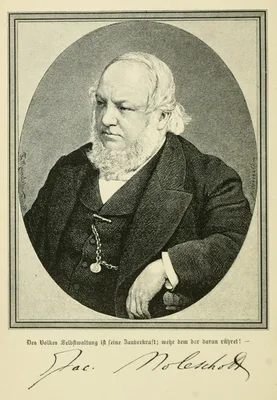
1852 MOLESCHOTT, Jacob (1822 – 1893)
Der Kreislauf des Lebens.
This work attacked Liebig’s theories, although courteously. Moleschott, a Dutch physiologist, evolved a purely materialistic conception of the world. He considered life a magnificent metabolic process, and thought a p…
GMN 115 · https://historyofmedicine.com/id/2037
1852 REMAK, Robert (1815 – 1865)
Ueber extracelluläre Entstehung thierischer Zellen und über die Vermehrung derselben durch Theilung.
Remak was the first to point out that growth of new tissues was accomplished by the division of pre-existing cells.
GMN 116 · https://historyofmedicine.com/id/2042
1855 CANDOLLE, Alphonse Pyramus de (1806 – 1893)
Géographie botanique raisonnée ou exposition des faits principaux et des lois concernant la distribution géographique des plantes de l'époque actuelle. 2 vols.
This work work organized and systematized the huge mass of data being collected by the numerous scientific expeditions of the time to explain the geographical distribution of plants. Digital facsimile from BnF Gallica…
GMN 11884 · https://historyofmedicine.com/id/14088
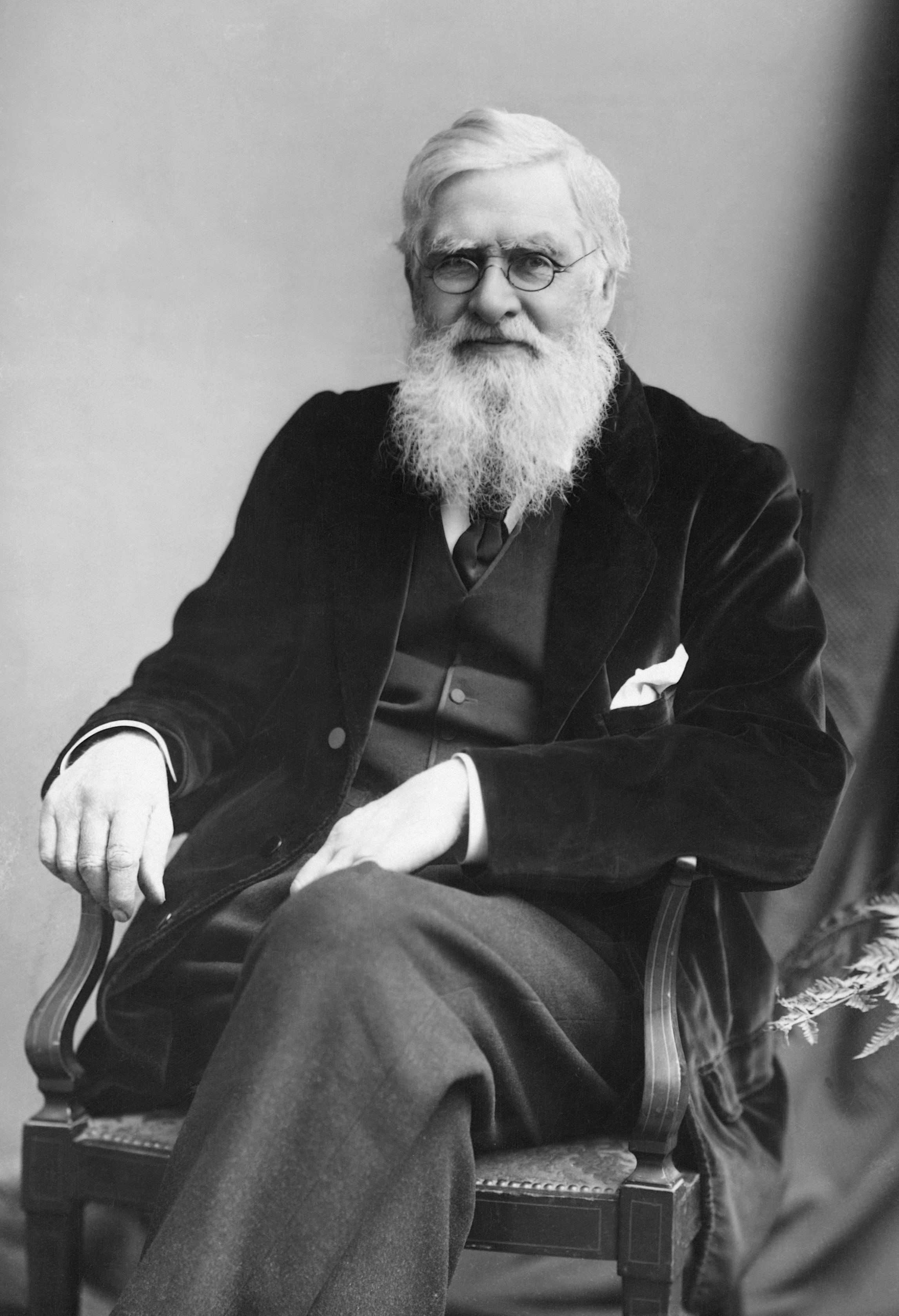
1855 WALLACE, Alfred Russel (1823 – 1913)
On the law which has regulated the introduction of new species.
This paper is sometimes referred to as the Sarawak Law paper since it was written while Wallace was on a specimen collecting expedition in the province of Sarawak (East Malayasian States) on the great island of Borneo…
GMN 13712 · https://historyofmedicine.com/id/15996
1856 FOOTE, Eunice Newton (1819 – 1888)
Circumstances affecting the heat of the sun's rays.
Foote was the first scientist known to have experimented on the warming effect of sunlight on different gases. In this two-page paper she theorized that changing the proportion of carbon dioxide in the atmosphere woul…
GMN 13464 · https://historyofmedicine.com/id/15738
1857 –1877 AGASSIZ, Louis Jean Rodolphe (1807 – 1873); AGASSIZ, Alexander Emmanuel Rodolphe (1835 – 1910)
Contributions to the natural history of the United States. 5 vols.
Vols. 1-4 by Louis Agassiz were published from 1857-1862; Vol. 5, North American starfishes by Alexander Agassiz, appeared in 1877. Louis Agassiz was, for his time, the leading comparative anatomist in America and a v…
GMN 333 · https://historyofmedicine.com/id/217
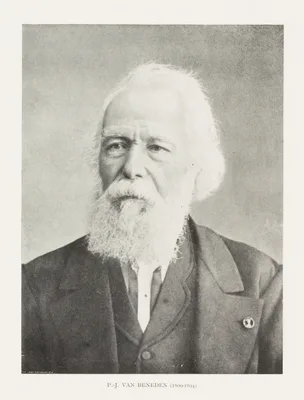
1858 BENEDEN, Pierre-Joseph van (1809 – 1894)
Mémoire sur les vers intestinaux.
Beneden's treatise on the development, transformation, and life-histories of parasitic worms won the Grand prix des sciences physiques of the Institut de France. It was published in the "International Scientific Serie…
GMN 10278 · https://historyofmedicine.com/id/12469
1859 –1969 BRONN, Heinrich Georg (1800 – 1862)
Die Klassen und Ordnungen des Thier-Reichs, wissenschaftlich dargestellt in Wort und Bild.
This great systematic work, begun by Bronn, was continued by other naturalists. It deals with both recent and fossil zoology. Bronn wrote the volumes dealing with Amorphozoa, Actinozoa, and Malacozoa, published 1859-1…
GMN 334 · https://historyofmedicine.com/id/219
1859 WALLACE, Alfred Russel (1823 – 1913); DARWIN, Charles Robert (1809 – 1882)
On the tendency of species to form varieties: and on the perpetuation of varieties and species by natural means of selection.
The first printed exposition of the “Darwinian” theory of evolution by natural selection. Had not Wallace independently discovered the theory of natural selection, it is possible that the extremely cautious Darwin mig…
GMN 219 · https://historyofmedicine.com/id/4042
1859 DARWIN, Charles Robert (1809 – 1882)
On the origin of species by means of natural selection, or the preservation of favoured races in the struggle for life.
Prepared under the advice of Lyell and Hooker, and brought to press soon after publication of the joint paper by Darwin and Wallace (No. 219), this was Darwin’s greatest work and one of the most important books ever p…
GMN 220 · https://historyofmedicine.com/id/4044
1859 FORBES, Edward (1815 – 1854); GODWIN-AUSTEN, Robert Alfred Gloyn (1808 – 1884)
The natural history of the European seas. Edited and continued by Robert Godwin-Austen.
Digital facsimile from Biodiversity Heritage Library at this link.
GMN 9972 · https://historyofmedicine.com/id/12161
1860 GOSSE, Philip Henry (1810 – 1888)
Actinologia Britannica. A history of the British sea-anemones and corals. With coloured figures of the species and principal varieties.
Digital facsimile from Biodiversity Heritage Library at this link.
GMN 11805 · https://historyofmedicine.com/id/14007
1861 SCHULTZE, Max Johann Sigismund (1825 – 1874)
Ueber Muskelkörperchen und das, was man eine Zelle zu nennen habe.
Schultze showed the cell to be a clump of nucleated protoplasm, stating that each muscle fibre or primitive muscle bundle was developed from a single myoblast by successive divisions of its cell or nucleus. His work s…
GMN 117 · https://historyofmedicine.com/id/2047
1861 PASTEUR, Louis (1822 – 1895)
Animalcules infusoires vivant sans gaz oxygène libre et déterminant des fermentations.
The discovery of strict anaerobiosis, important for general biology since it shows that oxygen gas is not a requisite for life.
GMN 2475.1 · https://historyofmedicine.com/id/3069
1861 DARWIN, Charles Robert (1809 – 1882)
On the origin of species by means of natural selection....Third edition with additions and corrections (Seventh thousand).
Extensively revised, and the first edition to include the "historical sketch" crediting the historical precursors to the theory of evolution by natural selection. Darwin added this chapter in response to writings by S…
GMN 8915 · https://historyofmedicine.com/id/11093
1861 TYNDALL, John (1820 – 1893)
On the absorption and radiation of heat by gases and vapours, and on the physical connexion of radiation, absorption and conduction.
Demonstration that gases including carbon dioxide and water can absorb heat, aand could change climate. Digital facsimile from royalsocietypublishing.org at this link.
GMN 13465 · https://historyofmedicine.com/id/15739