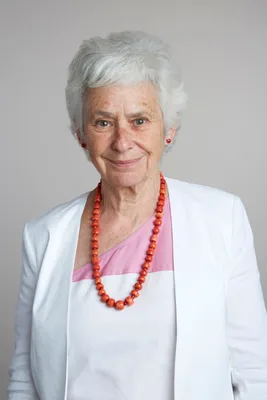
1852 REMAK, Robert (1815 – 1865)
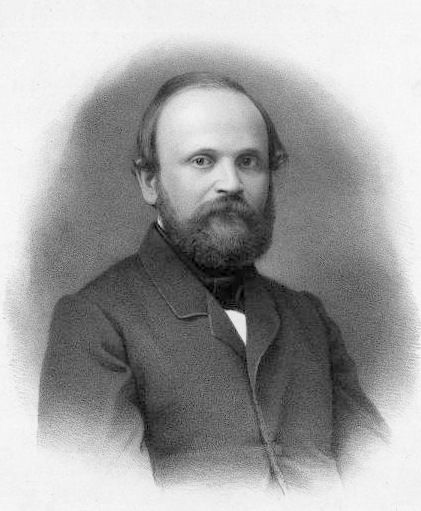
Ueber extracelluläre Entstehung thierischer Zellen und über die Vermehrung derselben durch Theilung.
Remak was the first to point out that growth of new tissues was accomplished by the division of pre-existing cells.
GMN 116 · https://historyofmedicine.com/id/2042
1861 SCHULTZE, Max Johann Sigismund (1825 – 1874)
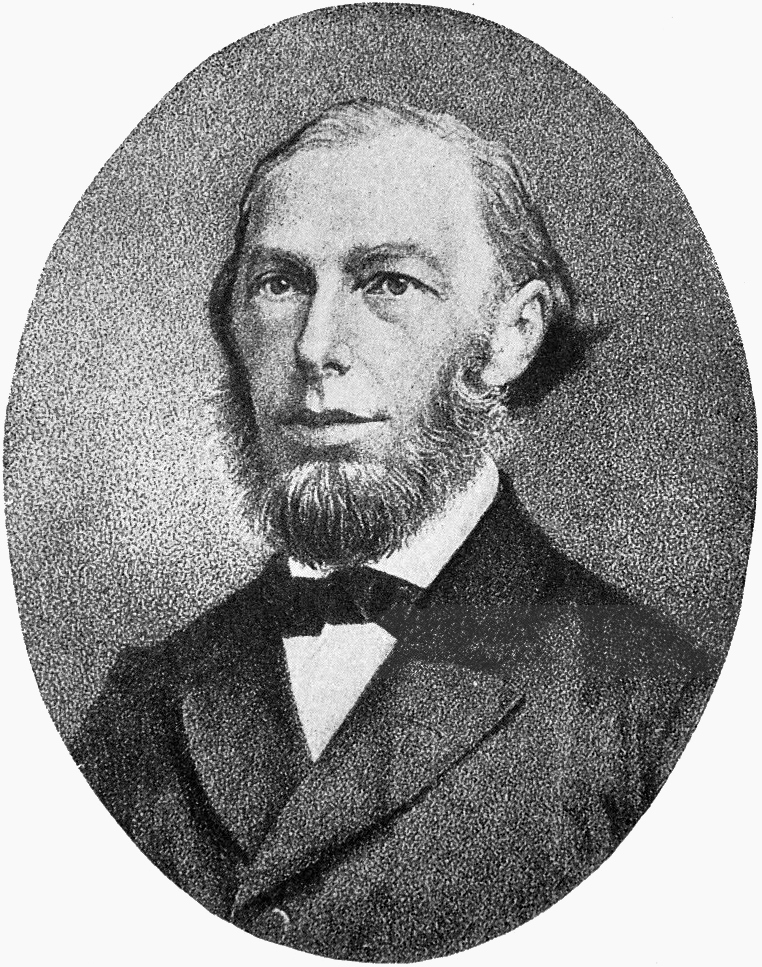
Ueber Muskelkörperchen und das, was man eine Zelle zu nennen habe.
Schultze showed the cell to be a clump of nucleated protoplasm, stating that each muscle fibre or primitive muscle bundle was developed from a single myoblast by successive divisions of its cell or nucleus. His work s…
GMN 117 · https://historyofmedicine.com/id/2047
1880 STRASBURGER, Eduard Adolf (1844 – 1912)
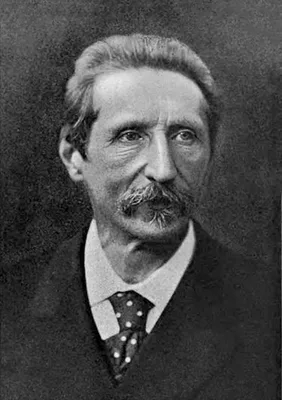
Ueber Zellbildung und Zelltheilung. 3te. Aufl.
A pioneer work on the formation and division of cells. In this third edition Strasburger established one of the principles of modern cytology, i.e., that independent cell formation does not occur but that fresh nuclei…
GMN 123 · https://historyofmedicine.com/id/2062
1883 ROUX, Wilhelm (1850 – 1924)
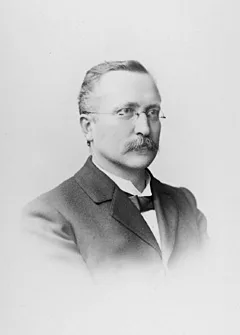
Überdie Bedeutungder Kerntheilungsfiguren.
Roux investigated why the nucleus undergoes the precise division of mitosis while the rest of the cell undergoes a rather crude division when one cell splits into two. He argued that mitosis ensures a precise halving …
GMN 229 · https://historyofmedicine.com/id/8327
1896 WILSON, Edmund Beecher (1856 – 1939)
The cell in development and inheritance.
Wilson emphasized the function of cytology in the study of embryology, heredity, evolution and general physiology. The above work has been called the single most influential treatise on cytology of the 20th century. T…
GMN 238 · https://historyofmedicine.com/id/8354
1908 MINOT, Charles Sedgwick (1852 – 1914)
The problem of age, growth and death.
Minot’s theory of aging, based on cytomorphosis and the rate of growth. This work first appeared as a paper in vol. 7 of the Popular Science Monthly, 1907.
GMN 132 · https://historyofmedicine.com/id/2149
1962 GURDON, Sir John Bertrand (1933 – )
Adult frogs derived from the nuclei of single somatic cells.
Demonstration that somatic and germinal nuclei are genetically equivalent. Using somatic cell nuclear transfer (SCNT), Gurdon (Nobel Prize 2012) transplanted cell nuclei from mature intestinal tadpole cells into enucl…
GMN 256.12 · https://historyofmedicine.com/id/8709
1966 GURDON, Sir John Bertrand (1933 – ); UEHLINGER, V.
"Fertile" intestine nuclei.
Gurdon and Uehlinger replaced the cell nucleus of frog ova with frog intestinal nuclei to generate tadpoles, some of which became fertile adult male and female frogs. In 2012 the Nobel Prize in Physiology or Medicine …
GMN 14064 · https://historyofmedicine.com/id/16375
1974 BRENNER, Sydney (1927 – 2019)
The genetics of CAENORHABDITIS ELEGANS.
In 2002 Brenner shared the Nobel Prize in Physiology or Medicine in Physiology or Medicine with H. Robert Horvitz and John Sulston "for their discoveries concerning genetic regulation of organ development and programm…
GMN 9941 · https://historyofmedicine.com/id/12129
1977 SULSTON, Sir John Edward (1942 – 2018); HORVITZ, Howard Robert (1947 – )
Post-embryonic cell lineages of the nematode Caenorhabditis elegans.
Complete map of the nematode's neurons. Sulston and Horvitz tracked every non-gonadal cell division that occurred during larval development, and published a complete description of these lineages in 1977.
GMN 9938 · https://historyofmedicine.com/id/12126
1981 MARTIN, Gail Roberta (1944 – )
Isolation of a pluripotent cell line from early mouse embryos cultured in medium conditioned by teratocarcinoma stem cells (embryonic stem cells/inner cell masses/differentiation in vitro/embryonal carcinoma cells/growth factors) .
Martin used a different approach that avoided in vivo alteration. She reasoned that an ES cell line might be obtained by culturing cells isolated from blastocysts in a medium that had previously been conditioned by an…
GMN 13961 · https://historyofmedicine.com/id/16263
1986 HORVITZ, Howard Robert (1947 – ); ELLIS, Hilary M.
Genetic control of programmed cell death in the nematode C. elegans.
Using C. elegans to investigate whether there was a genetic program controlling cell death, or apoptosis, In 1986, Horvitz identified the first "death genes", ced-3 and ced-4. He showed that functional ced-3 and ced-4…
GMN 9939 · https://historyofmedicine.com/id/12127
1991 HORVITZ, Howard Robert (1947 – ); ELLIS, Ronald E.; YUAN, Junying (1959 – )
Mechanisms and functions of cell death.
Horvitz and colleagues identified several key components in the molecular pathway of programmed cell death, including: EGL-1, a protein which activates apoptosis by inhibiting CED-9.
GMN 9940 · https://historyofmedicine.com/id/12128