1479 ARISTOTLE (ἈΡΙΣΤΟΤΈΛΗΣ) (-384 – -322); WILLEM VAN MOERBEKE, (Gulielmus de Moerbecum; William of Moerbeke) (1215 – 1286); BOËTHIUS, Anicius Manlius Severinus (420 – 524); PORRÉE, Gilbert de la [Gilbert of Poitiers, Gilbertus Poretanus or Pictaviensis] (1085 – 1154); JACOBUS VENETICUS, [James of Venice, Giacomo da Venezia, Jacobus Veneticus Grecus, Jacobus de Venetiis] (1100 – 1165)
Opera. In four parts dated: I) 15 Sept. 1479; II) 13 Oct. 1479; III) 21 Oct. 1479; IV) 8 Nov. 1479. Contents: [I] Praedicamenta, De interpretatione, Analytica priora (Tr: Boethius). Add: Porphyrius: Isagoge in Aristotelis Praedicamenta (Tr: Boethius). Gilbertus Porretanus: Liber sex principiorum. Boethius: Divisiones. [II] Analytica posteriora (Tr: Jacobus Veneticus). [III] Sophistici elenchi, Topica (Tr: Boethius). [IV] Physica (Tr: Guilelmus de Moerbeka).
Aristotle, at one time tutor to Alexander the Great, was, among other things, the first observational biologist, and the founder of comparative anatomy. His views had a profound influence in determining the direction …
GMN 17 · https://historyofmedicine.com/id/39
1483 ARISTOTLE (ἈΡΙΣΤΟΤΈΛΗΣ) (-384 – -322); AVERROËS [IBN RUSHD (ARABIC: ابن رشد), FULL NAME ʾABŪ L-WALĪD MUḤAMMAD IBN ʾAḤMAD IBN RUŠD] (1126 – 1198); WILLEM VAN MOERBEKE, (Gulielmus de Moerbecum; William of Moerbeke) (1215 – 1286); BOËTHIUS, Anicius Manlius Severinus (420 – 524); JACOBUS VENETICUS, [James of Venice, Giacomo da Venezia, Jacobus Veneticus Grecus, Jacobus de Venetiis] (1100 – 1165); VERNIA, Nicoletto (1420 – 1499); SCOT, Michael [Michael Scotus] (1175 – 1232); DURANDUS DE ALVERNIA (1250 – ); PORPHYRIOS, [Porphyri; Πορφύριος] (234 – 305)
Opera. With the commentary of Averroes. Edited by Nicoletus Vernia. 8 parts.
First edition of the collected works of Aristotle with the commentaries of Averroes, by which Aristotle was mainly studied during the Middle Ages. The purpose of Vernia's edition was to provide an accurate edition of …
GMN 9399 · https://historyofmedicine.com/id/11582
1495 –1498 ARISTOTLE (ἈΡΙΣΤΟΤΈΛΗΣ) (-384 – -322); THEOPHRASTUS OF ERESOS (ΘΕΌΦΡΑΣΤΟΣ) (371 – 287); PORPHYRIOS, [Porphyri; Πορφύριος] (234 – 305); ALEXANDER OF APHRODISIAS, [ Ἀλέξανδρος ὁ Ἀφροδισιεύς] (170 – ); PHILO OF ALEXANDRIA, (Φίλων; Philo Judaeus)
Aristotle. [Opera omnia]. 5 vols.
Between November 1495 and June 1498 scholar printer Aldus Manutius (Teobaldo Mannucci) of Venice issued the first edition in the original Greek of Aristotle's Opera omnia. The set appeared in five thick quarto or smal…
GMN 8395 · https://historyofmedicine.com/id/10572
1551 –1587 GESNER, Conrad [Konrad Gessner] (1516 – 1565)
Historia animalium. 5 vols.
Gesner's Historia animalium is considered one of the starting points of modern zoology; it contains 4,500 pages and nearly 1,000 woodcuts, some by Albrecht Dürer. The illustrations are the first original zoological il…
GMN 280 · https://historyofmedicine.com/id/8815
1725 MARSILI, Luigi Ferdinando [MARSIGLI] (1658 – 1730)
Histoire physique de la mer.
The first book devoted entirely to marine science and the first oceanographic study of a single region. Marsigli conducted an intensive investigation of the Gulf of Lyon in the south of France, taking soundings to obt…
GMN 11223 · https://historyofmedicine.com/id/13420
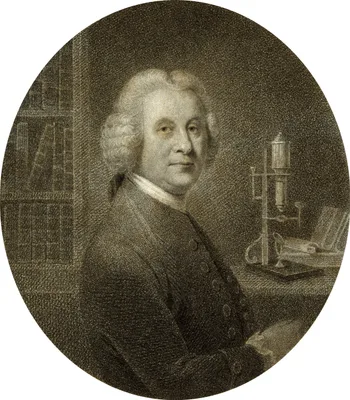
1743 BAKER, Henry (1698 – 1774)
An attempt towards a natural history of the polype.
GMN 306 · https://historyofmedicine.com/id/109
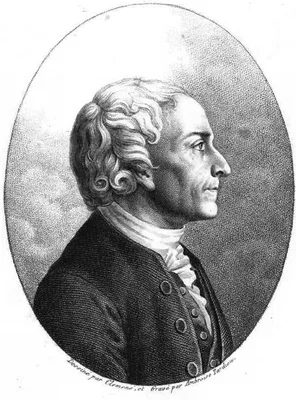
1744 TREMBLEY, Abraham (1710 – 1784)
Mémoires, pour servir à l’histoire d’un genre de polypes d’eau douce, à bras en forme de cornes.
Trembley discovered the hydra and was the first to observe in it asexual reproduction, regeneration, and photosensitivity in an animal without eyes. His experiments were of great importance in the study of regeneratio…
GMN 307 · https://historyofmedicine.com/id/113
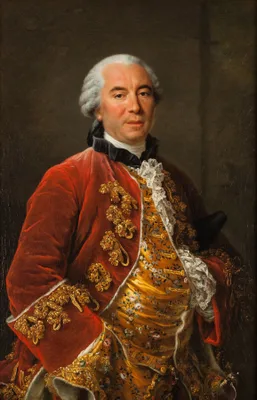
1749 –1789 BUFFON, Georges-Louis Leclerc, Comte de (1707 – 1788)
Histoire naturelle générale et particulière…. 44 vols., plus atlas.
This vast work is divided into seven parts. I: Histoire naturelle générale et particulière…15 vols., by Buffon and L.J.M. Daubenton (1749-67). II: Histoire naturelle des oiseaux. 9 vols., by Buffon, P. Guéneau de Mont…
GMN 324 · https://historyofmedicine.com/id/193
1755 ELLIS, John (1710 – 1776)
An essay towards the natural history of the corallines, and other marine productions of the like kind, commonly found on the coasts of Great Britain and Ireland. To which is added the description of a large marine polype taken near the North Pole, by the whale-fishers, in the summer 1753.
The first work to state the animal nature of corals, which had previously been regarded as marine plants. It has been asserted that although unsigned, some of the plates are after drawings by Ehret. Digital facsimile …
GMN 12706 · https://historyofmedicine.com/id/14951
1773 WALSH, John (1725 – 1795)
Of the electric property of the torpedo.
The first accurate study of the electrical organs of the torpedo fish were made by Walsh, who was given the Copley Medal of the Royal Society for his work on the subject. Walsh proved that the shock of the torpedo was…
GMN 589 · https://historyofmedicine.com/id/405
1817 CUVIER, Jean Léopold Chrétien Frédéric "Georges" (1769 – 1832)
Le règne animal. 4 vols.
Second edition in five vols., 1829–1830. After Cuvier's death 12 "disciples" of Cuvier brought out a third edition in 22 vols. from 1836 to 1849. The 12 "disciples" were Jean Victor Audouin (insects), Gerard Paul Desh…
GMN 327 · https://historyofmedicine.com/id/173
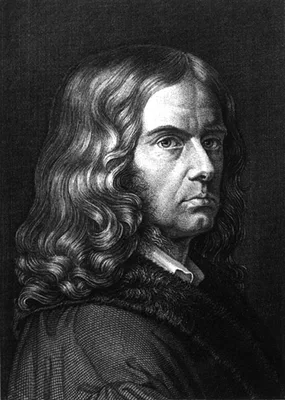
1819 CHAMISSO, Adelbert von (1781 – 1838)
De animalibus quibusdam e classe vermium Linneana in circumnavigator terra auspicante Comite N. Romanzoff duce Ottone de Kotzebue annis 1815, 1816, 1817, 1818. Fasciculus primus. De Salpa.
Chamisso was naturalist on the Kotzebue voyage of 1815-1818. This monograph on certain Vermes included the first description of several of the tunicates and the earliest use of the expression “alternation of generatio…
GMN 317 · https://historyofmedicine.com/id/151
1832 OWEN, Sir Richard (1804 – 1892)
Memoir on the pearly nautilus (Nautilus pompilius, Linn.).
GMN 325 · https://historyofmedicine.com/id/167
1842 DARWIN, Charles Robert (1809 – 1882)
The structure and distribution of coral reefs. Being the first part of the geology of the voyage of the Beagle, under the command of Capt. Fitzroy, R. N. During the years 1832 to 1836.
With slight modification, Darwin's work remains the accepted explanation for these phenomena. "Even if he had done nothing else, the theory of the coral islands alone would have placed Darwin in the very front of inve…
GMN 8916 · https://historyofmedicine.com/id/11094
1857 –1877 AGASSIZ, Louis Jean Rodolphe (1807 – 1873); AGASSIZ, Alexander Emmanuel Rodolphe (1835 – 1910)
Contributions to the natural history of the United States. 5 vols.
Vols. 1-4 by Louis Agassiz were published from 1857-1862; Vol. 5, North American starfishes by Alexander Agassiz, appeared in 1877. Louis Agassiz was, for his time, the leading comparative anatomist in America and a v…
GMN 333 · https://historyofmedicine.com/id/217
1859 –1969 BRONN, Heinrich Georg (1800 – 1862)
Die Klassen und Ordnungen des Thier-Reichs, wissenschaftlich dargestellt in Wort und Bild.
This great systematic work, begun by Bronn, was continued by other naturalists. It deals with both recent and fossil zoology. Bronn wrote the volumes dealing with Amorphozoa, Actinozoa, and Malacozoa, published 1859-1…
GMN 334 · https://historyofmedicine.com/id/219
1859 FORBES, Edward (1815 – 1854); GODWIN-AUSTEN, Robert Alfred Gloyn (1808 – 1884)
The natural history of the European seas. Edited and continued by Robert Godwin-Austen.
Digital facsimile from Biodiversity Heritage Library at this link.
GMN 9972 · https://historyofmedicine.com/id/12161
1860 GOSSE, Philip Henry (1810 – 1888)
Actinologia Britannica. A history of the British sea-anemones and corals. With coloured figures of the species and principal varieties.
Digital facsimile from Biodiversity Heritage Library at this link.
GMN 11805 · https://historyofmedicine.com/id/14007
1867 RANSONNET-VILLEZ, Eugen, Freiherr von (1838 – 1926)
Sketches of the inhabitants, animal life and vegetation in the lowlands and high mountains of Ceylon: As well as of the submarine scenery near the coast taken from a diving bell.
This work was illustrated with 26 tinted lithographs of natives and scenery in Sri Lanka after drawings from nature by the author, of which four were colored reproductions of underwater scenes made by the author using…
GMN 11705 · https://historyofmedicine.com/id/13906
1872 DANA, James Dwight (1813 – 1895)
Corals and coral islands.
Digital facsimile from Biodiversity Heritage Library at this link.
GMN 11803 · https://historyofmedicine.com/id/14005
1873 THOMSON, Charles Wyville (1830 – 1882)
The depths of the sea. An account of the general results of the dredging cruises of H. M. SS. 'Porcupine' and 'Lightning during the summers of 1868, 1869, and 1870, under the scientific direction of Dr. Carpenter, F.R.S., J. Gwyn Jeffreys, F.R.S., and Dr. Wyville Thomson, F.R.S.
Digital facsimile from the Internet Archive at this link.
GMN 7483 · https://historyofmedicine.com/id/9655
1877 –1880 ROMANES, George John (1848 – 1894)
Observations on the locomotor system of Medusae. 3 pts.
Charles Sherrington described the significance of Romanes' research on jellyfish in terms of its impact on cardiac physiology: "Romanes's observations carried out with simple means were novel and fundamental. The ques…
GMN 632 · https://historyofmedicine.com/id/573
1877 MÖBIUS, Karl August (1825 – 1908)
Die Auster und die Austernwirtschaft.
In this study of oyster culture precipitated by the impoverishment of natural oyster beds, Möbius provided the earliest description of a marine animal community maintained in a state of equilibrium by limitations of r…
GMN 145.61 · https://historyofmedicine.com/id/2496
1877 THOMSON, Charles Wyville (1830 – 1882)
The voyage of the "Challenger": The Atlantic: A preliminary account of the general results of th exploring voyage of H.M.S. "Challenger" during the year 1873 and the early part of the year 1876. 2 vols.
Digital facsimile of the first American edition (1878) from the Biodiversity Heritage Library, Internet Archive, at this link.
GMN 7484 · https://historyofmedicine.com/id/9656
1879 MOSELEY, Henry Nottidge (1844 – 1891)
Notes by a naturalist on the Challenger; being an account of observations made during the Voyage of H.M.S.Challenger round the world in the years 1872-1876. Under the Command of Capt. Sir G. S.Nares and Capt. F. T. Thomson.
Includes descriptions of the natural history of Teneriffe, St. Thomas, Bermuda; Azores, Madeira, Cape Verdes; St. Paul’s Rocks and Fernando Do Norhona; Bahia; Tristan Da Cunha, Inaccessible Island; Nightingale Island;…
GMN 9627 · https://historyofmedicine.com/id/11814
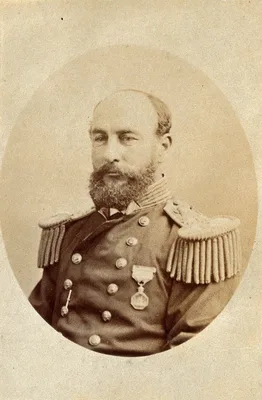
1880 –1895 MURRAY, John (1841 – 1914); THOMSON, Charles Wyville (1830 – 1882); NARES, George Strong (1831 – 1915)
Report on the scientific results of the Voyage of the H.M.S. Challenger during the Years 1873-76, under the command of Captain George S. Nares… and Captain Frank Tourle Thomson. 42 vols. in 50.
This work edited by John Murray and Charles Wyville Thomson, and completed by Murray after Thomson's death, was published over a 15 year period, and included about 29,500 pages and more than 3,280 plates. It treated i…
GMN 9626 · https://historyofmedicine.com/id/11813
1893 SAVILLE-KENT, William (1845 – 1908)
The Great Barrier Reef of Australia; Its products and potentialities, containing an account, with copious coloured and photographic illustrations (the latter here produced for the first time), of the corals and coral reefs, pearl and pearl-shell, bêche-de-mer, other fishing Industries, and the marine fauna of the Australian Great Barrier region.
Digital facsimile from Biodiversity Heritage LIbrary at this link.
GMN 11810 · https://historyofmedicine.com/id/14012
1899 –1904 HAECKEL, Ernest Heinrich Philipp August (1834 – 1919)
Kunstformern der Natur.
Includes 100 mostly color lithographic and half-tone prints based on Haeckel's sketches and watercolors. Issued in 10 fascicules of 10 prints each and collected into a bound volume in 1904. Digital facsimile of vol. 1…
GMN 7998 · https://historyofmedicine.com/id/10174
1908 –1952 ARISTOTLE (ἈΡΙΣΤΟΤΈΛΗΣ) (-384 – -322); SMITH, John Alexander (1863 – 1939); ROSS, Willliam David (1877 – 1971)
The works of Aristotle translated into English. Edited by J.A. Smith and W.D. Ross. 12 vols.
De motu animalium. De incessu animalium. In his Works, edited by J.A. Smith and W.D. Ross, 5, 698a-714b., Oxford, 1912. De Anima. In his Works… translated into English. Edited by J. A. Smith and W. D. Ross. 3, 402a-35…
GMN 18 · https://historyofmedicine.com/id/4491
1912 MURRAY, John (1841 – 1914); HJORT, Johan (1869 – 1948)
The depths of the ocean. A general account of the modern science of oceanography based largely on the scientific researches of the Norwegian Steamer Michael Sars in the North Atlantic.
Digital facsimile from the Biodiversity Heritage Library, Internet Archive at this link.
GMN 7482 · https://historyofmedicine.com/id/9654
1912 WOOD JONES, Frederick (1879 – 1954)
Coral and atolls. A history and description of the Keeling-Cocos Islands, with an account of their fauna and flora, and a discussion of the method of development and transformation of coral structures in general.
Wood Jones was one of the first to study coral reefs as living organisms interacting with their environment. Prior to Wood Jones's book most of the work on corals was done from the systematics viewpoint using specimen…
GMN 11812 · https://historyofmedicine.com/id/14014
1962 SHIMOMURA, Osamu (1928 – 2018); JOHNSON, Frank H.; SAIGA, Yo
Extraction, purification and properties of Aequorin, a bioluminescent protein from the luminous hydromedusan, Aequorea.
Shimomura reported the discovery of green fluorescent protein (GFP) in a single footnote in this paper that was otherwise devoted to an entirely different bioluminescent protein: photoprotein aequorin. This may be the…
GMN 13562 · https://historyofmedicine.com/id/15839
1965 –1991 ARISTOTLE (ἈΡΙΣΤΟΤΈΛΗΣ) (-384 – -322); BALME, David Mowbray (1912 – 1989); PECK, A. L.
History of animals. Vol. 1, Books 1-3; Vol. 2, Books 4-6; Vol. 3, Books 7-10. Vols. 1 & 2 edited with an introduction and translated by A. L. Peck; Vol. 3 edited and translated by D. M. Balme.
Loeb Classic Library.
GMN 9075 · https://historyofmedicine.com/id/11254
1971 YOUNG, John Zachary (1907 – 1997)
The anatomy of the nervous system of Octopus vulgaris.
GMN 7159 · https://historyofmedicine.com/id/9326
1972 LINKLATER, Eric (1899 – 1974)
The voyage of the Challenger.
GMN 9628 · https://historyofmedicine.com/id/11815
2002 ARISTOTLE (ἈΡΙΣΤΟΤΈΛΗΣ) (-384 – -322); BALME, David Mowbray (1912 – 1989); GOTTHELF, Allan Stanley (1942 – 2013)
Aristotle: Historia animalium. Volume 1, Books I-X: Text. Edited by D. M. Balme. Prepared for publication by Allan Gotthelf.
Critical edition based on a collation of the 26 known extant manuscripts and a study of the early Latin translations. Begun by Balme in 1975, with his work towards the Loeb editio minor of books VII–X, this edition in…
GMN 9076 · https://historyofmedicine.com/id/11255
2002 ARISTOTLE (ἈΡΙΣΤΟΤΈΛΗΣ) (-384 – -322); LENNOX, James G. (1948 – )
Aristotle: On the parts of the animals I-IV. Translated with commentary by James G. Lennox.
GMN 9078 · https://historyofmedicine.com/id/11257
2002 DAMKAER, David M.
The copedologist's cabinet: A biographical and bibliographical history.
"Copepod crustaceans are the most numerous multicellular animals on earth. They occur in every free-living and parasitic aquatic niche. Copepods have been known since the time of Aristotle, yet there has never been a …
GMN 10078 · https://historyofmedicine.com/id/12267
2015 BOWEN, James
The coral reef era: From discovery to decline. A history of scientific investigation from 1600 to the anthropocene epoch.
GMN 11807 · https://historyofmedicine.com/id/14009
2019 PORTER, James W.
The professional library of James W. Porter on corals and coral reefs.
GMN 11804 · https://historyofmedicine.com/id/14006

![SCOT, Michael [Michael Scotus] (1175 – 1232)](/media/portraits/12461)