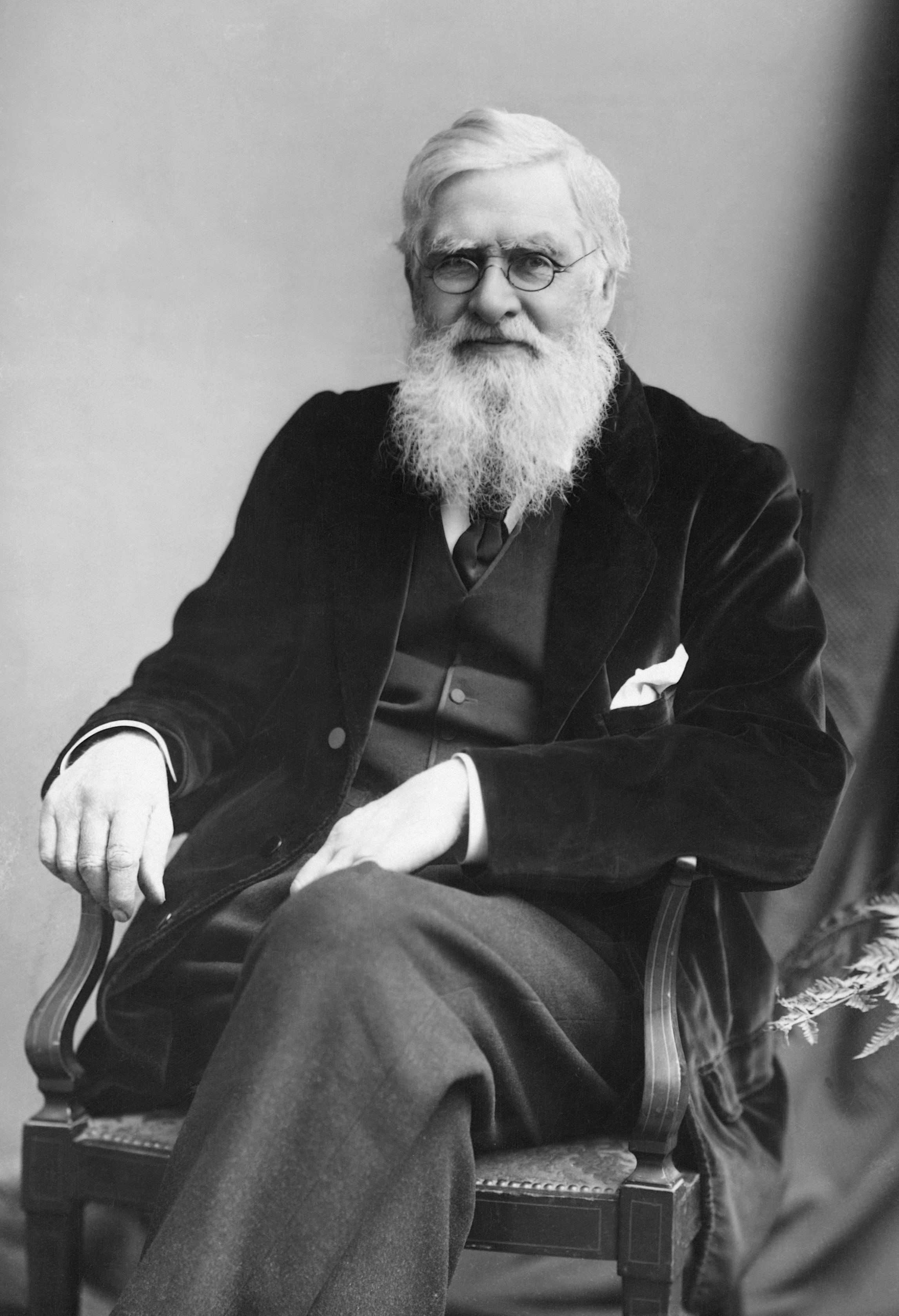
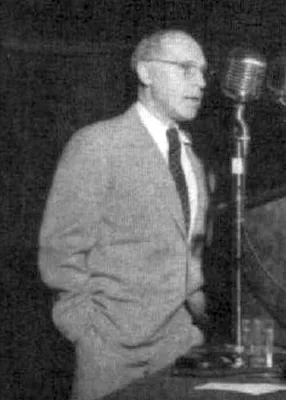
1903 WALLACE, Alfred Russel (1823 – 1913)
Man's place in the universe. A study of the results of scientific research in relation to the unity or plurality of worlds.
The first serious attempt by a biologist to evaluate the likelihood of life on other planets. Wallace concluded that the Earth was the only planet in the solar system that could possibly support life, mainly because i…
GMN 7382 · https://historyofmedicine.com/id/9554
1907 WALLACE, Alfred Russel (1823 – 1913)
Is Mars habitable?
"His treatment of Mars in this book [Man's Place in the Universe] was brief, and in 1907, Wallace returned to the subject with a book Is Mars Habitable? to criticise the claims made by Percival Lowell that there were …
GMN 9181 · https://historyofmedicine.com/id/11360
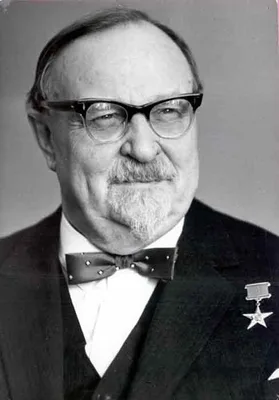
1924 OPARIN, Alexander Ivanovich (1894 – 1980)
Proiskhozhedenie Zhizni.
Oparin’s central thesis was that the first organisms to emerge in the anaerobic environment of the primitive Earth must have been heterotrophic bacteria. He proposed that life had been preceded by a lengthy period of …
GMN 7384 · https://historyofmedicine.com/id/9556
1929 HALDANE, John Burdon Sanderson (1892 – 1964)
The origin of life.
Haldane suggested that organic molecules could have been synthesized in an early atmosphere of carbon dioxide.
GMN 7467 · https://historyofmedicine.com/id/9639
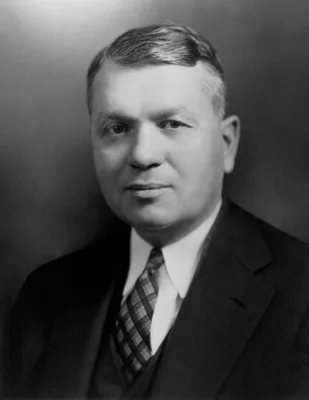
1952 UREY, Harold Clayton (1893 – 1981)
The planets: Their origin and development.
Urey coined the term cosmochemistry. He speculated that the early terrestrial atmosphere was probably composed of ammonia, methane, and hydrogen. One of his graduate students, Stanley Miller, showed in the Miller–Urey…
GMN 7469 · https://historyofmedicine.com/id/9641
1953 MILLER, Stanley Lloyd (1930 – 2007)
Production of amino acids under possible primitive earth conditions.
The Miller–Urey experiment or Miller experiment, a classic experiment investigating abiogenesis, simulated the conditions thought at the time to be present on the early Earth, and tested the chemical origin of life un…
GMN 7383 · https://historyofmedicine.com/id/9555
1961 MULLER, Hermann Joseph (1890 – 1967)
Genetic nucleic acid: Key material in the origin of life.
Muller was one of the earliest proponents of a genetics-first theory for the origin of life.
GMN 7468 · https://historyofmedicine.com/id/9640
1967 BERNAL, John Desmond (1901 – 1971)
The origin of life.
An outstanding illustrated synthesis of the topics as they stood in 1967, including Chapter 2: "Notions of the origins of life in the past," summarizing prior theories. Appendix 1 publishes the English translation of …
GMN 7466 · https://historyofmedicine.com/id/9638
1969 THE LUNAR SAMPLE PRELIMINARY EXAMINATION TEAM
Preliminary examination of lunar samples from Apollo 11: A physical, chemical, mineralogical, and biological analysis of 22 kilograms of lunar rocks and fines.
On p. 1226 the massive number of authors reported that "microscopic, culture, injection and inoculation studies on many different organisms to include mice, fish, invertebrates, insects, plants and lower animals such …
GMN 14055 · https://historyofmedicine.com/id/16365
2000 FRY, Iris
The emergence of life on earth. An historical and scientific overview.
GMN 9192 · https://historyofmedicine.com/id/11373
2004 DICK, Stephen J. (1949 – ); STRICK, James E.
The living universe: NASA and the development of astrobiology.
GMN 7380 · https://historyofmedicine.com/id/9552