1656 BOYM, Michal Piotr (1612 – 1659)
Flora sinensis, fructus floresque humillime porrigens serenissimo et potentissimo Leopoldo Ignatio, Hungariae regi florentissimo, &c. Fructus saecul promittenti Augustissimos.
The first description published in Europe of an ecosystem of the Far East, including animals as well as plants, with particular attention to Chinese fruit bearing plants, and medicinal properties of Chinese plants. Di…
GMN 8591 · https://historyofmedicine.com/id/10768
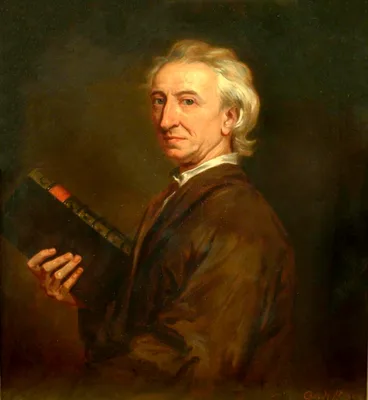
1661 EVELYN, John (1620 – 1706)
Fumifugium: or the inconveniencie of the aer and smoak of London dissipated. Together with some remedies humbly proposed.
A pioneering attack on air pollution caused by “the hellish and dismall cloud of sea-coal” which perpetually enveloped London. Of course, the problems Evelyn wrote about did not go away, and the work continued to be r…
GMN 145.5 · https://historyofmedicine.com/id/8791
1664 EVELYN, John (1620 – 1706)
Sylva, or a discourse of forest-trees, and the preservation of timber in His Majesty’s dominions.
A protest against the careless destruction of England’s forests to fuel the furnaces of the glass and iron industries. The work was influential in establishing a much-needed program of reforestation that had a lasting…
GMN 145.51 · https://historyofmedicine.com/id/2427
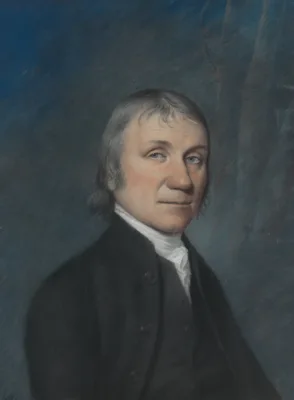
1772 PRIESTLEY, Joseph (1733 – 1804)
Observations on the different kinds of air.
The isolation of oxygen was first achieved by Priestley. He also demonstrated that plants immersed in water give off oxygen and that this gas is essential for animal life.
GMN 920 · https://historyofmedicine.com/id/116
1779 INGEN-HOUSZ, Jan (1730 – 1799)
Experiments on vegetables, discovering their great power of purifying the common air in the sun-shine, and of injuring it in the shade at night. To which is joined, a new method of examining the accurate degree of salubrity of the atmosphere.
Discovery of photosynthesis. Ingen-Housz showed that the green parts of plants, when exposed to light, fix the free carbon dioxide of the atmosphere, but that in darkness plants have no such power. Thus he proved that…
GMN 103 · https://historyofmedicine.com/id/8969
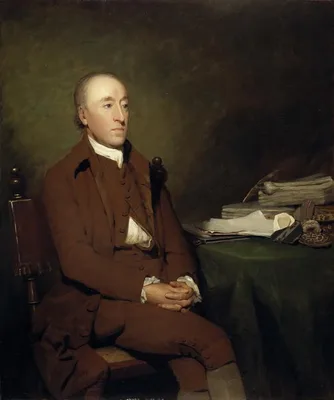
1788 HUTTON, James (1726 – 1797)
The theory of rain.
In this paper on the operation of the water-cycle in meteorology Hutton hypothesized that rain was caused by a mixture of air currents of differing temperatures, either saturated or nearly saturated with moisture. "Hi…
GMN 13593 · https://historyofmedicine.com/id/15872
1802 RAUCH, François Antoine (1777 – 1837)
Harmonie hydro-végétale et météorologique, ou recherches sur les moyens de recréer avec nos forêts la force des températures et la régularité des saisons, par des plantations raisonnées. 2 vols.
Rauch was particularly concerned with deforestation, which not only affected the agriculture and scenery of the countryside, but also the whole ecological balance of crops, flora and fauna, and human interaction with …
GMN 7067 · https://historyofmedicine.com/id/9234
1804 SAUSSURE, Nicolas-Théodore de (1767 – 1845)
Recherches chimiques sur la végétation.
In this foundation work on phytochemistry, Saussure analysed the chief active components of plants, their synthesis and decomposition. He specified the relationships between vegetation and the environment. He showed t…
GMN 145.54 · https://historyofmedicine.com/id/2445
1805 HUMBOLDT, Friedrich Wilhelm Heinrich Alexander von (1769 – 1859); BONPLAND, Aimé Jacques Alexandre (1773 – 1858)
Essai sur la géographie des plantes; accompagné d’un tableau physique des régions équinoxiales.
One of the first works on the geographical distribution of plants. Humboldt was a pioneer student of geographical–ecological plant associations. The sheets of this work were reissued as Vol. I of the authors' Voyage a…
GMN 145.55 · https://historyofmedicine.com/id/2459
1807 –1834 HUMBOLDT, Friedrich Wilhelm Heinrich Alexander von (1769 – 1859); BONPLAND, Aimé Jacques Alexandre (1773 – 1858)
Voyage aux régions équinoxiales du nouveau continent, fait en 1799, 1800, 1801, 1802, 1803 et 1804. 34 vols.
In 1799 Humboldt and Bonpland embarked on a six-year tour of research through South America and Mexico, a trip which would afterwards be called, justifiably, "the scientific discovery of America." The two amassed exha…
GMN 7452 · https://historyofmedicine.com/id/9624
1824 EDWARDS, William Frédéric (1776 – 1842)
De l’influence des agens physiques sur la vie.
Edwards studied the influence of environmental factors on animal life, concluding that vital processes depend on external physical and chemical forces but are not entirely controlled by them. The work includes an acco…
GMN 145.56 · https://historyofmedicine.com/id/8796
1832 EDWARDS, William Frédéric (1776 – 1842); HODGKIN, Thomas (1798 – 1866); LISTER, Joseph Jackson (1786 – 1869); HOWARD, Luke (1772 – 1864); POUILLET, Claude Servais Mathias (1790 – 1868); FISHER, Alder
On the influence of physical agents on life, by W. F. Edwards. Translated from the French by Dr. Hodgkin and Dr. Fisher. To which are added, in the appendix, some observations on electricity by Dr. Edwards, M. Pouillet, and Luke Howard; on absorption, and the uses of the spleen, by Dr. Hodgkin; on the microscopic characters of the animal tissues and fluids, by J. J. Lister and Dr. Hodgkin, and some notes to the work of Dr. Edwards.
Digital facsimile from Google Books at this link.
GMN 12197 · https://historyofmedicine.com/id/14407
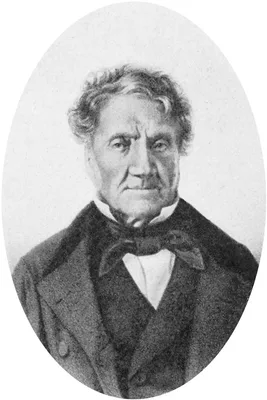
1837 DUTROCHET, René Joachim Henri (1776 – 1847)
Mémoires pour servir à l’histoire anatomique et physiologique des végétaux et des animaux. 2 vols. and atlas.
Dutrochet asserted that respiration follows the same pattern in both animals and plants, showing that the minute openings on the surface of leaves (the stomata) communicate with lacunae in deeper tissue. He also demon…
GMN 110 · https://historyofmedicine.com/id/1639
1842 DARWIN, Charles Robert (1809 – 1882)
The structure and distribution of coral reefs. Being the first part of the geology of the voyage of the Beagle, under the command of Capt. Fitzroy, R. N. During the years 1832 to 1836.
With slight modification, Darwin's work remains the accepted explanation for these phenomena. "Even if he had done nothing else, the theory of the coral islands alone would have placed Darwin in the very front of inve…
GMN 8916 · https://historyofmedicine.com/id/11094
1844 DARWIN, Charles Robert (1809 – 1882)
Observations on the volcanic islands, visited during the voyage of the H.M.S. Beagle, together with some brief notices on the geology of Australia and the Cape of Good Hope. Being the second part of the geology of the voyage of the Beagle.
GMN 8917 · https://historyofmedicine.com/id/11095
1845 –1862 HUMBOLDT, Friedrich Wilhelm Heinrich Alexander von (1769 – 1859)
Kosmos. Entwurf einer physischen Weltbeschreibung. 5 vols. and atlas.
This work includes founding material in geography, plant geography, orography, climatology and meterology, among other sciences, and citations to 9,000 sources. The atlas was issued without Humboldt's participation, a…
GMN 8223 · https://historyofmedicine.com/id/10399
1846 DARWIN, Charles Robert (1809 – 1882)
Geological observations on South America. Being the third part of the geology of the voyage of the Beagle.
The third and last of Darwin's geological reports on the Beagle voyage. In it he described the pampas, the plateaus and the Andres, showing how they had been gradually pushed up in the way that Charles Lyell surmised …
GMN 8918 · https://historyofmedicine.com/id/11096
1849 BALFOUR, Edward Green (1813 – 1889)
Notes on the influence exercised by trees in inducing rain and preserving moisture.
Digital facsimile from the Internet Archive at this link.
GMN 11757 · https://historyofmedicine.com/id/13957
1855 CANDOLLE, Alphonse Pyramus de (1806 – 1893)
Géographie botanique raisonnée ou exposition des faits principaux et des lois concernant la distribution géographique des plantes de l'époque actuelle. 2 vols.
This work work organized and systematized the huge mass of data being collected by the numerous scientific expeditions of the time to explain the geographical distribution of plants. Digital facsimile from BnF Gallica…
GMN 11884 · https://historyofmedicine.com/id/14088
1856 FOOTE, Eunice Newton (1819 – 1888)
Circumstances affecting the heat of the sun's rays.
Foote was the first scientist known to have experimented on the warming effect of sunlight on different gases. In this two-page paper she theorized that changing the proportion of carbon dioxide in the atmosphere woul…
GMN 13464 · https://historyofmedicine.com/id/15738
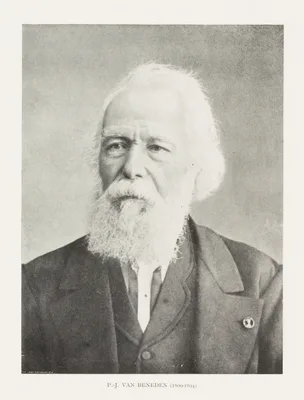
1858 BENEDEN, Pierre-Joseph van (1809 – 1894)
Mémoire sur les vers intestinaux.
Beneden's treatise on the development, transformation, and life-histories of parasitic worms won the Grand prix des sciences physiques of the Institut de France. It was published in the "International Scientific Serie…
GMN 10278 · https://historyofmedicine.com/id/12469
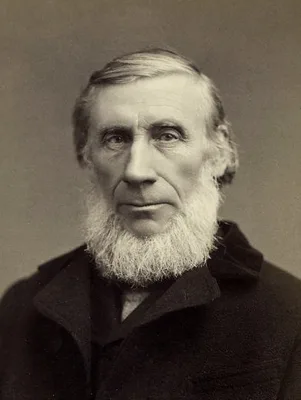
1861 TYNDALL, John (1820 – 1893)
On the absorption and radiation of heat by gases and vapours, and on the physical connexion of radiation, absorption and conduction.
Demonstration that gases including carbon dioxide and water can absorb heat, aand could change climate. Digital facsimile from royalsocietypublishing.org at this link.
GMN 13465 · https://historyofmedicine.com/id/15739
1864 MARSH, George Perkins (1801 – 1882)
Man and nature; or, physical geography as modified by human action.
“The fountainhead of the conservation movement” (Mumford). This is a comprehensive scientific account of humanity's enormous and often destructive impact on the physical world. Marsh warned of the dangers of the reckl…
GMN 145.59 · https://historyofmedicine.com/id/2482
1872 SMITH, Robert Angus (1817 – 1884)
Air and rain. The beginnings of a chemical climatology.
In this work on the industrial causes of pollution Smith coined the term acid rain. "The corrosive effect of polluted, acidic city air on limestone and marble was noted in the 17th century by John Evelyn, who remarked…
GMN 8972 · https://historyofmedicine.com/id/11151
1877 MÖBIUS, Karl August (1825 – 1908)
Die Auster und die Austernwirtschaft.
In this study of oyster culture precipitated by the impoverishment of natural oyster beds, Möbius provided the earliest description of a marine animal community maintained in a state of equilibrium by limitations of r…
GMN 145.61 · https://historyofmedicine.com/id/2496
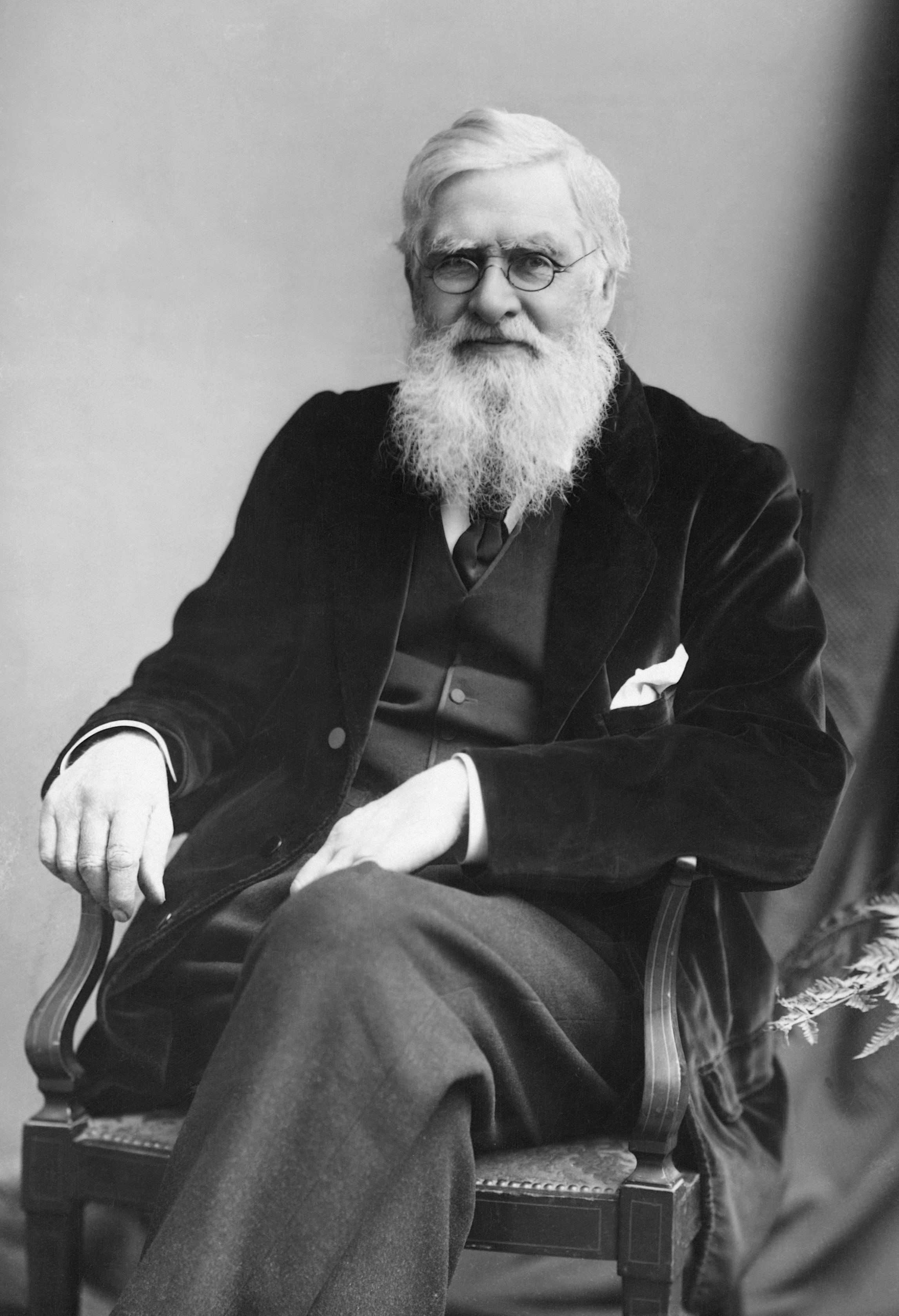
1878 WALLACE, Alfred Russel (1823 – 1913)
Tropical nature and other essays.
"Wallace's extensive work in biogeography made him aware of the impact of human activities on the natural world. In Tropical Nature and Other Essays (1878), he warned about the dangers of deforestation and soil erosio…
GMN 9174 · https://historyofmedicine.com/id/11353
1881 DARWIN, Charles Robert (1809 – 1882)
The formation of vegetable mould through the action of worms, with observations on their habits.
Darwin's last book, published only 6 months before his death, but reporting on a subject that he had studied for more than 50 years. "He showed the services performed by earthworms in eating leaves and grinding earth …
GMN 8913 · https://historyofmedicine.com/id/11091
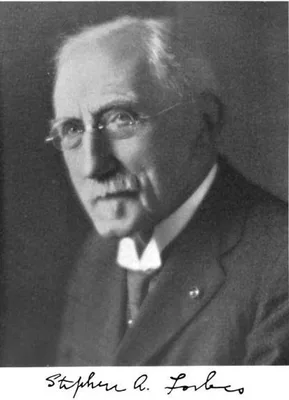
1887 FORBES, Stephen Alfred (1844 – 1930)
The lake as a microcosm.
Forbes was the first to apply ecological principles to limnology. He emphasized population regulation and the dynamic nature of the community.
GMN 145.62 · https://historyofmedicine.com/id/2503
1889 BERTHELOT, Pierre Eugène Marcellin (1827 – 1907)
Fixation de l’azote par la terre végétale nue ou avec le concours des légumineuses.
Berthelot showed that bacteria acting in clay soils are able to fix nitrogen.
GMN 714 · https://historyofmedicine.com/id/977
1890 WINOGRADSKY, Sergei Nikolaievich
Sur les organisms de la nitrification.
In his research on nitrifying bacteria Winogradsky discovered the first known form of chemoautotrophy in which organisms obtain energy by oxidation of electron donors in their environments without the intervention of …
GMN 12303 · https://historyofmedicine.com/id/14525
1896 ARRHENIUS, Svante August (1859 – 1927)
Ueber den Einfluss des atmosphärischen Kohlensäuregehalts auf die Temperatur der Erdoberfläche.
Arrhenius used basic principles of physical chemistry to estimate the extent to which increases in atmospheric carbon dioxide are responsible for the Earth's increasing surface temperature, the "greenhouse effect."
GMN 13046 · https://historyofmedicine.com/id/15297
1898 SCHIMPER, Andreas Franz Wilhelm (1856 – 1901)
Pflanzengeographie auf Physiologischer Grundlage.
In this work on the geographical distribution of plants Schimper coined the terms tropical rainforest and sclerophyll. English translation by William R. Fisher, revised and edited by Percy Groom and Isaac Bayley Balfo…
GMN 8536 · https://historyofmedicine.com/id/10713
1901 BEIJERINCK, Martinus Willem (1851 – 1931)
Über oligonitrophile Mikroben.
Discovery of nitrogen fixation, the process by which diatomic nitrogen gas is converted to ammonium ions and becomes available to plants. Bacteria perform nitrogen fixation, dwelling inside root nodules of certain pla…
GMN 12789 · https://historyofmedicine.com/id/15035
1907 ARRHENIUS, Svante August (1859 – 1927)
Das Werden der Welten. Mit Unterstützung des Verfassers aus dem schwedischen übersetzt von L. Bamberger.
In this work Arrhenius predicted the possibility of man-made global warming. His prediction that significant global warming would take ~3000 years to develop is now recognized as a substantial underestimate due in par…
GMN 8152 · https://historyofmedicine.com/id/10328
1911 WALLACE, Alfred Russel (1823 – 1913)
The world of life: A manifestation of creative power, directive mind and ultimate purpose.
"Wallace's comments on environment grew more strident later in his career. In The World of Life (1913) he wrote: "These considerations should lead us to look upon all the works of nature, animate or inanimate, as inve…
GMN 9180 · https://historyofmedicine.com/id/11359
1912 WEGENER, Alfred Lothar (1880 – 1930)
Die Entstehung der Kontinente.
Wegener originated the theory of continental drift in this paper on the origin of continents, which he conceived after being struck by the apparent correspondence in the shapes of the coastlines on the west and east s…
GMN 8153 · https://historyofmedicine.com/id/10329
1913 SHELFORD, Victor Ernest (1877 – 1968)
Animal communities in temperate America as illustrated in the Chicago region. A study in animal ecology.
This book represents the beginning of organized theoretical principles for animal ecology, including Shelford's "law of toleration" or "law of tolerance." "Analogous to the physiologists' law of the minimum [developed…
GMN 7075 · https://historyofmedicine.com/id/9242
1913 HORNADAY, William Temple (1854 – 1937)
Our vanishing wild life: Its extermination and reservation.
One of the first books wholly devoted to endangered wild animals. Hornaday revolutionized museum exhibits by displaying wildlife in their natural settings, and is credited with discovering the American crocodile, savi…
GMN 7436 · https://historyofmedicine.com/id/9608
1916 CLEMENTS, Frederic Edward (1874 – 1945)
Plant succession: An analysis of the development of vegetation.
A seminal work of ecological science, establishing a dynamic model of species succession toward an eventual "climax" equilibrium under the influence of climate and other factors in a given habitat. "From his observati…
GMN 8154 · https://historyofmedicine.com/id/10330
1925 LOTKA, Alfred James (1880 – 1949)
Elements of physical biology.
In this landmark of theoretical population ecology Lotka attempted to provide for parts of biology a basis comparable to that given by theoretical physics to experimental physics. This was the first great exposition a…
GMN 145.63 · https://historyofmedicine.com/id/2508
1926 VOLTERRA, Vito (1860 – 1940)
Variazioni e fluttuazioni del numero d’individui in specie animali conviventi.
The mathematician Volterra created the basic equations for two species interactions. Abridged English translation as appendix to R. Chapman, Animal ecology, New York, 1931.
GMN 145.64 · https://historyofmedicine.com/id/2549
1927 ELTON, Charles Sutherland (1900 – 1991)
Animal ecology.
Elton integrated the concepts of food chains, pyramids of numbers, and the “niche” into a useful framework for ecology.
GMN 145.65 · https://historyofmedicine.com/id/2562
1930 MILANKOVIČ, Milutin (Milankovitch) (1879 – 1958)
Mathematische Klimalehre und astronomische Theorie der Klimaschwankungen. Handbuch der Klimatologie, Bd. 1, Teil A.
Milankovitch cycles, first exposition (176 pages). Milankovitch theorized that variations in eccentricity, axial tilt, and precession of the Earth's orbit determined climatic patterns on Earth through orbital forcing,…
GMN 7308 · https://historyofmedicine.com/id/9478
1934 GAUSE, George Francis (Georgiĭ Frantsevich) (1910 – 1986)
The struggle for existence.
Gause developed the concept of competitive exclusion as formulated by Volterra.
GMN 145.66 · https://historyofmedicine.com/id/2699
1941 MILANKOVIČ, Milutin (Milankovitch) (1879 – 1958)
Kanon der Erdbestrahlung und seine Anwendung auf das Eiszeitenproblem.
Milanković’s masterwork on his astronomical theory of climate, which brought together all the mathematical elements underlying the theory of “Milanković cycles.” Milanković cycles are cyclical changes in a planet’s cl…
GMN 13027 · https://historyofmedicine.com/id/15277
1942 LINDEMAN, Raymond Laurel (1915 – 1942)
The trophic-dynamic aspect of ecology.
“The birth of ecosystem ecology” (McIntosh). Lindeman described energy flow in ecosystems in a form amenable to productive abstract analysis. This paper introduced what came to be known as the "Ten percent law."
GMN 145.67 · https://historyofmedicine.com/id/2704
1945 LESLIE, Patrick Holt (1900 – 1972)
On the use of matrices in certain population mathematics.
"... the Leslie matrix is a discrete, age-structured model of population growth that is very popular in population ecology.... The Leslie matrix (also called the Leslie model) is one of the most well known ways to des…
GMN 9891 · https://historyofmedicine.com/id/12079
1949 LEOPOLD, Aldo (1887 – 1948)
A Sand County almanac, and sketches here and there.
This combination of natural history, philosophy, and poetic writing informed the environmental movement. It is perhaps best known for the following quote, which defines Leopold's land ethic: "A thing is right when it …
GMN 7084 · https://historyofmedicine.com/id/9251
1957 CALVIN, Melvin Ellis (1911 – 1997); BASSHAM, James Alan (1922 – 2012)
The path of carbon in photosynthesis.
Discovery of the Calvin cycle, also known as the Calvin–Benson–Bassham (CBB) cycle, or reductive pentose phosphate cycle or C3 cycle — a series of biochemical redox reactions that take place in the stroma of chloropla…
GMN 7386 · https://historyofmedicine.com/id/9558
1962 CARSON, Rachel Louise (1907 – 1964)
Silent spring.
This very carefully documented book convincingly proved the disastrous effects of DDT in the environment, and generated a storm of controversy. It was later credited with founding the "environmental movement" in the U…
GMN 7841 · https://historyofmedicine.com/id/10013