1840 HÜNEFELD, Friedrich Ludwig (1799 – 1882)
Der Chemismus in der thierischen Organisation.
Hünefeld accidentally observed the first protein crystals— those of hemoglobin—in partically dried samples of mammalian blood blood pressed between glass plates. On page 160 Hünefeld noted that he had seen, in some sa…
GMN 6921 · https://historyofmedicine.com/id/9086
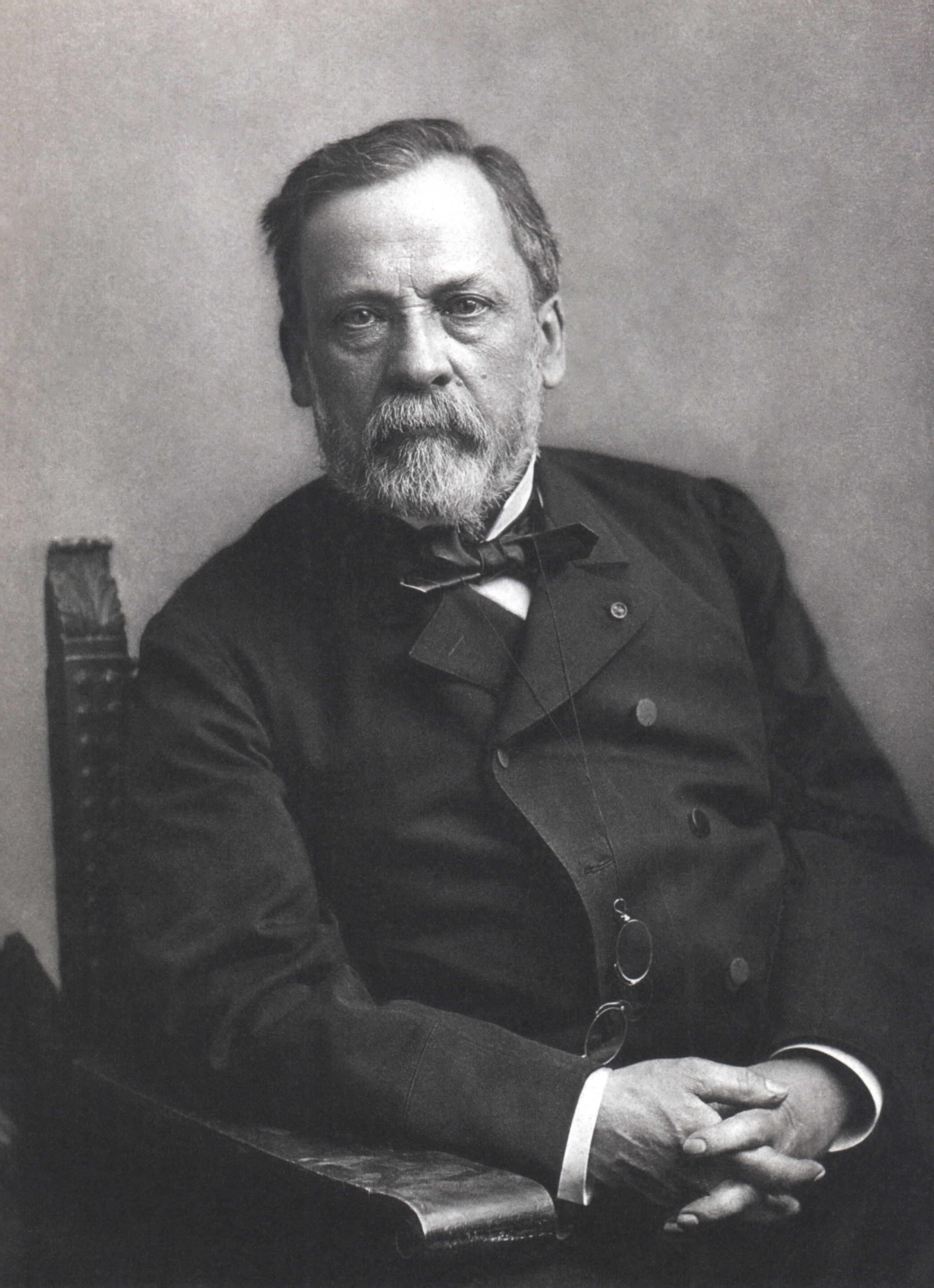
1847 PASTEUR, Louis (1822 – 1895)
Thèses de physique et de chimie, Presentées à la Faculté des Sciences de Paris.
Pasteur reported a series of “investigations into the relation between optical activity, crystalline structure, and chemical composition in organic compounds, particularly tartaric and paratartaric acids. This work fo…
GMN 6922 · https://historyofmedicine.com/id/9087
1871 MIESCHER, Johann Friedrich (1844 – 1895)
Ueber die chemische Zusammensetzung der Eiterzellen.
In 1869 Miescher discovered a substance which he termed nuclein (nucleoprotein), later shown to be the hereditary genetic material. He demonstrated it in pus cells. The discovery he first published in 1871. He was als…
GMN 695 · https://historyofmedicine.com/id/897
1874 MIESCHER, Johann Friedrich (1844 – 1895)
Die Spermatozoen einiger Wirbelthiere. Ein Beitrag zur Histochemie.
Miescher first isolated DNA and identified it as an acid through chemical analysis of salmon spermatozoa. See Ralf Dahm, "Discovering DNA: Friedrich Miescher and the early years of nucleic acid research," Human Geneti…
GMN 11093 · https://historyofmedicine.com/id/13289
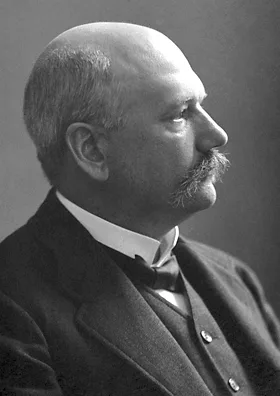
1882 –1883 KOSSEL, Albrecht (1853 – 1927)
Zur Chemie des Zellkerns.
Among the many important contributions of Kossel was his study of the chemistry of the cell and cell-nucleus. Kossel correctly concluded that the function of nuclein is neither to act as a storage substance nor to fur…
GMN 702 · https://historyofmedicine.com/id/1829
1889 ALTMANN, Richard (1852 – 1900)
Ueber Nucleinsäuren.
Atlmann coined the term "nucleic acid", replacing Friedrich Miescher's term "nuclein" when it was demonstrated that nuclein was acidic.
GMN 713 · https://historyofmedicine.com/id/973
1893 KOSSEL, Albrecht (1853 – 1927)
Ueber die Nucleinsaure.
See No. 702.
GMN 719 · https://historyofmedicine.com/id/1040
1897 MIESCHER, Johann Friedrich (1844 – 1895)
Die histochemischen und physiologischen Arbeiten. 2 vols.
In a letter to his uncle, the embryologist, Wilhelm His, written on December 17, 1892, and first published in this collected edition, Miescher described a kind of genetic code. He remarked how "some of the large molec…
GMN 11094 · https://historyofmedicine.com/id/13290
1898 KOSSEL, Albrecht (1853 – 1927)
Ueber die Eiweissstoffe.
Kossel forecast the polypeptide nature of the protein molecule.
GMN 721 · https://historyofmedicine.com/id/1051
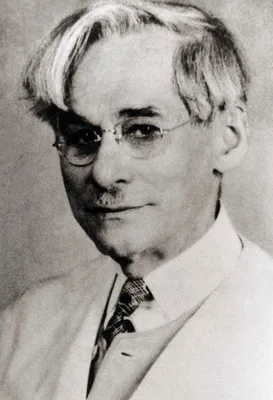
1901 –1903 LEVENE, Phoebus Aaron Theodore (1869 – 1940)
Darstellung und Analyse einiger Nucleinsäuren. I.-VI. Mittheilung.
Chemical distinction between DNA and RNA. Levene elucidated the fundamentals of nucleic acid chemistry. His work led to the tetranucleotide hypothesis.
GMN 725.1 · https://historyofmedicine.com/id/1070
1909 REICHERT, Edward Tyson (1855 – 1931); BROWN, Amos Peaslee (1864 – 1917)
The differentiation and specificity of corresponding proteins and other vital substances in relation to biological classification and organic evolution: The crystallography of hemoglobins.
This massive work with 100 plates including 600 images, was the first large-scale investigation of species differences at the molecular level. Digital facsimile from the Internet Archive at this link.
GMN 6845 · https://historyofmedicine.com/id/9009
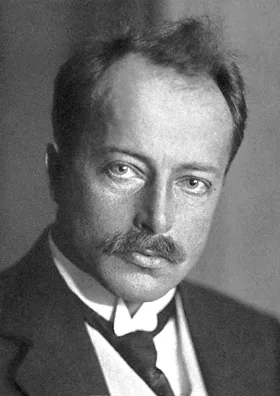
1912 LAUE, Max Theodor Felix von (1879 – 1960); KNIPPING, Paul (1883 – 1935)
Interferenz-Erscheinungen bei Röntgenstrahlen. . . . Eine quantitative Prüfung der Theorie für die Interferenz-Erscheinungen bei Röntgenstrahlen
Discovery of the diffraction of X-rays in crystals. Laue’s discovery was of dual importance: it allowed the subsequent investigation of X-radiation by means of wavelength determination, and it provided the means for t…
GMN 6917 · https://historyofmedicine.com/id/9082
1913 BRAGG, Sir William Lawrence (1890 – 1971)
The diffraction of short electromagnetic waves by a crystal.
At the age of 22, Bragg discovered that the regular pattern of dots produced on a photographic plate by an X-ray beam passing through a crystal could be regarded as a reflection of electromagnetic radiation from plane…
GMN 6919 · https://historyofmedicine.com/id/9084
1913 BRAGG, Sir William Lawrence (1890 – 1971); BRAGG, Sir William Henry (1862 – 1942)
The reflection of x-rays by crystals.
Discovery of X-ray crystallography. The father and son team of physicists, William Henry Bragg and William Lawrence Bragg, constructed the first X-ray spectrometer using crystals as gratings, using a known wavelength …
GMN 6920 · https://historyofmedicine.com/id/9085
1915 TWORT, Frederick William (1877 – 1950)
An investigation on the nature of ultra-microscopic viruses.
Twort discovered discovered bacteriophages, a type of virus that attacks bacteria (the term bacteriophage was coined by Félix d’Herelle, who in 1917 independently confirmed Twort’s discovery). The discovery of bacteri…
GMN 2571 · https://historyofmedicine.com/id/3705
1915 BRAGG, Sir William Lawrence (1890 – 1971); BRAGG, Sir William Henry (1862 – 1942)
X rays and crystal structure.
Digital facsimile from the Internet Archive at this link.
GMN 9646 · https://historyofmedicine.com/id/11833
1926 SUMNER, James Batcheller (1887 – 1955)
The isolation and crystallization of the enzyme urease.
Sumner first isolated and crystallized an enzyme (urease) and proved that enzymes are proteins. One month after publication of the above paper Sumner reinforced his discovery by recrystalizing urease, publishing a fol…
GMN 14025 · https://historyofmedicine.com/id/16332
1927 MULLER, Hermann Joseph (1890 – 1967)
Artificial transmutation of the gene.
Muller showed that radiation causes mutations that are passed on from one generation to the next. This was the first suggestion that inherited traits might be altered or controlled, and it created a sensation: “Man’s …
GMN 251.1 · https://historyofmedicine.com/id/8680
1928 GRIFFITH, Frederick (1879 – 1941)
The significance of pneumococcal types.
Griffith’s experiments on transforming type II pneumococci into type III were repeated by Avery who was able sixteen years later (No. 255.3) to demonstrate that DNA was the transforming material.
GMN 251.2 · https://historyofmedicine.com/id/8681
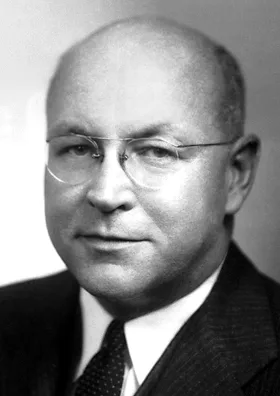
1930 NORTHROP, John Howard (1891 – 1987)
Crystalline pepsin.
Crystallization of pepsin and its identity as a protein. In 1946 Northrop shared half of the Nobel Prize in Chemistry with Wendell Meredith Stanley "for their preparation of enzymes and virus proteins in a pure form."…
GMN 1038.1 · https://historyofmedicine.com/id/1021
1932 ASTBURY, William Thomas (1898 – 1961)
X-ray studies of the structures of hair, wool, and related fibres. I. General.
Astbury, a student of William Lawrence Bragg, was the first to study proteins by X-ray analysis. He applied X-ray analysis to the structure of hair, wool, and related fibers, of which the protein keratin is the princi…
GMN 6918 · https://historyofmedicine.com/id/9083
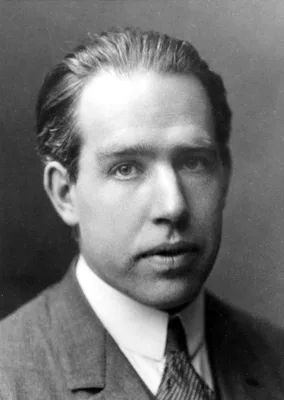
1932 BOHR, Niels (1885 – 1962)
Light and life. Address delivered at the opening meeting of the International Congress on Light Therapy in Copenhagen 15. August 1932.
In 1922 Bohr was awarded the Nobel Prize in Physics "for his services in the investigation of the structure of atoms and of the radiation emanating from them." Including Bohr's 1932 address, Light and life, in the Nob…
GMN 12060 · https://historyofmedicine.com/id/14269
1934 BERNAL, John Desmond (1901 – 1971); HODGKIN, Dorothy Crowfoot (1910 – 1994)
X-Ray photographs of crystalline pepsin.
Bernal and Hodgkin took the first X-ray photograph of a protein structure—crystalline pepsin. They showed that crystals of pepsin give an X-ray diffaction pattern, beginning protein crystallography. This may also be t…
GMN 6923 · https://historyofmedicine.com/id/9088
1935 STANLEY, Wendell Meredith (1904 – 1971)
Isolation of a crystalline protein possessing the properties of tobacco-mosaic virus.
Stanley first crystallized a virus— tobacco mosaic virus. The following year Bawden, Pirie, Bernal and Fankuchen (No. 12005) showed that tobacco mosaic virus molecules are asnisometric and consist of ribonucleoprotein…
GMN 2524.5 · https://historyofmedicine.com/id/3353
1935 DELBRÜCK, Max (1906 – 1981); TIMOFEEV-RESSOVSKIJ, Nikolaj Vladmirovich (Timofeeff-Ressovsky; Николай Владимирович Тимофеев-Ресовский) (1900 – 1981); ZIMMER, Karl Günter (1911 – 1988)
Ueber die Natur der Genmutation und der Genstruktur.
This paper is divided into four sections. The first, by Timofeev-Ressovskij, describes the mutagenic effects of x-rays and gamma rays on Drosophila melanogaster; the second part, by Zimmer, analyzes Timofeev-Ressovski…
GMN 254.1 · https://historyofmedicine.com/id/8686
1936 SCHLESINGER, Max (1906 – 1937)
The Feulgen reaction of the bacteriophage substance.
Schlesinger showed that the fundamental constituents of bacteriophages consist mainly of approximately equal amounts of protein and DNA.
GMN 2524.6 · https://historyofmedicine.com/id/3356
1936 BERNAL, John Desmond (1901 – 1971); BAWDEN, Sir Frederick Charles (1908 – 1972); PIRIE, Norman Wingate (1907 – 1997); FANKUCHEN, Isidor (1904 – 1964); ET AL
Liquid crystalline substances from virus infected plants.
Order of authorship in the original publication: Bawden, Pirie, Bernal, Fankuchen. The authors isolated and crystallized tobacco mosaic virus, finding for the first time that a virus contained nucleic acids, when othe…
GMN 12005 · https://historyofmedicine.com/id/14213
1938 HAUROWITZ, Felix (1896 – 1987)
Das Gleichgewicht zwischen Hämoglobin and Sauerstoff.
Haurowitz discovered that crystalline deoxyhemoglobin changes in shape and color on reaction with oxygen, suggesting that it is a molecular lung.
GMN 6915 · https://historyofmedicine.com/id/9080
1938 WEAVER, Warren (1894 – 1978)
Molecular biology: origin of the term.
Perhaps the only mathematician to name a new biological discipline, in 1938, as Director of the Natural Sciences Division of the Rockefeller Foundation, Weaver coined the term molecular biology to describe the use of …
GMN 6924 · https://historyofmedicine.com/id/9089
1939 PAULING, Linus Carl (1901 – 1994)
The nature of the chemical bond and the structure of molecules and crystals: An introduction to modern structural chemistry.
This book set forth in detail Pauling's valence-bond theory based on the quantum-mechanical concept of resonance between two energy states, which led to his highly innovative idea that the hybridization of orbitals (e…
GMN 6914 · https://historyofmedicine.com/id/9079
1941 BEADLE, George Wells (1903 – 1989); TATUM, Edward Lawrie (1909 – 1975)
Genetic control of biochemical reactions in Neurospora.
Beadle and Tatum proposed the "one gene, one enzyme" hypothesis in 1941. This was a restatement of ideas originally proposed by Archibald Garrod (No. 244.1) in 1908. 1958 Beadle and Tatum shared the Nobel Prize in Phy…
GMN 254.3 · https://historyofmedicine.com/id/8688
1944 MCCARTY, Maclyn (1911 – 2005); AVERY, Oswald Theodore Jr. (1877 – 1955); MACLEOD, Colin Munro (1909 – 1972)
Studies on the chemical nature of the substance inducing transformation of pneumococcal types. Induction of transformation by a deoxyribonucleic acid fraction isolated from pneumococcus type III.
Demonstration that deoxyribonucleic acid (DNA) is the basic material responsible for genetic transformation. Digital facsimile from PubMedCentral at this link. Followed by: McCarty & Avery, "Studies on the chemical na…
GMN 255.3 · https://historyofmedicine.com/id/8692
1944 SCHRÖDINGER, Erwin (1867 – 1961)
What is life? The physical aspect of the living cell.
This work about the physical basis of natural phenomena influenced the young James D. Watson and others. The book was a popularization of ideas developed by Max Delbrück in his paper with Timofeeff-Ressovsky in 1935. …
GMN 6897 · https://historyofmedicine.com/id/9061
1946 DELBRÜCK, Max (1906 – 1981); BAILEY, W. T.
Induced mutations in bacterial viruses.
Genetic recombination in bacteriophages. In 1969 Delbrück shared the Nobel Prize with A. D. Hershey and S. E. Luria "for their discoveries concerning the replication mechanism and the genetic structure of viruses."
GMN 2578.5 · https://historyofmedicine.com/id/4142
1948 MCCARTY, Maclyn (1911 – 2005)
The occurrence of nucleases in culture filtrates of group A hemolytic streptococci.
Streptodornase. See also W. S. Tillett et al., Proc. Soc. exp. Biol. (N. Y.), 1948, 68, 184-88.
GMN 1929.2 · https://historyofmedicine.com/id/2741
1949 DULBECCO, Renato (1914 – 2012); LURIA, Salvador Edward (1912 – 1991)
Genetic recombinations leading to production of active bacteriophage from ultraviolet inactivated bacteriophage particles.
In 1969 Luria shared the Nobel Prize in Physiology or Medicine in with Delbrück (No. 2578.5) and A. D. Hershey (No. 256) "for their discoveries concerning the replication mechanism and the genetic structure of viruses."
GMN 2526.1 · https://historyofmedicine.com/id/3458
1949 PAULING, Linus Carl (1901 – 1994); ITANO, Harvey Akio (1920 – 2010); SINGER, Seymour Jonathan (1924 – 2017); WELLS, Ibert C. (1921 – 2011)
Sickle cell anemia, a molecular disease.
First recognition, by Pauling and colleagues, of a structural hemoglobin variant, and the beginning of the molecular approach to disease.
GMN 3154.1 · https://historyofmedicine.com/id/4015
1949 BARR, Murray Llewellyn (1908 – 1995); BERTRAM, Ewart George (1923 – )
A morphological distinction between neurones of the male and female, and the behaviour of the nucleolar satellite during accelerated nucleoprotein synthesis.
The Barr body, " the inactive X chromosome in a female somatic cell,[2] rendered inactive in a process called lyonization, in those species in which sex is determined by the presence of the Y (including humans) or W c…
GMN 255.5 · https://historyofmedicine.com/id/8694
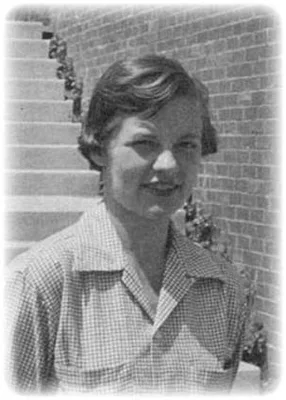
1949 HODGKIN, Dorothy Crowfoot (1910 – 1994); ROGERS-LOW, Barbara Wharton (1920 – 2019)
X-ray crystallographic investigation of the structure of penicillin. IN: Clarke, Johnson, Robinson (eds.) Chemistry of penicillin (1949) 310-67.
Hodgkin and colleagues, including biochemist Barbara Low, solved the structure of penicillin in 1945, demonstrating, contrary to scientific opinion at the time, that it contains a β-lactam ring. The discovery was orig…
GMN 12635 · https://historyofmedicine.com/id/14876
1950 CHARGAFF, Erwin (1905 – 2002)
Chemical specificity of nucleic acids and the mechanism of their enzymatic degradation.
"Chargaff's rules." Between 1946 and 1950 Chargaff carried out chemical studies that revolutionized attitudes towards DNA.
GMN 255.6 · https://historyofmedicine.com/id/8695
1950 LEDERBERG, Esther (1922 – 2006)
Lysogenicity in Escherichia coli strain K-12.
Discovery of phage λ (lambda phage). According to estherlederberg.com, only about 100 people received the first issue of Microbial Genetics Bulletin, a typed and mimeographed publication. Digital facsimile from esther…
GMN 13525 · https://historyofmedicine.com/id/15802
1951 PAULING, Linus Carl (1901 – 1994); COREY, Robert Brainard (1897 – 1971); BRANSON, Herman Russell (1914 – 1995)
The structure of proteins: Two hydrogen-bonded configurations of the polypeptide chain.
Pauling, his crystallographer R. B. Corey, and African-American physicist and chemist H.R. Branson announced the α-helix, a principal structural feature of proteins. Digital facsimile from the National Academy of Scie…
GMN 6846 · https://historyofmedicine.com/id/9010
1951 –1952 BENNETT, John Makepeace (1921 – 2010); KENDREW, Sir John Cowdery (1917 – 1997)
The computation of Fourier syntheses with a digital electronic calculating machine.
The first paper published in a scientific journal on the application of an electronic computer to computational biology. At the second English computer conference held in Manchester from July 9-12, 1951 computer scien…
GMN 6910 · https://historyofmedicine.com/id/9075
1951 PAULING, Linus Carl (1901 – 1994); COREY, Robert Brainard (1897 – 1971)
The pleated sheet, a new layer configuration of polypeptide chains.
Pauling and Corey discovered the β-sheet, a principal structural feature of proteins. Digital facsimile from PNAS.org at this link.
GMN 13298 · https://historyofmedicine.com/id/15564
1952 HERSHEY, Alfred Day (1908 – 1997); CHASE, Martha Cowles (1927 – 2003)
Independent functions of viral protein and nucleic acid in growth of bacteriophage.
DNA shown to be the carrier of genetic information in virus reproduction. In 1969 Hershey shared the Nobel Prize in Physiology or Medicine with S. E. Luria and M. Delbrück for "for their discoveries concerning the rep…
GMN 256 · https://historyofmedicine.com/id/8697
1952 LEDERBERG, Joshua (1925 – 2008); ZINDER, Norton David (1928 – 2012)
Genetic exchange in Salmonella.
Description of a new mechanism (“transduction”) for the transfer of genetic characters from one bacterial strain to another.
GMN 256.1 · https://historyofmedicine.com/id/8698
1952 LURIA, Salvador Edward (1912 – 1991); HUMAN, Mary L.
A nonhereditary, host-induced variation of bacterial viruses.
Order of authorship in the original publication: Luria, Human. Luria and Human discovered the restriction modification system found in bacteria and other prokaryotic organisms. This system provides a defense against f…
GMN 12032 · https://historyofmedicine.com/id/14240
1952 LEDERBERG, Joshua (1925 – 2008); ZINDER, Norton David (1928 – 2012)
Genetic exchange in salmonella.
Working as a graduate student with Lederberg, Zinder discovered that a bacteriophage can carry genes from one bacterium to another. Initial experiments were carried out using Salmonella. Zinder and Lederberg named thi…
GMN 13970 · https://historyofmedicine.com/id/16272
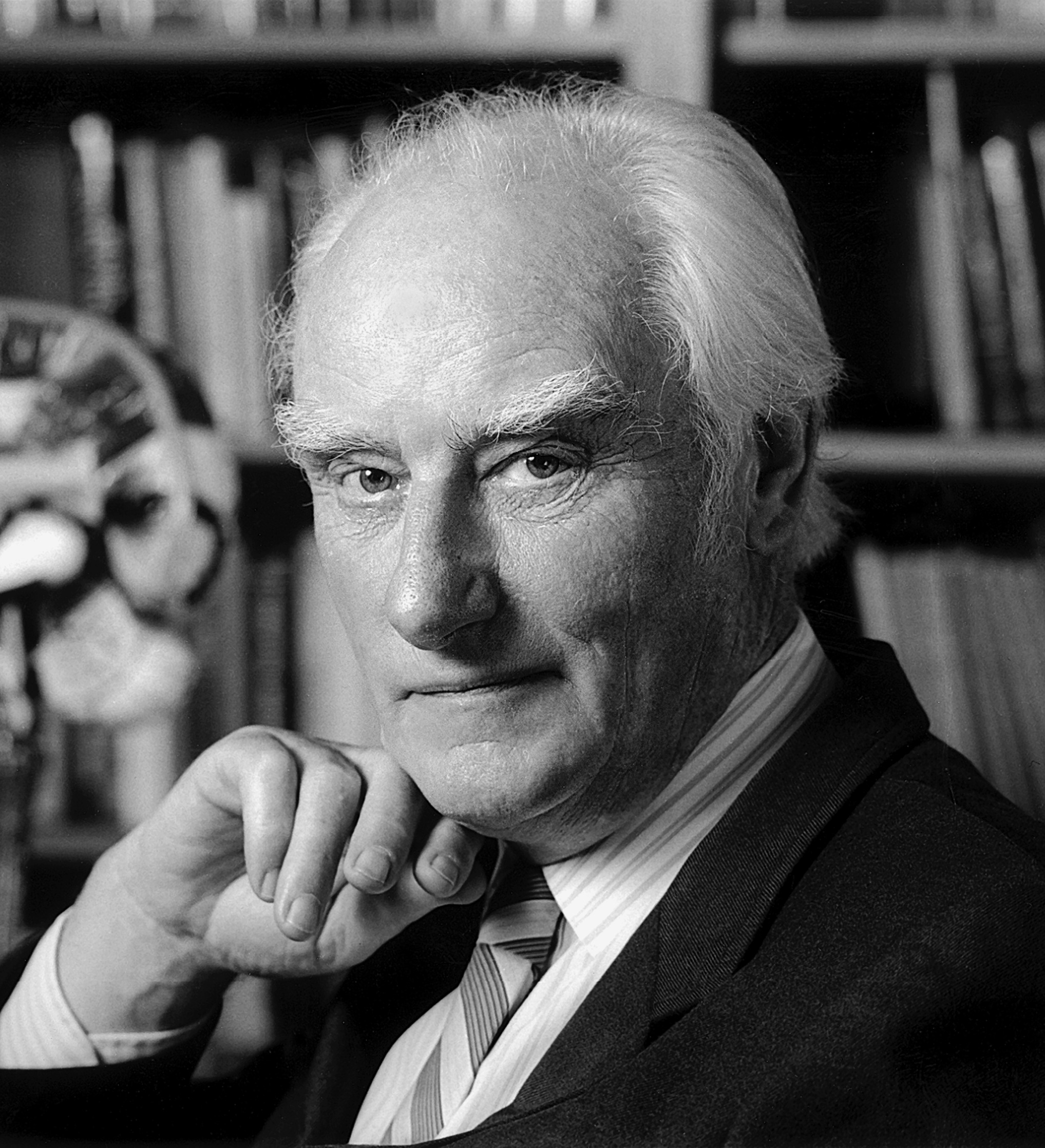
1952 CRICK, Francis Harry Compton (1916 – 2004); COCHRAN, William (1922 – 2003); VAND, Vladimir (1911 – 1968)
The structure of synthetic polypeptides. 1. The transform of atoms on a helix.
This paper gives the formulae for the Fourier transforms of a number of helical structures, and provides evidence that the structure of a synthetic polypeptide was based on the alpha helix of Pauling and Corey. "It wa…
GMN 13998 · https://historyofmedicine.com/id/16302
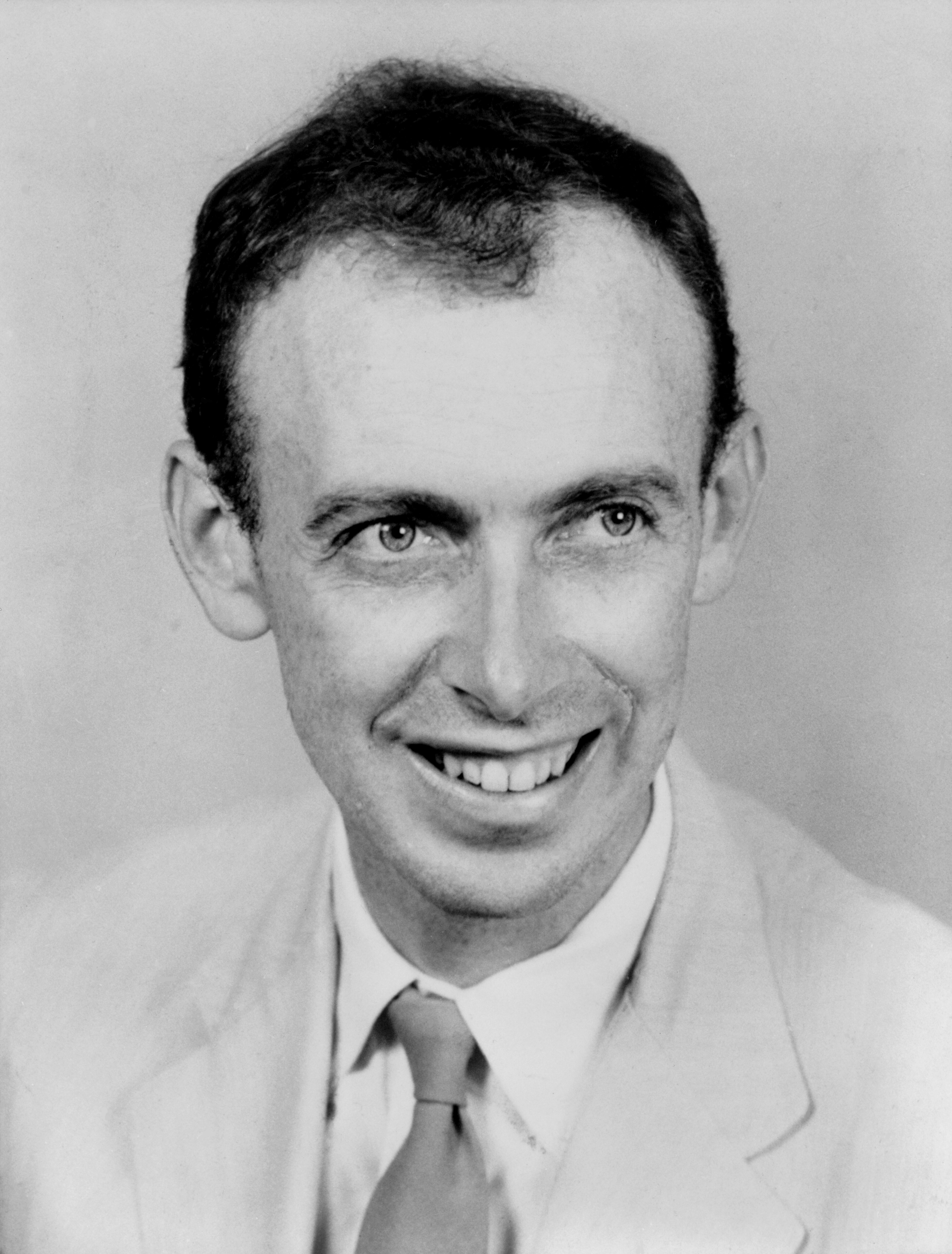
1953 WATSON, James Dewey (1928 – ); CRICK, Francis Harry Compton (1916 – 2004)
Molecular structure of nucleic acids. A structure for deoxyribose nucleic acid.
Watson and Crick shared the Nobel Prize with M. H. F. Wilkins (No. 256.4) "for their discoveries concerning the molecular structure of nucleic acids and its significance for information transfer in living material." L…
GMN 256.3 · https://historyofmedicine.com/id/8700