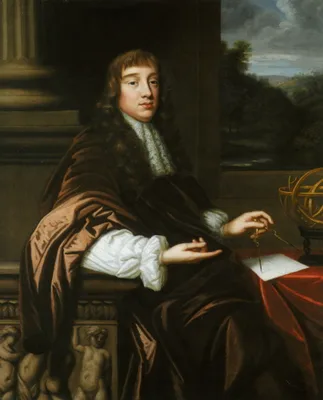
1665 HOOKE, Robert (1635 – 1703)
Micrographia, or some physiological descriptions of minute bodies made by magnifying glasses; with observations and inquiries thereupon.
Hooke, at one time research assistant to Robert Boyle, was one of the greatest inventive geniuses of all time. This was the first book devoted entirely to microscopical observations, and also the first book to pair it…
GMN 262 · https://historyofmedicine.com/id/8735
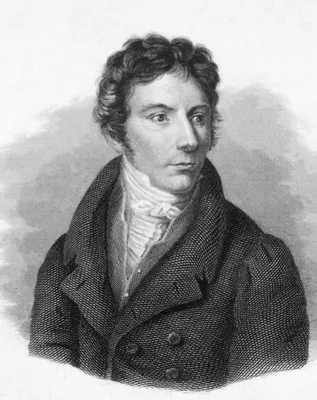
1805 OKEN, Lorenz (1779 – 1851)
Die Zeugung.
Oken maintained that all organic beings originate from, and consist of, cells, and that organisms are produced by an agglomeration of these cells.
GMN 106 · https://historyofmedicine.com/id/1610
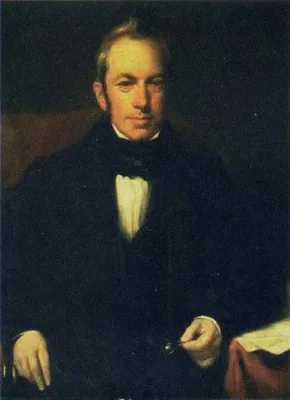
1829 –1832 BROWN, Robert (1773 – 1858)
Observations on the organs and mode of fecundation in Orchideae and Asclepiadeae.
Discovery, in 1831, of the cell nucleus. First issued as a separate pamphlet: Observations on the Organs and Mode of Fecundation in orchideae and asclepiadeae ... [with:] Additional remarks ... London, [privately prin…
GMN 109 · https://historyofmedicine.com/id/1627
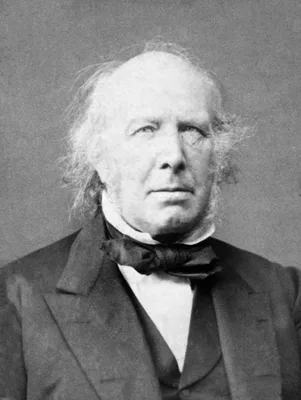
1835 PURKYNĔ, Jan Evangelista [PURKINJE] (1787 – 1869); VALENTIN, Gabriel Gustav (1810 – 1883)
De phaenomeno generali et fundamentali motus vibratorii contini in membranis.
Classical paper on ciliary epithelial motion. Reprinted in Purkynĕ’s Opera omnia (No. 82), pp. 277-371, 1918. English translation in Dublin J. med. chem. Sci., 1835, 7, 279-84.
GMN 602 · https://historyofmedicine.com/id/449
1835 –1859 SHARPEY, William (1802 – 1880); TODD, Robert Bentley (1809 – 1860)
The cyclopaedia of anatomy and physiology. Edited by Robert Bentley Todd. 5 vols.
Contributors included Richard Owen and Thomas Huxley, and physicians James Paget, James Young Simpson, and William Bowman.The discoveries of Purkynĕ and Valentin, together with additional observations by William Sharp…
GMN 603 · https://historyofmedicine.com/id/453
1835 WAGNER, Rudolf Friedrich Johann Heinrich (Rudolph) (1805 – 1864)
Einige Bemerkungen und Fragen über das Keimbläschen (vesicula germinativa).
Wagner saw and described the nucleolus.
GMN 109.1 · https://historyofmedicine.com/id/1632
1835 MOHL, Hugo von (1805 – 1872)
Ueber die Vermehrung der Pflanzen-Zellen durch Theilung. Eine Inaugural-Dissertation welche zur Erlangung der Doctor-Würde in der Medicin und Chirurgie welche / unter dem Präsidium von Hugo Mohl; vorlegt August Wilhelm Winter.
In his doctoral thesis Mohl reported his discovery of the multiplication of cells by division, later known as mitosis. Digital facsimile from Bayerische StaatsBibliothek at this link.
GMN 14133 · https://historyofmedicine.com/id/16444
1838 SCHLEIDEN, Mattias Jakob (1804 – 1881)
Beiträge zur Phytogenesis.
Schleiden demonstrated that plant tissues are made up of and developed from groups of cells, of which he recognized the “cytoblast” or cell-nucleus. He observed with great accuracy certain other activities of the cell…
GMN 112 · https://historyofmedicine.com/id/1667
1838 SCHWANN, Theodor (1810 – 1882)
Ueber die Analogie in der Structur und dem Wachsthum der Thiere und Pflanzen.
Schwann’s three-part preliminary application of Schleiden’s “watch-glass” cell theory to the genesis of animal cells. Schleiden communicated the theory to him verbally. This paper actually pre-dates Schleiden’s first …
GMN 112.1 · https://historyofmedicine.com/id/1683
1839 ROSENTHAL, Joseph Ferdinand; PURKYNĔ, Jan Evangelista [PURKINJE] (1787 – 1869)
De formatione granulosa in nervis aliisque partibus organismi animalis.
In 1839 Purkynĕ was the first to use the term protoplasma, by which he described the embryonic ground substance. This fact is recorded in the inaugural dissertation of one of his students, J. Rosenthal.
GMN 541 · https://historyofmedicine.com/id/174
1839 SCHWANN, Theodor (1810 – 1882)
Mikroskopische Untersuchungen über die Uebereinstimmung in der Struktur und dem Wachsthum der Thiere und Pflanzen.
Mainly devoted to the investigation of the elementary structure of animal tissues, Schwann’s Untersuchungen had an important bearing on the development of the doctrine of the cell structure of animal tissue. In this w…
GMN 113 · https://historyofmedicine.com/id/2028
1847 VIRCHOW, Rudolf Ludwig Karl (1821 – 1902)
Die pathologischen Pigmente.
On the origin and chemical composition of extracellular and intracellular pigments, and on the supposed formation of new cells by the membranous envelopment of pigmented blood corpuscles or pigment granules.
GMN 2296 · https://historyofmedicine.com/id/2930
1849 LUDWIG, Carl Friedrich Wilhelm (1816 – 1895)
Ueber die endosmotischen Aequivalent und die endosmotische Theorie.
In this development of his theory of urinary secretion (see No. 1232) Ludwig made important observations on endosmosis.
GMN 682 · https://historyofmedicine.com/id/793
1851 WAGNER, Rudolf Friedrich Johann Heinrich (Rudolph) (1805 – 1864); MOHL, Hugo von (1805 – 1872)
Grundzüge der Anatomie und Physiologie der vegetabilischen Zelle. In: Rudolph Wagner’s Handwörterbuch der Physiologie.
Von Mohl saw and described cell division. English translation, London, 1852.
GMN 114 · https://historyofmedicine.com/id/8788
1852 REMAK, Robert (1815 – 1865)
Ueber extracelluläre Entstehung thierischer Zellen und über die Vermehrung derselben durch Theilung.
Remak was the first to point out that growth of new tissues was accomplished by the division of pre-existing cells.
GMN 116 · https://historyofmedicine.com/id/2042
1861 SCHULTZE, Max Johann Sigismund (1825 – 1874)
Ueber Muskelkörperchen und das, was man eine Zelle zu nennen habe.
Schultze showed the cell to be a clump of nucleated protoplasm, stating that each muscle fibre or primitive muscle bundle was developed from a single myoblast by successive divisions of its cell or nucleus. His work s…
GMN 117 · https://historyofmedicine.com/id/2047
1863 SCHULTZE, Max Johann Sigismund (1825 – 1874)
Das Protoplasma der Rhizopoden und der Pflanzenzellen.
Schultze showed that protoplasm is practically identical in all living cells.
GMN 118 · https://historyofmedicine.com/id/2051
1865 SCHWEIGGER-SEIDEL, Franz Wilhelm (1834 – 1871)
Ueber die Samenkörperchen und ihre Entwicklung.
Proof that the spermatozöon possesses a nucleus and cytoplasm.
GMN 1224 · https://historyofmedicine.com/id/1911
1870 LANGHANS, Theodor (1839 – 1915)
Zur Kenntnis der menschlichen Placenta.
“Langhans’s layer”—the cytotrophoblast, the individual cells of which are termed “Langhans’s cells”.
GMN 491 · https://historyofmedicine.com/id/1419
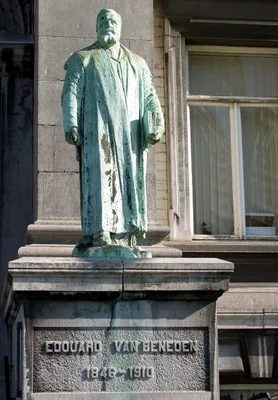
1876 BENEDEN, Edouard Joseph Louis Marie van (1846 – 1910)
Contributions à l’histoire de la vésicule germinative et du premier noyau embryonnaire.
Independently of Flemming, van Beneden discovered the centrosome.
GMN 497 · https://historyofmedicine.com/id/8939
1877 FLEMMING, Walther (1843 – 1905)
Beobachtungen über die Beschaffenheit des Zellkerns.
Discovery of the centrosome.
GMN 498 · https://historyofmedicine.com/id/1448
1878 WHITMAN, Charles Otis (1842 – 1910)
The embryology of Clepsine.
The study of cell-lineage was initiated by Whitman’s paper on Clepsine.
GMN 499 · https://historyofmedicine.com/id/1454
1879 FLEMMING, Walther (1843 – 1905)
Beiträge zur Kenntniss der Zelle und ihrer Lebenserscheinungen
Classic account of cell division and karyokinesis. Flemming named the nuclear substance “chromatin” and gave the name “mitosis” to cell division. Translation of Part II in J. Cell Biol., 1965, 25, No. 1, pt. 2, 3-69. …
GMN 122 · https://historyofmedicine.com/id/54
1879 EHRLICH, Paul (1854 – 1915)
Beitrage zur Kenntniss der granulirten Bindegewebszellen und der eosinophilen Leukocyten.
Mast cells; see No. 548.1.
GMN 553.1 · https://historyofmedicine.com/id/227
1880 STRASBURGER, Eduard Adolf (1844 – 1912)
Ueber Zellbildung und Zelltheilung. 3te. Aufl.
A pioneer work on the formation and division of cells. In this third edition Strasburger established one of the principles of modern cytology, i.e., that independent cell formation does not occur but that fresh nuclei…
GMN 123 · https://historyofmedicine.com/id/2062
1883 ROUX, Wilhelm (1850 – 1924)
Überdie Bedeutungder Kerntheilungsfiguren.
Roux investigated why the nucleus undergoes the precise division of mitosis while the rest of the cell undergoes a rather crude division when one cell splits into two. He argued that mitosis ensures a precise halving …
GMN 229 · https://historyofmedicine.com/id/8327
1884 –1890 HERTWIG, Wilhelm August Oscar (1849 – 1922); HERTWIG, Richard Wilhelm Karl Theodor Ritter von (1850 – 1937)
Untersuchungen zur Morphologie und Physiologie der Zelle.
GMN 555 · https://historyofmedicine.com/id/233
1884 STRASBURGER, Eduard Adolf (1844 – 1912)
Neue Untersuchungen über den Befruchtungsvorgang bei den Phanerogamen als Gründlage für eine Theorie der Zeugung.
Like Roux, Strasburger hypothesized that the cell nucleus contained the material basis of heredity, and developed the idea with evidence from microscopical observations.
GMN 229.1 · https://historyofmedicine.com/id/8329
1885 KÖLLIKER, Rudolph Albert von (1817 – 1905)
Die Bedeutung der Zellenkerne für die Vorgänge der Vererbung.
Along with Roux, Kölliker stated that hereditary characters were transmitted by the cell nucleus.
GMN 231 · https://historyofmedicine.com/id/8332
1888 BOVERI, Theodor (1862 – 1915)
Zellen-Studien.
Boveri gave decisive proof of the maintenance of chromosomal individuality.
GMN 231.1 · https://historyofmedicine.com/id/8334
1890 ALTMANN, Richard (1852 – 1900)
Die Elementarorganismen und ihre Beziehungen zu den Zellen.
Mitochondria described, p. 145.
GMN 126 · https://historyofmedicine.com/id/2128
1893 –1898 HERTWIG, Wilhelm August Oscar (1849 – 1922); HERTWIG, Richard Wilhelm Karl Theodor Ritter von (1850 – 1937)
Die Zelle und die Gewebe.
Part 1 was translated as The cell: outlines of general anatomy and physiology, London, 1895.
GMN 556 · https://historyofmedicine.com/id/232
1895 WILSON, Edmund Beecher (1856 – 1939); LEAMING, Edward (1861 – 1916)
An atlas of the fertilization and karyokinesis of the ovum.
The first atlas of photomicrographs showing fertilization and cellular development during mitosis. The photomicrographs were taken by Leaming. Digital facsimile from the Internet Archive at this link.
GMN 8653 · https://historyofmedicine.com/id/10830
1896 WILSON, Edmund Beecher (1856 – 1939)
The cell in development and inheritance.
Wilson emphasized the function of cytology in the study of embryology, heredity, evolution and general physiology. The above work has been called the single most influential treatise on cytology of the 20th century. T…
GMN 238 · https://historyofmedicine.com/id/8354
1902 –1904 HAMBURGER, Hartog Jakob (1859 – 1924)
Osmotischer Druck und Ionenlehre in den medicinischen Wissenschaften. 3 vols.
Includes an account of all the methods of determining osmotic pressure.
GMN 725 · https://historyofmedicine.com/id/1065
1903 SUTTON, Walter Stanborough (1877 – 1916)
The chromosomes in heredity.
Sutton advanced the theory that Mendel’s factors were hereditary particles borne by the chromosomes and that Mendel’s laws for his factors were the direct result of the behaviour of chromosomes in meiosis. Boveri inde…
GMN 242.1 · https://historyofmedicine.com/id/8665
1904 BOVERI, Theodor (1862 – 1915)
Ergebnisse über die Konstitution der chromatischen Substanz des Zellkerns.
See No. 242.1.
GMN 242.2 · https://historyofmedicine.com/id/8666
1905 HOFBAUER, J. Isfred Isidore (1871 – 1961)
Grundzüge einer Biologie der menschlichen Plazenta. Mit besonderer Berücksichtig der Fragen der fötalen Ernährung.
Discovery of Hofbauer cells, oval eosinophilic histiocytes with granules and vacuoles found in the placenta, which are of mesenchymal origin, in mesoderm of the chorionic villus, particularly numerous in early pregnan…
GMN 14095 · https://historyofmedicine.com/id/16406
1908 MINOT, Charles Sedgwick (1852 – 1914)
The problem of age, growth and death.
Minot’s theory of aging, based on cytomorphosis and the rate of growth. This work first appeared as a paper in vol. 7 of the Popular Science Monthly, 1907.
GMN 132 · https://historyofmedicine.com/id/2149
1909 MAXIMOW, Alexander Alexandrowitsch (1874 – 1928)
Der Lymphozyt als gemeinsame Stammzelle der verschiedenen Blutelemente in der embryonalen Entwicklung und im postfetalen Leben der Säugetiere.
Maximow developed and introduced a unitarian theory of hematopoiesis, a theory upon which the modern concept of blood cells' origin and differentiation is based. He introduced the term "stem cell." Translated into Eng…
GMN 12426 · https://historyofmedicine.com/id/14657
1910 HARRISON, Ross Granville (1870 – 1959)
The outgrowth of the nerve fibre as a mode of protoplasmic movement.
Tissue culture was made possible by Harrison’s proof of the outgrowth of nerve-fibers from ganglion cells.
GMN 558 · https://historyofmedicine.com/id/234
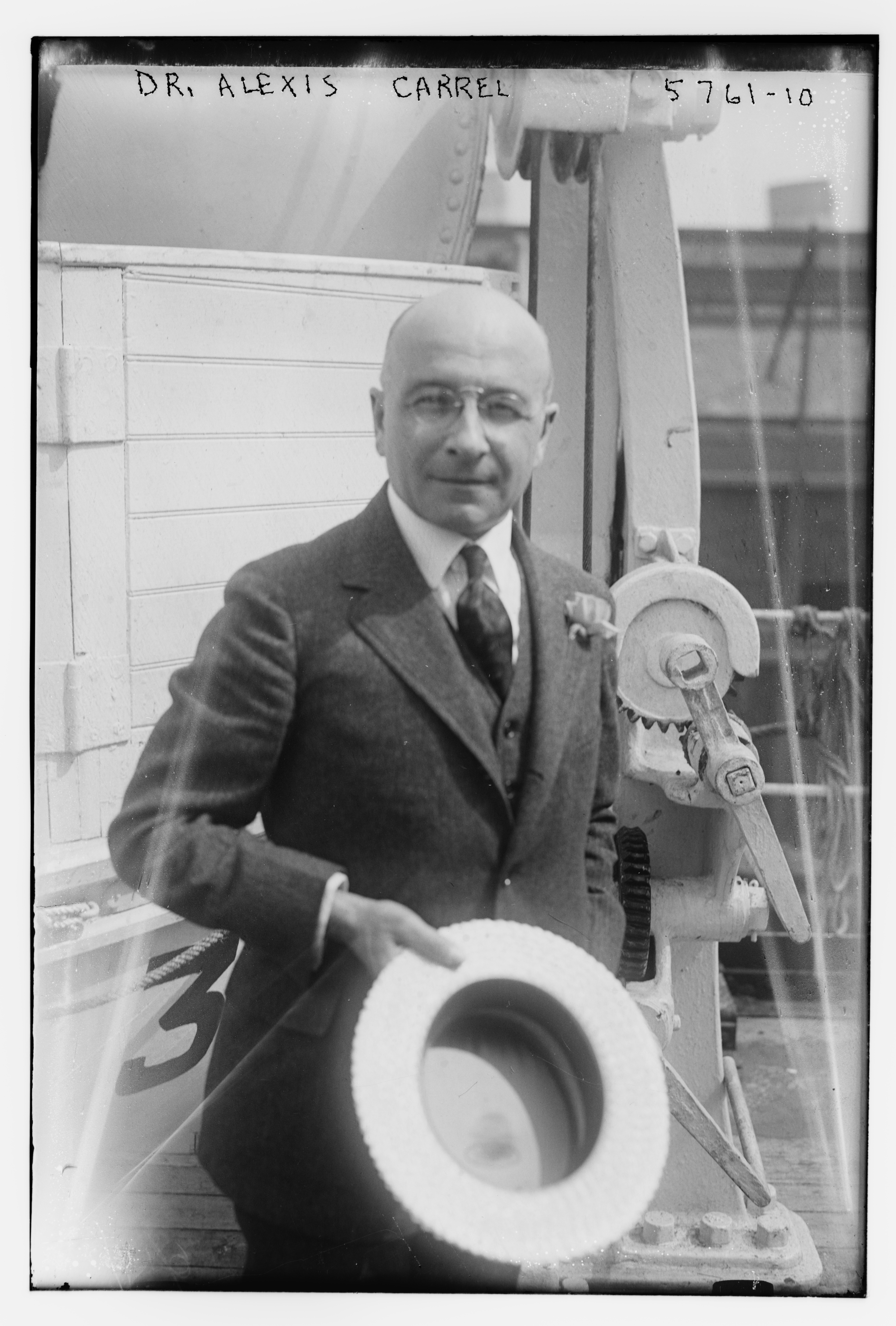
1911 CARREL, Alexis (1873 – 1944)
Rejuvenation of cultures of tissues.
Extra-vital cultivation and rejuvenation of tissue.
GMN 559 · https://historyofmedicine.com/id/276
1911 CARREL, Alexis (1873 – 1944); BURROWS, Montrose Thomas (1884 – 1947)
Cultivation of tissues in vitro and its technique.
Carrel demonstrated the potential immortality of mammalian tissue. He was able to keep the excised viscera of an animal alive and functioning physiologically in vitro. For his later work see the same journal, 1911, 14…
GMN 560 · https://historyofmedicine.com/id/283
1913 BRIDGES, Calvin Blackman (1889 – 1938)
Non-disjunction of the sex chromosome of Drosophila.
Bridges discovered non-disjunction, failure of chromosome pairs to segregate regularly during meiosis.
GMN 245.5 · https://historyofmedicine.com/id/8677
1914 –1915 LEWIS, Margaret Adaline Reed (1881 – 1970); LEWIS, Warren Harmon (1870 – 1964)
Mitochondria and other cytoplasmic structures in tissue cultures.
Original investigations upon the visible mitochondria.
GMN 561 · https://historyofmedicine.com/id/288
1914 BOVERI, Theodor (1862 – 1915)
Zur Frage der Entstehung maligner Tumoren.
Boveri argued that malignancy arises as a consequence of chromosomal abnormalities, and that multiplication is an inherent property of cells. He predicted the existence of tumor suppressor mechanisms and was perhaps t…
GMN 7759 · https://historyofmedicine.com/id/9931
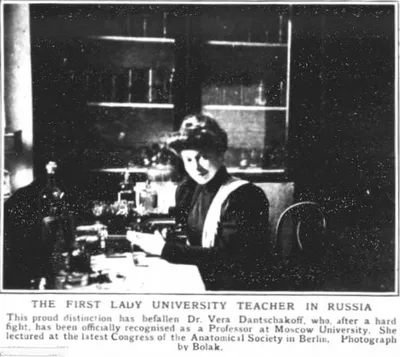
1916 DANCHAKOFF, Vera Mikhailovna (1879 – 1950)
The differentiation of cells as a criterion for cell identification, considered in relation to the small cortical cells of the thymus.
First use of the term "stem cells" in English. Digital facsimile from rupress.org at this link.
GMN 14094 · https://historyofmedicine.com/id/16405
1924 ASCHOFF, Karl Albert Ludwig (1866 – 1942)
Das reticulo-endotheliale System.
In an earlier paper on this subject (Münch, med. Wschr., 1922, 69, 1352-56) Aschoff introduced the term “reticulo-endothelial system”; as early as 1914 he grouped certain phagocytic cells into his system.
GMN 562 · https://historyofmedicine.com/id/290
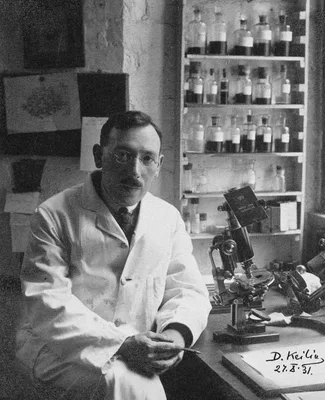
1929 KEILIN, David (1887 – 1963)
Cytochrome and respiratory enzymes.
Keilin discovered cytochrome and laid the foundations of the modern concept of cellular respiration. See No. 1588.3.
GMN 968 · https://historyofmedicine.com/id/296
1929 FELL, Dame Honor Bridgett (1900 – 1986); ROBISON, Robert (1883 – 1941)
The growth, development and phosphatase activity of embryonic avian femora in limb-buds cultivated in vitro.
First modern organ cultures.
GMN 566.1 · https://historyofmedicine.com/id/298