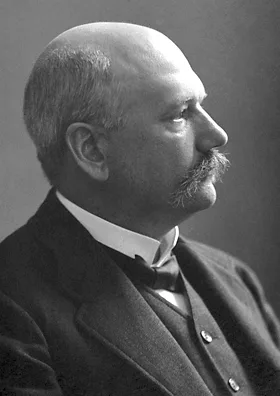
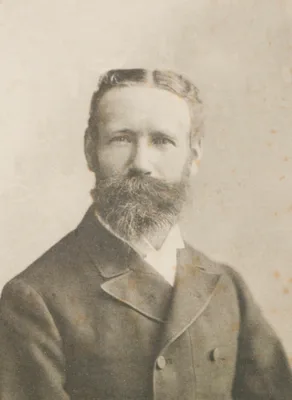
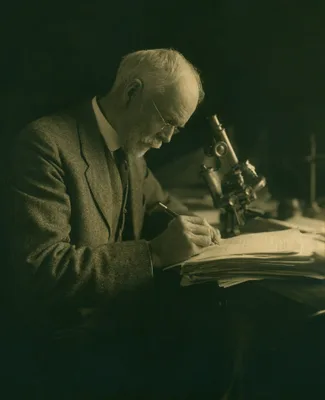
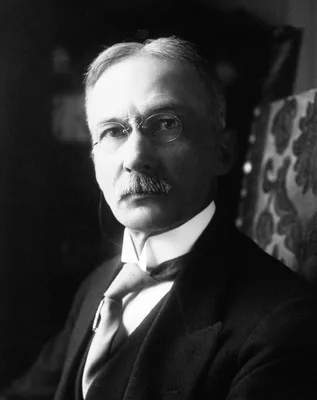
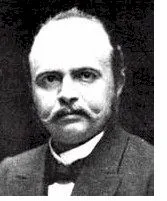
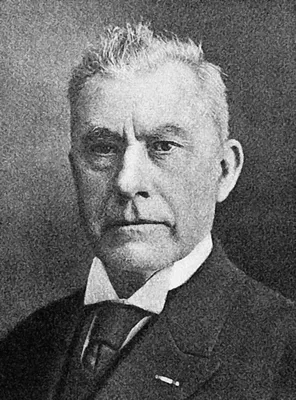
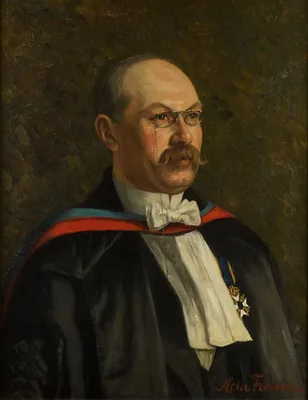
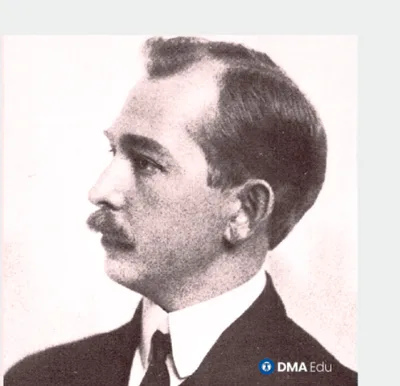
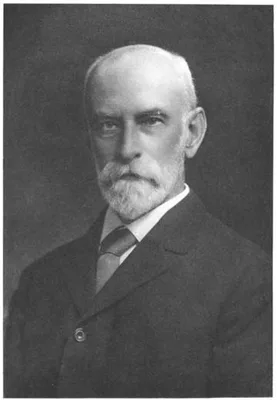
1893 KOSSEL, Albrecht (1853 – 1927)
Ueber die Nucleinsaure.
See No. 702.
GMN 719 · https://historyofmedicine.com/id/1040
1893 SAVILLE-KENT, William (1845 – 1908)
The Great Barrier Reef of Australia; Its products and potentialities, containing an account, with copious coloured and photographic illustrations (the latter here produced for the first time), of the corals and coral reefs, pearl and pearl-shell, bêche-de-mer, other fishing Industries, and the marine fauna of the Australian Great Barrier region.
Digital facsimile from Biodiversity Heritage LIbrary at this link.
GMN 11810 · https://historyofmedicine.com/id/14012
1895 WILSON, Edmund Beecher (1856 – 1939); LEAMING, Edward (1861 – 1916)
An atlas of the fertilization and karyokinesis of the ovum.
The first atlas of photomicrographs showing fertilization and cellular development during mitosis. The photomicrographs were taken by Leaming. Digital facsimile from the Internet Archive at this link.
GMN 8653 · https://historyofmedicine.com/id/10830
1896 WILSON, Edmund Beecher (1856 – 1939)
The cell in development and inheritance.
Wilson emphasized the function of cytology in the study of embryology, heredity, evolution and general physiology. The above work has been called the single most influential treatise on cytology of the 20th century. T…
GMN 238 · https://historyofmedicine.com/id/8354
1896 BALDWIN, James Mark (1861 – 1934)
A new factor in evolution.
The Baldwin effect. "In evolutionary biology, the Baldwin effect describes the effect of learned behavior on evolution. In brief, James Mark Baldwin suggested that an organism's ability to learn new behaviors (e.g. to…
GMN 9319 · https://historyofmedicine.com/id/11501
1896 ARRHENIUS, Svante August (1859 – 1927)
Ueber den Einfluss des atmosphärischen Kohlensäuregehalts auf die Temperatur der Erdoberfläche.
Arrhenius used basic principles of physical chemistry to estimate the extent to which increases in atmospheric carbon dioxide are responsible for the Earth's increasing surface temperature, the "greenhouse effect."
GMN 13046 · https://historyofmedicine.com/id/15297
1897 –1899 DAVENPORT, Charles Benedict (1866 – 1944)
Experimental morphology. 2 pts.
GMN 127 · https://historyofmedicine.com/id/2133
1897 MIESCHER, Johann Friedrich (1844 – 1895)
Die histochemischen und physiologischen Arbeiten. 2 vols.
In a letter to his uncle, the embryologist, Wilhelm His, written on December 17, 1892, and first published in this collected edition, Miescher described a kind of genetic code. He remarked how "some of the large molec…
GMN 11094 · https://historyofmedicine.com/id/13290
1898 KOSSEL, Albrecht (1853 – 1927)
Ueber die Eiweissstoffe.
Kossel forecast the polypeptide nature of the protein molecule.
GMN 721 · https://historyofmedicine.com/id/1051
1898 SCHIMPER, Andreas Franz Wilhelm (1856 – 1901)
Pflanzengeographie auf Physiologischer Grundlage.
In this work on the geographical distribution of plants Schimper coined the terms tropical rainforest and sclerophyll. English translation by William R. Fisher, revised and edited by Percy Groom and Isaac Bayley Balfo…
GMN 8536 · https://historyofmedicine.com/id/10713
1899 –1904 HAECKEL, Ernest Heinrich Philipp August (1834 – 1919)
Kunstformern der Natur.
Includes 100 mostly color lithographic and half-tone prints based on Haeckel's sketches and watercolors. Issued in 10 fascicules of 10 prints each and collected into a bound volume in 1904. Digital facsimile of vol. 1…
GMN 7998 · https://historyofmedicine.com/id/10174
1901 –1903 LEVENE, Phoebus Aaron Theodore (1869 – 1940)
Darstellung und Analyse einiger Nucleinsäuren. I.-VI. Mittheilung.
Chemical distinction between DNA and RNA. Levene elucidated the fundamentals of nucleic acid chemistry. His work led to the tetranucleotide hypothesis.
GMN 725.1 · https://historyofmedicine.com/id/1070
1901 DRIESCH, Hans Adolf Eduard (1867 – 1941)
Die organischen Regulationen.
GMN 129 · https://historyofmedicine.com/id/2143
1901 BEIJERINCK, Martinus Willem (1851 – 1931)
Über oligonitrophile Mikroben.
Discovery of nitrogen fixation, the process by which diatomic nitrogen gas is converted to ammonium ions and becomes available to plants. Bacteria perform nitrogen fixation, dwelling inside root nodules of certain pla…
GMN 12789 · https://historyofmedicine.com/id/15035
1902 –1904 HAMBURGER, Hartog Jakob (1859 – 1924)
Osmotischer Druck und Ionenlehre in den medicinischen Wissenschaften. 3 vols.
Includes an account of all the methods of determining osmotic pressure.
GMN 725 · https://historyofmedicine.com/id/1065
1902 MCCLUNG, Clarence Erwin (1870 – 1946)
The accessory chromosome; sex determination.
McClung showed that the accessory chromosomes are the determinants of sex.
GMN 518 · https://historyofmedicine.com/id/1602
1903 BOVERI, Theodor (1862 – 1915)
Über mehrpolige Mitosen als Mittel zur Analyse des Zellkerns.
Boveri’s experiments, involving multipolar mitoses in sea urchin eggs fertilized by two sperm, demonstrated that different chromosomes perform different functions in development. English translation in No. 534.3.
GMN 241.1 · https://historyofmedicine.com/id/8663
1903 SUTTON, Walter Stanborough (1877 – 1916)
The chromosomes in heredity.
Sutton advanced the theory that Mendel’s factors were hereditary particles borne by the chromosomes and that Mendel’s laws for his factors were the direct result of the behaviour of chromosomes in meiosis. Boveri inde…
GMN 242.1 · https://historyofmedicine.com/id/8665
1903 WALLACE, Alfred Russel (1823 – 1913)
Man's place in the universe. A study of the results of scientific research in relation to the unity or plurality of worlds.
The first serious attempt by a biologist to evaluate the likelihood of life on other planets. Wallace concluded that the Earth was the only planet in the solar system that could possibly support life, mainly because i…
GMN 7382 · https://historyofmedicine.com/id/9554
1904 BOVERI, Theodor (1862 – 1915)
Ergebnisse über die Konstitution der chromatischen Substanz des Zellkerns.
See No. 242.1.
GMN 242.2 · https://historyofmedicine.com/id/8666
1905 –1909 RÁDL, Emmanuel (1873 – 1942)
Geschichte der biologischen Theorien seit dem Ende des siebzehnten Jahrhunderts. 2 pts.
Second edition, extensively revised as Geschichte der biologischen Theorien in der Neuzeit, pt. l., Leipzig-Berlin, 1913. English translation of pt 2. as The history of biological theories, London, 1930.
GMN 141 · https://historyofmedicine.com/id/2259
1905 HOFBAUER, J. Isfred Isidore (1871 – 1961)
Grundzüge einer Biologie der menschlichen Plazenta. Mit besonderer Berücksichtig der Fragen der fötalen Ernährung.
Discovery of Hofbauer cells, oval eosinophilic histiocytes with granules and vacuoles found in the placenta, which are of mesenchymal origin, in mesoderm of the chorionic villus, particularly numerous in early pregnan…
GMN 14095 · https://historyofmedicine.com/id/16406
1907 ARRHENIUS, Svante August (1859 – 1927)
Das Werden der Welten. Mit Unterstützung des Verfassers aus dem schwedischen übersetzt von L. Bamberger.
In this work Arrhenius predicted the possibility of man-made global warming. His prediction that significant global warming would take ~3000 years to develop is now recognized as a substantial underestimate due in par…
GMN 8152 · https://historyofmedicine.com/id/10328
1907 WALLACE, Alfred Russel (1823 – 1913)
Is Mars habitable?
"His treatment of Mars in this book [Man's Place in the Universe] was brief, and in 1907, Wallace returned to the subject with a book Is Mars Habitable? to criticise the claims made by Percival Lowell that there were …
GMN 9181 · https://historyofmedicine.com/id/11360
1908 BRYCE, Thomas Hastie (1862 – 1946); TEACHER, John Hammond (1869 – 1930)
Contributions to the study of the early development and imbedding of the human ovum. An early ovum imbedded in the decidua.
The “Bryce-Teacher ovum”, age estimated at 13-14 days.
GMN 523 · https://historyofmedicine.com/id/1652
1908 MINOT, Charles Sedgwick (1852 – 1914)
The problem of age, growth and death.
Minot’s theory of aging, based on cytomorphosis and the rate of growth. This work first appeared as a paper in vol. 7 of the Popular Science Monthly, 1907.
GMN 132 · https://historyofmedicine.com/id/2149
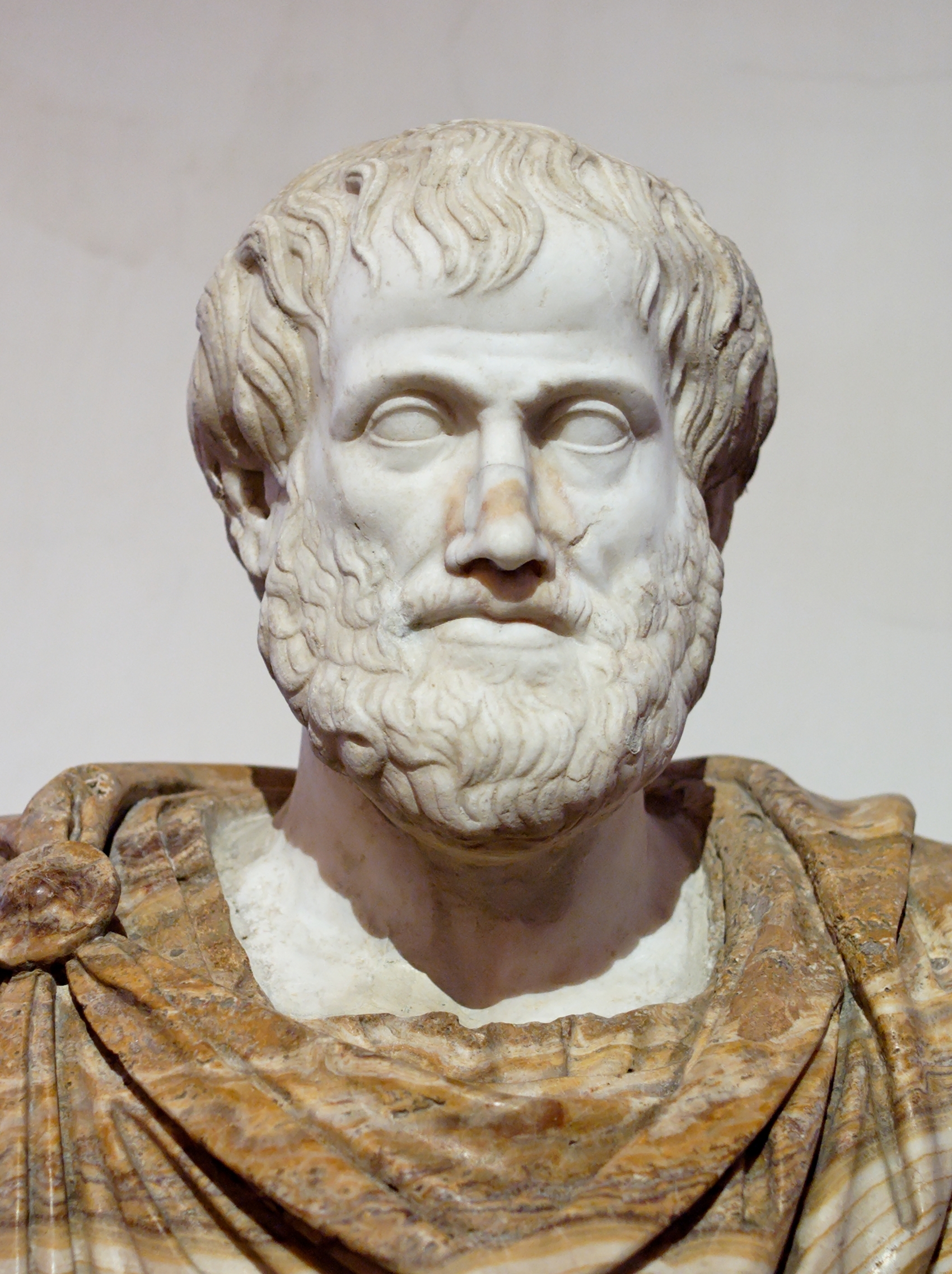
1908 –1952 ARISTOTLE (ἈΡΙΣΤΟΤΈΛΗΣ) (-384 – -322); SMITH, John Alexander (1863 – 1939); ROSS, Willliam David (1877 – 1971)
The works of Aristotle translated into English. Edited by J.A. Smith and W.D. Ross. 12 vols.
De motu animalium. De incessu animalium. In his Works, edited by J.A. Smith and W.D. Ross, 5, 698a-714b., Oxford, 1912. De Anima. In his Works… translated into English. Edited by J. A. Smith and W. D. Ross. 3, 402a-35…
GMN 18 · https://historyofmedicine.com/id/4491
1909 REICHERT, Edward Tyson (1855 – 1931); BROWN, Amos Peaslee (1864 – 1917)
The differentiation and specificity of corresponding proteins and other vital substances in relation to biological classification and organic evolution: The crystallography of hemoglobins.
This massive work with 100 plates including 600 images, was the first large-scale investigation of species differences at the molecular level. Digital facsimile from the Internet Archive at this link.
GMN 6845 · https://historyofmedicine.com/id/9009
1909 MAXIMOW, Alexander Alexandrowitsch (1874 – 1928)
Der Lymphozyt als gemeinsame Stammzelle der verschiedenen Blutelemente in der embryonalen Entwicklung und im postfetalen Leben der Säugetiere.
Maximow developed and introduced a unitarian theory of hematopoiesis, a theory upon which the modern concept of blood cells' origin and differentiation is based. He introduced the term "stem cell." Translated into Eng…
GMN 12426 · https://historyofmedicine.com/id/14657
1910 HARRISON, Ross Granville (1870 – 1959)
The outgrowth of the nerve fibre as a mode of protoplasmic movement.
Tissue culture was made possible by Harrison’s proof of the outgrowth of nerve-fibers from ganglion cells.
GMN 558 · https://historyofmedicine.com/id/234
1910 KEEBLE, Sir Frederick William (1870 – 1952)
Plant animals: A study in symbiosis.
Digital facsimile from the Internet Archive at this link.
GMN 134 · https://historyofmedicine.com/id/2154
1910 GREGORY, William King (1897 – 1970)
The orders of mammals. Part 1.- Typical stages in the history of the ordinal classification of mammals. Part II. - Genetic relations of the mammalian orders; with a discussion of the origin of the mammalia and of the problem of the auditory ossicles.
Gregory's PhD dissertation, of particular significance for its exhaustive analysis of prior taxonomic systems for mammalia. Digital facsimile from Google Books at this link.
GMN 14044 · https://historyofmedicine.com/id/16352
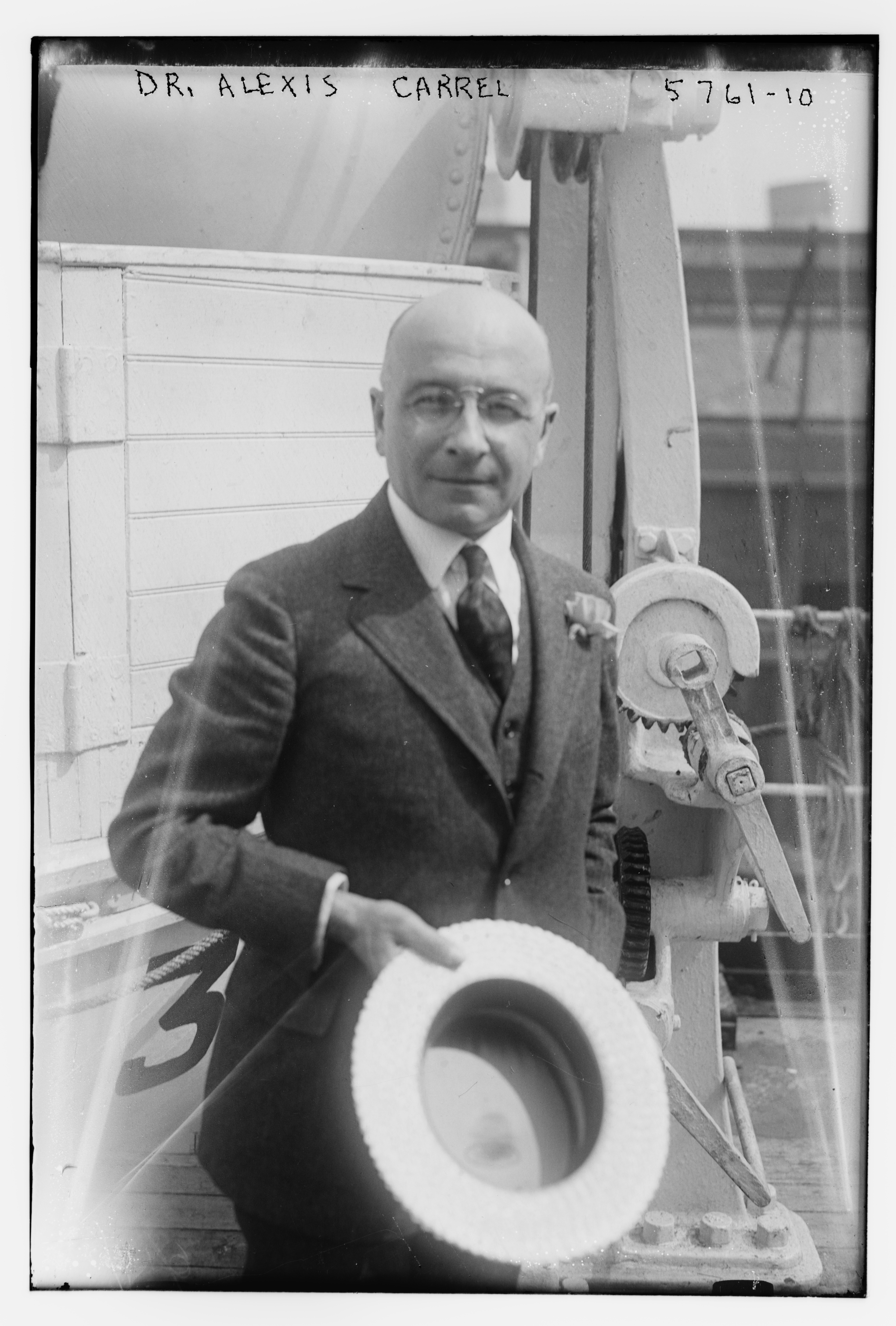
1911 CARREL, Alexis (1873 – 1944)
Rejuvenation of cultures of tissues.
Extra-vital cultivation and rejuvenation of tissue.
GMN 559 · https://historyofmedicine.com/id/276
1911 CARREL, Alexis (1873 – 1944); BURROWS, Montrose Thomas (1884 – 1947)
Cultivation of tissues in vitro and its technique.
Carrel demonstrated the potential immortality of mammalian tissue. He was able to keep the excised viscera of an animal alive and functioning physiologically in vitro. For his later work see the same journal, 1911, 14…
GMN 560 · https://historyofmedicine.com/id/283
1911 WALLACE, Alfred Russel (1823 – 1913)
The world of life: A manifestation of creative power, directive mind and ultimate purpose.
"Wallace's comments on environment grew more strident later in his career. In The World of Life (1913) he wrote: "These considerations should lead us to look upon all the works of nature, animate or inanimate, as inve…
GMN 9180 · https://historyofmedicine.com/id/11359
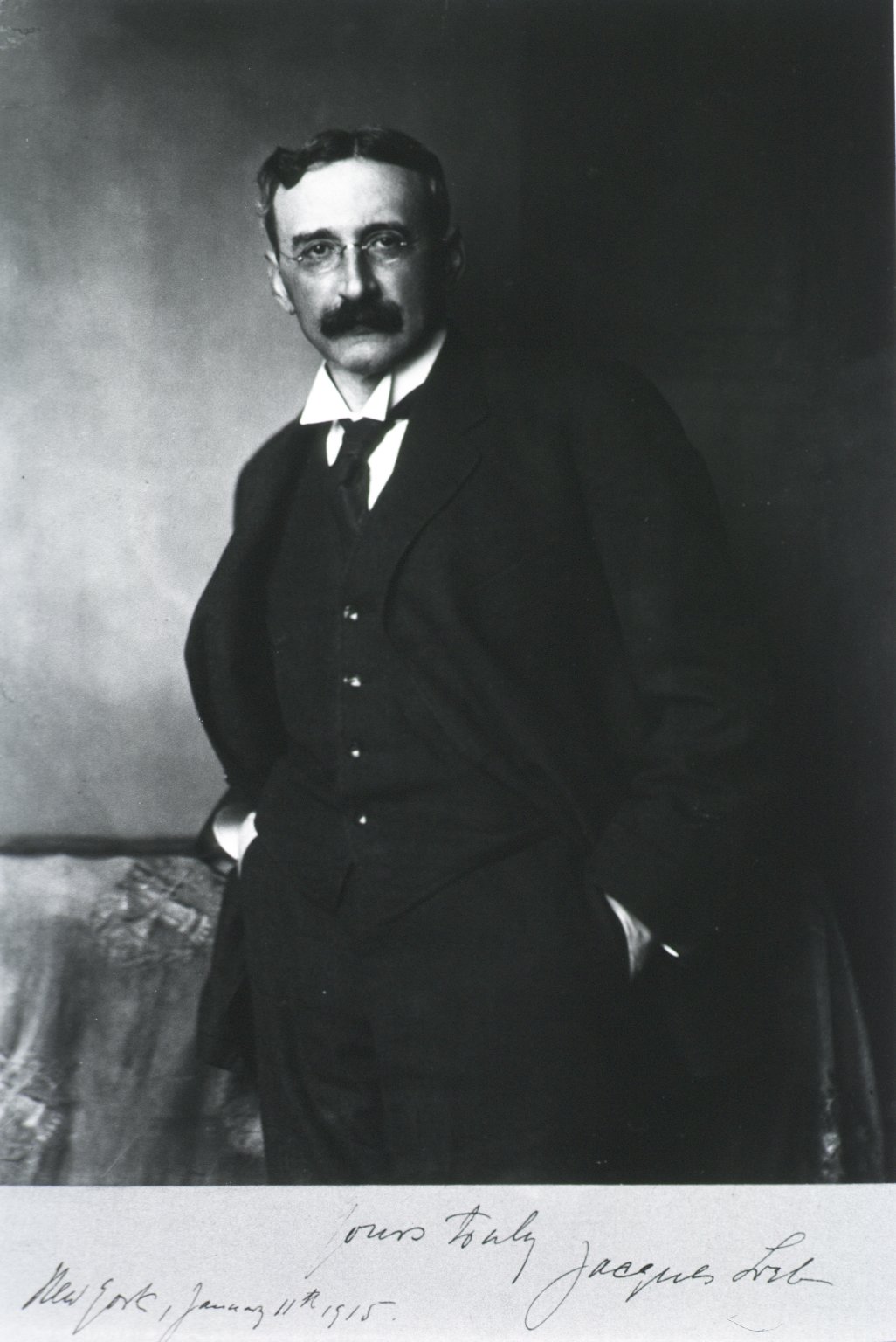
1912 LOEB, Jacques (1859 – 1924)
The mechanistic conception of life.
This work established Loeb's reputation as a researcher who treated organisms as machines. He stated that biologists explain organic phenomena only when they could control those phenomena. Loeb first published the tit…
GMN 135 · https://historyofmedicine.com/id/2159
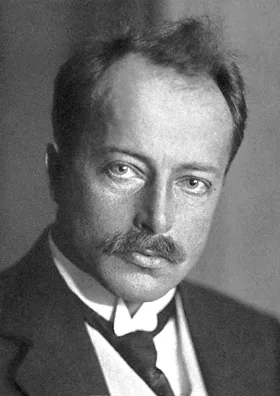
1912 LAUE, Max Theodor Felix von (1879 – 1960); KNIPPING, Paul (1883 – 1935)
Interferenz-Erscheinungen bei Röntgenstrahlen. . . . Eine quantitative Prüfung der Theorie für die Interferenz-Erscheinungen bei Röntgenstrahlen
Discovery of the diffraction of X-rays in crystals. Laue’s discovery was of dual importance: it allowed the subsequent investigation of X-radiation by means of wavelength determination, and it provided the means for t…
GMN 6917 · https://historyofmedicine.com/id/9082
1912 MURRAY, John (1841 – 1914); HJORT, Johan (1869 – 1948)
The depths of the ocean. A general account of the modern science of oceanography based largely on the scientific researches of the Norwegian Steamer Michael Sars in the North Atlantic.
Digital facsimile from the Biodiversity Heritage Library, Internet Archive at this link.
GMN 7482 · https://historyofmedicine.com/id/9654
1912 WEGENER, Alfred Lothar (1880 – 1930)
Die Entstehung der Kontinente.
Wegener originated the theory of continental drift in this paper on the origin of continents, which he conceived after being struck by the apparent correspondence in the shapes of the coastlines on the west and east s…
GMN 8153 · https://historyofmedicine.com/id/10329
1912 WOOD JONES, Frederick (1879 – 1954)
Coral and atolls. A history and description of the Keeling-Cocos Islands, with an account of their fauna and flora, and a discussion of the method of development and transformation of coral structures in general.
Wood Jones was one of the first to study coral reefs as living organisms interacting with their environment. Prior to Wood Jones's book most of the work on corals was done from the systematics viewpoint using specimen…
GMN 11812 · https://historyofmedicine.com/id/14014
1913 LILLIE, Frank Rattray (1870 – 1947)
The mechanism of fertilization.
GMN 527.1 · https://historyofmedicine.com/id/1679
1913 BRIDGES, Calvin Blackman (1889 – 1938)
Non-disjunction of the sex chromosome of Drosophila.
Bridges discovered non-disjunction, failure of chromosome pairs to segregate regularly during meiosis.
GMN 245.5 · https://historyofmedicine.com/id/8677
1913 BRAGG, Sir William Lawrence (1890 – 1971)
The diffraction of short electromagnetic waves by a crystal.
At the age of 22, Bragg discovered that the regular pattern of dots produced on a photographic plate by an X-ray beam passing through a crystal could be regarded as a reflection of electromagnetic radiation from plane…
GMN 6919 · https://historyofmedicine.com/id/9084
1913 BRAGG, Sir William Lawrence (1890 – 1971); BRAGG, Sir William Henry (1862 – 1942)
The reflection of x-rays by crystals.
Discovery of X-ray crystallography. The father and son team of physicists, William Henry Bragg and William Lawrence Bragg, constructed the first X-ray spectrometer using crystals as gratings, using a known wavelength …
GMN 6920 · https://historyofmedicine.com/id/9085
1913 SHELFORD, Victor Ernest (1877 – 1968)
Animal communities in temperate America as illustrated in the Chicago region. A study in animal ecology.
This book represents the beginning of organized theoretical principles for animal ecology, including Shelford's "law of toleration" or "law of tolerance." "Analogous to the physiologists' law of the minimum [developed…
GMN 7075 · https://historyofmedicine.com/id/9242
1913 HORNADAY, William Temple (1854 – 1937)
Our vanishing wild life: Its extermination and reservation.
One of the first books wholly devoted to endangered wild animals. Hornaday revolutionized museum exhibits by displaying wildlife in their natural settings, and is credited with discovering the American crocodile, savi…
GMN 7436 · https://historyofmedicine.com/id/9608
1914 –1915 LEWIS, Margaret Adaline Reed (1881 – 1970); LEWIS, Warren Harmon (1870 – 1964)
Mitochondria and other cytoplasmic structures in tissue cultures.
Original investigations upon the visible mitochondria.
GMN 561 · https://historyofmedicine.com/id/288
1914 BOVERI, Theodor (1862 – 1915)
Zur Frage der Entstehung maligner Tumoren.
Boveri argued that malignancy arises as a consequence of chromosomal abnormalities, and that multiplication is an inherent property of cells. He predicted the existence of tumor suppressor mechanisms and was perhaps t…
GMN 7759 · https://historyofmedicine.com/id/9931
1915 TWORT, Frederick William (1877 – 1950)
An investigation on the nature of ultra-microscopic viruses.
Twort discovered discovered bacteriophages, a type of virus that attacks bacteria (the term bacteriophage was coined by Félix d’Herelle, who in 1917 independently confirmed Twort’s discovery). The discovery of bacteri…
GMN 2571 · https://historyofmedicine.com/id/3705
1915 BRAGG, Sir William Lawrence (1890 – 1971); BRAGG, Sir William Henry (1862 – 1942)
X rays and crystal structure.
Digital facsimile from the Internet Archive at this link.
GMN 9646 · https://historyofmedicine.com/id/11833