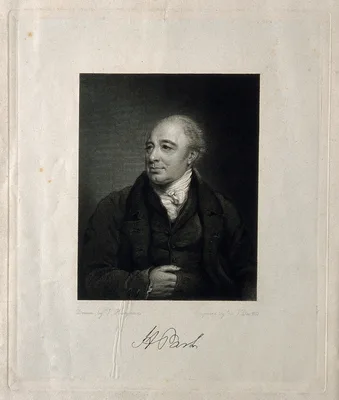
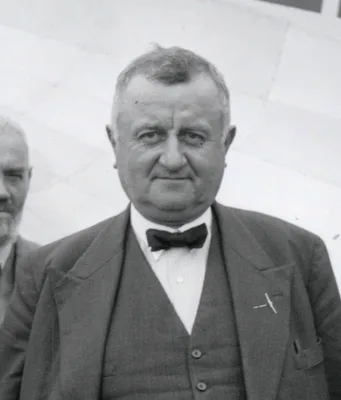
1733 PARK, Henry (1744 – 1831)
An account of a new method of treating diseases of the joints of the knee and elbow.
This was originally a letter to Pott. Park became famous for his operation of excision and arthrodesis as a treatment for destructive joint disease. The title page is misprinted “MDCCXXXIII”; the letter is dated 1783.…
GMN 4438 · https://historyofmedicine.com/id/6333
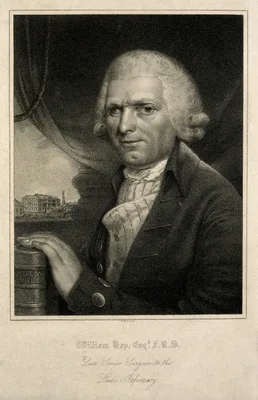
1803 HEY, William (1736 – 1819)
Practical observations in surgery.
Hey is remembered for “Hey’s saw” and “Hey’s internal derangement of the knee,” a phrase that he coined. He was an outstanding surgeon in his day; he founded and was senior surgeon of the General Infirmary, Leeds. He …
GMN 4308.1 · https://historyofmedicine.com/id/5506
1845 BUCK, Gurdon (1807 – 1877)
The knee-joint anchylosed at a right angle – restored nearly to a straight position after the excision of a wedge-shaped portion of bone, consisting of the patella, condyles and articular surface of the tibia.
Buck’s operation, “one of the more spectacular surgical feats by an American surgeon in the first half of the nineteenth century” (Rutkow). The paper is reprinted in Med. Classics, 1939, 3, 791-99.
GMN 4324 · https://historyofmedicine.com/id/5547
1865 PRICE, Peter Charles (1832 – 1864)
A description of the diseased conditions of the knee-joint which require amputation of the limb, and those conditions which are favourable to excision of the joint.
A valuable contribution to the knowledge and surgical treatment of diseases of the knee-joint.
GMN 4336 · https://historyofmedicine.com/id/5655
1875 THOMAS, Hugh Owen (1834 – 1891)
Diseases of the hip, knee and ankle joints, with their deformities, treated by a new and efficient method.
Thomas splint. Enlarged second edition, 1876. See No. 4348.
GMN 4340 · https://historyofmedicine.com/id/5693
1885 ANNANDALE, Thomas (1839 – 1908)
An operation for displaced semilunar cartilage.
The first deliberate and planned operation for the relief of internal derangement of the knee-joint caused by a displaced cartilage, i.e. repair of the meniscus. Annandale succeeded Lister as Professor of Clinical Sur…
GMN 4426.1 · https://historyofmedicine.com/id/6248
1890 GLUCK, Themistocles (1853 – 1942)
Referat über die durch das moderne chirurgische Experiment gewonnen positive Resultate, betreffend die Naht und den Ersatz von Defecten.
The first total joint replacements: Gluck replaced the tuberculous knee joint of a 17 year old woman with a hinged ivory prosthesis on May 20, 1890, followed by a total wrist replacement in another patient three weeks…
GMN 7212 · https://historyofmedicine.com/id/9379
1921 BIRCHER, Eugen (1882 – 1956)
Die Arthroendoskopie.
First published account of the use of the laparoscope for arthroscopy.
GMN 4388.2 · https://historyofmedicine.com/id/5956
1931 BURMAN, Michael S. (1901 – 1975)
Arthroscopy or the direct visualization of joints: An experimental cadaver study.
The first description of arthroscopic appearance of joints other than the knee, and a classic on the fundamental principles of the procedure. Follow-up paper by Burman, H. Finkelstein, & L. Mayer: Arthroscopy of the k…
GMN 4400.1 · https://historyofmedicine.com/id/6021
1938 PALMER, Ivor
On the injuries to the ligaments of the knee joint: A clinical study.
Classic study of knee ligament injuries.
GMN 4478.110 · https://historyofmedicine.com/id/323
1957 WATANABE, Masaki (1911 – 1995)
Atlas of arthroscopy.
The first atlas of arthroscopy, a major step in gaining wide acceptance of this operating technique. The color illustrations were prepared by an artist as available arthroscopes did not permit color photography. Watan…
GMN 4405.01 · https://historyofmedicine.com/id/6093
1971 GUNSTON, Frank Herbert (1933 – 2016)
Polycentric knee arthoplasty: Prosthetic simulation of normal knee movement.
Total knee replacement (replacing diseased articular surfaces of both femur and tibia), holding the metal and plastic components in place with acrylic cement.
GMN 4405.5 · https://historyofmedicine.com/id/6128