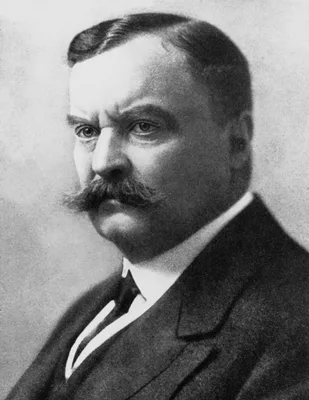
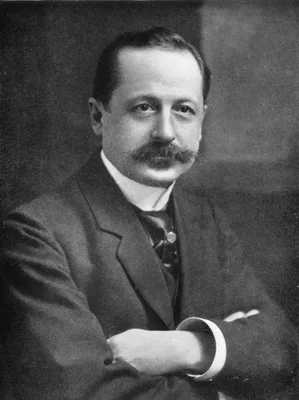
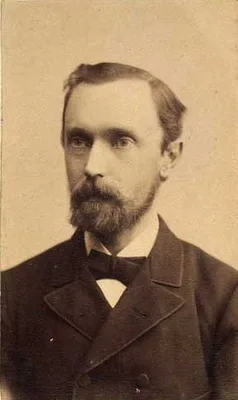
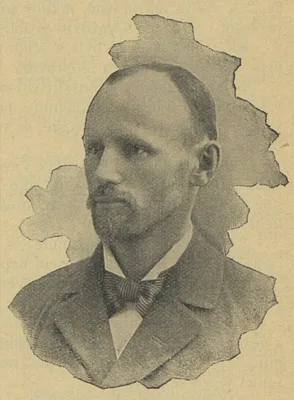
1873 OBERMEIER, Otto Hugo Franz (1843 – 1873)
Vorkommen feinster, eine Eigenbewegung zeigender Fäden im Blute von Recurrenskranken.
Discovery (in 1868) of Borrelia recurrentis, causative agent in relapsing fever.
GMN 5314 · https://historyofmedicine.com/id/6602
1887 BRUCE, Sir David (1855 – 1931)
Note on the discovery of a micro-organism in Malta fever.
Malta fever was shown by Bruce to be due to Micrococcus (Brucella) melitensis. The disease was later named Brucellosis.
GMN 5098 · https://historyofmedicine.com/id/6020
1896 VINCENT, Jean Hyacinthe (1862 – 1950)
Sur l’étiologie et sur les lésions anatomo-pathologiques de la pourriture d’hôpital.
Vincent described a fusiform bacillus and a spirillum which, in association, were responsible for hospital gangrene. Later, in Arch. int. Laryng., 1898, 11, 44-48, he showed these two organisms to be present in “Vince…
GMN 3309 · https://historyofmedicine.com/id/4512
1897 BANG, Bernhard Laurits Frederik (1848 – 1932)
Die Aetiologie des seuchenhaften (“infectiösen”) Verwerfens.
Discovery of Brucella abortus.
GMN 5099 · https://historyofmedicine.com/id/6023
1905 DUTTON, Joseph Everett (1877 – 1905); TODD, John Lancelot (1876 – 1949)
The nature of tick fever in the eastern part of the Congo Free State.
Independently of Ross and Milne, Dutton and Todd demonstrated relapsing fever in monkeys conveyed by infected ticks, Omithodorus moubata. The organism was named Sp. (now Borrelia) duttoni. Both Dutton and Todd contrac…
GMN 5318 · https://historyofmedicine.com/id/6610
1906 NOVY, Frederick George (1864 – 1957); KNAPP, Richard Edward (1884 – )
Studies in Spirillum obermeieri and related organisms.
Novy and Knapp made important observations on the spirochaete isolated by Norris et al. from a case of (American) relapsing fever, proving it to be different from Borrelia obermeieri, sometimes referred to as “Novy’s …
GMN 5320 · https://historyofmedicine.com/id/6616
1982 BURGDORFER, Willy (1925 – 2014); BARBOUR, Alan G.; HAYES, Stanley F.
Lyme disease - a tick-borne spirochetosis?
Discovery of the agent causing Lyme disease. Though the authors initially thought the disease might be a spirochetosis, the agent was attributed to a bacterium Borrelia burgdorferi, named for Burgdorfer who discovered…
GMN 10782 · https://historyofmedicine.com/id/12978