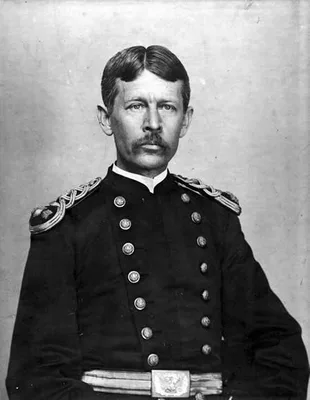
1902 REED, Walter (1851 – 1902)
Recent researches concerning the etiology, propagation, and prevention of yellow fever, by the United States Army Commission.
By 1902 Reed knew that the infectious agent of yellow fever was smaller than bacteria, though he did not specifically call it a virus. "In 1898, the passage of an animal pathogen through a Chamberland filter was repor…
GMN 11860 · https://historyofmedicine.com/id/14064
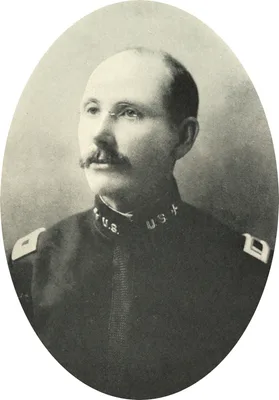
1911 REED, Walter (1851 – 1902); CARROLL, James (1854 – 1907)
Yellow fever: A compilation of various publications. Results of the work of Maj. Walter Reed, Medical Corps, United States Army, and the Yellow Fever Commission. Presented by Mr. Owen.
A convenient compilation of the work of Reed and his associates, including the work of James Carroll published after the death of Walter Reed. Digital facsimile from the Internet Archive at this link.
GMN 9373 · https://historyofmedicine.com/id/11556
1928 STOKES, Adrian (1887 – 1927); ET AL
Experimental transmission of yellow-fever to laboratory animals.
Experimental infection of the monkey, Macacus rhesus, with the yellow fever virus. Stokes succumbed to yellow fever while investigating the disease. With J. H. Bauer and N. P. Hudson.
GMN 5462 · https://historyofmedicine.com/id/7575
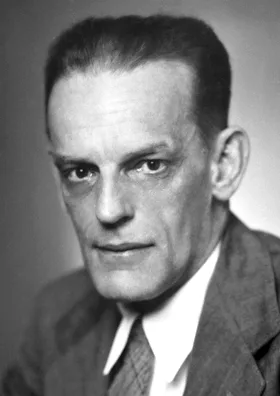
1930 THEILER, Max (1899 – 1972)
Studies on the action of yellow fever virus in mice.
The intracerebral protection test in mice, a test for the diagnosis of yellow fever and for the determination of its past existence in a community, was made possible by Theiler’s discovery that white mice are suscepti…
GMN 5463 · https://historyofmedicine.com/id/7579
1932 SAWYER, Wilbur Augustus (1879 – 1951); LLOYD, Wray Devere Marr (1902 – 1936)
Vaccination against yellow fever with immune serum and virus fixed for mice.
These workers devised an immune serum for prophylactic inoculation against yellow fever. With S. F. Kitchen and W. D. M. Lloyd.
GMN 5465 · https://historyofmedicine.com/id/7586
1932 THEILER, Max (1899 – 1972); HAAGEN, Eugen (1898 – 1972)
Untersuchungen über das Verhalten des Gelbfiebervirus in der Gewebekultur. Mit besonderer Berücksichtigung seiner Kultivierbarkeit.
Yellow fever virus grown in tissue culture.
GMN 5465.1 · https://historyofmedicine.com/id/7591
1935 HOSKINS, Meredith
A protective action of neurotropic against viscerotropic yellow fever virus in Macacus rhesus.
One of the first examples of an animal virus interference phenomenon was demonstrated by Hoskins.
GMN 2576.3 · https://historyofmedicine.com/id/4118
1937 THEILER, Max (1899 – 1972); SMITH, Hugh Hollingsworth (1902 – 1995)
The use of yellow fever virus modified by in vitro cultivation for human immunization.
Immunization without the use of immune serum. In 1951 Theiler was awared the Nobel Prize in Physiology or Medicine "for his discovery of an effective vaccine against yellow fever." This was the first Nobel Prize award…
GMN 5467 · https://historyofmedicine.com/id/7597
1938 SHANNON, Raymond Corbett (1894 – 1945); ET AL
Yellow fever virus in jungle mosquitoes.
Haemagogus sp. shown to be vectors of yellow fever. With L. Whitman and M. Frania.
GMN 5467.1 · https://historyofmedicine.com/id/7600
1952 DICK, George Williamson Auchinvole (1914 – 1997); KITCHEN, S. F.; HADDOW, Alexander John (1912 – 1978)
Zika virus (I). Isolations and serological specificity.
First description of Zika virus, an arbovirus native to Africa. The authors named the virus after the Zika forest in Uganda, where they were searching for Yellow Fever. Instead they isolated a new virus in samples tak…
GMN 7864 · https://historyofmedicine.com/id/10036
1952 DICK, George Williamson Auchinvole (1914 – 1997)
Zika virus. (II). Pathogenicity and physical properties.
Dick's second paper on the Zika virus, immediately following his first paper in the same volume of the same journal (see no. 7864). First statement that the Aedes aegypti mosquito is the vector of transmission of the …
GMN 10939 · https://historyofmedicine.com/id/13135
1952 SMITHBURN, K. C.
Neutralizing antibodies against certain recently isolated viruses in the sera of human beings residing in East Africa.
First report of human illness caused by Zika virus, detected in Uganda and Tanzania. 38 patients had neutralizing antibodies to Zika virus in their blood serum, proving that they had been infected by the virus. (Thank…
GMN 10940 · https://historyofmedicine.com/id/13136
2007 NENE, Vishvanath M.; WORTMAN, Jennifer Russo; LAWSON, Daniel; ET AL
Genome sequence of Aedes aegypti, a major arbovirus vector.
Order of authorship in the original publication: Nene, Wortman, Lawson.... Sequence of the genome of the mosquito that transmits Zika, Yellow fever, Dengue, Chikungunya, etc. (Thanks to Juan Weiss for this reference a…
GMN 11338 · https://historyofmedicine.com/id/13536
2016 SIROHI, Devika; KUHN, Richard J.; ROSSMANN, Michael G. (1930 – 2019); ET AL
The 3.8Å resolution cryo-EM structure of Zika Virus.
Order of authorship in the original paper: Sirohi, Rossmann, Kuhn. Using cryogenic-electron microscopy (cryo-EM), the authors presented the molecular structure of the Zika virus at 3.8Å resolution. Digital facsimile f…
GMN 10941 · https://historyofmedicine.com/id/13137
2016 DUTRA, Heverton Leandor Carneiro; ROCHA, Marcele Neves; MOREIRA, Luciano Andrade; ET AL
Wolbachia blocks currently circulating Zika virus isololates in Brazilian Aedes aegypti mosquitoes.
Order of authorship in the original paper: Dutra, Rocha, Moreira. The authors infected lab populations of mosquitos with Wolbachia pipientis, a common parasitic microbe that infects a high proportion of insects. They …
GMN 10942 · https://historyofmedicine.com/id/13138
2016 CENTERS FOR DISEASE CONTROL AND PREVENTION (CDC)
Local mosquito-borne transmission of Zika virus - Miami - Dade and Broward counties, Florida, June-August 2016.
First report on Zika virus infections in the U.S., tracing the area of infection to a specific square mile, creating a buffer zone around the area, targeting it for spraying and mosquito collection, intervention, mass…
GMN 10944 · https://historyofmedicine.com/id/13140
2017 GRUBAUGH, Nathan D.; LADNER, Jason T.; KRAEMER, Moritz U.G.; ET AL
Genomic epidemiology reveals multiple introductions of Zika virus into the United States.
Order of authorship in the original publication: Grubaugh, Ladner, Kraemer. The authors found that the Zika virus was introduced into Florida at least 4 times, but perhaps as many as 40 times, before it was detected, …
GMN 10945 · https://historyofmedicine.com/id/13141
2017 KARIKÓ, Katalin (1955 – ); WEISSMAN, Drew; PARDI, Norbert; ET AL
Zika virus protection by a single low-dose nucleoside-modified mRNA vaccination.
Prior to their development of the mRNA vaccine for Covid-19, Karikó and Weissman (Nobel Prize 2023) and colleagues used a novel mRNA vaccine, with base modifications created in their laboratory, to generate a protecti…
GMN 14201 · https://historyofmedicine.com/id/16517
2018 PIERSON, Theodore C.; DIAMOND, Michael
The emergence of Zika virus and its new clinical syndromes.
Order of authorship in the original publication: Pierson, Diamond. Analyzes, and documents with 147 references, the variety of new clinical syndromes, including fetal / in utero effects, caused by the Zika virus. Also…
GMN 10946 · https://historyofmedicine.com/id/13142