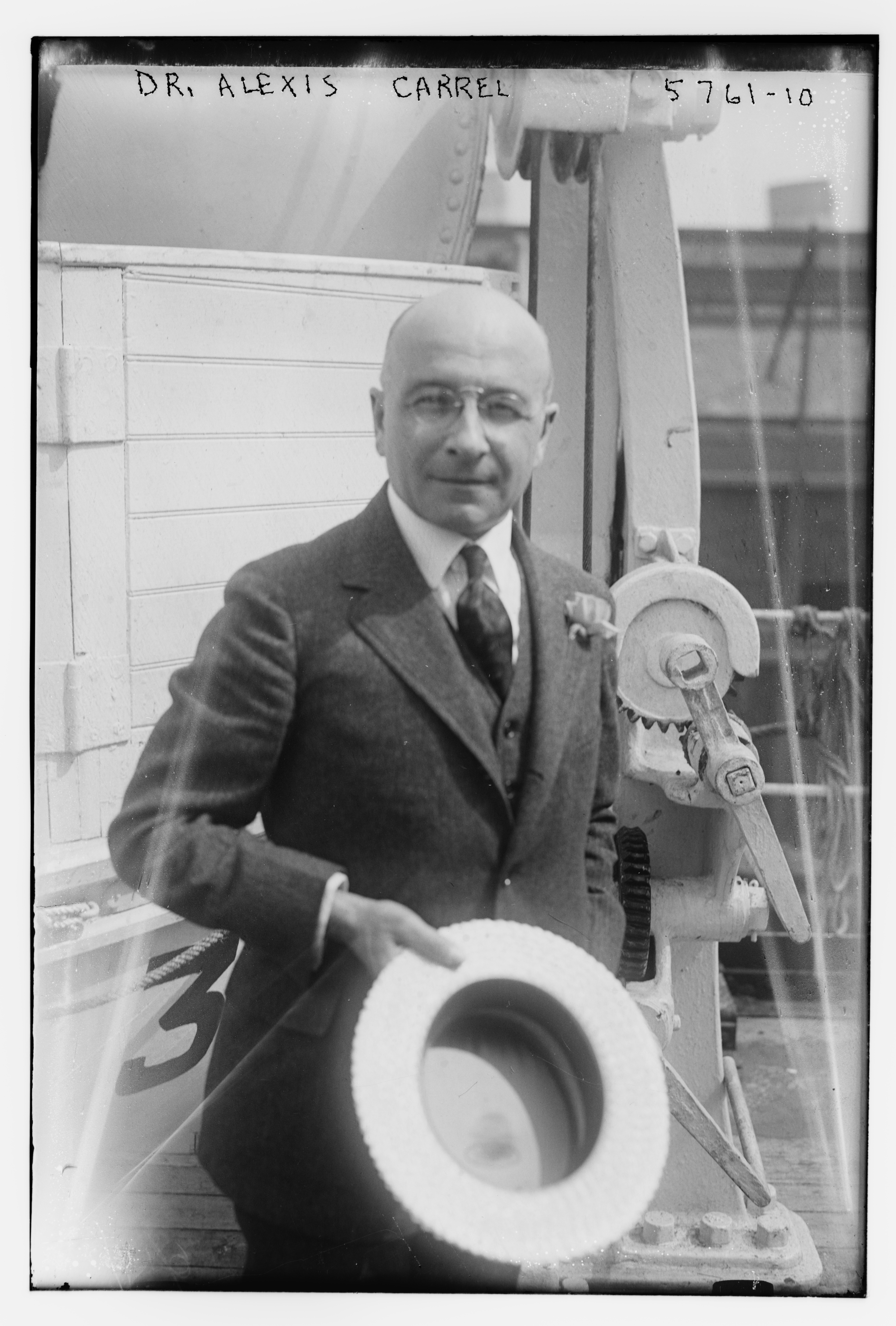
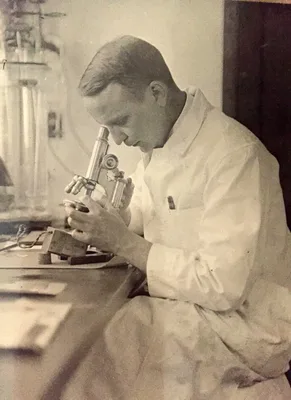
1910 CARREL, Alexis (1873 – 1944); BURROWS, Montrose Thomas (1884 – 1947)
Cultures de sarcome en dehors de l’organisme.
Using the Rous chicken sarcoma, Carrel and Burrows were the first to grow tumor tissue in vitro.
GMN 2636 · https://historyofmedicine.com/id/3234
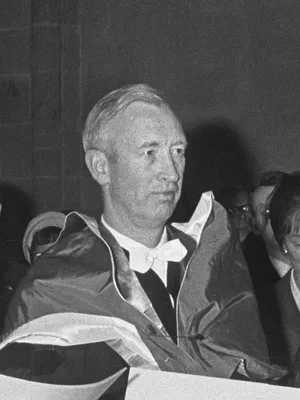
1910 ROUS, Francis Peyton (1879 – 1970)
A transmissible avian neoplasm (sarcoma of the common fowl).
Original description of the chicken sarcoma (Rous sarcoma). Rous demonstrated that sarcomatous tumors in hens could be transmitted to normal hens by the injection of cell-free filtrates (virus) of the original tumor. …
GMN 2637 · https://historyofmedicine.com/id/3238
1925 GYE, William Ewart (1884 – 1952)
The aetiology of malignant new growths.
Gye advanced the theory that an ultramicroscopic virus combined with an intrinsic chemical factor were concerned in the production of the Rous sarcoma.
GMN 2647 · https://historyofmedicine.com/id/3291
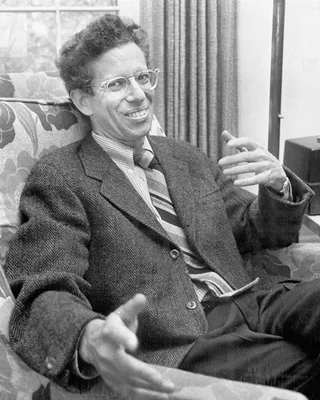
1970 TEMIN, Howard Martin (1934 – 1994); MIZUTANI, Satoshi
RNA-dependent DNA polymerase in virions of Rous sarcoma virus.
Discovery of reverse transcriptase. "In 1969, Temin and a postdoctoral fellow, Satoshi Mizutani, began searching for the enzyme that was responsible for the phenomenon of viral RNA being transferred into proviral DNA.…
GMN 2660.23 · https://historyofmedicine.com/id/3432
1978 ZAMECNIK, Paul Charles (1912 – 2009); STEPHENSON, Mary Louise (1921 – 2009)
Inhibition of Rous sarcoma virus replication and cell transformation by a specific oligodeoxynucleotide (tridecamer deoxyribonucleotide/hybridization competitor/hybridon).
Zamecnick and Stephenson reported the first example of specific inhibition of gene expression by an oligonucleotide when they demonstrated that a short oligonucleotide inhibited Rous sarcoma virus replication in cell …
GMN 13969 · https://historyofmedicine.com/id/16271
1980 GALLO, Robert Charles (1937 – ); POIESZ, Bernard J.; RUSCETTI, Francis W.; ET AL
Detection and isolation of type C retrovirus particles from fresh and cultured lymphocytes of a patient with cutaneous T-cell lymphoma.
Order of authorship in the original publication: Poiesz, Ruscetti,... Gallo. Gallo and associates announced the discovery of a human retrovirus with type C morphology causing a cutaneous T-cell lymphoma. Gallo named t…
GMN 11057 · https://historyofmedicine.com/id/13253
1982 GALLO, Robert Charles (1937 – ); KALYANARAMAN, V. S.; SARNGADHARAN, M. G.; ET AL
A new subtype of human T-cell leukemia virus (HTLV-II) associated with a T-cell variant of hairy cell leukemia.
Order of authorship in the original publication: Kalyanaraman, Sarngadharan,... Gallo. Discovery by Gallo of HTLV-II, which like HTLV-I, is carcinogenic. (Thanks to Juan Weiss for this entry and its interpretation.)
GMN 11058 · https://historyofmedicine.com/id/13254
1983 MONTAGNIER, Luc Antoine (1932 – ); BARRÉ-SINOUSSI, Françoise (1947 – ); ET AL
Isolation of a T-lymphotropic retrovirus from a patient at risk for acquired immune deficiency syndrome (AIDS).
Isolation of the human immunodeficiency virus (HIV-1). In 2008 Barré-Sinoussi and Montagnier shared half of the Nobel Prize in Physiology and Medicine "for their discovery of human immunodeficiency virus." The other h…
GMN 6996 · https://historyofmedicine.com/id/9162
1984 GALLO, Robert Charles (1937 – ); POPOVIC, Mikulas; ET AL
Detection, isolation, and continuous production of cytopathic retroviruses (HTLV-III) from patients with AIDS and pre-AIDS.
Gallo, Popovic, and colleagues demonstrated that a retrovirus they had isolated, called HTLV-III, was the cause of AIDS. M. G. Sarngadharan, and E. Read. Bibcode:1984Sci...224..497P. doi:10.1126/science.6200935. PMID …
GMN 6997 · https://historyofmedicine.com/id/9163
1984 MONTAGNIER, Luc Antoine (1932 – ); BARRÉ-SINOUSSI, Françoise (1947 – ); DAUGUET, C.; ET AL
A new type of retrovirus isolated from patients presenting with lymphadenopathy and acquired immune deficiency syndrome: Structural and antigenic relatedness with equine infectious anemia virus.
Order of authorship in the original publication: Montagnier, Dauguet,... Barré-Sinoussi. In this paper Montagnier and colleagues showed that, contrary to the views of Gallo and his group, LAV (Lymphadenopathy Associat…
GMN 11059 · https://historyofmedicine.com/id/13255
1985 KANKI, Phyllis J.; BARIN, Francis; M'BOUP, Souleymane; ET AL
Serological evidence for virus related to Simian T-Lymphotropic retrovirus III in residents of West Africa.
First report of the discovery of what became known as HIV-2 by the U.S. research group led by Kanki. This group published before the French group, but the French group had reported their data one day prior to the U.S.…
GMN 10789 · https://historyofmedicine.com/id/12985
1985 KANKI, Phyllis J.; ESSEX, Myron Elmer "Max" (1939 – ); MCLANE, M. F.; ET AL
Serologic identification and characterization of a macaque T-lymphotropic retrovirus closely related to HTLV-III.
Order of authorship in the original paper: Kanki, McLane... Essex. This paper was followed in the issue of Science by: Daniel, M., Letvi, N. L., King, N.W., "Isolation of T-cell tropic HTLV-3 - like retrovirus from ma…
GMN 10965 · https://historyofmedicine.com/id/13161
1986 CLAVEL, François; GUÉTARD, D.; BRUN-VEZINET, François; ET AL
Isolation of a new human retrovirus from West African patients with AIDS.
HIV-2 was discovered essentially simultaneously by French and U.S. teams. This was the first publication by the French team. Order of authorship of the original publication was Clavel, Guettard, Brun-Vezinet. See thei…
GMN 10788 · https://historyofmedicine.com/id/12984
2005 WOLFE, Nathan D. (1970 – ); CARR, Jean K.; HENIENE, Walid; BIRX, Deborah Leah (1956 – ); ET AL
Emergence of unique primate T-lymphotropic viruses among central African bushmeat hunters.
Order of authorship in the original publication: Wolfe, Heniene, Carr ...Birx.... "As of 2016, 301 terrestrial mammals were threatened with extinction due to hunting for bushmeat including primates, even-toed ungulate…
GMN 12113 · https://historyofmedicine.com/id/14322
2020 JIANG, Chenyang; LIAN, Xiadong; GAO, Ce; ET AL
Distinct viral reservoirs in individuals with spontaneous control of HIV-1.
The authors describe a mechanism for the observed natural viral "immunity" of individuals with spontaneous control of HIV-1. A very few exceptional people have the molecular ability to steer the incoming/infecting cel…
GMN 13479 · https://historyofmedicine.com/id/15753