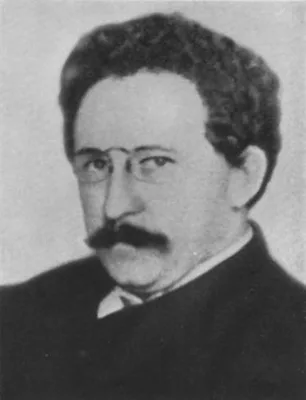
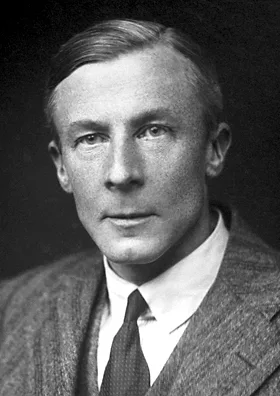
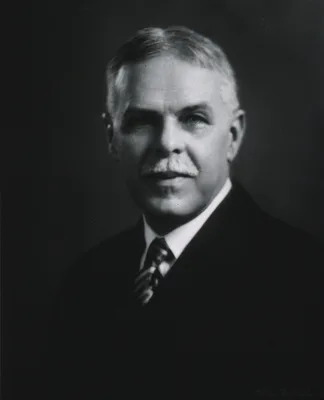
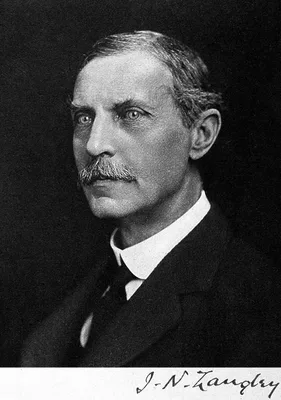
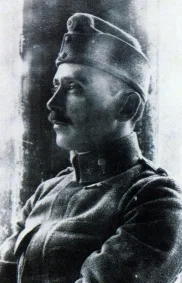
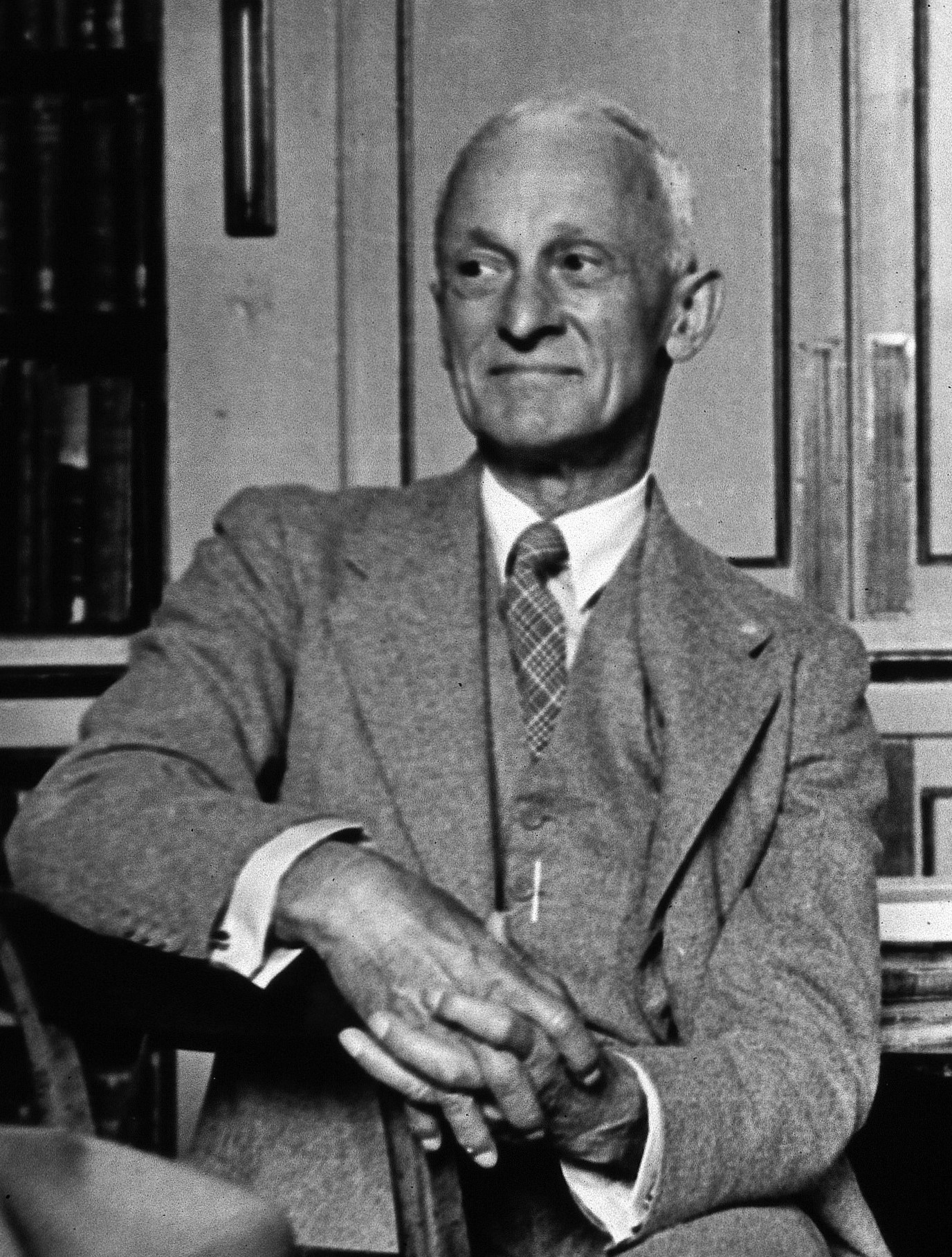
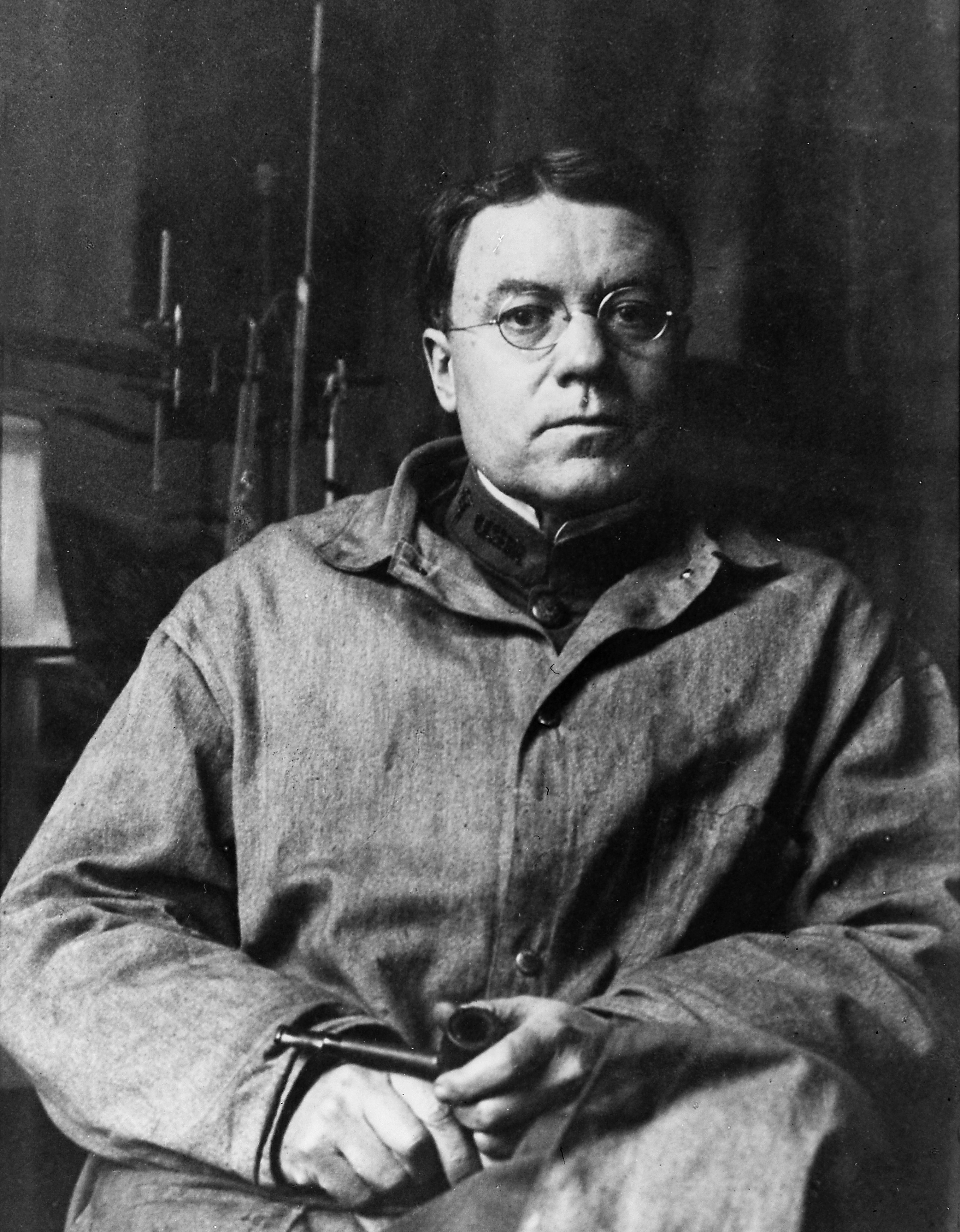
1910 MALONE, Edward Fall (1880 – )
Über die kerne des menschlichen diencephalon.
"Malone was a strict adherent to the cytoarchitectonic method, and ascribed similar function to neurons with similar shape in different parts of the nervous system. He named the nucleus reuniens (thalamus) here, and a…
GMN 7344 · https://historyofmedicine.com/id/9516
1911 HEAD, Sir Henry (1861 – 1940); HOLMES, Sir Gordon Morgan (1876 – 1965)
Sensory disturbances from cerebral lesions.
First systematic account of the functions of the thalamus and its relationship to the cerebral cortex. Reprinted in No. 1304.
GMN 1438.1 · https://historyofmedicine.com/id/2236
1911 MESTREZAT, William (1883 – 1928)
Le liquide céphalo-rachidien normal et pathologique, valeur clinique de l’examen chimique: Syndromes humoraux dans les diverses affections
Mestrezat gave the first exact description of the chemical constitution of the cerebrospinal fluid. Also published at Paris, Maloine, 1912. Digital facsimile of the 1912 edition from the Internet Archive at this link.
GMN 4596 · https://historyofmedicine.com/id/8924
1913 TASHIRO, Shiro (1882 – 1963)
Carbon dioxide production from nerve fibres when resting and when stimulated; a contribution to the chemical basis of irritability.
Tashiro showed that the production of the nervous impulse depends on the metabolic activity of the nerve fiber.
GMN 1302.1 · https://historyofmedicine.com/id/2381
c. 1914 DALE, Sir Henry Hallett (1875 – 1968)
The action of certain esters and ethers of choline, and their relation to muscarine.
Demonstration of the inhibitory action of acetylcholine on the heart. In 1936 Dale shared the Nobel Prize in Physiology or Medicine with Otto Loewi (No. 1343) "for their studies in the chemical mediation of nervous im…
GMN 1340 · https://historyofmedicine.com/id/1465
1914 EWINS, Arthur James (1882 – 1957)
Acetylcholine, a new active principle of ergot.
Isolation of acetylcholine in ergot.
GMN 1341 · https://historyofmedicine.com/id/1470
1914 MONAKOW, Constantin von (1853 – 1930)
Die Lokalisation im Grosshirn und der Abbau der Funktion durch kortikale Herde.
A monumental work on cerebral localization.
GMN 1438.2 · https://historyofmedicine.com/id/2237
1914 WEED, Lewis Hill (1886 – 1952)
Studies on cerebro-spinal fluid. III. The pathways of escape from the subarachnoid spaces with particular reference to the arachnoid villi.
Weed mapped out the pathways of the circulation of the cerebrospinal fluid. He described the pathways in this paper with 40 pages of text and 5 plates. This was the third of his four-part series of papers entitled Stu…
GMN 1439 · https://historyofmedicine.com/id/2238
1916 QUECKENSTEDT, Hans Heinrich Georg (1876 – 1918)
Zur Diagnose der Rückenmarkskompression.
“Queckenstedt’s test” for determining patency of the spinal subarachnoid space.
GMN 4600 · https://historyofmedicine.com/id/490
1916 GASKELL, Walter Holbrook (1847 – 1914)
The involuntary nervous system. Part 1.
This book sums up the life work of Gaskell, who laid the histological foundation of the modern study of the autonomic nervous system. No more published.
GMN 1331 · https://historyofmedicine.com/id/1424
1917 HEAD, Sir Henry (1861 – 1940); RIDDOCH, George (1888 – 1947)
The automatic bladder, excessive sweating and some other reflex conditions, in gross injuries of the spinal cord.
Classic studies on “spinal man”. Republished in book form, 1918.
GMN 1376 · https://historyofmedicine.com/id/1779
1917 RIDDOCH, George (1888 – 1947)
The reflex functions of the completely divided spinal cord in man, compared with those associated with less severe lesions.
Riddoch described in detail the results of complete transection of the spinal cord in man. With Head (see No. 1376) he made one of the most painstaking investigations of this subject.
GMN 1377 · https://historyofmedicine.com/id/1780
1917 WEED, Lewis Hill (1886 – 1952)
The development of the cerebro-spinal spaces in pig and man.
GMN 1440 · https://historyofmedicine.com/id/2239
1917 ADRIAN, Edgar Douglas (1889 – 1977); LUCAS, Keith (1879 – 1916)
The conduction of the nervous impulse.
Gotch (No. 1420.1), Adrian, and Keith Lucas made important discoveries concerning the “all-or-nothing” responses of individual nerve fibers. Their work is summarized in the above monograph. Digital facsimile from the …
GMN 1303 · https://historyofmedicine.com/id/2385
1918 HUNT, Reid (1870 – 1948)
Vasodilator reactions.
Showed that tissues are more sensitive to acetylcholine after treatment with eserine (physostigmine).
GMN 1342 · https://historyofmedicine.com/id/1475
1920 HEAD, Sir Henry (1861 – 1940); THOMPSON, Harold Theodore (1878 – 1935); RIDDOCH, George (1888 – 1947); HOLMES, Sir Gordon Morgan (1876 – 1965); SHERREN, James (1872 – 1945); RIVERS, William Halse Rivers (1864 – 1922)
Studies in neurology. By Henry Head in conjunction with W.H.R. Rivers, James Sherren, Gordon Holmes, Theodore Thompson, George Riddoch. 2 vols.
Reprint, with modifications and additions, of seven papers published in the journal Brain between 1905 and 1918. Digital facsimile from the Internet Archive at this link.
GMN 1304 · https://historyofmedicine.com/id/1126
1920 –1921 ARIENS KAPPERS, Cornelius Ubbo (1877 – 1946)
Die vergleichende Anatomie des Nervensystems der Wirbeltiere und des Menschen. 2 vols.
Ariëns Kappers was Professor of Neuroanatomy at Amsterdam. See also No. 14229.
GMN 1247 · https://historyofmedicine.com/id/2063
1921 LANGLEY, John Newport (1852 – 1925)
The autonomic nervous system.
Langley divided the autonomic nervous system into (1) the orthosympathetic, and (2) the parasympathetic; he defined it as an efferent system.
GMN 1332 · https://historyofmedicine.com/id/1426
1921 –1922 LOEWI, Otto (1873 – 1961)
Ueber humorale Uebertragbarkeit der Herznervenwirkung.
Loewi’s important experiments firmly established the theory of chemical intermediaries in nervous reactions. In 1936 Loewi shared the Nobel Prize in Physiology or Medicine with Dale "for discoveries related to chemica…
GMN 1343 · https://historyofmedicine.com/id/1486
1921 TILNEY, Frederick (1875 – 1938); RILEY, Henry Alsop (1887 – 1966)
The form and functions of the central nervous system.
GMN 1441 · https://historyofmedicine.com/id/2240
1924 ERLANGER, Joseph (1874 – 1965); GASSER, Herbert Spencer (1888 – 1963)
The compound nature of the action current of nerve as disclosed by the cathode ray oscillograph.
In 1944 Erlanger and Gasser shared the Nobel Prize in Physiology or Medicine "for their discoveries regarding the highly differentiated functions of single nerve fibers."
GMN 1305 · https://historyofmedicine.com/id/1130
1924 KATO, Genichi (1890 – 1979)
The theory of decrementless conduction in narcotised region of nerve.
Kato made valuable investigations on nerve conduction. A second volume, Further studies, appeared in 1926.
GMN 1306 · https://historyofmedicine.com/id/1137
1924 DUSSER DE BARENNE, Johannes Gregorius (1885 – 1940)
Experimental researches on sensory localization in the cerebral cortex of the monkey (Macacus).
Dusser de Barenne demonstrated the major functional subdivisions of the sensory cortex.
GMN 1442 · https://historyofmedicine.com/id/2241
1924 LIDDELL, Edward George Tandy (1895 – 1981); SHERRINGTON, Sir Charles Scott (1857 – 1952)
Reflexes in response to stretch (myotatic reflexes).
This investigation of the stretch reflex was of value in elucidating muscle tone and posture.
GMN 1443 · https://historyofmedicine.com/id/2242
1924 LOEWI, Otto (1873 – 1961); NAVRATIL, E
Ueber humorale Uebertragbarkeit der Herznervenwirkung
Established the presence of cholinesterase and that in vitro eserine inhibited this esterase.
GMN 1344 · https://historyofmedicine.com/id/8641
1925 ECONOMO, Constantin von (1876 – 1931); KOSKINAS, Georg N. (1885 – 1975)
Die Cytoarchitektonik der Hirnrinde des erwachsenen Menschen. 1 vol. and atlas.
This work consisted of textbook of more than 800 pages and an atlas with 112 large-sized microphotographic plates of the cortex. The textbook contained detailed descriptions of their studies and an introduction to the…
GMN 1444 · https://historyofmedicine.com/id/2243
1926 ADRIAN, Edgar Douglas (1889 – 1977); ZOTTERMAN, Yngve (1898 – 1982)
The impulses produced by sensory nerve-endings. Part 2. The response of a single end-organ.
The observations of Adrian and Zotterman on the response of single sensory end-organs to a natural stimulus led them to formulate their conception of “adaptation” of receptors to stimuli.
GMN 1307 · https://historyofmedicine.com/id/1141
1926 CUSHING, Harvey Williams (1869 – 1939)
Studies in intracranial physiology & surgery. The third circulation. The hypophysis. The gliomas. The Cameron Prize Lectures delivered at the University of Edinburgh October 19, 20, 22, 1925.
This series of three lectures was an analytical review by Cushing of the three main categories of scientific work that he had accomplished during the previous 25 years. Remarkably, Cushing completed this review and de…
GMN 14313 · https://historyofmedicine.com/id/16638
1928 ADRIAN, Edgar Douglas (1889 – 1977)
The basis of sensation. The action of the sense organs.
In 1932 Adrian shared the Nobel Prize in Physiology or Medicine with Charles Scott Sherrington "for their discoveries about the function of neurons." See also Nos. 1307, 1528, and 1303.
GMN 1308 · https://historyofmedicine.com/id/1144
1928 GAGEL, Otto (1899 – )
Zur Histologie und Topographie der vegetativen Zentren im Rückenmark.
Study of the cells of origin of the white rami.
GMN 1333 · https://historyofmedicine.com/id/1427
1929 DALE, Sir Henry Hallett (1875 – 1968); DUDLEY, Harold Ward (1887 – 1935)
The presence of histamine and acetylcholine in the spleen of the ox and the horse.
Isolation of acetylcholine from ox and horse spleen.
GMN 1345 · https://historyofmedicine.com/id/1518
1929 BERGER, Johannes (“Hans”) (1873 – 1941)
Über das Elektrenkephalogramm des Menschen.
First recording of human brain activity, which Berger called electroencephalography. Berger actually recorded his first EEG in 1924, but did not publish the technique until 1929. He showed that the electrical activity…
GMN 1446 · https://historyofmedicine.com/id/2245
1929 LASHLEY, Karl Spencer (1890 – 1958)
Brain mechanisms and intelligence: a quantitative study of injuries to the brain.
Lashley related nervous function and behavior with well-defined areas of the brain, particularly in connection with cerebral lesions.
GMN 1446.1 · https://historyofmedicine.com/id/2246
1931 MÜLLER, Ludwig Robert (1870 – 1962)
Lebensnerven und Lebenstriebe. 3te. Aufl.
GMN 1309 · https://historyofmedicine.com/id/1150
1931 CANNON, Walter Bradford (1871 – 1945); BACQ, Zénon (1903 – 1983)
Studies on conditions of activity in endocrine organs. xxvi. A hormone produced by sympathetic action on smooth muscle.
Cannon and Bacq suggested the name “sympathin” for a substance which they considered to be liberated into the blood stream following nerve stimulation and which acted in the same manner as sympathetic impulses. See al…
GMN 1346 · https://historyofmedicine.com/id/1524
1931 ENGELHART, Erich
Der humorale Wirkungsmechanismus der Oculomotoriusreizung.
GMN 1347 · https://historyofmedicine.com/id/1529
1932 GIBBS, Owen Stanley (1898 – ); SZELÖCZEY, J
Die humorale Übertragung der Chorda tympani-Reizung.
Production of acetylcholine on stimulation of the chorda tympani nerve.
GMN 1348 · https://historyofmedicine.com/id/1534
1932 KELLER, Allen Dudley (1901 – ); HARE, William Kenrick (1908 – )
The hypothalamus and heat regulation.
Location of the heat-regulating center in the hypothalamus.
GMN 1446.2 · https://historyofmedicine.com/id/2247
1932 CLARK, Sir Wilfrid Edward Le Gros (1895 – 1971)
The structure and connections of the thalamus.
GMN 1448 · https://historyofmedicine.com/id/2249
1933 BAIN, William Alexander (1905 – 1971)
The mode of action of vasodilator and vasoconstrictor nerves.
GMN 1349 · https://historyofmedicine.com/id/1537
1933 CANNON, Walter Bradford (1871 – 1945); ROSENBLUETH, Arturo Stearns (1900 – 1970)
Studies on conditions of activity in endocrine organs, xxix. Sympathin E and sympathin I.
Adrenaline and sympathin were suggested to be unidentical substances, and Cannon and Rosenblueth proposed the terms “sympathin E” and “sympathin I”.
GMN 1350 · https://historyofmedicine.com/id/1543
1933 KIBJAKOW, A. W.
Ueber humorale Uebertragung der Erregung von einem Neuron suf das andere.
Kibjakow showed that some substance in a muscle perfusate is able to contract muscle during stimulation of nerve.
GMN 1351 · https://historyofmedicine.com/id/1547
1933 FOERSTER, Otfrid (1873 – 1941)
The dermatomes in man.
GMN 1377.1 · https://historyofmedicine.com/id/1781
1934 FELDBERG, Wilhelm Siegmund (1900 – 1993); GADDUM, Sir John Henry (1900 – 1965)
The chemical transmitter at synapses in a sympathetic ganglion.
These workers produced evidence that a chemical agent (acetylcholine) appears in the transfer of nerve impulses from neuron to neuron in sympathetic ganglia.
GMN 1352 · https://historyofmedicine.com/id/1551
1934 ADRIAN, Edgar Douglas (1889 – 1977); MATTHEWS, Sir Bryan Harold Cabot (1906 – 1986)
The interpretation of potential waves in the cortex.
Confirmation of Berger’s findings (No. 1446). See also Brain, 1934, 57, 355-85.
GMN 1447 · https://historyofmedicine.com/id/2248
1936 YOUNG, John Zachary (1907 – 1997)
The structure of nerve fibres in cephalopods and crustacea.
Young’s discovery of the giant nerve fibers of the squid (squid giant axon) Loglio forbesi made possible the study of the electrical phenomena of the nervous impulse in the interior as well as on the surface of a nerv…
GMN 1309.1 · https://historyofmedicine.com/id/1152
1936 DALE, Sir Henry Hallett (1875 – 1968); FELDBERG, Wilhelm Siegmund (1900 – 1993); BROWN, Sir George Lindor (1903 – 1971)
Reactions of the normal mammalian muscle to acetylcholine and to eserine.
GMN 1353 · https://historyofmedicine.com/id/1557
1936 CLARK, Sir Wilfrid Edward Le Gros (1895 – 1971)
The topography and homologies of the hypothalamic nuclei in man.
GMN 1449 · https://historyofmedicine.com/id/2311
1936 FOERSTER, Otfrid (1873 – 1941)
The motor cortex in man in the light of Hughlings Jackson’s doctrines.
In this Hughlings Jackson Lecture, Foerster published his famous cytoarchitectonic map of the human cerebral cortex.
GMN 1450 · https://historyofmedicine.com/id/2318
1937 –1938 KIRKMAN, Hadley (1901 – 1997); SEVERINGHAUS, Aura Edward (1894 – 1979)
A review of the Golgi apparatus.
GMN 1310 · https://historyofmedicine.com/id/1159