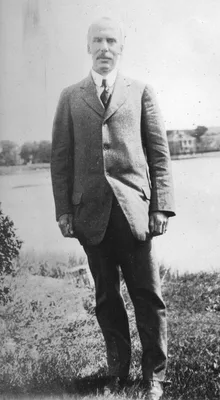
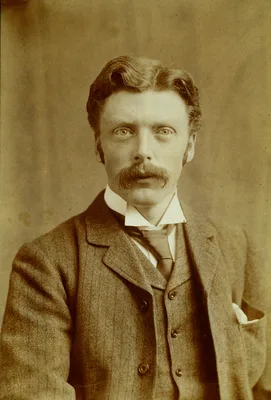
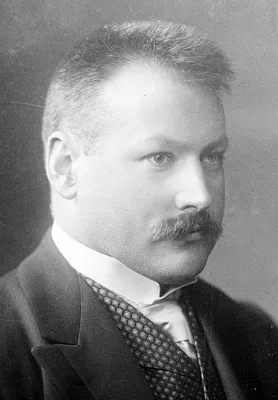
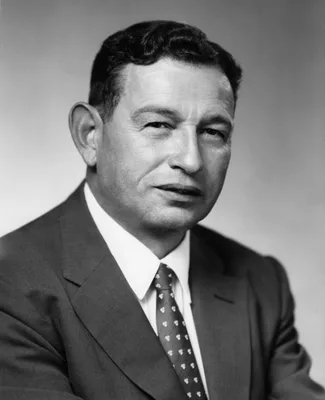
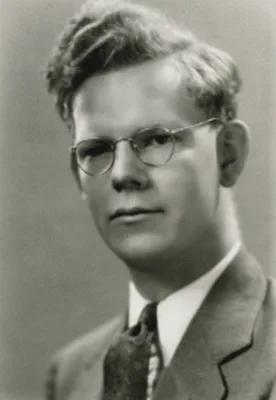
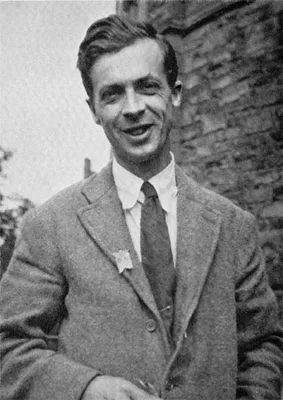
1916 CLEMENTS, Frederic Edward (1874 – 1945)
Plant succession: An analysis of the development of vegetation.
A seminal work of ecological science, establishing a dynamic model of species succession toward an eventual "climax" equilibrium under the influence of climate and other factors in a given habitat. "From his observati…
GMN 8154 · https://historyofmedicine.com/id/10330
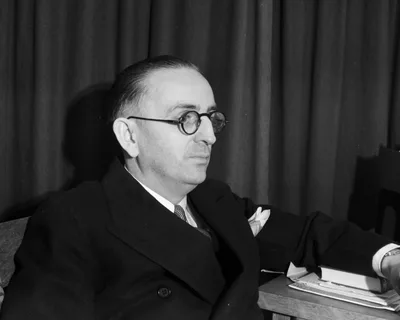
1916 LILLIE, Frank Rattray (1870 – 1947)
The theory of the free-martin.
Lillie found that sex steroids in the blood controlled differentiation. "Free-martins, sterile female cows born without sex organs, were a perplexing issue for cattle ranchers. Lillie found that free-martins formed wh…
GMN 11854 · https://historyofmedicine.com/id/14058
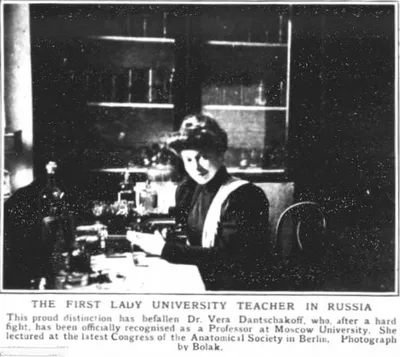
1916 DANCHAKOFF, Vera Mikhailovna (1879 – 1950)
The differentiation of cells as a criterion for cell identification, considered in relation to the small cortical cells of the thymus.
First use of the term "stem cells" in English. Digital facsimile from rupress.org at this link.
GMN 14094 · https://historyofmedicine.com/id/16405
1917 THOMPSON, D'Arcy Wentworth (1860 – 1948)
On growth and form.
Thompson's description of the mathematical beauty of nature eventually inspired others, such as Alan Turing, to develop the scientific explanation of morphogenesis, the process by which patterns are formed in plants a…
GMN 6972 · https://historyofmedicine.com/id/9137
1920 GOLDSCHMIDT, Richard Benedict (1878 – 1958)
Mechanismus und Physiologie der Geschlechtsbestimmung.
Translated into English William J. Dakin as The Mechanism and Physiology of Sex Determination (London: Methuen & Co., 1923). Digital facsimile of the 1920 edition from Google Books at this link. Digital facsimile of t…
GMN 529 · https://historyofmedicine.com/id/1684
1920 –1939 ABDERHALDEN, Emil (1877 – 1950)
Handbuch der biologischen Arbeitsmethoden. Edited by Emil Abderhalden. 14 vols. in 107.
The Hathi Trust maintains versions of all 107 parts, most of which are searchable to a limited extent, at this link.
GMN 136 · https://historyofmedicine.com/id/2183
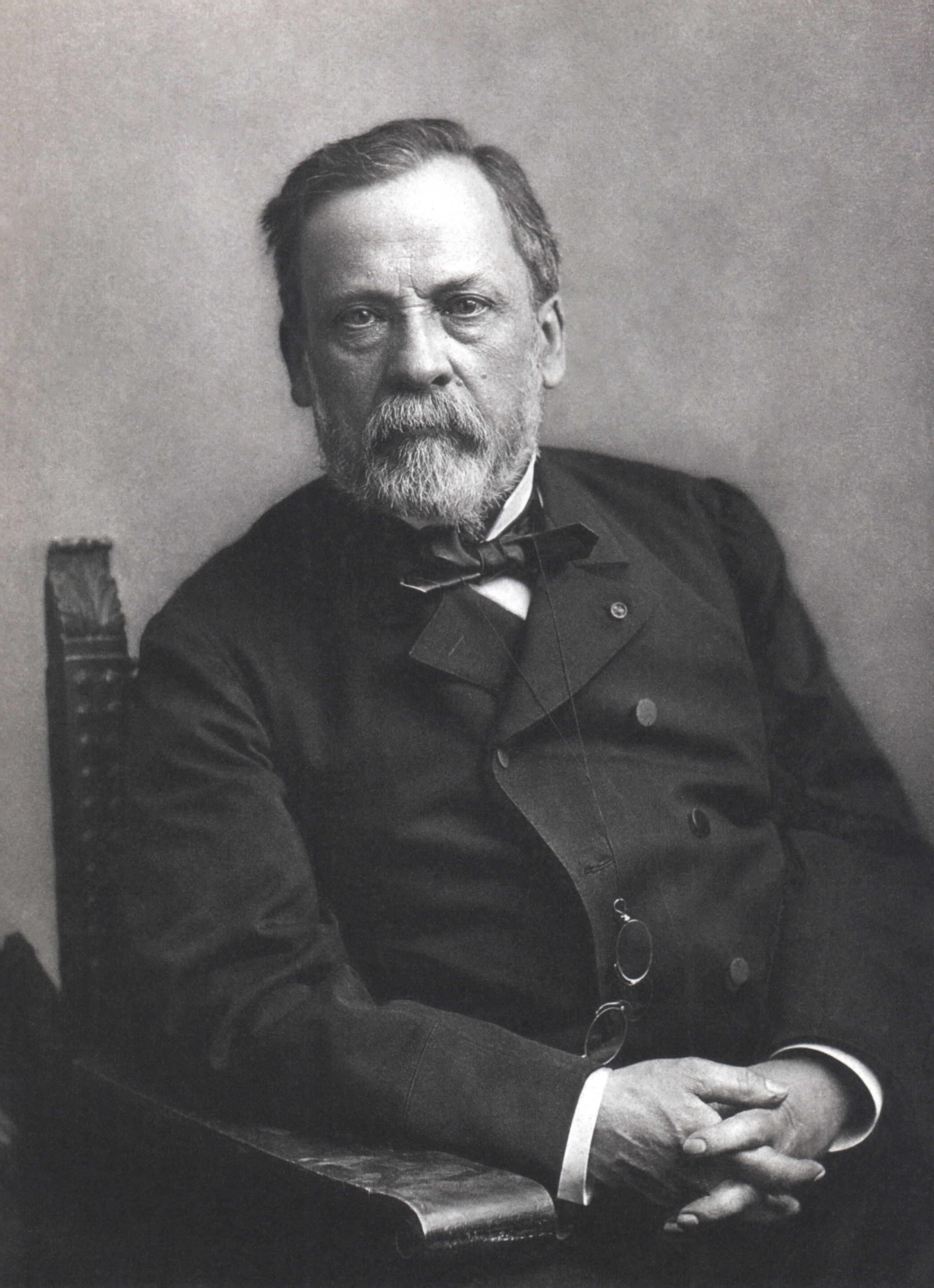
1922 –1939 PASTEUR, Louis (1822 – 1895); VALLERY-RADOT, Joseph Louis Pasteur (1886 – 1970)
Œuvres de Pasteur, réunies par Pasteur Vallery-Radot. 7 vols.
One of the founders of bacteriology, Pasteur's work on fermentation, the doctrine of spontaneous generation (which he exploded), virus diseases and preventive vaccinations, was fundamental. Digital facsimile of the co…
GMN 83 · https://historyofmedicine.com/id/1399
1922 –1931 KAHN, Fritz (1888 – 1968)
Das Leben des Menschen. Eine volkstümliche Anatomie, Biologie, Physiologie und Entwicklungsgeschichte des Menschen. 5 vols.
By developing a new infographics style of illustration in which physiological processes and other technical medical and biological concepts were often depicted as, or compared to machines, Kahn made medical and biolog…
GMN 7649 · https://historyofmedicine.com/id/9821
1923 ROBERTSON, Thorburn Brailsford (1884 – 1930)
The chemical basis of growth and senescence.
GMN 138 · https://historyofmedicine.com/id/2251
1924 ASCHOFF, Karl Albert Ludwig (1866 – 1942)
Das reticulo-endotheliale System.
In an earlier paper on this subject (Münch, med. Wschr., 1922, 69, 1352-56) Aschoff introduced the term “reticulo-endothelial system”; as early as 1914 he grouped certain phagocytic cells into his system.
GMN 562 · https://historyofmedicine.com/id/290
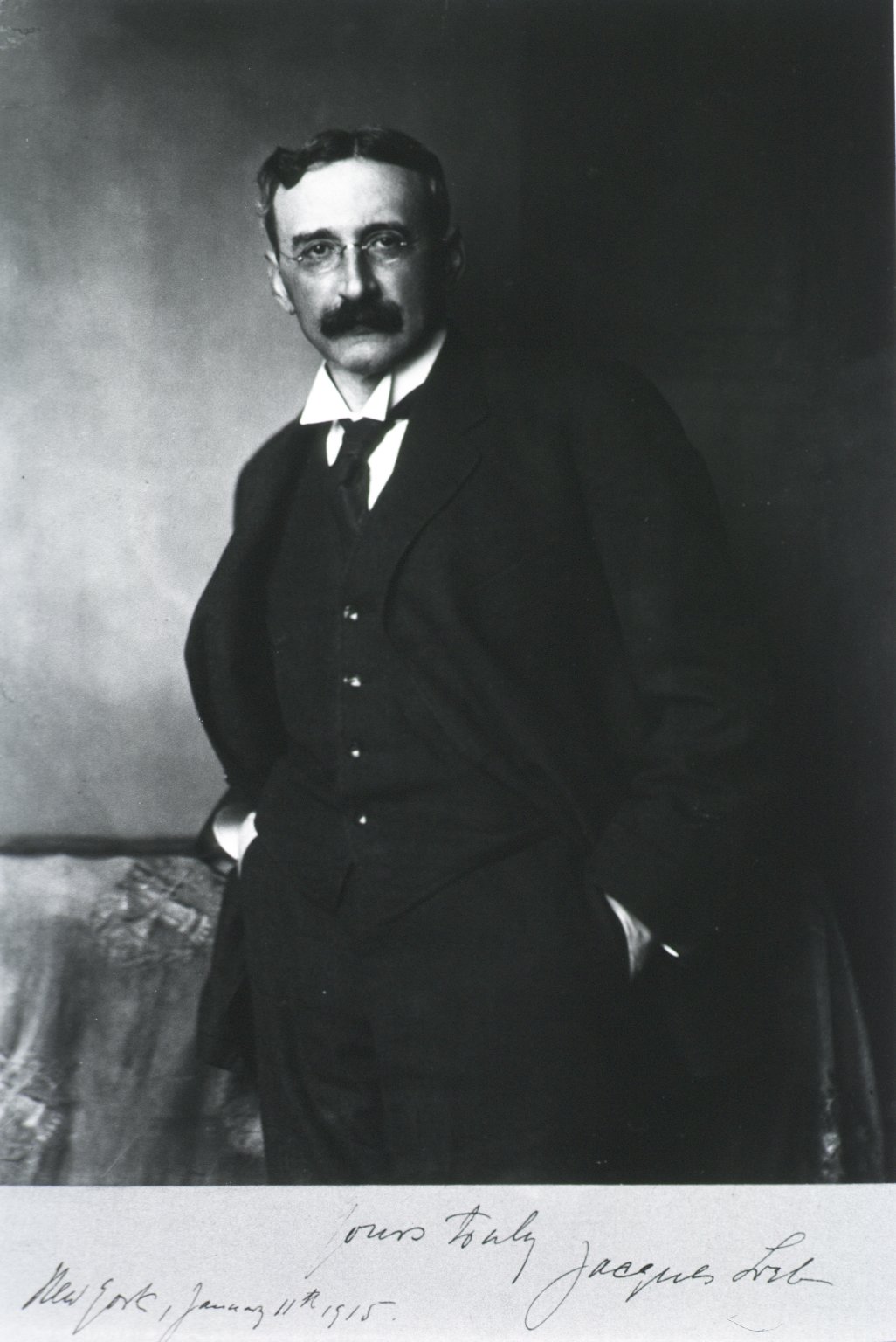
1924 LOEB, Jacques (1859 – 1924)
Regeneration from a physico-chemical viewpoint.
GMN 139 · https://historyofmedicine.com/id/2253
1924 OPARIN, Alexander Ivanovich (1894 – 1980)
Proiskhozhedenie Zhizni.
Oparin’s central thesis was that the first organisms to emerge in the anaerobic environment of the primitive Earth must have been heterotrophic bacteria. He proposed that life had been preceded by a lengthy period of …
GMN 7384 · https://historyofmedicine.com/id/9556
1924 MOORE, Carl Richard (1892 – 1955); QUICK, William J.
The scrotum as a temperature regulator for the testes.
Moore and Quick established that the scrotal sac, and its ability to expand or contract, helps to regulate the temperature of the testes. Through this mechanism it enables sperm production and supports the viability o…
GMN 14195 · https://historyofmedicine.com/id/16511
1925 LOTKA, Alfred James (1880 – 1949)
Elements of physical biology.
In this landmark of theoretical population ecology Lotka attempted to provide for parts of biology a basis comparable to that given by theoretical physics to experimental physics. This was the first great exposition a…
GMN 145.63 · https://historyofmedicine.com/id/2508
1926 VOLTERRA, Vito (1860 – 1940)
Variazioni e fluttuazioni del numero d’individui in specie animali conviventi.
The mathematician Volterra created the basic equations for two species interactions. Abridged English translation as appendix to R. Chapman, Animal ecology, New York, 1931.
GMN 145.64 · https://historyofmedicine.com/id/2549
1926 SUMNER, James Batcheller (1887 – 1955)
The isolation and crystallization of the enzyme urease.
Sumner first isolated and crystallized an enzyme (urease) and proved that enzymes are proteins. One month after publication of the above paper Sumner reinforced his discovery by recrystalizing urease, publishing a fol…
GMN 14025 · https://historyofmedicine.com/id/16332
1927 ELTON, Charles Sutherland (1900 – 1991)
Animal ecology.
Elton integrated the concepts of food chains, pyramids of numbers, and the “niche” into a useful framework for ecology.
GMN 145.65 · https://historyofmedicine.com/id/2562
1927 MULLER, Hermann Joseph (1890 – 1967)
Artificial transmutation of the gene.
Muller showed that radiation causes mutations that are passed on from one generation to the next. This was the first suggestion that inherited traits might be altered or controlled, and it created a sensation: “Man’s …
GMN 251.1 · https://historyofmedicine.com/id/8680
1928 NORDENSKIÖLD, Erik (1872 – 1933)
The history of biology: A survey. Translated by L. B. Eyre.
Previously published in Swedish and German editions. Many reprints were published.
GMN 142 · https://historyofmedicine.com/id/2261
1928 GRIFFITH, Frederick (1879 – 1941)
The significance of pneumococcal types.
Griffith’s experiments on transforming type II pneumococci into type III were repeated by Avery who was able sixteen years later (No. 255.3) to demonstrate that DNA was the transforming material.
GMN 251.2 · https://historyofmedicine.com/id/8681
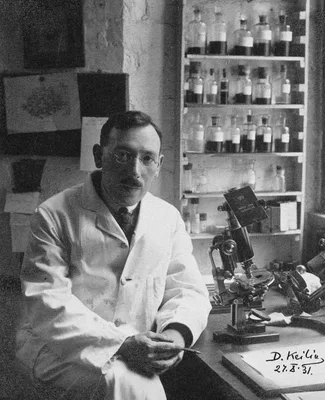
1929 KEILIN, David (1887 – 1963)
Cytochrome and respiratory enzymes.
Keilin discovered cytochrome and laid the foundations of the modern concept of cellular respiration. See No. 1588.3.
GMN 968 · https://historyofmedicine.com/id/296
1929 FELL, Dame Honor Bridgett (1900 – 1986); ROBISON, Robert (1883 – 1941)
The growth, development and phosphatase activity of embryonic avian femora in limb-buds cultivated in vitro.
First modern organ cultures.
GMN 566.1 · https://historyofmedicine.com/id/298
1929 FRANK, Robert Tilden (1875 – 1949)
The female sex hormone. Part I: Biology, pharmacology and chemistry. Part II: Clinical investigations based on the female sex hormone blood test.
The first handbook on female sex hormones. Digital facsimile from the Hathi Trust at this link.
GMN 7186 · https://historyofmedicine.com/id/9353
1929 HALDANE, John Burdon Sanderson (1892 – 1964)
The origin of life.
Haldane suggested that organic molecules could have been synthesized in an early atmosphere of carbon dioxide.
GMN 7467 · https://historyofmedicine.com/id/9639
1930 NORTHROP, John Howard (1891 – 1987)
Crystalline pepsin.
Crystallization of pepsin and its identity as a protein. In 1946 Northrop shared half of the Nobel Prize in Chemistry with Wendell Meredith Stanley "for their preparation of enzymes and virus proteins in a pure form."…
GMN 1038.1 · https://historyofmedicine.com/id/1021
1930 MILANKOVIČ, Milutin (Milankovitch) (1879 – 1958)
Mathematische Klimalehre und astronomische Theorie der Klimaschwankungen. Handbuch der Klimatologie, Bd. 1, Teil A.
Milankovitch cycles, first exposition (176 pages). Milankovitch theorized that variations in eccentricity, axial tilt, and precession of the Earth's orbit determined climatic patterns on Earth through orbital forcing,…
GMN 7308 · https://historyofmedicine.com/id/9478
1931 LEWIS, Warren Harmon (1870 – 1964)
Pinocytosis.
Discovery of pinocytosis.
GMN 139.2 · https://historyofmedicine.com/id/2256
1932 ASTBURY, William Thomas (1898 – 1961)
X-ray studies of the structures of hair, wool, and related fibres. I. General.
Astbury, a student of William Lawrence Bragg, was the first to study proteins by X-ray analysis. He applied X-ray analysis to the structure of hair, wool, and related fibers, of which the protein keratin is the princi…
GMN 6918 · https://historyofmedicine.com/id/9083
1932 BOHR, Niels (1885 – 1962)
Light and life. Address delivered at the opening meeting of the International Congress on Light Therapy in Copenhagen 15. August 1932.
In 1922 Bohr was awarded the Nobel Prize in Physics "for his services in the investigation of the structure of atoms and of the radiation emanating from them." Including Bohr's 1932 address, Light and life, in the Nob…
GMN 12060 · https://historyofmedicine.com/id/14269
1934 GAUSE, George Francis (Georgiĭ Frantsevich) (1910 – 1986)
The struggle for existence.
Gause developed the concept of competitive exclusion as formulated by Volterra.
GMN 145.66 · https://historyofmedicine.com/id/2699
1934 EULER, Ulf Svante Hansson von (1905 – 1983)
Zur Kenntnis der pharmakologischen Wirkungen der Natursekreten und Extrakten männlicher accessorischer Geschlechtsdrüsen.
Prostaglandins. Von Euler reported that a lipid fraction of human seminal fluid had potent activities on smooth muscle, hence the name. Later, prostaglandins were found to be widely distributed in mammalian tissues an…
GMN 1924.3 · https://historyofmedicine.com/id/2715
1934 BERNAL, John Desmond (1901 – 1971); HODGKIN, Dorothy Crowfoot (1910 – 1994)
X-Ray photographs of crystalline pepsin.
Bernal and Hodgkin took the first X-ray photograph of a protein structure—crystalline pepsin. They showed that crystals of pepsin give an X-ray diffaction pattern, beginning protein crystallography. This may also be t…
GMN 6923 · https://historyofmedicine.com/id/9088
1935 STANLEY, Wendell Meredith (1904 – 1971)
Isolation of a crystalline protein possessing the properties of tobacco-mosaic virus.
Stanley first crystallized a virus— tobacco mosaic virus. The following year Bawden, Pirie, Bernal and Fankuchen (No. 12005) showed that tobacco mosaic virus molecules are asnisometric and consist of ribonucleoprotein…
GMN 2524.5 · https://historyofmedicine.com/id/3353
1935 DELBRÜCK, Max (1906 – 1981); TIMOFEEV-RESSOVSKIJ, Nikolaj Vladmirovich (Timofeeff-Ressovsky; Николай Владимирович Тимофеев-Ресовский) (1900 – 1981); ZIMMER, Karl Günter (1911 – 1988)
Ueber die Natur der Genmutation und der Genstruktur.
This paper is divided into four sections. The first, by Timofeev-Ressovskij, describes the mutagenic effects of x-rays and gamma rays on Drosophila melanogaster; the second part, by Zimmer, analyzes Timofeev-Ressovski…
GMN 254.1 · https://historyofmedicine.com/id/8686
1935 CASTETTER, Edward Franklin (1896 – 1978); UNDERHILL, Ruth Murray (1883 – 1984)
The ethnobiology of the Papago Indians. Ethnological Studies in the American Southwest II.
"The Tohono O’odham ... are a Native American people of the Sonoran Desert, residing primarily in the U.S. state of Arizona and the Mexican state of Sonora. Tohono O’odham means "Desert People." The federally recogniz…
GMN 9303 · https://historyofmedicine.com/id/11485
1935 LORENZ, Konrad (1903 – 1989)
Der Kumpan in der Umwelt des Vogels - Der Artgenosse als auslösendes Moment sozialer Verhaltensweisen.
This paper is often considered the foundational text and conceptual bedrock for ethology, the scientific study of animal behavior. Lorenz concentrated his studies in the bird populations. He analyzed social behavior i…
GMN 14370 · https://historyofmedicine.com/id/16702
1936 SCHLESINGER, Max (1906 – 1937)
The Feulgen reaction of the bacteriophage substance.
Schlesinger showed that the fundamental constituents of bacteriophages consist mainly of approximately equal amounts of protein and DNA.
GMN 2524.6 · https://historyofmedicine.com/id/3356
1936 CASTETTER, Edward Franklin (1896 – 1978); OPLER, Morris Edward (1907 – 1996)
The ethnobiology of the Chiricahua and Mescalero Apache: A. the use of plants for food, beverages and narcotics. Ethnobiological studies in the American Southwest, Vol. 3. Biological series (Vol. 4, No. 5); Bulletin, University of New Mexico, whole, (No. 297).
GMN 9304 · https://historyofmedicine.com/id/11486
1936 BERNAL, John Desmond (1901 – 1971); BAWDEN, Sir Frederick Charles (1908 – 1972); PIRIE, Norman Wingate (1907 – 1997); FANKUCHEN, Isidor (1904 – 1964); ET AL
Liquid crystalline substances from virus infected plants.
Order of authorship in the original publication: Bawden, Pirie, Bernal, Fankuchen. The authors isolated and crystallized tobacco mosaic virus, finding for the first time that a virus contained nucleic acids, when othe…
GMN 12005 · https://historyofmedicine.com/id/14213
1937 –1938 KIRKMAN, Hadley (1901 – 1997); SEVERINGHAUS, Aura Edward (1894 – 1979)
A review of the Golgi apparatus.
GMN 1310 · https://historyofmedicine.com/id/1159
1938 HAUROWITZ, Felix (1896 – 1987)
Das Gleichgewicht zwischen Hämoglobin and Sauerstoff.
Haurowitz discovered that crystalline deoxyhemoglobin changes in shape and color on reaction with oxygen, suggesting that it is a molecular lung.
GMN 6915 · https://historyofmedicine.com/id/9080
1938 WEAVER, Warren (1894 – 1978)
Molecular biology: origin of the term.
Perhaps the only mathematician to name a new biological discipline, in 1938, as Director of the Natural Sciences Division of the Rockefeller Foundation, Weaver coined the term molecular biology to describe the use of …
GMN 6924 · https://historyofmedicine.com/id/9089
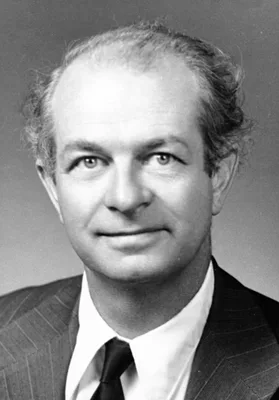
1939 PAULING, Linus Carl (1901 – 1994)
The nature of the chemical bond and the structure of molecules and crystals: An introduction to modern structural chemistry.
This book set forth in detail Pauling's valence-bond theory based on the quantum-mechanical concept of resonance between two energy states, which led to his highly innovative idea that the hybridization of orbitals (e…
GMN 6914 · https://historyofmedicine.com/id/9079
1940 COTT, Hugh Bamford (1900 – 1987)
Adaptive coloration in animals. With an introduction by Julian S. Huxley.
Published during WWII, Cott's book was the first major work on camouflage in zoology, appreciated by zoologists for its scientific information and carried by many allied soldiers during the war for survival purposes. …
GMN 7719 · https://historyofmedicine.com/id/9891
1941 BEADLE, George Wells (1903 – 1989); TATUM, Edward Lawrie (1909 – 1975)
Genetic control of biochemical reactions in Neurospora.
Beadle and Tatum proposed the "one gene, one enzyme" hypothesis in 1941. This was a restatement of ideas originally proposed by Archibald Garrod (No. 244.1) in 1908. 1958 Beadle and Tatum shared the Nobel Prize in Phy…
GMN 254.3 · https://historyofmedicine.com/id/8688
1941 MILANKOVIČ, Milutin (Milankovitch) (1879 – 1958)
Kanon der Erdbestrahlung und seine Anwendung auf das Eiszeitenproblem.
Milanković’s masterwork on his astronomical theory of climate, which brought together all the mathematical elements underlying the theory of “Milanković cycles.” Milanković cycles are cyclical changes in a planet’s cl…
GMN 13027 · https://historyofmedicine.com/id/15277
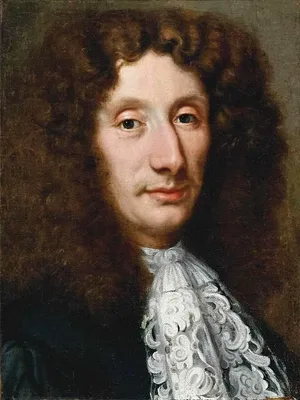
1941 REDI, Francesco (1626 – 1697); PRANDI, Dino
Bibliografia delle opere di Francesco Redi; segue la riproduzione della Lettera intorno all'invenzione degli occhiali scritta a Paolo Falconieri. Dall'edizione delle "Lettere" 1779-1795
GMN 13183 · https://historyofmedicine.com/id/15444
1942 ROCK, John A. (1890 – 1984); HERTIG, Arthur Tremain (1904 – 1990)
Some aspects of early human development.
Report of the youngest normal implanted fertilized human ovum, fertilization age about 7 1/2 days. Hertig and Rock published a more detailed study in Contr. Embryol. Carneg. Instn. 1945, 31, 65-84.
GMN 532 · https://historyofmedicine.com/id/1696
1942 LINDEMAN, Raymond Laurel (1915 – 1942)
The trophic-dynamic aspect of ecology.
“The birth of ecosystem ecology” (McIntosh). Lindeman described energy flow in ecosystems in a form amenable to productive abstract analysis. This paper introduced what came to be known as the "Ten percent law."
GMN 145.67 · https://historyofmedicine.com/id/2704
1942 HUXLEY, Sir Julian Sorell (1887 – 1975)
Evolution: The modern synthesis.
The work which defined the modern synthesis of evolutionary biology of the early 20th century.
GMN 255 · https://historyofmedicine.com/id/8689