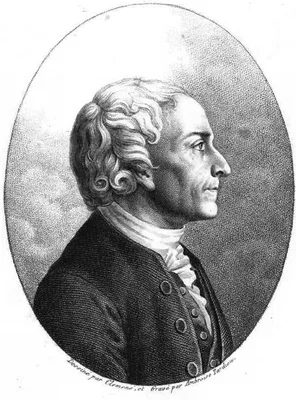
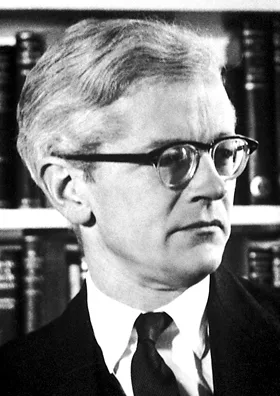
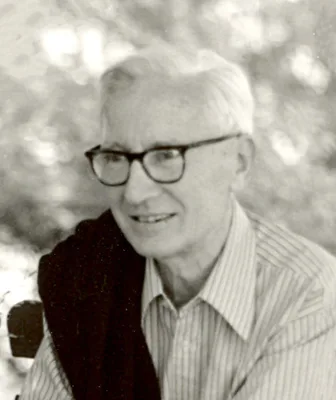
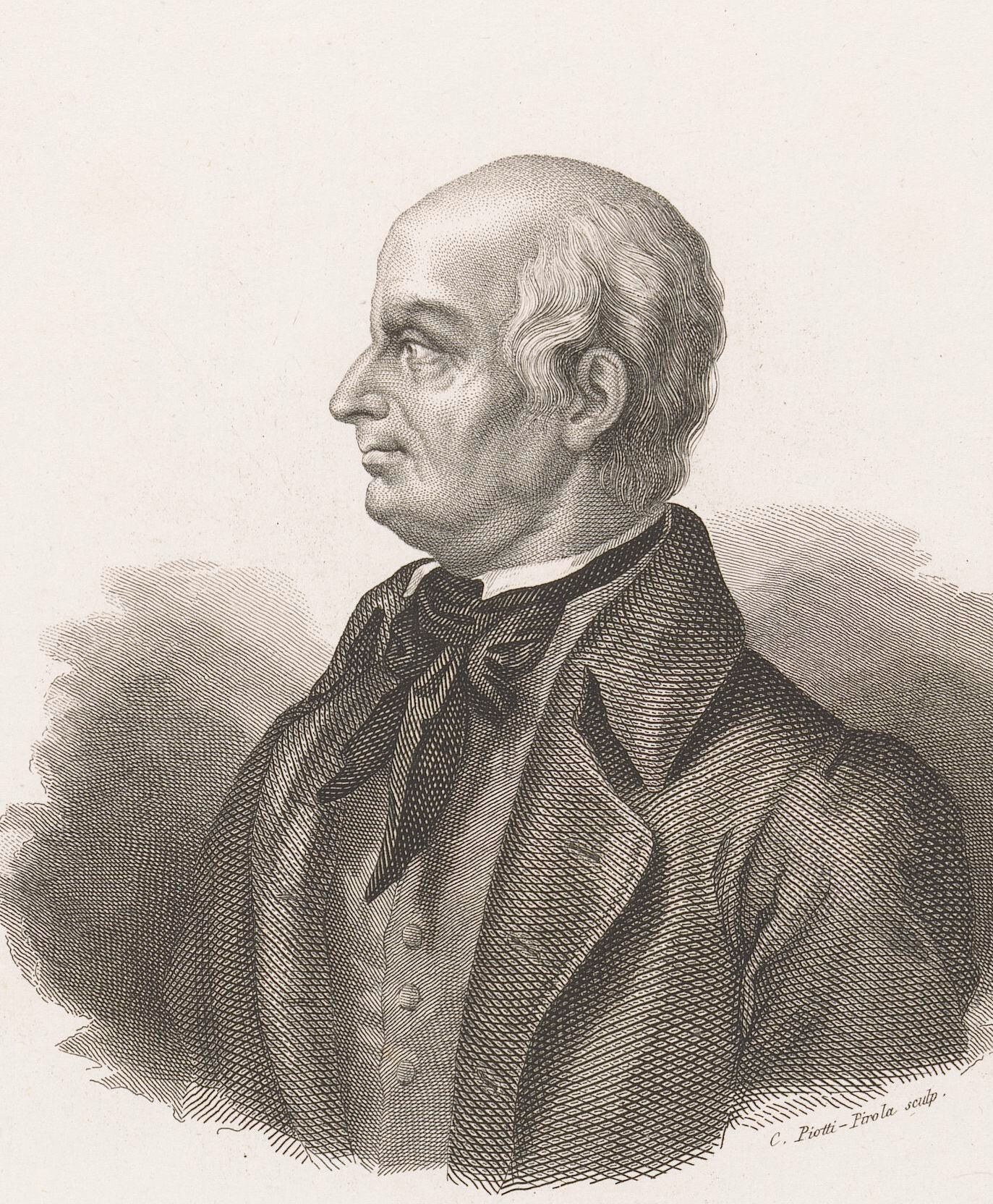
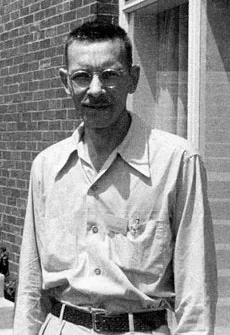
1943 RÉAUMUR, René Antoine Ferchault de (1683 – 1757); TREMBLEY, Abraham (1710 – 1784); GUYÉNOT, Émile (1885 – 1964)
Correspondence inédite entre Réaumur et Abraham Trembley, comprenant 113 lettres, recueillies et annotées par Maurice Trembley. Introduction par Emile Guyenot.
GMN 12123 · https://historyofmedicine.com/id/14332
1944 SIMPSON, George Gaylord (1902 – 1984)
Tempo and mode in evolution.
Simpson's seminal contribution to the modern evolutionary synthesis integrated the facts of paleontology with those of genetics and natural selection. "Simpson argued that the microevolution of population genetics was…
GMN 255.2 · https://historyofmedicine.com/id/8691
1944 MCCARTY, Maclyn (1911 – 2005); AVERY, Oswald Theodore Jr. (1877 – 1955); MACLEOD, Colin Munro (1909 – 1972)
Studies on the chemical nature of the substance inducing transformation of pneumococcal types. Induction of transformation by a deoxyribonucleic acid fraction isolated from pneumococcus type III.
Demonstration that deoxyribonucleic acid (DNA) is the basic material responsible for genetic transformation. Digital facsimile from PubMedCentral at this link. Followed by: McCarty & Avery, "Studies on the chemical na…
GMN 255.3 · https://historyofmedicine.com/id/8692
1944 SCHRÖDINGER, Erwin (1867 – 1961)
What is life? The physical aspect of the living cell.
This work about the physical basis of natural phenomena influenced the young James D. Watson and others. The book was a popularization of ideas developed by Max Delbrück in his paper with Timofeeff-Ressovsky in 1935. …
GMN 6897 · https://historyofmedicine.com/id/9061
1945 LESLIE, Patrick Holt (1900 – 1972)
On the use of matrices in certain population mathematics.
"... the Leslie matrix is a discrete, age-structured model of population growth that is very popular in population ecology.... The Leslie matrix (also called the Leslie model) is one of the most well known ways to des…
GMN 9891 · https://historyofmedicine.com/id/12079
1946 DELBRÜCK, Max (1906 – 1981); BAILEY, W. T.
Induced mutations in bacterial viruses.
Genetic recombination in bacteriophages. In 1969 Delbrück shared the Nobel Prize with A. D. Hershey and S. E. Luria "for their discoveries concerning the replication mechanism and the genetic structure of viruses."
GMN 2578.5 · https://historyofmedicine.com/id/4142
1946 FRISCH, Karl Ritter von (1886 – 1982)
Die Tänze der Bienen.
Von Frisch discovered the waggle dance, a particular figure-eight dance of honey bees by which successful foragers can communicate information with other members of their colony about the direction and distance to pat…
GMN 14138 · https://historyofmedicine.com/id/16452
1947 RAVEN, Charles Earle (1885 – 1964)
English naturalists from Neckham to Ray.
GMN 356.1 · https://historyofmedicine.com/id/294
1948 SANFORD, Katherine Koontz (1915 – 2005); ET AL
The growth in vitro of single isolated tissue cells.
Sanford was the first to clone in vitro a single living cell of a mammal—in this instance, a rodent. She performed this feat in search of a means to research how cells transform into malignancy.
GMN 566.2 · https://historyofmedicine.com/id/300
1948 BAKER, John Randal (1900 – 1984)
The cell-theory: a restatement, history, and critique.
GMN 139.1 · https://historyofmedicine.com/id/2254
1948 MCCARTY, Maclyn (1911 – 2005)
The occurrence of nucleases in culture filtrates of group A hemolytic streptococci.
Streptodornase. See also W. S. Tillett et al., Proc. Soc. exp. Biol. (N. Y.), 1948, 68, 184-88.
GMN 1929.2 · https://historyofmedicine.com/id/2741
1949 DULBECCO, Renato (1914 – 2012); LURIA, Salvador Edward (1912 – 1991)
Genetic recombinations leading to production of active bacteriophage from ultraviolet inactivated bacteriophage particles.
In 1969 Luria shared the Nobel Prize in Physiology or Medicine in with Delbrück (No. 2578.5) and A. D. Hershey (No. 256) "for their discoveries concerning the replication mechanism and the genetic structure of viruses."
GMN 2526.1 · https://historyofmedicine.com/id/3458
1949 PAULING, Linus Carl (1901 – 1994); ITANO, Harvey Akio (1920 – 2010); SINGER, Seymour Jonathan (1924 – 2017); WELLS, Ibert C. (1921 – 2011)
Sickle cell anemia, a molecular disease.
First recognition, by Pauling and colleagues, of a structural hemoglobin variant, and the beginning of the molecular approach to disease.
GMN 3154.1 · https://historyofmedicine.com/id/4015
1949 BARR, Murray Llewellyn (1908 – 1995); BERTRAM, Ewart George (1923 – )
A morphological distinction between neurones of the male and female, and the behaviour of the nucleolar satellite during accelerated nucleoprotein synthesis.
The Barr body, " the inactive X chromosome in a female somatic cell,[2] rendered inactive in a process called lyonization, in those species in which sex is determined by the presence of the Y (including humans) or W c…
GMN 255.5 · https://historyofmedicine.com/id/8694
1949 LEOPOLD, Aldo (1887 – 1948)
A Sand County almanac, and sketches here and there.
This combination of natural history, philosophy, and poetic writing informed the environmental movement. It is perhaps best known for the following quote, which defines Leopold's land ethic: "A thing is right when it …
GMN 7084 · https://historyofmedicine.com/id/9251
1949 HODGKIN, Dorothy Crowfoot (1910 – 1994); ROGERS-LOW, Barbara Wharton (1920 – 2019)
X-ray crystallographic investigation of the structure of penicillin. IN: Clarke, Johnson, Robinson (eds.) Chemistry of penicillin (1949) 310-67.
Hodgkin and colleagues, including biochemist Barbara Low, solved the structure of penicillin in 1945, demonstrating, contrary to scientific opinion at the time, that it contains a β-lactam ring. The discovery was orig…
GMN 12635 · https://historyofmedicine.com/id/14876
1950 CHARGAFF, Erwin (1905 – 2002)
Chemical specificity of nucleic acids and the mechanism of their enzymatic degradation.
"Chargaff's rules." Between 1946 and 1950 Chargaff carried out chemical studies that revolutionized attitudes towards DNA.
GMN 255.6 · https://historyofmedicine.com/id/8695
1950 LEDERBERG, Esther (1922 – 2006)
Lysogenicity in Escherichia coli strain K-12.
Discovery of phage λ (lambda phage). According to estherlederberg.com, only about 100 people received the first issue of Microbial Genetics Bulletin, a typed and mimeographed publication. Digital facsimile from esther…
GMN 13525 · https://historyofmedicine.com/id/15802
1951 HALL, Thomas Steele (1909 – )
A source book in animal biology.
GMN 143.1 · https://historyofmedicine.com/id/2265
1951 PAULING, Linus Carl (1901 – 1994); COREY, Robert Brainard (1897 – 1971); BRANSON, Herman Russell (1914 – 1995)
The structure of proteins: Two hydrogen-bonded configurations of the polypeptide chain.
Pauling, his crystallographer R. B. Corey, and African-American physicist and chemist H.R. Branson announced the α-helix, a principal structural feature of proteins. Digital facsimile from the National Academy of Scie…
GMN 6846 · https://historyofmedicine.com/id/9010
1951 –1952 BENNETT, John Makepeace (1921 – 2010); KENDREW, Sir John Cowdery (1917 – 1997)
The computation of Fourier syntheses with a digital electronic calculating machine.
The first paper published in a scientific journal on the application of an electronic computer to computational biology. At the second English computer conference held in Manchester from July 9-12, 1951 computer scien…
GMN 6910 · https://historyofmedicine.com/id/9075
1951 TINBERGEN, Nikolaas (1909 – 1988)
The study of instinct.
Foundation of ethology, the scientific study of animal behavior. "It was based on a series of six lectures at Columbia University in 1947 and presented a general model of animal behavior. Basically, it was about metho…
GMN 7348 · https://historyofmedicine.com/id/9520
1951 SPALLANZANI, Lazzaro (1729 – 1799); PRANDI, Dino
Bibliografia delle opere di Lazzaro Spallanzani delle traduzioni e degli scritti su di lui
GMN 13182 · https://historyofmedicine.com/id/15443
1951 PAULING, Linus Carl (1901 – 1994); COREY, Robert Brainard (1897 – 1971)
The pleated sheet, a new layer configuration of polypeptide chains.
Pauling and Corey discovered the β-sheet, a principal structural feature of proteins. Digital facsimile from PNAS.org at this link.
GMN 13298 · https://historyofmedicine.com/id/15564
1952 ATERMAN, Kurt (1913 – 2002)
Some local factors in the restoration of the rat’s liver after partial hepatectomy. 1. Glycogin; the Golgi apparatus; sinusoidal cells; the basement membranes of the sinusoids.
First detailed account of lysosomes.
GMN 566.3 · https://historyofmedicine.com/id/304
1952 HERSHEY, Alfred Day (1908 – 1997); CHASE, Martha Cowles (1927 – 2003)
Independent functions of viral protein and nucleic acid in growth of bacteriophage.
DNA shown to be the carrier of genetic information in virus reproduction. In 1969 Hershey shared the Nobel Prize in Physiology or Medicine with S. E. Luria and M. Delbrück for "for their discoveries concerning the rep…
GMN 256 · https://historyofmedicine.com/id/8697
1952 LEDERBERG, Joshua (1925 – 2008); ZINDER, Norton David (1928 – 2012)
Genetic exchange in Salmonella.
Description of a new mechanism (“transduction”) for the transfer of genetic characters from one bacterial strain to another.
GMN 256.1 · https://historyofmedicine.com/id/8698
1952 UREY, Harold Clayton (1893 – 1981)
The planets: Their origin and development.
Urey coined the term cosmochemistry. He speculated that the early terrestrial atmosphere was probably composed of ammonia, methane, and hydrogen. One of his graduate students, Stanley Miller, showed in the Miller–Urey…
GMN 7469 · https://historyofmedicine.com/id/9641
1952 LURIA, Salvador Edward (1912 – 1991); HUMAN, Mary L.
A nonhereditary, host-induced variation of bacterial viruses.
Order of authorship in the original publication: Luria, Human. Luria and Human discovered the restriction modification system found in bacteria and other prokaryotic organisms. This system provides a defense against f…
GMN 12032 · https://historyofmedicine.com/id/14240
1952 HSU, T. C. (1917 – 2003)
Mammalian chromosomes in vitro I: The karyotype of man.
Since the turn of the twentieth century, chromosomes prepared on microscope slides formed clumps that made it extremely difficult to distinguish them. Although the preparations made the identification of individual ch…
GMN 13941 · https://historyofmedicine.com/id/16238
1952 LEDERBERG, Joshua (1925 – 2008); ZINDER, Norton David (1928 – 2012)
Genetic exchange in salmonella.
Working as a graduate student with Lederberg, Zinder discovered that a bacteriophage can carry genes from one bacterium to another. Initial experiments were carried out using Salmonella. Zinder and Lederberg named thi…
GMN 13970 · https://historyofmedicine.com/id/16272
1952 CRICK, Francis Harry Compton (1916 – 2004); COCHRAN, William (1922 – 2003); VAND, Vladimir (1911 – 1968)
The structure of synthetic polypeptides. 1. The transform of atoms on a helix.
This paper gives the formulae for the Fourier transforms of a number of helical structures, and provides evidence that the structure of a synthetic polypeptide was based on the alpha helix of Pauling and Corey. "It wa…
GMN 13998 · https://historyofmedicine.com/id/16302
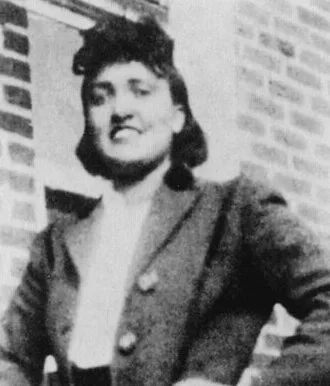
1952 GEY, George Otto (1899 – 1970); COFFMAN, Ward D.; KUBICEK, Mary T.; LACKS, Henrietta (1920 – 1951)
Tissue culture studies of the proliferative capacity of cervical carcinoma and normal epithelium.
A cell biologist at Johns Hopkins Hospital, Gey propagated the HeLa cell line from Henrietta Lacks' cervical tumor. This cell line, which maintained a continuous growth phase, was the first immortal human cell line to…
GMN 14100 · https://historyofmedicine.com/id/16411
1953 MURRAY, Margaret Ransome (1901 – ); KOPECH, Gertrude (1915 – )
A bibliography of the research in tissue culture 1884-1950. An index to the literature of the living cell cultivated in vitro.
GMN 567.1 · https://historyofmedicine.com/id/311
1953 BARR, Murray Llewellyn (1908 – 1995); MOORE, Keith Leon (1925 – ); GRAHAM, Margaret A.
The detection of chromosomal sex in hermaphrodites from a skin biopsy.
Sex chromatin demonstrated in humans.
GMN 256.2 · https://historyofmedicine.com/id/8699
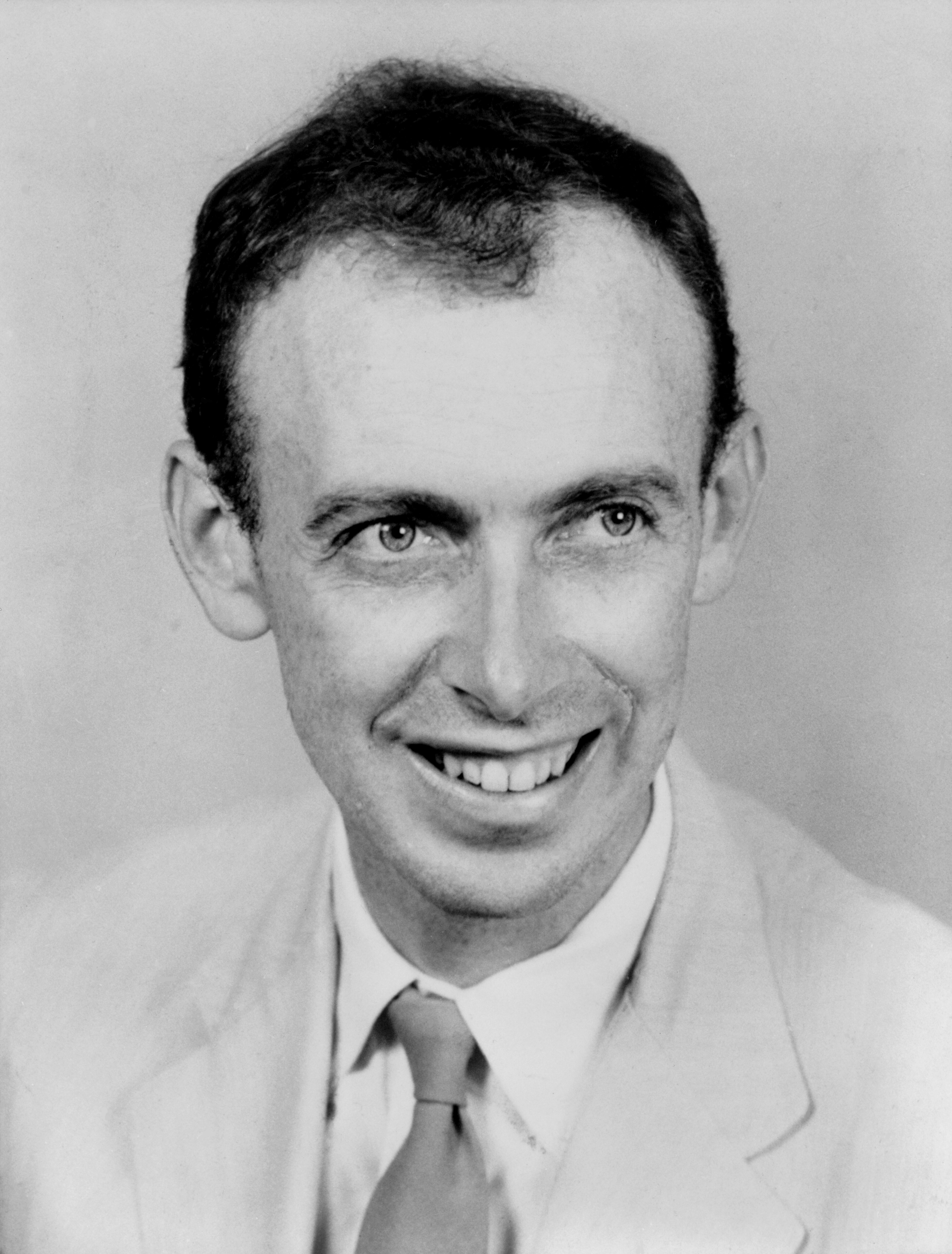
1953 WATSON, James Dewey (1928 – ); CRICK, Francis Harry Compton (1916 – 2004)
Molecular structure of nucleic acids. A structure for deoxyribose nucleic acid.
Watson and Crick shared the Nobel Prize with M. H. F. Wilkins (No. 256.4) "for their discoveries concerning the molecular structure of nucleic acids and its significance for information transfer in living material." L…
GMN 256.3 · https://historyofmedicine.com/id/8700
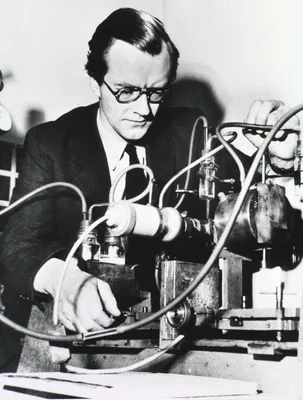
1953 WILKINS, Maurice Hugh Frederick (1916 – 2004); STOKES, Alexander Rawson (1919 – 2003); SEEDS, William Etienne; WILSON, Herbert Rees (1929 – 2008)
Helical structure of crystalline deoxypentose nucleic acid.
In 1962 Wilkins shared the Nobel Prize in Physiology or Medicine with Crick and Watson "for their discoveries concerning the molecular structure of nucleic acids and its significance for information transfer in living…
GMN 256.4 · https://historyofmedicine.com/id/8701
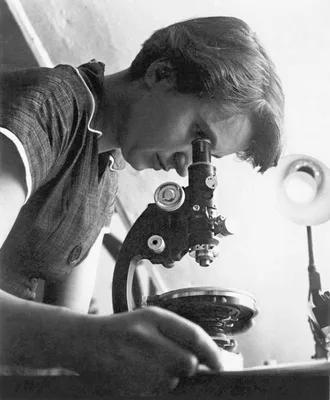
1953 FRANKLIN, Rosalind Elsie (1920 – 1958); GOSLING, Raymond (1926 – 2015)
Molecular configuration in sodium thymonucleate.
This paper reports Franklin's discovery of the existence of DNA in 2 forms, and conditions for readily and rapidly changing from one to the other. Its phosphates were on the outside.” (Maddox 195) The Watson-Crick mod…
GMN 6847 · https://historyofmedicine.com/id/9011
1953 WATSON, James Dewey (1928 – ); CRICK, Francis Harry Compton (1916 – 2004)
Genetical implications of the structure of deoxyribonucleic acid.
In this paper published on May 30, 1953 Watson and Crick proposed the method of replication of DNA. This discovery has been called as significant, or possibly even more significant, than their discovery of the double-…
GMN 7138 · https://historyofmedicine.com/id/9305
1953 MILLER, Stanley Lloyd (1930 – 2007)
Production of amino acids under possible primitive earth conditions.
The Miller–Urey experiment or Miller experiment, a classic experiment investigating abiogenesis, simulated the conditions thought at the time to be present on the early Earth, and tested the chemical origin of life un…
GMN 7383 · https://historyofmedicine.com/id/9555
1953 REEVES, William C. (1916 – 2004)
Quantitative field studies on a carbon dioxide chemotropism of mosquitoes.
Reeves demonstrated that mosquitoes detect their prey by sensing the carbon dioxide that animals exhale. (It was later shown that some mosquitoes can detect their prey from more than 165 feet away.) (Thanks to Juan We…
GMN 11075 · https://historyofmedicine.com/id/13271
1953 FRANKLIN, Rosalind Elsie (1920 – 1958); GOSLING, Raymond (1926 – 2015)
Evidence for 2-chain helix in crystalline structure of sodium deoxyribonucleate.
Franklin and Gosling's completed Patterson synthesis of the A-form of DNA, based on work begun in 1952, represents the first independent confirmation that the Watson-Crick double-helix model was correct. "We suggest t…
GMN 13946 · https://historyofmedicine.com/id/16244
1954 GAMOW, George (Gamov) (1904 – 1968)
Possible relation between deoxyribonucleic acid and protein structures.
Gamow, a physicist, invented the concept of a genetic code. This brief 1-page paper, published in the February 13, 1954 issue of Nature was the first specific positive response to Watson and Crick's structure of DNA. …
GMN 6896 · https://historyofmedicine.com/id/9060
1954 INGRAM, Vernon Martin (1924 – 2006); PERUTZ, Max Ferdinand (1914 – 2002); GREEN, David W. ( – 1976)
The structure of haemoglobin - IV. Sign determination by the isomorphous replacement method.
The first demonstration of isomorphous replacement in protein crystallography. This was a key step in determination of the structure of large biological molecules. Harittai, "On the origins of isomorphous replacement …
GMN 14223 · https://historyofmedicine.com/id/16540
1955 DUVE, Christian René Marie Joseph, Viscountde (1917 – 2013); ET AL
Tissue fractionation studies. 6. Intracellular distribution patterns of enzymes in rat-liver tissue.
Lysosomes. With B. C. Pressman, R. Gianetto, R. Wattiaux and F. Appelmans.
GMN 566.4 · https://historyofmedicine.com/id/307
1955 GRUNBERG-MANAGO, Marianne (1921 – 2013); OCHOA DE ALBORNOZ, Severo (1905 – 1993); ORTIZ, Priscilla J.
Enzymatic synthesis of nucleic acidlike polynucleotides.
Ochoa shared the Nobel Prize with Arthur Kornberg in 1959 for their artificial synthesis of nucleic acids by means of enzymes. Order of authorship in the original publication: Ochoa, Grunberg-Manago, Ortiz. See also O…
GMN 752.3 · https://historyofmedicine.com/id/1738
1955 SANGER, Frederick (1918 – 2013)
The disulphide bonds of insulin.
Sanger sequenced the amino acids of insulin, the first of any protein. His work “revealed that a protein has a definite constant, genetically determined sequence—and yet a sequence with no general rule for its assembl…
GMN 1207 · https://historyofmedicine.com/id/1852
1955 FRAENKEL-CONRAT, Heinz Ludwig (1910 – 1999); WILLIAMS, Robley Cook (1908 – 1995)
Reconstitution of active tobacco mosaic virus from its inactive protein and nucleic acid components.
First reconstitution of a virus.
GMN 2527 · https://historyofmedicine.com/id/3465
1955 HODGKIN, Dorothy Crowfoot (1910 – 1994)
The crystal structure of the hexacarboxylic acid derived from B12 and the molecular structure of the vitamin.
The final structure of vitamin B12. With J. Pickworth, J.H. Robertson, K.N. Trueblood, R.J. Prosen, J. G. White. In 1964 Hodgkin was awarded the Nobel Prize in Chemistry "for her determinations by X-ray techniques of …
GMN 6928 · https://historyofmedicine.com/id/9093
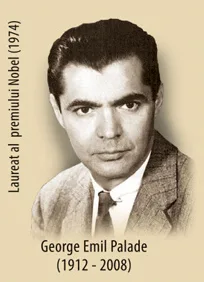
1955 PALADE, George Emil (1912 – 2008)
A small particulate component of the cytoplasm.
Palade first described the association of what were subsequently determined to ribosomes with membranes. He and Keith Porter subsequently named this structure the endoplasmic reticulum. Digital facsimile from PubMedCe…
GMN 13685 · https://historyofmedicine.com/id/15967