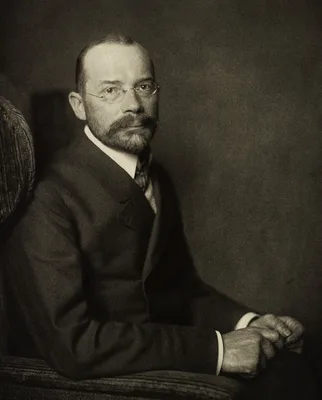
1895 ODRIOZOLA, Ernesto (1862 – 1921)
La erupción en la enfermedad de Carrión (verruga peruana).
“Carrion’s disease” (Oroya fever) was named by the Peruvian physician Ernesto Odriozola, after Daniel Alcides Carrión Garcia (1859-85), a student. In order to prove or disprove the connection between Oroya fever and v…
GMN 5530 · https://historyofmedicine.com/id/6655
1909 BARTON, Alberto Leonardo (1870 – 1950)
Descripción de elementos endo-globulares hallados en las enfermos de fiebre verrucosa.
The causal organism of Oroya fever and verruga peruana, endemic in Peru, was named Bartonella bacilliformis after Barton, who was one of the first to observe it.
GMN 5533 · https://historyofmedicine.com/id/6681
1915 GRAHAM, John Henry Porteus (1869 – 1957)
A note on a relapsing febrile illness of unknown origin.
First reported case of “trench fever”.
GMN 5385 · https://historyofmedicine.com/id/7113
1915 HUNT, George Herbert (1884 – 1926); RANKIN, Allan Coats (1877 – 1959)
Intermittent fever of obscure origin, occurring among British soldiers in France. The so-called “trench-fever”.
In this paper trench fever is so named for the first time.
GMN 5386 · https://historyofmedicine.com/id/7118
1916 HIS, Wilhelm Jr. (1863 – 1934)
Ueber eine neue periodische Fiebererkrankung (Febris Wolhynica).
His encountered a form of “trench fever” in Volhynia, Russia, and named it after that district.
GMN 5387 · https://historyofmedicine.com/id/7134
1916 TÖPFER, Hans Willi (1876 – )
Zur Ursache und Uebertragung des Wolhynischen Fiebers.
Isolation of Rickettsia quintana (now called Bartonella quintana) from lice found on patients suffering from trench fever.
GMN 5389 · https://historyofmedicine.com/id/7140
1951 GREER, William Edward R. (1918 – ); KEEFER, Chester Scott (1897 – 1972)
Cat-scratch fever. A disease entity.
First description.
GMN 5546.2 · https://historyofmedicine.com/id/6769
1990 RELMAN, David Arnold; LOUTIT, Jeffrey S.; SCHMIDT, Thomas M.; ET AL
The agent of bacillary angiomatosis - An approach to the identification of uncultured pathogens.
To identify an uncultured and unidentified pathogen that was often visualized in tissue sections of lesions of bacillary angiomatosis with Warthin-Starry staining, the authors utilized two different techniques that we…
GMN 11929 · https://historyofmedicine.com/id/14134
1990 HENSEL, Diane Marie (1948 – 2017); SLATER, Leonard N.; WELCH, David F.; ET AL
A newly recognized fastidious gram-negative pathogen as a cause of fever and bacteremia.
Order of authorship in the original publication: Slater, Welch, Hensel.... Hensel, a medical technologist working in the clinical microbiology laboratory, University Hospitals, Oklahoma City, used innovative culture m…
GMN 11930 · https://historyofmedicine.com/id/14135
1992 REGNERY, Russell L.; ANDERSON, Burt E.; CLARRIDGE, Jill E. III; ET AL
Characterization of a novel Rochalimaea species, R. henselae sp. nov., isolated from blood of a febrile, human immunodeficiency virus-positive patient.
Order of authorship in the original publication: Regnery, Anderson, Clarridge....The authors paid homage to the innovative work of medical technologist Diane Hensel by naming the species after her. It was initially gr…
GMN 11931 · https://historyofmedicine.com/id/14136
1993 REGNERY, Russell L.; DOLAN, Matthew J.; WONG, Michael T.; ET AL
Syndrome of Rochalimea henselae adenitis suggesting cat scratch disease.
Order of authorship in the original publication: Dolan, Wong, Regnery....The authors demonstrated that Rochalimea henselae (now Bartonella henselae) is the infectious agent causing cat scratch fever. (Thanks to Juan W…
GMN 11932 · https://historyofmedicine.com/id/14137
1996 CHOMEL, Bruno B.; KASTEN, Rickie W.; FLOYD-HAWKINS, Kim; ET AL
Experimenal transmission of Bartonella henselae by the cat flea.
Order of authorship in the original publication: Chomel, Kasten, Floyd-Hawkins.... Chomel and colleagues studied 47 cattery cats from a private home for 12 months. They found that such cats typically are bacteremic. S…
GMN 11933 · https://historyofmedicine.com/id/14138
2007 EREMEEVA, Marina E.; GERNS, Helen L.; LYDY, Shari L.; ET AL
Bacteremia, fever, and splenomegaly caused by a newly recognized Bartonella species.
The authors described an organism resembling, but different from, Bartonella bacilliformis (Oroya fever) on a patient returning from Peru. The patient recalled numerous insect bites on her legs and feet during her tri…
GMN 11934 · https://historyofmedicine.com/id/14139