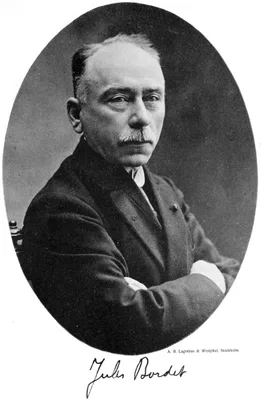
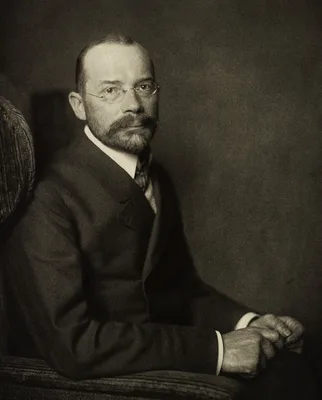
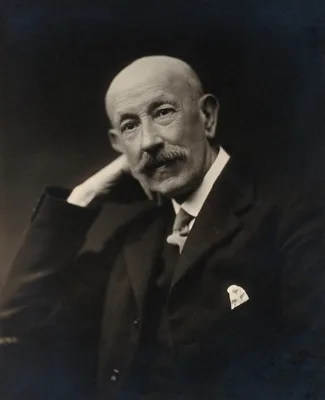
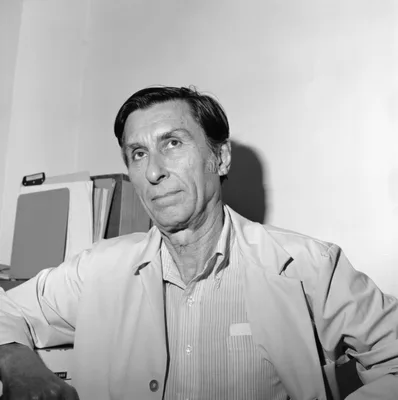
1906 BORDET, Jules Jean Baptiste Vincent (1870 – 1961); GENGOU, Octave (1875 – 1957)
Le microbe de la coqueluche.
The cocco-bacillus Haemophilus pertussis, commonly regarded as the causal organism of whooping cough, was at first named “Bordet–Gengou bacillus” after its discoverers. It has later renamed Bordetella pertussis.
GMN 5087 · https://historyofmedicine.com/id/5968
1906 GOTSCHLICH, Felix (1874 – 1914)
Über Cholera- und choleraähnliche Vibrionen unter den aus Mekka zurückkehrenden Pilgern.
Isolation of El Tor vibrio, a particular strain of the bacterium Vibrio cholerae. Gotschlich first identified this strain in 1905 at a quarantine camp on the Sinai Peninsula in El Tor, Egypt . The vibrios were found i…
GMN 5111.1 · https://historyofmedicine.com/id/6061
1907 FLEXNER, Simon (1863 – 1946)
Concerning a serum therapy for experimental infection with Diplococcus intracellularis.
Flexner prepared an antiserum for use in cerebrospinal meningitis.
GMN 4683 · https://historyofmedicine.com/id/958
1908 UHLENHUTH, Paul Theodor (1870 – 1957); HUBENER, Erich August (1870 – )
Weitere Mitteilungen über Schweinepest mit besonderer Berücksichtigung der Bakteriologie der Hogcholeragruppe.
First description of Salmonella paratyphi C.
GMN 5041 · https://historyofmedicine.com/id/5815
1909 BARTON, Alberto Leonardo (1870 – 1950)
Descripción de elementos endo-globulares hallados en las enfermos de fiebre verrucosa.
The causal organism of Oroya fever and verruga peruana, endemic in Peru, was named Bartonella bacilliformis after Barton, who was one of the first to observe it.
GMN 5533 · https://historyofmedicine.com/id/6681
1912 WHITMORE, Alfred (1876 – 1946); KRISHNASWAMI, C. S.
An account of the discovery of a hitherto undescribed infective disease occurring among the population of Rangoon.
First description of melioidosis. Together with C.S. Krishnaswami, Whitmore identified Burkholderia pseudomallei, the causative agent of melioidosis (also known as "Whitmore's disease") in opium addicts in Rangoon in …
GMN 5159 · https://historyofmedicine.com/id/6213
1912 MCCOY, George Walter (1876 – 1952); CHAPIN, Charles Willard (1877 – )
Further observations on a plague-like disease of rodents with a preliminary note on the causative agent, Bacterium tularense.
Isolation of Pasteurella tularensis, causal organism in tularemia.
GMN 5174 · https://historyofmedicine.com/id/6273
1914 WHERRY, William Buchanan (1875 – 1936); LAMB, Benjamin Harrison (1889 – 1955)
Infection of man with Bacterium tularense
Wherry and Lamb were first to isolate P. tularensis from lesions in man.
GMN 5175 · https://historyofmedicine.com/id/6279
1914 SCHOTTMÜLLER, Hugo (1867 – 1936)
Zurt Aetiologie und Klinik der Bisskrankheit.
Isolation of Streptothrix (Actinomyces) muris ratti from human patients bitten by rats.
GMN 5325 · https://historyofmedicine.com/id/6627
1915 SONNE, Carl Olaf (1882 – 1948)
Ueber die Bakteriologie der giftarmen Dysenteriebacillen (Para-dysenteriebacillen).
Sonne’s bacillus (Shigella sonnei) was probably described earlier by others, but it was Sonne who first drew serious attention to it. First published as inaugural dissertation, 1914.
GMN 5094 · https://historyofmedicine.com/id/6008
1915 GRAHAM, John Henry Porteus (1869 – 1957)
A note on a relapsing febrile illness of unknown origin.
First reported case of “trench fever”.
GMN 5385 · https://historyofmedicine.com/id/7113
1915 HUNT, George Herbert (1884 – 1926); RANKIN, Allan Coats (1877 – 1959)
Intermittent fever of obscure origin, occurring among British soldiers in France. The so-called “trench-fever”.
In this paper trench fever is so named for the first time.
GMN 5386 · https://historyofmedicine.com/id/7118
1916 FUTAKI, Kenzo (1873 – 1966); ET AL
The cause of rat-bite fever.
K. Futaki, I. Takaki, T. Taniguchi, and S. Osumi found a spirillum (Sp. morsus muris) in the lymphatic glands and blood stream in cases of rat-bite fever (sodoku).
GMN 5326 · https://historyofmedicine.com/id/6630
1916 HIS, Wilhelm Jr. (1863 – 1934)
Ueber eine neue periodische Fiebererkrankung (Febris Wolhynica).
His encountered a form of “trench fever” in Volhynia, Russia, and named it after that district.
GMN 5387 · https://historyofmedicine.com/id/7134
1916 TÖPFER, Hans Willi (1876 – )
Zur Ursache und Uebertragung des Wolhynischen Fiebers.
Isolation of Rickettsia quintana (now called Bartonella quintana) from lice found on patients suffering from trench fever.
GMN 5389 · https://historyofmedicine.com/id/7140
1917 SCHMITZ, Karl Eitel Friedrich (1889 – )
Eine neuer Typus aus der Gruppe der Ruhrbazillen als Erreger einer grösseren Epidemie.
Schmitz’s bacillus – Bact. ambiguum (Shigella schmitzii),a cause of dysentery.
GMN 5095 · https://historyofmedicine.com/id/6010
1917 STANTON, Sir Ambrose Thomas (1875 – 1938)
A form of pseudo-tuberculosis (melioidosis).
Stanton identified the bacillus of melioidosis and reproduced the disease in animals by feeding and inoculation of cultures.
GMN 5159.1 · https://historyofmedicine.com/id/6218
1918 ANDREWES, Sir Frederick William (1859 – 1932)
Dysentery bacilli: the differentiation of the true dysentery bacilli from allied species.
Shigella alkalescens described.
GMN 3542 · https://historyofmedicine.com/id/4049
1919 HIRSZFELD, Ludwik Maurycy [Hirschfeld] (1884 – 1954)
A new generation of paratyphoid.
Hirszfeld gave an important description of Salmonella paratyphi C. (“Hirszfeld’s bacillus”).
GMN 5044 · https://historyofmedicine.com/id/5822
1924 ROBERTSON, Andrew
Observations on the causal organism of rat-bite fever in man.
Robertson proved one of the causal organisms of rat-bite fever to be Sp. morsus muris. He re-named it Spirillum minus Carter, 1887, identifying it as the first spiral micro-organism to be described from a rodent.
GMN 5327 · https://historyofmedicine.com/id/6633
1931 KAUFFMANN, Fritz (1899 – 1978)
Der heutige Stand der Paratyphusforschung.
Kauffmann–White classification of Salmonella based on antigenic structure. For historical note, including the part played by P. B. White, see J. Hyg. (camb), 1934, 34, 335.
GMN 5044.1 · https://historyofmedicine.com/id/5823
1931 LESLIE, Patrick Holt (1900 – 1972); GARDNER, Arthur Duncan (1884 – 1977)
The phases of Haemophilus pertussis.
Leslie and Gardner classified H. pertussis cultures into four types and established an experimental basis for the development of an effective vaccine.
GMN 5087.1 · https://historyofmedicine.com/id/5975
1946 TATUM, Edward Lawrie (1909 – 1975); LEDERBERG, Joshua (1925 – 2008)
Gene recombination in Escherichia coli.
Discovery of sexual processes in the reproduction of bacteria. In 1958 Lederberg shared the Nobel Prize in Physiology or Medicine with Tatum and Beadle (No. 254.3) "for his discoveries concerning genetic recombination…
GMN 255.4 · https://historyofmedicine.com/id/8693
1951 GREER, William Edward R. (1918 – ); KEEFER, Chester Scott (1897 – 1972)
Cat-scratch fever. A disease entity.
First description.
GMN 5546.2 · https://historyofmedicine.com/id/6769
1952 LEDERBERG, Joshua (1925 – 2008); ZINDER, Norton David (1928 – 2012)
Genetic exchange in Salmonella.
Description of a new mechanism (“transduction”) for the transfer of genetic characters from one bacterial strain to another.
GMN 256.1 · https://historyofmedicine.com/id/8698
1977 FRASER, David William
Legionnaires’ disease. Description of an epidemic of pneumonia.
First major scientific account. With 11 co-authors. Legionnaire's disease acquired its name after an outbreak of a then-unknown "mystery disease" sickened 221 persons, causing 34 deaths. The people affected were atten…
GMN 3215.7 · https://historyofmedicine.com/id/4380
1977 SHEPARD, Charles Carter (1914 – 1985); FRASER, David William; MCDADE, Joseph E.; ET AL
Legionnaires’ disease. Isolation of a bacterium and demonstration of its role in other respiratory disease.
Order of authorship in the original publication: McDade, Shepard, Fraser.... See also p. 1218.
GMN 3215.8 · https://historyofmedicine.com/id/4382
1979 MCDADE, Joseph E.; BRENNER, Don J.; STEIGERWALT, A. G.
Classification of the Legionnaires' disease bacterium: Legionella pneumophila, genus novum, species nova, of the family Legionellaceae, familia nova.
Order of authorship in the original publication: Brenner, Steigerwalt, McDade. (Thanks to Juan Weiss for this reference and its interpretation.)
GMN 11256 · https://historyofmedicine.com/id/13453
1980 ROWBOTHAM, Timothy J.
Preliminary report on the pathogenicity of Legionella pneumophila for freshwater and soil amoebae.
Discovery of the pathogenic relationship between amoebas and Legionella bacteria--a key step in understanding how this bacteria infects mankind. Legionella bacteria, along with amoeba, live in the organic contaminatio…
GMN 11257 · https://historyofmedicine.com/id/13454
1983 MARSHALL, Barry James (1951 – ); WARREN, John Robin (1937 – )
Unidentified curved bacilli on gastric epithelium in active chronic gastritis.
In 2005 Marshall and Warren shared the Nobel prize in Physiology or Medicine "for their discovery of the bacterium Helicobacter pylori and its role in gastritis and peptic ulcer disease." See also their follow-up pape…
GMN 8475 · https://historyofmedicine.com/id/10652
1985 KARMALI, Mohamed A.; PETRIC, Martin; LIM, Corazon; ET AL
The association between idiopathic hemolytic uremic syndrome and infection by Verotoxin-producing Escherichia coli.
Order of authorship in the original publication: Karmali, Petric, Lim. The authors discovered that a hemolytic uremic syndrome, associated with E. coli 0157-H7 (first described in No. 11376), and which could not be cu…
GMN 11377 · https://historyofmedicine.com/id/13576
1990 RELMAN, David Arnold; LOUTIT, Jeffrey S.; SCHMIDT, Thomas M.; ET AL
The agent of bacillary angiomatosis - An approach to the identification of uncultured pathogens.
To identify an uncultured and unidentified pathogen that was often visualized in tissue sections of lesions of bacillary angiomatosis with Warthin-Starry staining, the authors utilized two different techniques that we…
GMN 11929 · https://historyofmedicine.com/id/14134
1990 HENSEL, Diane Marie (1948 – 2017); SLATER, Leonard N.; WELCH, David F.; ET AL
A newly recognized fastidious gram-negative pathogen as a cause of fever and bacteremia.
Order of authorship in the original publication: Slater, Welch, Hensel.... Hensel, a medical technologist working in the clinical microbiology laboratory, University Hospitals, Oklahoma City, used innovative culture m…
GMN 11930 · https://historyofmedicine.com/id/14135
1992 REGNERY, Russell L.; ANDERSON, Burt E.; CLARRIDGE, Jill E. III; ET AL
Characterization of a novel Rochalimaea species, R. henselae sp. nov., isolated from blood of a febrile, human immunodeficiency virus-positive patient.
Order of authorship in the original publication: Regnery, Anderson, Clarridge....The authors paid homage to the innovative work of medical technologist Diane Hensel by naming the species after her. It was initially gr…
GMN 11931 · https://historyofmedicine.com/id/14136
1993 REGNERY, Russell L.; DOLAN, Matthew J.; WONG, Michael T.; ET AL
Syndrome of Rochalimea henselae adenitis suggesting cat scratch disease.
Order of authorship in the original publication: Dolan, Wong, Regnery....The authors demonstrated that Rochalimea henselae (now Bartonella henselae) is the infectious agent causing cat scratch fever. (Thanks to Juan W…
GMN 11932 · https://historyofmedicine.com/id/14137
1995 VENTER, John Craig (1946 – ); SMITH, Hamilton Othanel (1931 – ); FLEISCHMANN, Robert D.; ADAMS, Mark D.; WHITE, Owen; ET AL
Whole-genome random sequencing and assembly of Haemophilus influenzae Rd.
First sequence of the complete genome of a free-living non-viral organism—Haemophilus influenzae—the bacterium that causes lower respiratory tract infections and meningitis in infants and young children. This genome c…
GMN 11343 · https://historyofmedicine.com/id/13541
1996 CHOMEL, Bruno B.; KASTEN, Rickie W.; FLOYD-HAWKINS, Kim; ET AL
Experimenal transmission of Bartonella henselae by the cat flea.
Order of authorship in the original publication: Chomel, Kasten, Floyd-Hawkins.... Chomel and colleagues studied 47 cattery cats from a private home for 12 months. They found that such cats typically are bacteremic. S…
GMN 11933 · https://historyofmedicine.com/id/14138
2007 EREMEEVA, Marina E.; GERNS, Helen L.; LYDY, Shari L.; ET AL
Bacteremia, fever, and splenomegaly caused by a newly recognized Bartonella species.
The authors described an organism resembling, but different from, Bartonella bacilliformis (Oroya fever) on a patient returning from Peru. The patient recalled numerous insect bites on her legs and feet during her tri…
GMN 11934 · https://historyofmedicine.com/id/14139