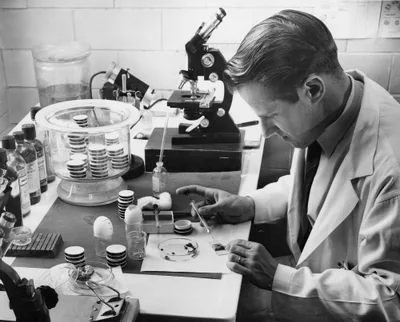
1925 CHURCHMAN, John Woolman (1877 – 1937)
Intravenous use of dyes.
Churchman demonstrated the selective bactericidal action of gentian violet against staphylococci. See also J. exp. Med., 1912, 16, 221-47; J. Urol., 1924, 11, 1-18.
GMN 1911 · https://historyofmedicine.com/id/2673
1925 FLETCHER, William ( – 1938); LESSLAR, J. E.
Tropical typhus in the Federated Malay States, with a compilation on epidemic typhus.
Bull. Inst. med. Res., F. M. S., No. 2. Drew attention to scrub typhus in Malaya.
GMN 5394 · https://historyofmedicine.com/id/7160
1926 MURRAY, Everitt George Dunne (1890 – 1964); ET AL
A disease of rabbits characterised by a large mononuclear leucocytosis, caused by a hitherto undescribed bacillus acterium monocytogenes (n. sp.).
Isolation of Listeria monocytogenes. With R. A. Webb and M. B. R. Swann.
GMN 2522.1 · https://historyofmedicine.com/id/3312
1926 PLACE, Edwin Hemphill (1880 – ); ET AL
Erythema arthriticum epidemicum; preliminary report.
“Haverhill fever” first reported. The writers isolated an organism, later found to be identical with Streptothrix muris ratti and Streptobacillus moniliformis. With L. E. Sutton and O. Willner.
GMN 5328 · https://historyofmedicine.com/id/6636
1926 MAXCY, Kenneth Fuller (1889 – 1966)
Clinical observations on endemic typhus (Brill’s disease) in Southern United States.
Maxcy described murine (flea-borne) typhus (“Maxcy’s disease”).
GMN 5396 · https://historyofmedicine.com/id/7169
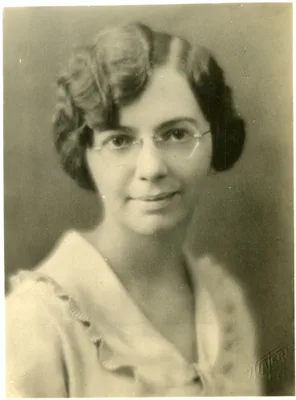
1926 SEIBERT, Florence Barbara (1897 – 1991)
Isolation of a crystalline protein with tuberculin activity.
Siebert identified the active agent in tuberculin as a protein.
GMN 12386 · https://historyofmedicine.com/id/14613
1927 CALMETTE, Léon Charles Albert (1863 – 1933); GUÉRIN, Camille (1872 – 1961); BOQUET, Alfred (1879 – 1947); NÈGRE, Léopold (1879 – 1961)
Sur la vaccination préventive des enfants nouveau-nés contre la tuberculose par le B.C.G.
GMN 2346 · https://historyofmedicine.com/id/3105
1927 CALMETTE, Léon Charles Albert (1863 – 1933); GUÉRIN, Camille (1872 – 1961); BOQUET, Alfred (1879 – 1947); NÈGRE, Léopold (1879 – 1961)
La vaccination préventive contre la tuberculose par le "BGG". Par Albert Calmette avec la collaboration de C. Guérin, A. Boquet et L. Nègre.
A 250-page monograph, with bibliographical references, on the development of the BCG vaccine from M. bovis, from 1909 to 1927 by the scientists involved. (Thanks to Ron Cox for this reference.)
GMN 11994 · https://historyofmedicine.com/id/14202
1928 –1929 THOMSON, David (1884 – 1969); THOMSON, Robert (1888 – )
The pathogenic streptococci. An historical survey of their role in human and animal disease.
Documents over 1,600 studies.
GMN 2523 · https://historyofmedicine.com/id/3321
1928 MOOSER, Hermann (1891 – 1971)
Experiments relating to the pathology and the etiology of Mexican typhus (tabardillo).
Mooser differentiated murine from epidemic typhus. The causative organism was later named Rickettsia mooseri.
GMN 5396.1 · https://historyofmedicine.com/id/7173
1931 KAUFFMANN, Fritz (1899 – 1978)
Der heutige Stand der Paratyphusforschung.
Kauffmann–White classification of Salmonella based on antigenic structure. For historical note, including the part played by P. B. White, see J. Hyg. (camb), 1934, 34, 335.
GMN 5044.1 · https://historyofmedicine.com/id/5823
1931 ANDERSON, James Stirling (1891 – 1976); ET AL
On the existence of two forms of diphtheria bacillus B. diphtheria gravis and B. diphtheriae mitis.
J. S. Anderson, F. C. Happold, J. W. McLeod, and J. G. Thomson were the first to distinguish the gravis, mitis, and intermediate types of C. diphtheriae.
GMN 5072 · https://historyofmedicine.com/id/5914
1931 LESLIE, Patrick Holt (1900 – 1972); GARDNER, Arthur Duncan (1884 – 1977)
The phases of Haemophilus pertussis.
Leslie and Gardner classified H. pertussis cultures into four types and established an experimental basis for the development of an effective vaccine.
GMN 5087.1 · https://historyofmedicine.com/id/5975
1931 DYER, Rollo Eugene (1886 – ); ET AL
Typhus fever. A virus of the typhus type derived from fleas collected from wild rats.
Murine typhus shown to be caused by an organism later named Rickettsia mooseri, transmitted by fleas from rats to man. With A. Rumreich and L. F. Badger.
GMN 5396.2 · https://historyofmedicine.com/id/7175
1931 OGATA, Norio (1883 – )
Aetiologie der Tsutsugamushi-Kiankheit: Rickettsia tsutsugamushi.
Ogata isolated the causal agent of tsutsugamushi disease, Orientia Tsutsugamushi, in 1927.
GMN 5396.3 · https://historyofmedicine.com/id/7176
1932 CROHN, Burrill Bernard (1884 – 1983); ET AL
Regional ileitis. A pathologic and clinical entity.
“Crohn’s disease” – regional ileitis. With L. Ginzburg and G. D. Oppenheimer. "Some of Crohn's initial research into the causes of the Crohn's disease was centered around his personal conviction that it was caused by …
GMN 3551 · https://historyofmedicine.com/id/4062
1932 THOMSON, David (1884 – 1969); THOMSON, Robert (1888 – )
The common cold, with special reference to the part played by streptococci, pneumococci, and other organisms.
Annals of the Pickett-Thomson Research Lab., Vol. 8.
GMN 3204 · https://historyofmedicine.com/id/4321
1933 LANCEFIELD, Rebecca Craighill (1895 – 1981)
A serological differentiation of human and other groups of hemolytic streptococci.
Lancefield determined the principal pathogenic strains of hemolytic streptococci and subdivided them into types. All important strains pathogenic to humans fall into Lancefield’s Group A.
GMN 2524.2 · https://historyofmedicine.com/id/3337
1933 KLARENBEEK, Arie (1888 – ); SCHÜFFNER, Wilhelm August Paul (1867 – 1949)
Het voorkomen van een afwijkend Leptospira-ras in Nederland.
Leptospira canicola first isolated (1913) from the urine of a dog.
GMN 5335 · https://historyofmedicine.com/id/6683
1933 WANI, Hidetsune
Ueber die Prophylaxe der Spirochaetosis icterohaemorrhagica Inada (Weilschen Krankheit) durch Schutzimpfung.
Prophylactic vaccination against leptospirosis.
GMN 5335.1 · https://historyofmedicine.com/id/6688
1934 GRIFFITH, Frederick (1879 – 1941)
The serological classification of Streptococcus pyogenes.
Griffith’s classification of streptococci. Digital facsimile from PubMedCentral at this link.
GMN 2524.3 · https://historyofmedicine.com/id/3346
1934 DHONT, C. M.; ET AL
De leptospiroses bij den hond, en de beteekenis der Leptospira canicola.
First reported cases of human infection with L. canicola. With A. Klarenbeek, W. A. P. Schüffner, and J. Voet.
GMN 5336 · https://historyofmedicine.com/id/6696
1934 SEIBERT, Florence Barbara (1897 – 1991)
The isolation and properties of the purified protein derivative of tuberculin
Purification of tuberculin (PPD). By the 1940s Seibert's PPD was the international standard for tuberculin tests.
GMN 12387 · https://historyofmedicine.com/id/14614
1935 KLIENEBERGER-NOBEL, Emmy (1892 – 1985)
The natural occurrence of pleuropneumonia-like organisms in apparent symbiosis with Streptobacillus moniliformis and other bacteria.
Klieneberger isolated typical strains of pleuropneumonia-like organisms from Strep, moniliformis.
GMN 2524.4 · https://historyofmedicine.com/id/3350
1937 DIENES, Louis L. (1886 – 1974); EDSALL, Geoffrey (1908 – 1980)
Observations on L-organism of Kleineberger.
Isolation of a mycoplasma from man.
GMN 3215 · https://historyofmedicine.com/id/4360
1937 LEMIERRE, André (1875 – 1956); ET AL
Sur une nouvelle fièvre par morsure de rat.
A. Lemierre, J. Reilly, A. Laporte, and M. Morin isolated Streptobacillus moniliformis from a case of rat-bite fever.
GMN 5329 · https://historyofmedicine.com/id/6643
1937 BURNET, Sir Frank Macfarlane (1899 – 1985); FREEMAN, Mavis Louisa (1907 – 1992)
Experimental studies on the virus of “Q” fever.
Discovery of Rickettsia burneti, causal agent in Q fever.
GMN 5398 · https://historyofmedicine.com/id/7187
1938 SAENZ RICART, Braulio (1886 – 1961)
Demonstratión de un treponema en el borde activo un caso de pinto de las manos y pies y en la linfa de ganglios superficiales (reporte preliminar).
B. Saenz, J. Grau Triana, and J. Alfonso Armenteros indicated that pinta is caused by a treponeme, T. carateum.
GMN 5308.1 · https://historyofmedicine.com/id/6564
1939 STERNE, Max (1905 – 1997)
The use of anthrax vaccines prepared from avirulent (uncapsulatec) variants of Bacillus anthracis.
Nonencapsulated spore vaccine.
GMN 5172.1 · https://historyofmedicine.com/id/6264
1940 LEWTHWAITE, Raymond (1894 – 1972); SAVOOR, S. R. (1900 – 1980)
Rickettsia disease of Malaya. Identity of tsutsugamushi and rural typhus.
Lewthwaite and Savoor showed scrub typhus to be identical to tsutsugamushi fever.
GMN 5398.2 · https://historyofmedicine.com/id/7195
1944 YEOMANS, Andrew (1907 – ); ET AL
The therapeutic effect of para-aminobenzic acid in louse-borne typhus fever.
With J. C. Snyder, E. S. Murray, C. J. D. Zarafonetis, and R. S. Ecke.
GMN 5398.3 · https://historyofmedicine.com/id/7199
1945 FELDMAN, William Hugh (1892 – 1974); HINSHAW, Horton Corwin (1902 – 2001)
Streptomycin in treatment of clinical tuberculosis: a preliminary report.
GMN 2350 · https://historyofmedicine.com/id/3125
1945 FULTON, Forrest (1913 – 1971); JOYNER, L
Cultivation of Rickettsia tsutsugamushi in lungs of rodents. Preparation of a scrub-typhus vaccine.
Scrub-typhus vaccine.
GMN 5399 · https://historyofmedicine.com/id/7205
1946 TATUM, Edward Lawrie (1909 – 1975); LEDERBERG, Joshua (1925 – 2008)
Gene recombination in Escherichia coli.
Discovery of sexual processes in the reproduction of bacteria. In 1958 Lederberg shared the Nobel Prize in Physiology or Medicine with Tatum and Beadle (No. 254.3) "for his discoveries concerning genetic recombination…
GMN 255.4 · https://historyofmedicine.com/id/8693
1948 MACCALLUM, Sir Peter (1885 – 1974); ET AL
A new mycobacterial infection in man.
Myco. ulcerans first described. With J. C. Tolhurst, G. Buckle, and H. A. Sissons.
GMN 2526 · https://historyofmedicine.com/id/3453
1951 GREER, William Edward R. (1918 – ); KEEFER, Chester Scott (1897 – 1972)
Cat-scratch fever. A disease entity.
First description.
GMN 5546.2 · https://historyofmedicine.com/id/6769
1952 LEDERBERG, Joshua (1925 – 2008); ZINDER, Norton David (1928 – 2012)
Genetic exchange in Salmonella.
Description of a new mechanism (“transduction”) for the transfer of genetic characters from one bacterial strain to another.
GMN 256.1 · https://historyofmedicine.com/id/8698
1958 EISEMAN, Ben (1917 – 2012); BASCOM, George S. (1927 – 1993); SILEN, W.; ET AL
Fecal enema as an adjunct in the treatment of pseudomembranous enterocolitis.
Order of authorship in the original publication: Eiseman, Silen, Bascom.... Report of the first "fecal transplant / fecal therapy," also known as "faecal microbiota transplanation," for recurrent / resistant C. diffic…
GMN 11458 · https://historyofmedicine.com/id/13657
1962 CHANOCK, Robert Merritt (1904 – 2010); HAYFLICK, Leonard (1928 – 2024)
Growth on artificial medium of an agent associated with atypical pneumonia and its identification as a PPLO.
Using a novel agar and fluid medium formulation he had devised, Hayflick isolated a unique mycoplasma Mycoplasma pneumoniae, a mycoplasma shown to be the cause of some cases of primary atypical pneumonia, or "walking …
GMN 3215.5 · https://historyofmedicine.com/id/4377
1969 BROCK, Thomas Dale (1926 – ); FREEZE, Hudson
Thermus aquaticus gen. n. and sp. n., a nonsporulating extreme thermophile.
Discovery of Thermus aquaticus, a species of bacteria that can tolerate high temperatures. This is one of several thermophilic bacteria that belong to the Deinococcus–Thermus group, and the source of the heat-resistan…
GMN 7967 · https://historyofmedicine.com/id/10143
1976 CHIEN CHANG, Alice; EDGAR, David B.; TRELA, John M.
Deoxyribonucleic acid polymerase from the extreme thermophile Thermus aquaticus.
The authors showed that the heat resistant bacteria Thermus aquaticus discovered by Thomas Brock contained a vital polymerase enzyme that had evolved in this bacteria to allow it to metabolize and survive in exception…
GMN 11104 · https://historyofmedicine.com/id/13300
1977 FRASER, David William
Legionnaires’ disease. Description of an epidemic of pneumonia.
First major scientific account. With 11 co-authors. Legionnaire's disease acquired its name after an outbreak of a then-unknown "mystery disease" sickened 221 persons, causing 34 deaths. The people affected were atten…
GMN 3215.7 · https://historyofmedicine.com/id/4380
1977 SHEPARD, Charles Carter (1914 – 1985); FRASER, David William; MCDADE, Joseph E.; ET AL
Legionnaires’ disease. Isolation of a bacterium and demonstration of its role in other respiratory disease.
Order of authorship in the original publication: McDade, Shepard, Fraser.... See also p. 1218.
GMN 3215.8 · https://historyofmedicine.com/id/4382
1979 MCDADE, Joseph E.; BRENNER, Don J.; STEIGERWALT, A. G.
Classification of the Legionnaires' disease bacterium: Legionella pneumophila, genus novum, species nova, of the family Legionellaceae, familia nova.
Order of authorship in the original publication: Brenner, Steigerwalt, McDade. (Thanks to Juan Weiss for this reference and its interpretation.)
GMN 11256 · https://historyofmedicine.com/id/13453
1980 ROWBOTHAM, Timothy J.
Preliminary report on the pathogenicity of Legionella pneumophila for freshwater and soil amoebae.
Discovery of the pathogenic relationship between amoebas and Legionella bacteria--a key step in understanding how this bacteria infects mankind. Legionella bacteria, along with amoeba, live in the organic contaminatio…
GMN 11257 · https://historyofmedicine.com/id/13454
1982 BURGDORFER, Willy (1925 – 2014); BARBOUR, Alan G.; HAYES, Stanley F.
Lyme disease - a tick-borne spirochetosis?
Discovery of the agent causing Lyme disease. Though the authors initially thought the disease might be a spirochetosis, the agent was attributed to a bacterium Borrelia burgdorferi, named for Burgdorfer who discovered…
GMN 10782 · https://historyofmedicine.com/id/12978
1983 MARSHALL, Barry James (1951 – ); WARREN, John Robin (1937 – )
Unidentified curved bacilli on gastric epithelium in active chronic gastritis.
In 2005 Marshall and Warren shared the Nobel prize in Physiology or Medicine "for their discovery of the bacterium Helicobacter pylori and its role in gastritis and peptic ulcer disease." See also their follow-up pape…
GMN 8475 · https://historyofmedicine.com/id/10652
1985 KARMALI, Mohamed A.; PETRIC, Martin; LIM, Corazon; ET AL
The association between idiopathic hemolytic uremic syndrome and infection by Verotoxin-producing Escherichia coli.
Order of authorship in the original publication: Karmali, Petric, Lim. The authors discovered that a hemolytic uremic syndrome, associated with E. coli 0157-H7 (first described in No. 11376), and which could not be cu…
GMN 11377 · https://historyofmedicine.com/id/13576
1987 MAEDA, Koichi; MARKOWITZ, Norman; HAWLEY, Robert C.; ET AL
Human infection with Ehrlichia canis, a leukocytic rickettsia.
Order of authorship in the original publication: Maeda, Markowitz, Hawley. First description of Ehrlichiosis in humans, description of the organism, and successful drug treatment with doxycycline. The pathogen was lat…
GMN 10899 · https://historyofmedicine.com/id/13095
1990 RELMAN, David Arnold; LOUTIT, Jeffrey S.; SCHMIDT, Thomas M.; ET AL
The agent of bacillary angiomatosis - An approach to the identification of uncultured pathogens.
To identify an uncultured and unidentified pathogen that was often visualized in tissue sections of lesions of bacillary angiomatosis with Warthin-Starry staining, the authors utilized two different techniques that we…
GMN 11929 · https://historyofmedicine.com/id/14134