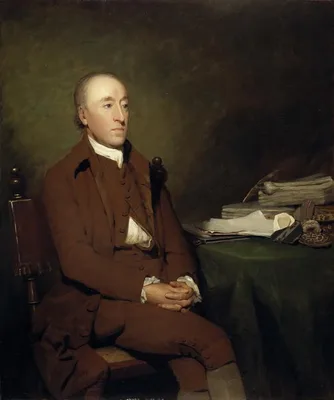
1788 HUTTON, James (1726 – 1797)
The theory of rain.
In this paper on the operation of the water-cycle in meteorology Hutton hypothesized that rain was caused by a mixture of air currents of differing temperatures, either saturated or nearly saturated with moisture. "Hi…
GMN 13593 · https://historyofmedicine.com/id/15872
1856 FOOTE, Eunice Newton (1819 – 1888)
Circumstances affecting the heat of the sun's rays.
Foote was the first scientist known to have experimented on the warming effect of sunlight on different gases. In this two-page paper she theorized that changing the proportion of carbon dioxide in the atmosphere woul…
GMN 13464 · https://historyofmedicine.com/id/15738
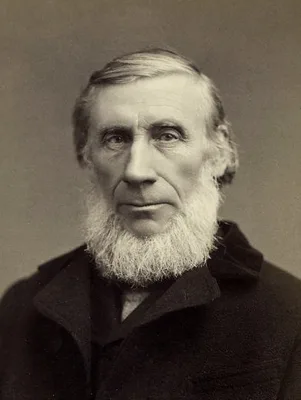
1861 TYNDALL, John (1820 – 1893)
On the absorption and radiation of heat by gases and vapours, and on the physical connexion of radiation, absorption and conduction.
Demonstration that gases including carbon dioxide and water can absorb heat, aand could change climate. Digital facsimile from royalsocietypublishing.org at this link.
GMN 13465 · https://historyofmedicine.com/id/15739
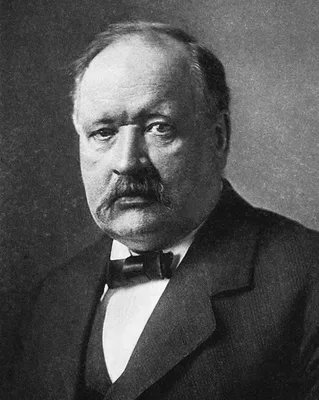
1896 ARRHENIUS, Svante August (1859 – 1927)
Ueber den Einfluss des atmosphärischen Kohlensäuregehalts auf die Temperatur der Erdoberfläche.
Arrhenius used basic principles of physical chemistry to estimate the extent to which increases in atmospheric carbon dioxide are responsible for the Earth's increasing surface temperature, the "greenhouse effect."
GMN 13046 · https://historyofmedicine.com/id/15297
1907 ARRHENIUS, Svante August (1859 – 1927)
Das Werden der Welten. Mit Unterstützung des Verfassers aus dem schwedischen übersetzt von L. Bamberger.
In this work Arrhenius predicted the possibility of man-made global warming. His prediction that significant global warming would take ~3000 years to develop is now recognized as a substantial underestimate due in par…
GMN 8152 · https://historyofmedicine.com/id/10328
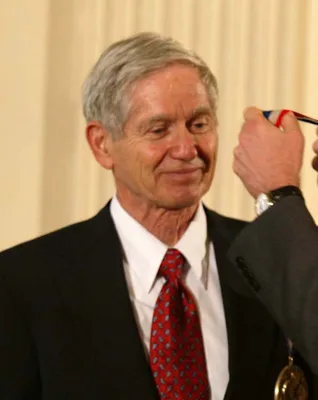
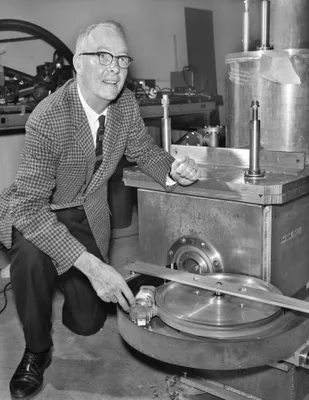
1970 KEELING, Charles David (1928 – 2005)
Is carbon dioxide from fossil fuel changing man's environment?
Keeling developed the first instrument that could measure carbon dioxide in atmospheric samples with consistently reliable accuracy, and in 1958 began collecting carbon dioxide samples from a base he established at Ma…
GMN 13559 · https://historyofmedicine.com/id/15836
1979 ALVAREZ, Luis Walter (1911 – 1988); ALVAREZ, Walter (1940 – ); ASARO, Frank (1927 – 2014); MICHEL, Helen Vaughan (1932 – )
Experimental evidence in support of an extra-terrestrial trigger for the Cretaceous-Tertiary extinctions. (Abstract).
Iridium is a very rare element in the Earth's crust, but is found in anomalously high concentrations (around 1000 times greater than normal) in a thin worldwide layer of clay marking the boundary between the Cretaceou…
GMN 14206 · https://historyofmedicine.com/id/16522
1980 ALVAREZ, Luis Walter (1911 – 1988); ALVAREZ, Walter (1940 – ); ASARO, Frank (1927 – 2014); MICHEL, Helen Vaughan (1932 – )
Extraterrestrial cause for the Cretaceous-Tertiary extinction.
Following up on No. 14206, the authors stated that the same excess iridium areas were found in two different areas of W. Europe and in New Zealand, and posited that “the anomalous iridium concentrations at the C [reta…
GMN 14207 · https://historyofmedicine.com/id/16523
1991 HILDEBRAND, Alan Russell (1955 – ); PENFIELD, Glen T.; KRING, David A. (1961 – ); CAMARGO-ZANOGUERA, Antonio; ET AL
Chicxulub Crater: A possible Cretaceous/Tertiary boundary impact crater on the Yucatán Peninsula, Mexico.
Eleven years after publication of No. 14207, Alan Hildebrand, working with Luis and Walter Alvarez, proposed that the Chicxulub Crater, discovered by Antonio-Camargo-Zanoguera and Glen T. Penfield during the 1970s, wa…
GMN 14208 · https://historyofmedicine.com/id/16524
1998 FLEMING, James Rodger
Historical perspectives on climate change.
GMN 7717 · https://historyofmedicine.com/id/9889
2006 GORE, Albert Arnold Jr. (1948 – )
An inconvenient truth. The planetary emergency of global warming and what we can do about it.
A politician, Gore was one of the first to draw popular attention to climate change. He supplemented the best-selling book with a film and DVD with the same title. Ten years later, recognizing that in spite of its wid…
GMN 14048 · https://historyofmedicine.com/id/16358
2020 SUMMERHAYES, Colin P.
Paleoclimatology: From snowball earth to the anthropocene.
GMN 13466 · https://historyofmedicine.com/id/15740
2022 CARLSON, Colin J. (1996 – ); ALBERY, Gregory F.; MEROW, Cory; ET AL
Climate change increases cross-species viral transmission risk.
1) Using a phylogeographical model of the mammal-virus network, and projections of geographical range shifts, the authors assert that 3,139 mammal species will aggregate in new combinations at high elevations, seeking…
GMN 14049 · https://historyofmedicine.com/id/16359