1965 U.S. PRESIDENT'S SCIENCE ADVISORY COMMITTEE
Restoring the quality of our environment. Report of The Environmental Pollution Panel, President's Science Advisory Committee.
Digital facsimile available at this link.
GMN 7422 · https://historyofmedicine.com/id/9594
1967 WILSON, Edward Osborne (1929 – 2021); MACARTHUR, Robert Helmer (1930 – 1972)
The theory of island biogeography.
MacArthur and Wilson showed that the species richness of an area could be predicted in terms of such factors as habitat area, immigration rate and extinction rate.
GMN 8155 · https://historyofmedicine.com/id/10331
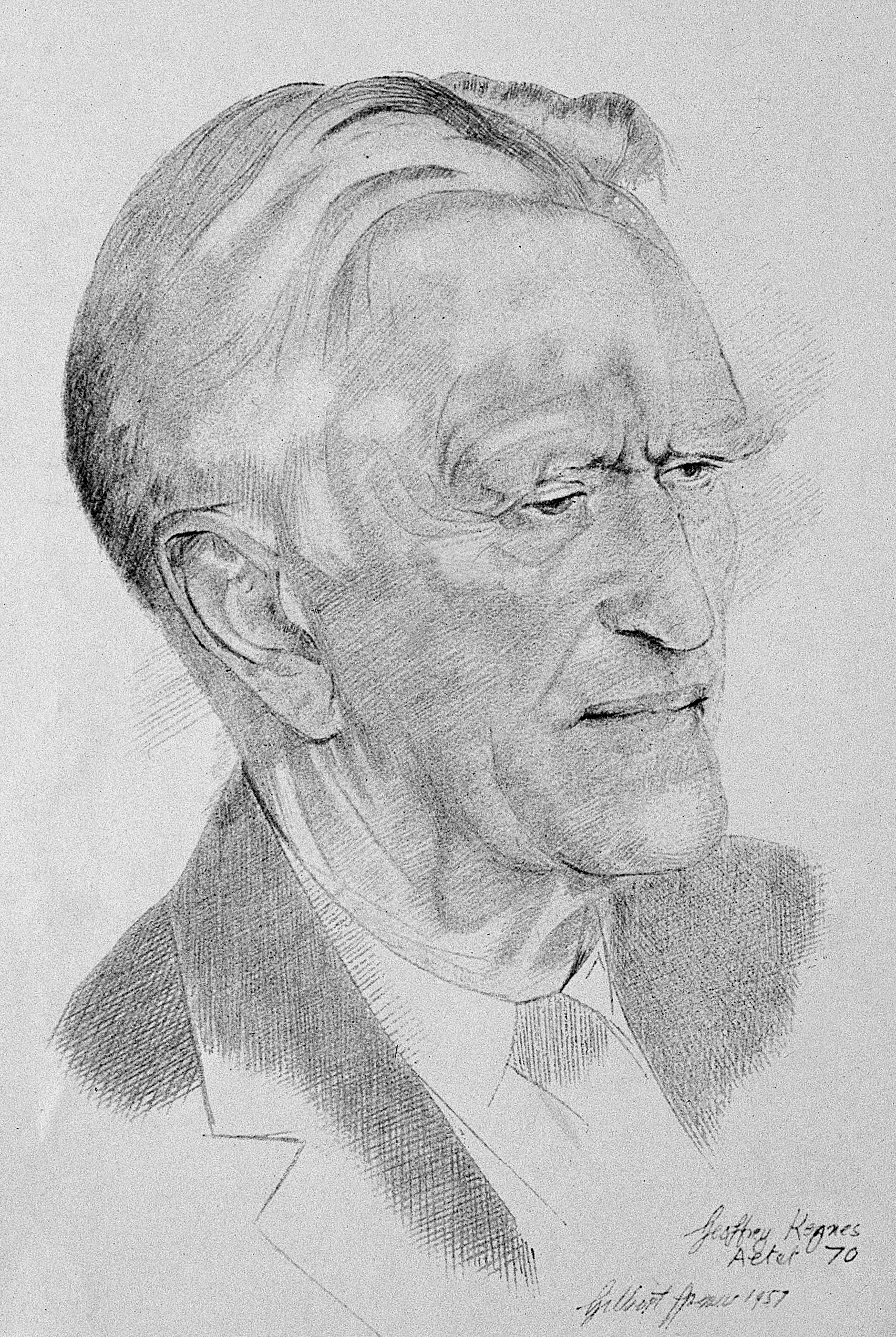
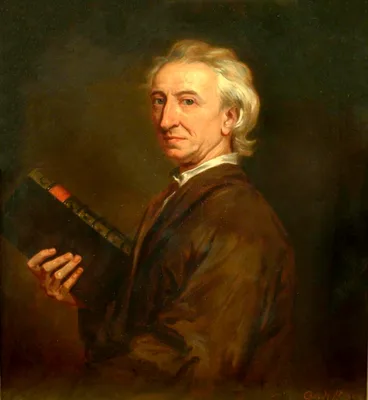
1968 KEYNES, Sir Geoffrey Langdon (1887 – 1982); EVELYN, John (1620 – 1706)
John Evelyn: A study in bibliopphily with a bibliography of his writings
Second edition, revised. First published in 1937 by The Grolier Club and Cambridge University Press.
GMN 11230 · https://historyofmedicine.com/id/13427
1970 CRUTZEN, Paul Jozef (1933 – )
The influence of nitrogen oxides on the atmospheric ozone content.
Crutzen showed that nitrous oxide impacts the ozone layer by pointing out "that emissions of nitrous oxide (N2O), a stable, long-lived gas produced by soil bacteria, from the Earth's surface could affect the amount of…
GMN 8156 · https://historyofmedicine.com/id/10332
1970 KEELING, Charles David (1928 – 2005)
Is carbon dioxide from fossil fuel changing man's environment?
Keeling developed the first instrument that could measure carbon dioxide in atmospheric samples with consistently reliable accuracy, and in 1958 began collecting carbon dioxide samples from a base he established at Ma…
GMN 13559 · https://historyofmedicine.com/id/15836
1971 FORD, John (1910 – )
The role of the trypanosomiases in African ecology: A study of the Tsetse fly problem.
GMN 10678 · https://historyofmedicine.com/id/12871
1974 MOLINA-PASQUEL HENRÍQUEZ, Mario José (1943 – ); ROWLAND, Frank Sherwood (1927 – 2012)
Stratospheric sink for chlorofluoromethanes: chlorine atom-catalysed destruction of ozone.
Rowland and his post-doctoral student, Molina, suggested that long-lived organic halogen compounds, such as chlorofluorocarbons (CFCs), could reach the stratosphere where they would be dissociated by UV light, releasi…
GMN 8157 · https://historyofmedicine.com/id/10333
1974 WHORTON, James C. (1942 – )
Before Silent Spring: Pesticides and public health in pre-DDT America.
GMN 12444 · https://historyofmedicine.com/id/14676
1978 HUTCHINSON, George Evelyn (1903 – 1991)
An introduction to population ecology.
This elegantly written textbook by a pioneering authority is based on a carefully documented historical approach to the subject.
GMN 145.9 · https://historyofmedicine.com/id/2708
1979 ALVAREZ, Luis Walter (1911 – 1988); ALVAREZ, Walter (1940 – ); ASARO, Frank (1927 – 2014); MICHEL, Helen Vaughan (1932 – )
Experimental evidence in support of an extra-terrestrial trigger for the Cretaceous-Tertiary extinctions. (Abstract).
Iridium is a very rare element in the Earth's crust, but is found in anomalously high concentrations (around 1000 times greater than normal) in a thin worldwide layer of clay marking the boundary between the Cretaceou…
GMN 14206 · https://historyofmedicine.com/id/16522
1980 MERCHANT, Carolyn (1936 – )
The death of nature: Women, ecology and the scientific revolution.
Reprinted with addition of a new preface, 1990.
GMN 7970 · https://historyofmedicine.com/id/10146
1980 ALVAREZ, Luis Walter (1911 – 1988); ALVAREZ, Walter (1940 – ); ASARO, Frank (1927 – 2014); MICHEL, Helen Vaughan (1932 – )
Extraterrestrial cause for the Cretaceous-Tertiary extinction.
Following up on No. 14206, the authors stated that the same excess iridium areas were found in two different areas of W. Europe and in New Zealand, and posited that “the anomalous iridium concentrations at the C [reta…
GMN 14207 · https://historyofmedicine.com/id/16523
1983 CRONON, William (1954 – )
Changes in the land: Indians, colonists and the ecology of New England.
"In this work, Cronon demonstrated the impact on the land of the widely disparate conceptions of ownership held by Native Americans and English colonists. English law objectified land, making it an object of which the…
GMN 10407 · https://historyofmedicine.com/id/12600
1985 MCINTOSH, Robert Patrick
The background of ecology: concept and theory.
GMN 145.91 · https://historyofmedicine.com/id/2712
1985 FARMAN, Joseph Charles (1930 – 2013); GARDINER, Brian Gerard; SHANKLIN, Jonathan (1953 – )
Large losses of total ozone in Antarctica reveal seasonal Cl0x/Nox interaction.
Discovery of the Antarctic ozone hole. In December 2016 the full text of the paper was available from ciesin.org at this link.
GMN 8158 · https://historyofmedicine.com/id/10334
1985 DEISENHOFER, Johann (1943 – ); MICHEL, Hartmut (1948 – ); HUBER, Robert (1937 – ); ET AL
Structure of the protein subunit in the photosynthetic reaction centre of Rhodopseudomonas viridis at 3 Å resolution.
Discovery of the three-dimensional structure of a protein complex found in certain photosynthetic bacteria, called the photosynthetic reaction center. This was the first elucidation of the 3D crystal structure of any …
GMN 11060 · https://historyofmedicine.com/id/13256
1986 CROSBY, Alfred W. Jr. (1931 – 2018)
Ecological imperialism: The biological expansion of Europe, 900-1900.
Revised edition, 2004.
GMN 8213 · https://historyofmedicine.com/id/10389
1986 LEAF, Alexander (1920 – 2012)
New perspectives on the medical consequences of nuclear war.
Leaf helped found Physicians for Social Responsibility (PSR) in 1961 and became a prominent member of International Physicians for the Prevention of Nuclear War (IPPNW). This paper highlighted "new research on estimat…
GMN 11476 · https://historyofmedicine.com/id/13675
1989 LEAF, Alexander (1920 – 2012)
Potential health effects of global climatic and environmental changes.
GMN 11475 · https://historyofmedicine.com/id/13674
1991 HILDEBRAND, Alan Russell (1955 – ); PENFIELD, Glen T.; KRING, David A. (1961 – ); CAMARGO-ZANOGUERA, Antonio; ET AL
Chicxulub Crater: A possible Cretaceous/Tertiary boundary impact crater on the Yucatán Peninsula, Mexico.
Eleven years after publication of No. 14207, Alan Hildebrand, working with Luis and Walter Alvarez, proposed that the Chicxulub Crater, discovered by Antonio-Camargo-Zanoguera and Glen T. Penfield during the 1970s, wa…
GMN 14208 · https://historyofmedicine.com/id/16524
1992 BOWLER, Peter J. (1944 – )
The Norton history of the environmental sciences.
GMN 8054 · https://historyofmedicine.com/id/10230
1994 WORSTER, Donald (1941 – )
Nature's economy. A history of ecological ideas. Second edition.
GMN 7068 · https://historyofmedicine.com/id/9235
1995 GROVE, Richard Hugh (1955 – )
Green imperialism: Colonial expansion, tropical island edens and the origins of environmentalism 1600–1860.
"... the first book to document the origins and early history of environmentalism, concentrating especially on its hitherto unexplained colonial and global aspects. It highlights the significance of Utopian, Physiocra…
GMN 9881 · https://historyofmedicine.com/id/12069
1996 QUAMMEN, David (1948 – )
The song of the Dodo: Island biogeography in an age of extinctions.
GMN 10435 · https://historyofmedicine.com/id/12628
1998 FLEMING, James Rodger
Historical perspectives on climate change.
GMN 7717 · https://historyofmedicine.com/id/9889
2000 MCNEILL, John Robert (1954 – )
Something new under the sun: An environmental history of the twentieth-century world.
GMN 9392 · https://historyofmedicine.com/id/11575
2002 U.S. LIBRARY OF CONGRESS
The evolution of the conservation movement, 1850-1920.
https://memory.loc.gov/ammem/amrvhtml/conshome.html "documents the historical formation and cultural foundations of the movement to conserve and protect America's natural heritage, through books, pamphlets, government…
GMN 9565 · https://historyofmedicine.com/id/11751
2003 WILLIAMS, Michael (1935 – 2009)
Deforesting the earth: From prehistory to global crisis.
This work, which was heralded as a masterwork of scholarship when published, originally consisted of 689pp. In 2006 the publishers issued "an abridgment" to make the work accessible to a "general readership." The abri…
GMN 10233 · https://historyofmedicine.com/id/12423
2005 SELINUS, Olle
Essentials of medical geology: Impacts of the natural environment on public health. Editor-in-chief: Olle Selinus.
"... emphasizes the importance and interrelationships of geological processes to the health and diseases of humans and animals. Its accessible format fosters better communication between the health and geoscience comm…
GMN 13769 · https://historyofmedicine.com/id/16054
2006 SACHS, Aaron (1969 – )
The Humboldt current: Nineteenth-century exploration and the roots of American environmentalism.
GMN 7962 · https://historyofmedicine.com/id/10137
2006 KOHLER, Robert E. (1937 – )
All creatures: Naturalists, collectors, and biodiversity, 1850-1950.
GMN 10366 · https://historyofmedicine.com/id/12558
2006 GORE, Albert Arnold Jr. (1948 – )
An inconvenient truth. The planetary emergency of global warming and what we can do about it.
A politician, Gore was one of the first to draw popular attention to climate change. He supplemented the best-selling book with a film and DVD with the same title. Ten years later, recognizing that in spite of its wid…
GMN 14048 · https://historyofmedicine.com/id/16358
2007 NASH, Linda (1962 – )
Inescapable ecologies: A history of environment, disease, and knowledge.
"Among the most far-reaching effects of the modern environmental movement was the widespread acknowledgment that human beings were inescapably part of a larger ecosystem." This book provides a "history of “ecological”…
GMN 11303 · https://historyofmedicine.com/id/13501
2009
Environment & Society Portal.
http://www.environmentandsociety.org/ "The Environment & Society Portal is a gateway to open access resources about human participation in, and understandings of, the environment. It addresses the community of teacher…
GMN 12058 · https://historyofmedicine.com/id/14266
2010 EDWARDS, Paul N.
A vast machine: Computer models, climate data, and the politics of global warming.
GMN 7510 · https://historyofmedicine.com/id/9682
2010 SACKMAN, Douglas Cazaux (1968 – )
A companion to American environmental history. Edited by Douglas Cazaux Sackman.
GMN 9670 · https://historyofmedicine.com/id/11857
2012 EGERTON, Frank N.
Roots of ecology: Antiquity to Haeckel.
GMN 7961 · https://historyofmedicine.com/id/10136
2012 RUTKOW, Eric
American canopy: Trees, forests and the making of a nation.
GMN 9971 · https://historyofmedicine.com/id/12160
2013 ABERTH, John (1963 – )
An environmental history of the Middle Ages: The crucible of nature.
GMN 7618 · https://historyofmedicine.com/id/9790
2014 ANDERSON, Eugene N. (1946 – )
Food and environment in early and medieval China.
GMN 8584 · https://historyofmedicine.com/id/10761
2015 BOWEN, James
The coral reef era: From discovery to decline. A history of scientific investigation from 1600 to the anthropocene epoch.
GMN 11807 · https://historyofmedicine.com/id/14009
2016 CAVERT, William M.
The smoke of London: Energy and environment in the early modern city.
GMN 8106 · https://historyofmedicine.com/id/10282
2016
Data Refuge.
https://www.datarefuge.org/ "Data Refuge is a public and collaborative project designed to address concerns about federal climate and environmental data that is in danger of being lost[1]. In particular, the initiativ…
GMN 9594 · https://historyofmedicine.com/id/11781
2016 POWELL, Miles A.
Vanishing America: Species extinction racial peril, and the origins of conservation.
"Nineteenth-century citizens of European descent widely believed that Native Americans would eventually vanish from the continent. Indian society was thought to be tied to the wilderness, and the manifest destiny of U…
GMN 10421 · https://historyofmedicine.com/id/12614
2018 LEWIS, Daniel
Belonging on an island: Birds, extinction, and evolution in Hawai'i.
GMN 10425 · https://historyofmedicine.com/id/12618
2019 BORLIK, Todd Andrew
Literature and nature in the English renaissance: An ecocritical anthology. Edited by Todd Andrew Borlik.
GMN 11999 · https://historyofmedicine.com/id/14207
2020 XU, Chi; KOHLER, Timothy A.; LENTON, Timothy Michael (1973 – ); SVENNING, Jens-Christian (1970 – ); SCHEFFER, Martin (1958 – )
Future of the human climate niche.
Significance "We show that for thousands of years, humans have concentrated in a surprisingly narrow subset of Earth’s available climates, characterized by mean annual temperatures around ∼13 °C. This distribution lik…
GMN 12602 · https://historyofmedicine.com/id/14842
2020 SUMMERHAYES, Colin P.
Paleoclimatology: From snowball earth to the anthropocene.
GMN 13466 · https://historyofmedicine.com/id/15740
2022 CARLSON, Colin J. (1996 – ); ALBERY, Gregory F.; MEROW, Cory; ET AL
Climate change increases cross-species viral transmission risk.
1) Using a phylogeographical model of the mammal-virus network, and projections of geographical range shifts, the authors assert that 3,139 mammal species will aggregate in new combinations at high elevations, seeking…
GMN 14049 · https://historyofmedicine.com/id/16359