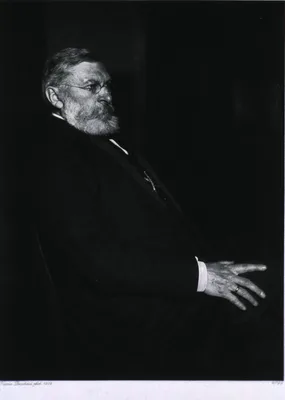
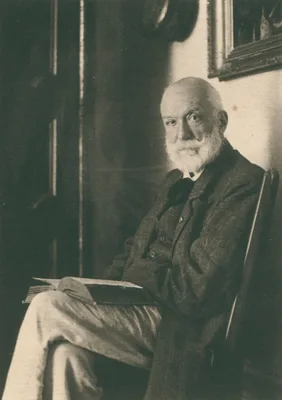
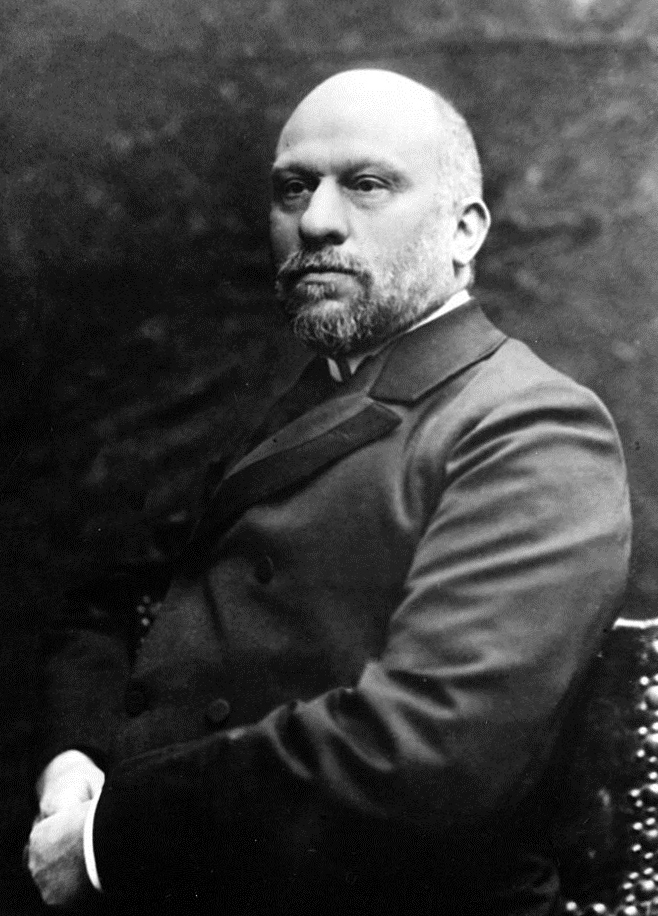
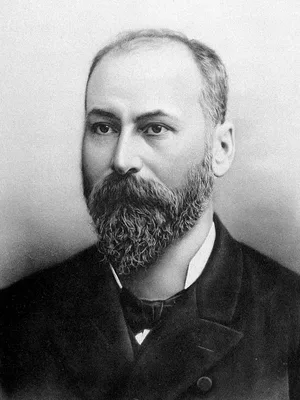
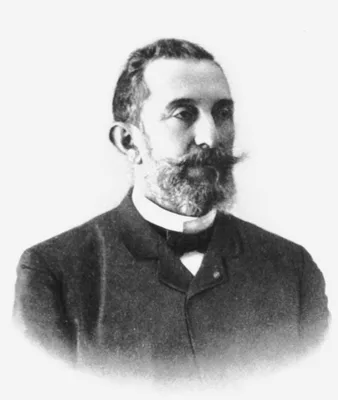
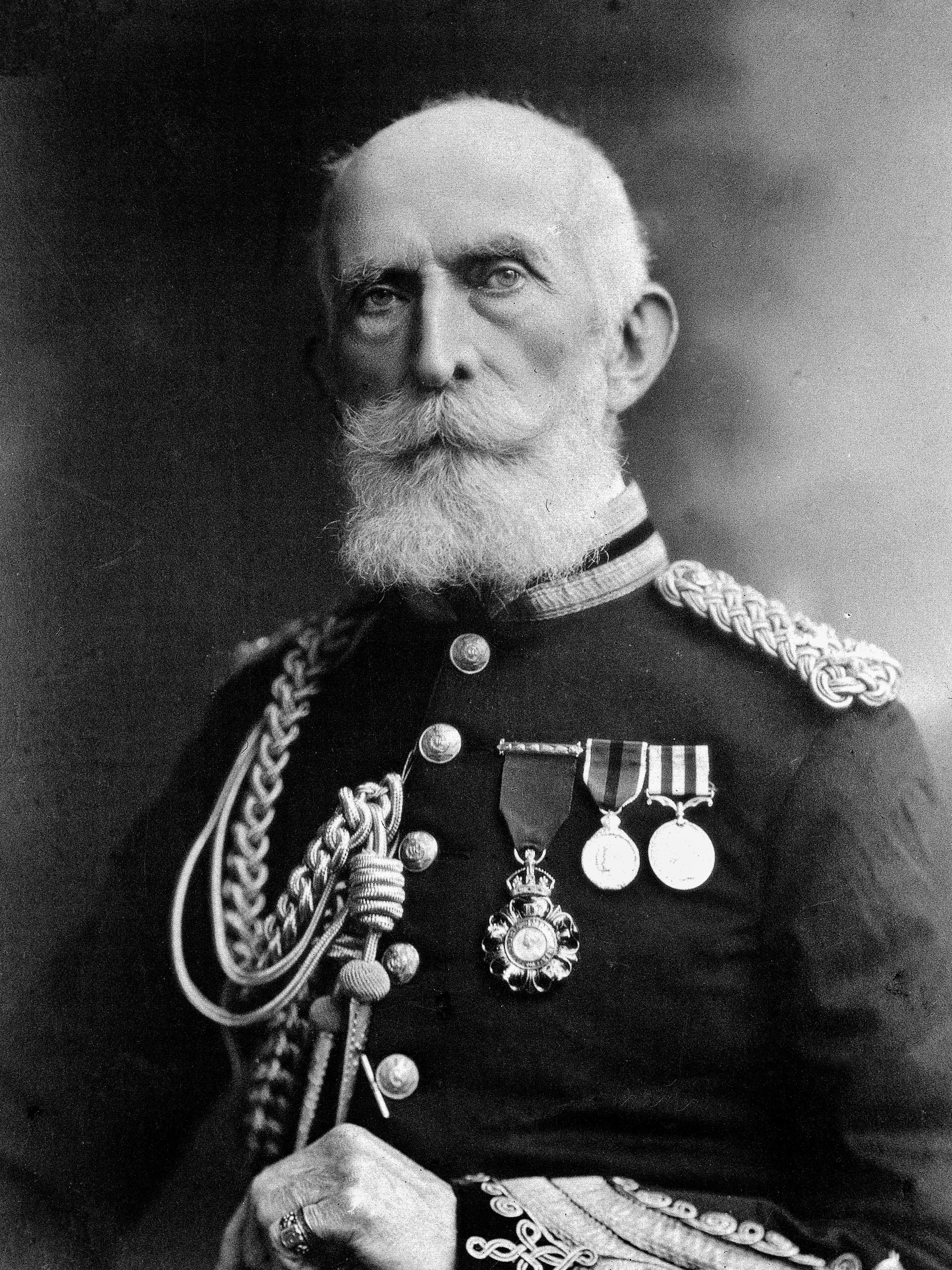
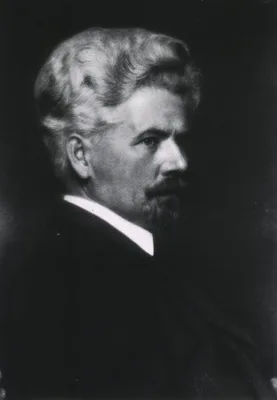
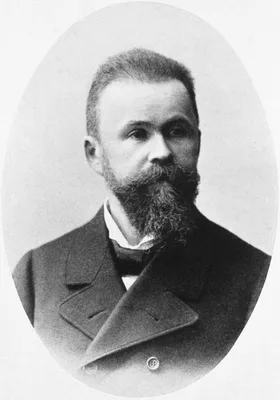
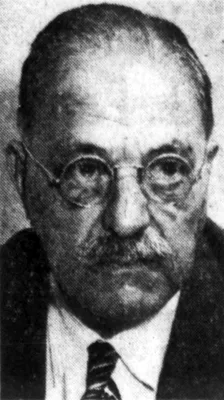
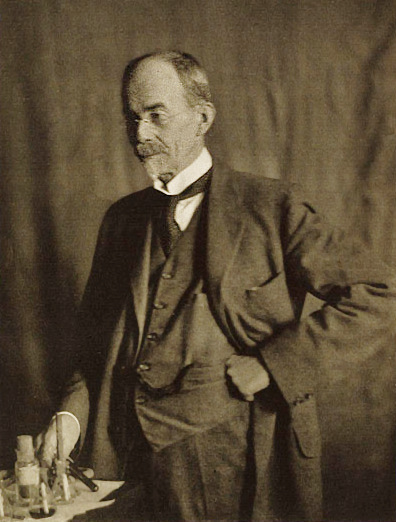
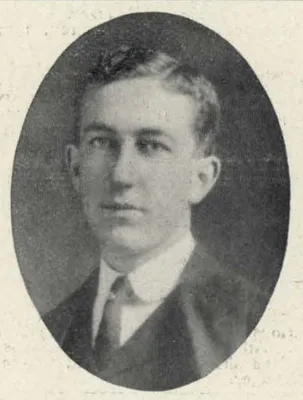
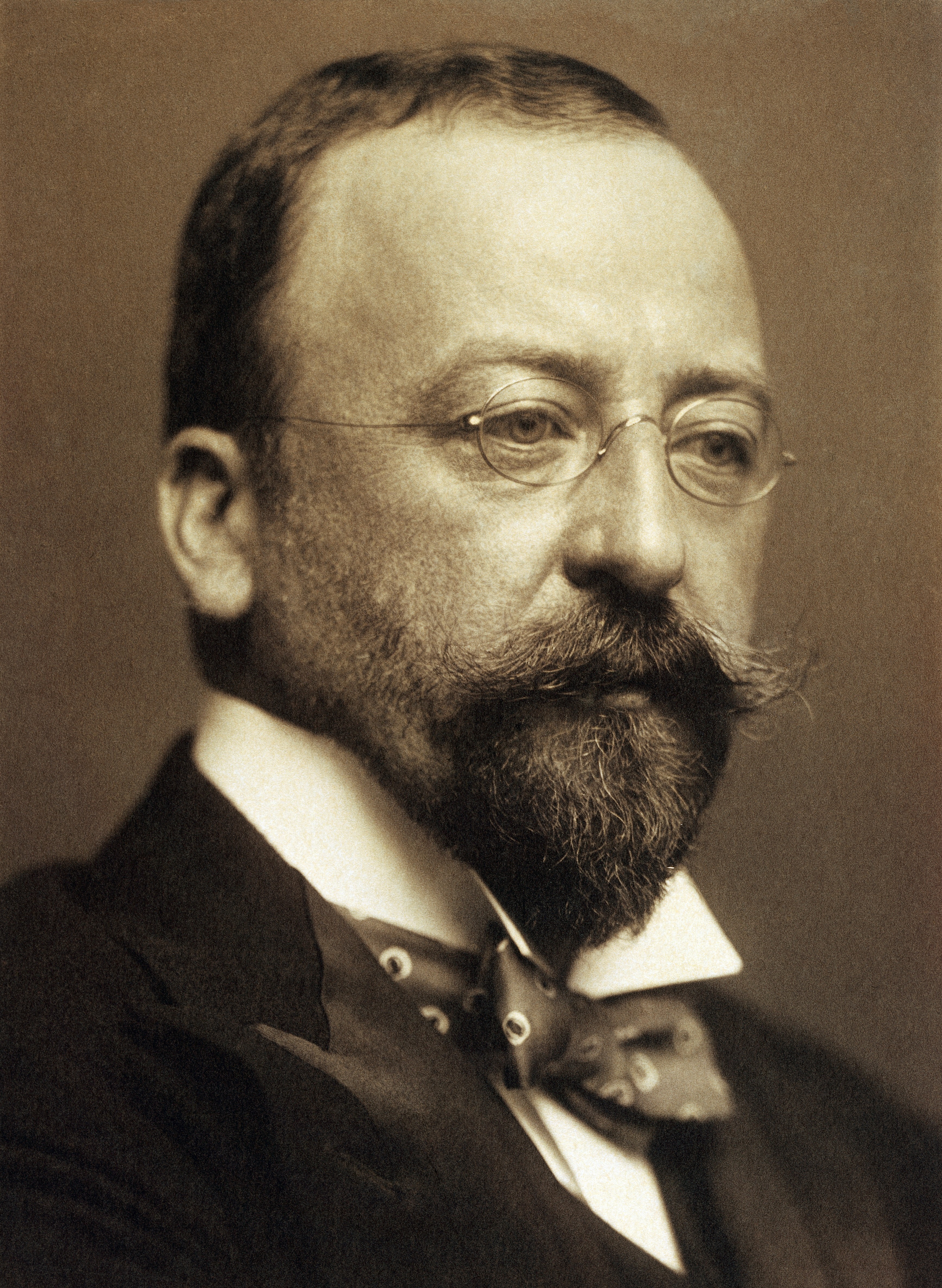
1876 FLECHSIG, Paul Emil (1847 – 1929)
Die Leitungsbahnen im Gehirn und Rückenmark des Menschen auf Grund entwicklungsgeschichtlicher Untersuchungen dargestellt.
Flechsig mapped out the motor and sensory areas of the cerebral cortex, and named the “pyramidal tract”. See Clarke & O'Malley, The human brain and spinal cord, p. 857, and pp. 277-81. Digital facsimile from Bayerisch…
GMN 1410 · https://historyofmedicine.com/id/2083
1877 FOREL, Auguste Henri (1848 – 1931)
Untersuchungen über die Haubenregion und ihre oberen Verknüpfungen im Gehirne des Menschen und einiger Säugethiere, mit Beiträgen zu den Methoden der Gehirnuntersuchung.
Forel elucidated the subthalamic region, “campus Foreli”.
GMN 1411 · https://historyofmedicine.com/id/2086
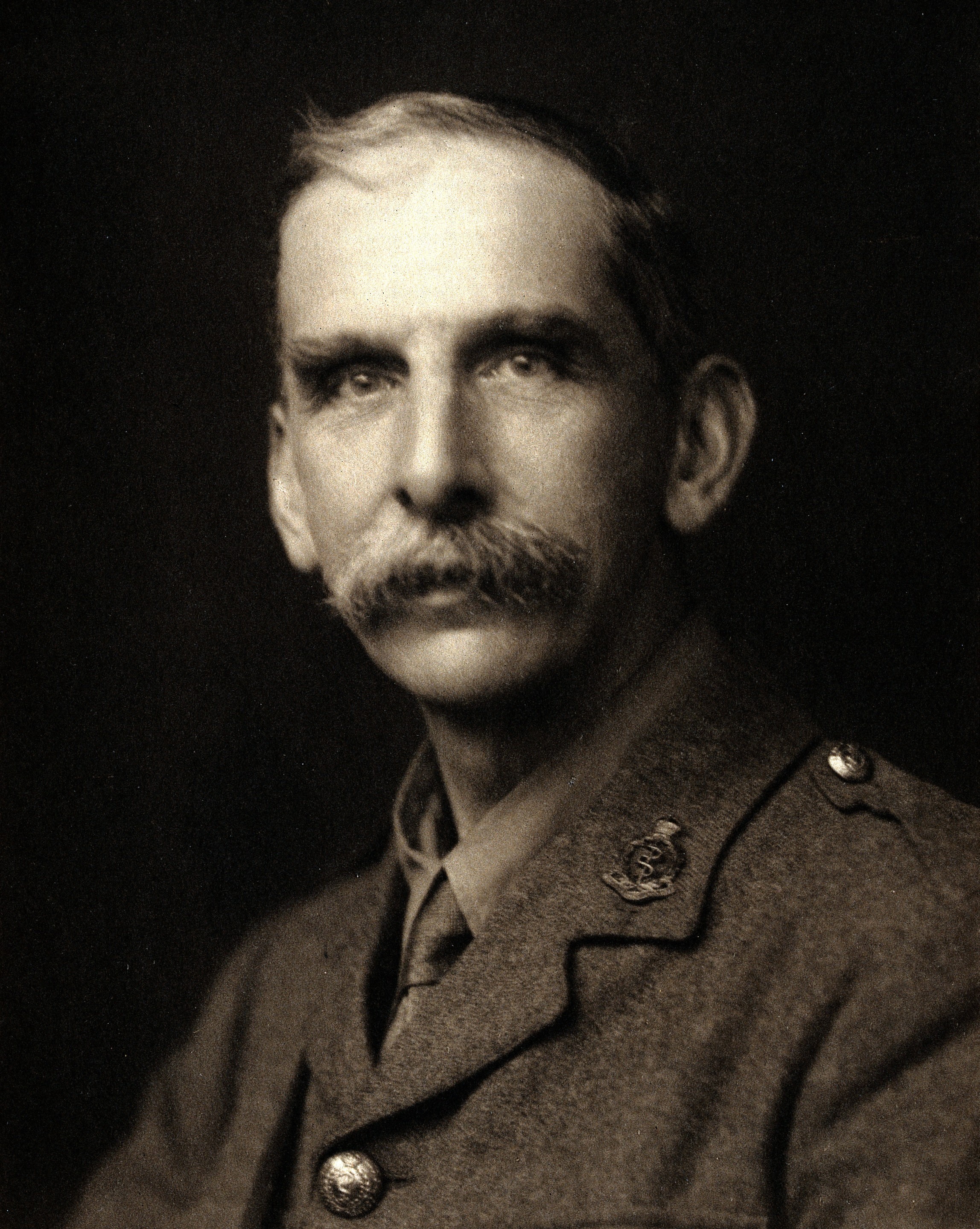
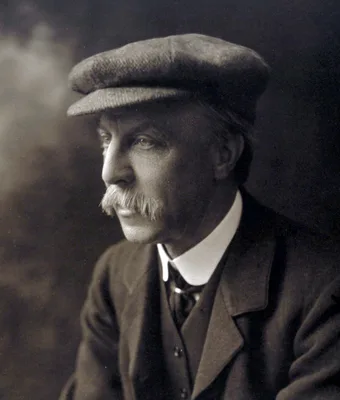
1878 LEWIS, William Bevan (1847 – 1929)
On the comparative structure of the cortex cerebri.
Lewis described the giant cells of the precentral convolution.
GMN 1412 · https://historyofmedicine.com/id/2090
1880 MOSSO, Angelo (1846 – 1910)
Sulla circolazione del sangue nel cervello dell’uomo. Ricerche sfigmografiche.
In this work Angelo Mosso reported his discovery that blood circulation in the brain increases in certain discrete areas during mental activity, and published the records of this activity produced by the machine he in…
GMN 6838 · https://historyofmedicine.com/id/9002
1881 EXNER, Sigmund (Siegmund Ritter Exner von Ewarten) (1846 – 1926)
Untersuchungen über die Localisation der Funktionen in der Grosshirnrinde des Menschen.
Exner identified the superficial tangential fibers of the molecular layer of the cerebral cortex, known eponymically as “Exner’s plexus”. Exner’s book of 1881 on cortical localization contained maps based on the clini…
GMN 1413 · https://historyofmedicine.com/id/2094
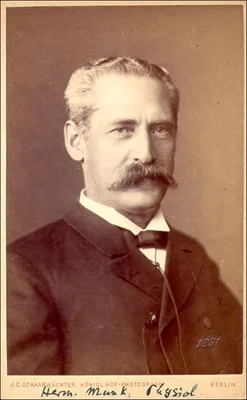
1881 MUNK, Hermann (1839 – 1912)
Ueber die Functionen der Grosshirnrinde.
Munk made important investigations on the functions of the temporal lobes.
GMN 1414 · https://historyofmedicine.com/id/2095
1884 OTT, Isaac (1847 – 1916)
The relation of the nervous system to the temperature of the body.
Ott studied the nervous regulation of body temperature. His papers on the heat-center in the brain and on the thermoinhibitory apparatus were published in the same journal, 1887, 14, 150-62, 428-38; 1888, 15, 85-104.
GMN 1415 · https://historyofmedicine.com/id/2098
1884 THUDICHUM, Johann Ludwig Wilhelm (1829 – 1901)
A treatise on the chemical constitution of the brain.
Thudichum, a German emigré, discovered cephalins and myelins in brain tissue. An enlarged German edition of his book was published at Tübingen, 1901. See biography by D. L. Drabkin, 1958, which includes an annotated b…
GMN 1415.1 · https://historyofmedicine.com/id/2101
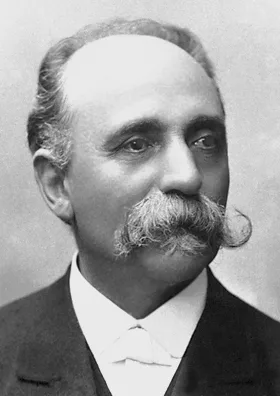
1886 GOLGI, Camillo (1844 – 1926)
Sulla fina anatomia degli organi centrali del sistema nervoso.
Golgi’s histological studies made a clear conception of the nervous system possible for the first time. He demonstrated the existence of multipolar nerve-cells (Golgi cells) by means of his silver nitrate stain, and d…
GMN 1416 · https://historyofmedicine.com/id/2103
1887 HORSLEY, Sir Victor Alexander Haden (1857 – 1916); BEEVOR, Charles Edward (1854 – 1907)
A minute analysis (experimental) of the various movements produced by stimulating in the monkey different regions of the cortical centre for the upper limb, as defined by Professor Ferrier.
Beevor, physician to the National Hospital, Queen Square, London, collaborated with Horsley in an important series of investigations of the localization of cerebral function.
GMN 1416.1 · https://historyofmedicine.com/id/2106
1887 FRANÇOIS-FRANCK, Charles-Émile (1849 – 1921)
Leçons sur les fonctions motrices du cerveau.
François-Franck’s studies on the excitability of the cerebral cortex and the localization of function followed work in collaboration with Pitres; Charcot wrote the preface. See also No. 1423.
GMN 1417 · https://historyofmedicine.com/id/2109
1887 WESTPHAL, Carl Friedrich Otto (1833 – 1890)
Ueber einen Fall von chronischer progressiver Lähmung der Augenmuskeln (Ophthalmoplegia externa) nebst Beschreibung von Ganglien-zellengruppen im Bereiche des Oculomotoriuskems.
“Westphal’s nucleus” – for accommodation – in the third cranial nerve. Called also “Edinger’s nucleus” (see the same journal, 1885, 16, 858-89).
GMN 1418 · https://historyofmedicine.com/id/2112
1889 SHARPEY-SCHAFER, Sir Edward Albert (1850 – 1935); HORSLEY, Sir Victor Alexander Haden (1857 – 1916)
A record of experiments upon the functions of the cerebral cortex.
A detailed analysis, by means of faradic stimulation, of the motor responses of the cerebral cortex, internal capsule, and spinal cord of higher primates.
GMN 1419 · https://historyofmedicine.com/id/2115
1889 VAN GIESON, Ira Thompson (1865 – 1913)
Laboratory notes of technical methods for the nervous system.
Van Gieson’s acid fuchsin and picric acid stain for nerve tissue.
GMN 1419.1 · https://historyofmedicine.com/id/2120
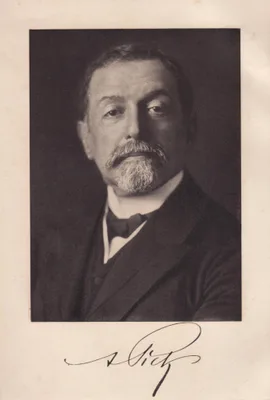
1890 PICK, Arnold (1851 – 1924)
Ueber ein abnormes Faserbündel der menschlichen Medulla oblongata.
“Pick’s bundle” of nerve fibres in the medulla oblongata.
GMN 1420 · https://historyofmedicine.com/id/2126
1891 HORSLEY, Sir Victor Alexander Haden (1857 – 1916); GOTCH, Francis (1853 – 1913)
On the mammalian nervous system, its functions, and their localisation determined by an electrical method.
Gotch and Horsley showed that electric currents are produced in the mammalian brain, and they recorded them with the string galvanometer of the capillary electrometer. Their work led eventually to the development of t…
GMN 1420.1 · https://historyofmedicine.com/id/2137
1891 LUCIANI, Luigi (1840 – 1919)
Il cervelletto. Nuovi studi di fisiologia normale e patologica.
Luciani succeeded in keeping dogs alive after total extirpation of the cerebellum, and initiated the modern study of cerebellar function. Digital facsimile from Google Books at this link.
GMN 1421 · https://historyofmedicine.com/id/2144
1894 NISSL, Franz (1860 – 1919)
Ueber den sogenannten Granula der Nervenzellen.
“Nissl’s granules”.
GMN 1422 · https://historyofmedicine.com/id/2147
1895 CHARCOT, Jean Martin (1825 – 1893); PITRES, Albert (1848 – 1928)
Les centres moteurs corticaux chez l’homme.
Three papers by Charcot and Pitres in 1877, 1878, and 1883 left no doubt as to the existence of cortical motor centres in man. These were later published in book form (above).
GMN 1423 · https://historyofmedicine.com/id/2152
1895 –1901 DEJERINE, Joseph Jules (1849 – 1917); DEJERINE-KLUMPKE, Augusta (1859 – 1927)
Anatomie des centres nerveux. 2 vols.
Classic summary of neuroanatomy at the end of the nineteenth century—comprehensive, beautifully illustrated, and scholarly. It is a goldmine of historical information with an outstanding bibliography.
GMN 1424 · https://historyofmedicine.com/id/2158
1895 DONALDSON, Henry Herbert (1857 – 1938)
The growth of the brain.
GMN 1425 · https://historyofmedicine.com/id/2162
1896 RETZIUS, Magnus Gustaf (1842 – 1919)
Das Menschenhirn. Studien in der makroskopischen Morphologie. 2 vols.
Retzius studied a large series of subprimate, simian, and human brains, and clarified some of the more difficult problems of cerebral morphology.
GMN 1426 · https://historyofmedicine.com/id/2176
1897 –1903 WERNICKE, Carl (1848 – 1905)
Atlas des Gehirns: Schnitte durch das menschliche Gehirn in photographischen Originalen. 3 Abteilungen in 4 Bänden.
Abt. 1: 32 Frontalschnitte durch eine Grosshirnhemisphäre / hergestellt und erl. von Dr. Ernst Hahn und Dr. Heinrich Sachs (1897) Breslau : Verl. der Königlichen psychiatrischen Klinik, in Comm. bei Schletter [1] Bl.,…
GMN 1427 · https://historyofmedicine.com/id/2179
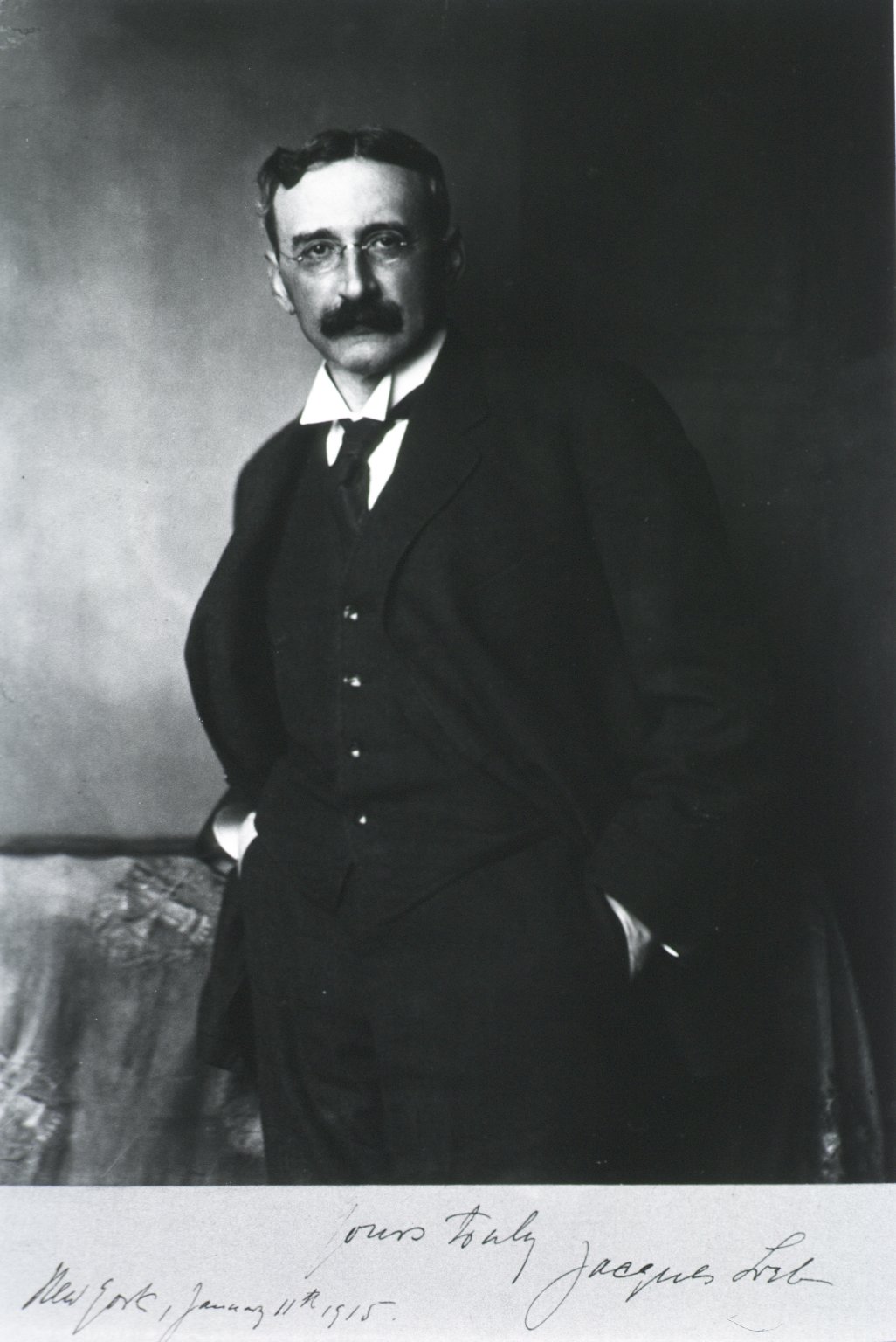
1899 LOEB, Jacques (1859 – 1924)
Einleitung in die vergleichende Gehirnphysiologie und vergleichende Psychologie.
GMN 1428 · https://historyofmedicine.com/id/2633
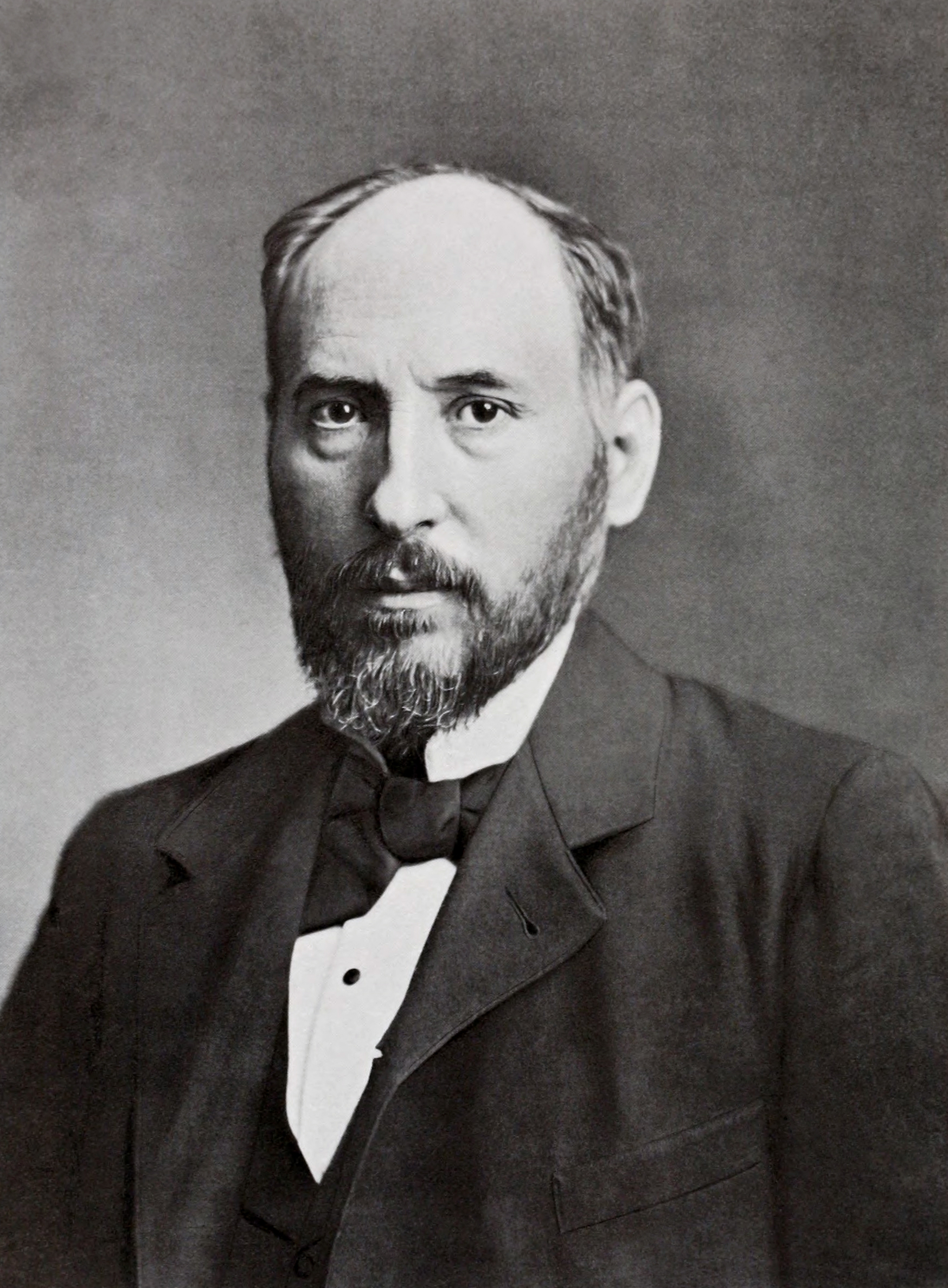
1901 CAJAL, Santiago Ramón y (1852 – 1934)
Estructura dela corteza cerebral olfativa del hombre y mamíferos.
Ramón y Cajal’s descriptions of the limbic cortex are still the most authoritative. The above work and three shorter papers in the same volume were translated by L.M. Kraft as Studies on the cerebral cortex, London, 1…
GMN 1428.1 · https://historyofmedicine.com/id/2186
1903 VOGT, Oskar (1870 – 1959)
Zur anatomischen Gliederung des Cortex cerebri.
GMN 1429 · https://historyofmedicine.com/id/2190
1905 CAMPBELL, Alfred Walter (1868 – 1937)
Histological studies on the localisation of cerebral function.
The precentral area of the cerebral cortex is known as “Campbell’s area”. Campbell and Brodmann were pioneers in the study of the architectonics of the cerebral cortex, or cerebral cytoarchitecture. Digital facsimile …
GMN 1430 · https://historyofmedicine.com/id/2195
1906 DEJERINE, Joseph Jules (1849 – 1917); ROUSSY, Gustave (1874 – 1948)
Le syndrome thalamique.
The “thalamic syndrome”, investigations of the effect of localized thalamic injury.
GMN 1431 · https://historyofmedicine.com/id/2203
1906 SHERRINGTON, Sir Charles Scott (1857 – 1952)
The integrative action of the nervous system.
Sherrington insisted that the essential function of the nervous system was the co-ordination of activities of the various parts of the organism. His work on the nervous system, especially his experimental studies of r…
GMN 1432 · https://historyofmedicine.com/id/2209
1907 SMITH, Sir Grafton Elliot (1871 – 1937)
A new topographical survey of the human cerebral cortex, being an account of the distribution of the anatomically distinct cortical areas and their relationship to the cerebral sulci.
Elliot Smith, Professor of Anatomy at Cairo, Manchester, and University College, London, initiated modern studies of cerebral function with his work on the cortical pattern of the human brain. He identified 50 areas.
GMN 1433 · https://historyofmedicine.com/id/2220
1908 BRODMANN, Korbinian (1868 – 1918)
Beiträge zur histologischen Lokalisation der Grosshirnrinde. VI. Die Cortexgliederung des Menschen.
“Brodmann’s areas”, the occipital and pre-occipital area of the cerebral cortex.
GMN 1434 · https://historyofmedicine.com/id/2222
1908 HORSLEY, Sir Victor Alexander Haden (1857 – 1916); CLARKE, Robert Henry (1850 – 1926)
The structure and functions of the cerebellum examined by a new method.
Stereotactic apparatus for the accurate location of electrodes in the brain. The apparatus devised by Horsley and Clarke opened the way to stereotactic surgery of the brain.
GMN 1435.1 · https://historyofmedicine.com/id/2230
1909 BRODMANN, Korbinian (1868 – 1918)
Vergleichende Lokalisationslehre der Grosshirnrinde in ihren Prinzipien dargestellt auf Grund des Zellenbaues.
Brodmann was a pioneer in the study of cytoarchitectonics, and this work forms the basis for localization of function in the cerebral cortex. Brodmann's "areas" are used to designate cortical function regions. Brodman…
GMN 1435 · https://historyofmedicine.com/id/2226
1909 KARPLUS, Johann Paul (1866 – 1936); KREIDL, Alois (1864 – 1928)
Gehirn und Sympathicus.
First experimental studies on hypothalmic function
GMN 1436 · https://historyofmedicine.com/id/2233
1909 SACHS, Ernest (1879 – 1958)
On the structure and functional relations of the optic thalamus.
GMN 1437 · https://historyofmedicine.com/id/2234
1910 ABEL, John Jacob (1857 – 1938); BARBOUR, Henry Gray (1886 – 1943)
Tetanic convulsions in frogs produced by acid fuchsin, and their relation to the problem of inhibition in the central nervous system.
GMN 1438 · https://historyofmedicine.com/id/2235
1910 MALONE, Edward Fall (1880 – )
Über die kerne des menschlichen diencephalon.
"Malone was a strict adherent to the cytoarchitectonic method, and ascribed similar function to neurons with similar shape in different parts of the nervous system. He named the nucleus reuniens (thalamus) here, and a…
GMN 7344 · https://historyofmedicine.com/id/9516
1911 HEAD, Sir Henry (1861 – 1940); HOLMES, Sir Gordon Morgan (1876 – 1965)
Sensory disturbances from cerebral lesions.
First systematic account of the functions of the thalamus and its relationship to the cerebral cortex. Reprinted in No. 1304.
GMN 1438.1 · https://historyofmedicine.com/id/2236
1911 MESTREZAT, William (1883 – 1928)
Le liquide céphalo-rachidien normal et pathologique, valeur clinique de l’examen chimique: Syndromes humoraux dans les diverses affections
Mestrezat gave the first exact description of the chemical constitution of the cerebrospinal fluid. Also published at Paris, Maloine, 1912. Digital facsimile of the 1912 edition from the Internet Archive at this link.
GMN 4596 · https://historyofmedicine.com/id/8924
1914 MONAKOW, Constantin von (1853 – 1930)
Die Lokalisation im Grosshirn und der Abbau der Funktion durch kortikale Herde.
A monumental work on cerebral localization.
GMN 1438.2 · https://historyofmedicine.com/id/2237
1914 WEED, Lewis Hill (1886 – 1952)
Studies on cerebro-spinal fluid. III. The pathways of escape from the subarachnoid spaces with particular reference to the arachnoid villi.
Weed mapped out the pathways of the circulation of the cerebrospinal fluid. He described the pathways in this paper with 40 pages of text and 5 plates. This was the third of his four-part series of papers entitled Stu…
GMN 1439 · https://historyofmedicine.com/id/2238
1917 WEED, Lewis Hill (1886 – 1952)
The development of the cerebro-spinal spaces in pig and man.
GMN 1440 · https://historyofmedicine.com/id/2239
1921 TILNEY, Frederick (1875 – 1938); RILEY, Henry Alsop (1887 – 1966)
The form and functions of the central nervous system.
GMN 1441 · https://historyofmedicine.com/id/2240
1924 DUSSER DE BARENNE, Johannes Gregorius (1885 – 1940)
Experimental researches on sensory localization in the cerebral cortex of the monkey (Macacus).
Dusser de Barenne demonstrated the major functional subdivisions of the sensory cortex.
GMN 1442 · https://historyofmedicine.com/id/2241
1924 LIDDELL, Edward George Tandy (1895 – 1981); SHERRINGTON, Sir Charles Scott (1857 – 1952)
Reflexes in response to stretch (myotatic reflexes).
This investigation of the stretch reflex was of value in elucidating muscle tone and posture.
GMN 1443 · https://historyofmedicine.com/id/2242
1925 ECONOMO, Constantin von (1876 – 1931); KOSKINAS, Georg N. (1885 – 1975)
Die Cytoarchitektonik der Hirnrinde des erwachsenen Menschen. 1 vol. and atlas.
This work consisted of textbook of more than 800 pages and an atlas with 112 large-sized microphotographic plates of the cortex. The textbook contained detailed descriptions of their studies and an introduction to the…
GMN 1444 · https://historyofmedicine.com/id/2243
1926 CUSHING, Harvey Williams (1869 – 1939)
Studies in intracranial physiology & surgery. The third circulation. The hypophysis. The gliomas. The Cameron Prize Lectures delivered at the University of Edinburgh October 19, 20, 22, 1925.
This series of three lectures was an analytical review by Cushing of the three main categories of scientific work that he had accomplished during the previous 25 years. Remarkably, Cushing completed this review and de…
GMN 14313 · https://historyofmedicine.com/id/16638
1929 BERGER, Johannes (“Hans”) (1873 – 1941)
Über das Elektrenkephalogramm des Menschen.
First recording of human brain activity, which Berger called electroencephalography. Berger actually recorded his first EEG in 1924, but did not publish the technique until 1929. He showed that the electrical activity…
GMN 1446 · https://historyofmedicine.com/id/2245
1929 LASHLEY, Karl Spencer (1890 – 1958)
Brain mechanisms and intelligence: a quantitative study of injuries to the brain.
Lashley related nervous function and behavior with well-defined areas of the brain, particularly in connection with cerebral lesions.
GMN 1446.1 · https://historyofmedicine.com/id/2246
1932 KELLER, Allen Dudley (1901 – ); HARE, William Kenrick (1908 – )
The hypothalamus and heat regulation.
Location of the heat-regulating center in the hypothalamus.
GMN 1446.2 · https://historyofmedicine.com/id/2247