1980 SZEKELEY, Maria
From DNA to Protein: The transfer of genetic information.
GMN 13206 · https://historyofmedicine.com/id/15467
1980 STEITZ, Joan Elaine Argetsinger (1941 – ); LERNER, Michael R.; WOLIN, Sandra Lynn; ET AL
Are snRNPs involved in splicing?
Steitz and Lerner used immunoprecipitation with human antibodies from patients with autoimmunity to isolate and identify the novel entities snRNPs (pronounced "snurps") and detect their role in splicing. A snRNP is a …
GMN 13993 · https://historyofmedicine.com/id/16297
1980 ALVAREZ, Luis Walter (1911 – 1988); ALVAREZ, Walter (1940 – ); ASARO, Frank (1927 – 2014); MICHEL, Helen Vaughan (1932 – )
Extraterrestrial cause for the Cretaceous-Tertiary extinction.
Following up on No. 14206, the authors stated that the same excess iridium areas were found in two different areas of W. Europe and in New Zealand, and posited that “the anomalous iridium concentrations at the C [reta…
GMN 14207 · https://historyofmedicine.com/id/16523
1980 ROTHMAN, James Edward (1950 – ); FRIES, Erik
Transport of vesicular stomatitis virus glycoprotein in a cell-free extract.
See also: Fries & Rothman, "Transient activity of Golgi-like membranes as donors of vescular stomatitis viral glycoprotein in vitro," J. Cell. Biol., 90, 1981, 697-704. "Rothman's research[15] details how vesicles—tin…
GMN 14255 · https://historyofmedicine.com/id/16575
1980 SCHEKMAN, Randy Wayne (1948 – ); NOVICK, Peter; FIELD, C.
The identification of 23 complementation groups required for post-translational events in the yeast secretory pathway.
See also: Novick, P., Ferro, S. and Schekman, R. "Order of events in the yeast secretory pathway," Cell, 25, 1981, 461-469. In 1979 Schekman devised a genetic selection for temperature-conditional secretion-defective …
GMN 14256 · https://historyofmedicine.com/id/16576
1981 BALTIMORE, David (1938 – ); RACANIELLO, Vincent R. (1953 – )
Molecular cloning of poliovirus cDNA and determination of the complete nucleotide sequence of the viral genome.
The poliovirus genome. Digital facsimile from PNAS through PubMedCentral at this link.
GMN 9175 · https://historyofmedicine.com/id/11354
1981 KITAMURA, Naomi; WIMMER, Eckard (1936 – )
Primary structure, gene organization and polypeptide expression of poliovirus RNA.
The poliovirus genome. With around 10 co-authors. "The primary structure of the poliovirus genome has been determined. The RNA molecule is 7,433 nucleotides long, polyadenylated at the 3′ terminus, and covalently link…
GMN 9176 · https://historyofmedicine.com/id/11355
1981 WATSON, James Dewey (1928 – ); TOOZE, John (1938 – )
The DNA story: A documentary history of gene cloning.
GMN 9728 · https://historyofmedicine.com/id/11915
1981 EVANS, Sir Martin John (1941 – ); KAUFFMAN, Matthew H. (1942 – 2013)
Establishment in culture of pluripotential cells from mouse embryos.
Evans and Kauffman were the first to identify, isolate and successfully culture embryonic stem cells using mouse blastocysts. This discovery opened the doors to the creation of “murine genetic models” -- mice that hav…
GMN 13285 · https://historyofmedicine.com/id/15551
1981 MESSING, Joachim (1946 – 2019); GARDNER, Richard C.; HOWARTH, Alan J.; ET AL
A complete nucleotide sequence of an infectious clone of cauliflower mosaic virus by M13mp7 shotgun sequencing.
Messing and colleagues employed shotgun sequencing to sequence the genome of cauliflower mosaic virus, the first genome sequenced by the shotgun method. They developed the shotgun DNA sequencing method with single and…
GMN 13960 · https://historyofmedicine.com/id/16261
1981 MARTIN, Gail Roberta (1944 – )
Isolation of a pluripotent cell line from early mouse embryos cultured in medium conditioned by teratocarcinoma stem cells (embryonic stem cells/inner cell masses/differentiation in vitro/embryonal carcinoma cells/growth factors) .
Martin used a different approach that avoided in vivo alteration. She reasoned that an ES cell line might be obtained by culturing cells isolated from blastocysts in a medium that had previously been conditioned by an…
GMN 13961 · https://historyofmedicine.com/id/16263
1981 FRANK, Joachim (1940 – ); VERSCHOOR, Adriana; BOUBLIK, Miloslav (1929 – 1994)
Computer averaging of electron micrographs of the 405 ribosomal subunit.
Frank and colleagues developed a method that allows sorting of particle images into classes based on their orientation, as well as their structural features. Specifically Frank developed mathematical tools used for im…
GMN 14183 · https://historyofmedicine.com/id/16498
1981 YONATH, Ada E. (1939 – ); APPELT, Krzysztof; DIJK, Jan; ET AL
The crystallization of ribsomal proteins from the 50 S subunit of the Escherichia coli and Bacillus stearothermophilus ribosome.
The authors crystallized fragments of the 50S subunit of a thermophile bacterium’s ribosome to 3 angstroms resolution. Order of authorship in the original publication: Appelt, Dyck, et al., Yonath. Digital facsimile f…
GMN 14224 · https://historyofmedicine.com/id/16541
1982 LENOIR, Timothy (1948 – )
The strategy of life: teleology and mechanics in nineteenth century German biology.
GMN 145.2 · https://historyofmedicine.com/id/2418
1982 MAYR, Ernst Walter (1904 – 2005)
The growth of biological thought. Diversity, evolution, and inheritance.
An interpretive history of what Mayr calls “ultimate” explanations in biology, reflecting Mayr’s expertise in systematics, evolution, and genetics.
GMN 258.12 · https://historyofmedicine.com/id/8729
1982 SANGER, Frederick (1918 – 2013)
Nucleotide sequence of bacteriophage lambda.
Sanger and colleagues sequenced the entire genome of bacteriophage lambda using a random shotgun technique. This was the first whole genome shotgun (WGS) sequence.
GMN 6885 · https://historyofmedicine.com/id/9049
1982 CECH, Thomas Robert (1947 – ); KRUGER, Kelly; GRABOWSKI, Paula; ET AL
Self-splicing RNA: Autoexcision and autocyclization of the ribosomal RNA intervening sequence of tetrahymena.
Discovery of ribozymes (ribonucleic acid enzymes). Cech discovered that RNA itself could cut strands of RNA, suggesting that life might have started as RNA. "In the 1970s, Cech had been studying the splicing of RNA in…
GMN 13932 · https://historyofmedicine.com/id/16227
1983 DAVIS, Wade (1953 – )
Preparation of the Haitian zombi poison.
According to popular accounts, zombies are innocent victims, raised in a comatose trance from their graves by malevolent Voodoo priests (bokors), and forced to toil indefinitely as slaves. Davis traced the material ba…
GMN 9313 · https://historyofmedicine.com/id/11495
1983 CRONON, William (1954 – )
Changes in the land: Indians, colonists and the ecology of New England.
"In this work, Cronon demonstrated the impact on the land of the widely disparate conceptions of ownership held by Native Americans and English colonists. English law objectified land, making it an object of which the…
GMN 10407 · https://historyofmedicine.com/id/12600
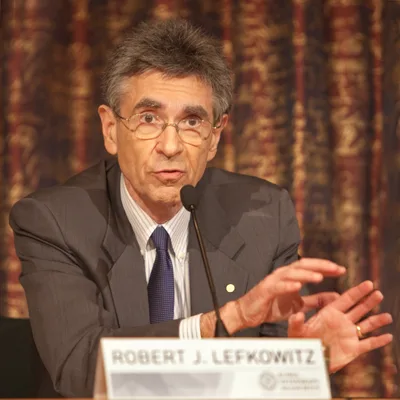
1983 LEFKOWITZ, Robert Joseph (1943 – ); STILES, Gary L.; STRASSER, Ruth H.; CARON, Marc G. (1946 – 2022)
Mammalian beta-adrenergic receptors. Structural differences in beta 1 and beta 2 subtypes revealed by peptide maps.
Lefkowitz and colleagues showed that there are two different types of beta receptors, distinguishing them as Beta-1 and Beta-2. They noticed that each has specific pharmacological characteristics. Order of authorship …
GMN 14140 · https://historyofmedicine.com/id/16454
1983 HUNT, Sir Richard Timothy (1943 – ); EVANS, Tom; ROSENTHAL, Eric T.; YOUNGBLOOM, Jim; DISTEL, Daniel
Cyclin: A protein specified by maternal mRNA in sea urchin eggs that is destroyed at each cleavage division.
"It was at Woods Hole around July 1982, using Arbacia sea urchin eggs as his model organism, that he discovered cyclin proteins.[12] Cyclins play a key role in regulating the cell-division cycle.[16] Hunt was observin…
GMN 14254 · https://historyofmedicine.com/id/16574
1984 HIGUCHI, Russell; RYDER, Oliver Allison III
DNA sequences from the quagga, an extinct member of the horse family.
Probably the first study of DNA isolated from ancient specimens, or ancient DNA (aDNA). By Higuchi, Barbara Bowman, and Mary Freiberger from the Department of Biochemistry, University of California, Berkeley and Ryder…
GMN 7428 · https://historyofmedicine.com/id/9600
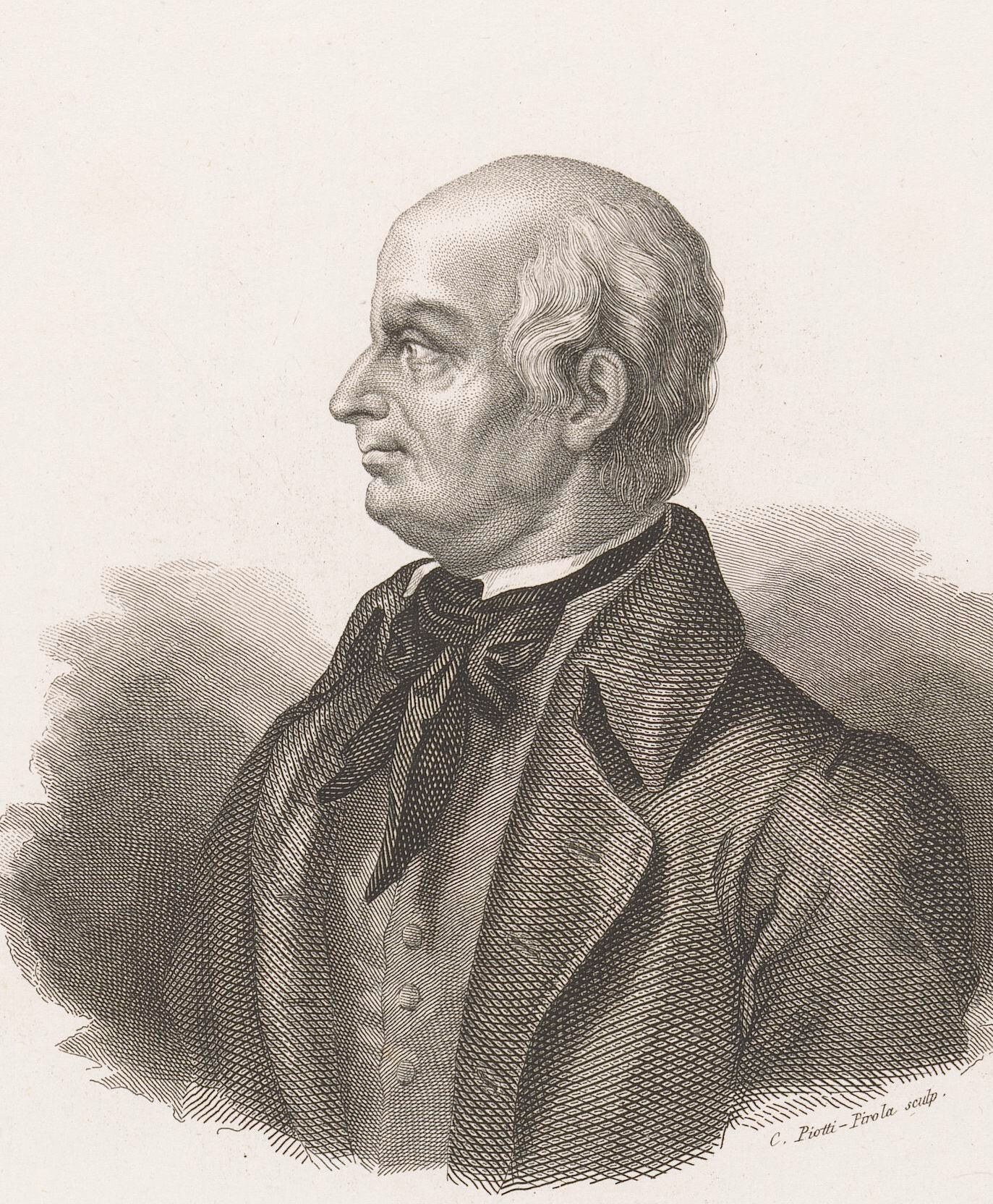
1984 –2013 SPALLANZANI, Lazzaro (1729 – 1799)
Edizioni nationale delle opere di Lazzaro Spallanzani. 30 vols.
Includes the correspondence and previously unpublished manuscripts. A description of this set is available from the publisher at this link.
GMN 9359 · https://historyofmedicine.com/id/11541
1984 SOLTER, Davor (1941 – ); MCGRATH, James
Completion of mouse embryogenesis requires both the maternal and paternal genomes.
Solter discovered mammalian genomic imprinting that causes parent-of-origin specific gene expression, with consequences for development and disease. "Genomic imprinting is an epigenetic phenomenon that causes genes to…
GMN 13991 · https://historyofmedicine.com/id/16295
1984 DUBOCHET, Jacques (1942 – ); ADRIAN, Marc; LEPAULT, Jean; ET AL
Cryo-electron microscopy of viruses.
Dubochet and colleagues introduced "Dubochet's vitrification method" to vitrify water by cooling it so rapidly that it solidified to form a glass instead of crystals. Using this method, the authors published the first…
GMN 14184 · https://historyofmedicine.com/id/16499
1984 HALL, Jeffrey Connor (1945 – ); ROSBASH, Michael Morris (1944 – ); REDDY, Pranhitha; ZEHRING, William A.; WHEELER, David A.; HADFIELD, Christopher
Molecular analysis of the period locus in Drosophila malanogaster and identification of a transcript involved in biological rhythms.
Rosbach and colleagues, including Jeffrey C. Hall, sequenced the Drosophila period gene in 1984. Full text available from cell.com at this link. Order of authorship in the original publication: Reddy, Zehring, Wheeler…
GMN 14263 · https://historyofmedicine.com/id/16584
1984 YOUNG, Michael Warren (1949 – ); BARGIELLO, Thaddeus A.; JACKSON, F. Rob
Restoration of circadian behavioral rhythms by gene transfer in Drosophila.
"At The Rockefeller University in the early 1980s, Young and his two lab members, Ted Bargiello and Rob Jackson, further investigated the circadian period gene in Drosophila. They constructed segments of recombinant D…
GMN 14265 · https://historyofmedicine.com/id/16586
1985 MCINTOSH, Robert Patrick
The background of ecology: concept and theory.
GMN 145.91 · https://historyofmedicine.com/id/2712
1985 FARMAN, Joseph Charles (1930 – 2013); GARDINER, Brian Gerard; SHANKLIN, Jonathan (1953 – )
Large losses of total ozone in Antarctica reveal seasonal Cl0x/Nox interaction.
Discovery of the Antarctic ozone hole. In December 2016 the full text of the paper was available from ciesin.org at this link.
GMN 8158 · https://historyofmedicine.com/id/10334
1985 BLACKBURN, Elizabeth Helen (1948 – ); GRIEDER, Carolyn Widney (1961 – )
Identification of a specific telomere terminal transferase activity in Tetrahymena extracts.
Blackburn and Grieder discovered telomerase in the ciliate Tetrahymena. In 2009 Blackburn and Grieder shared the Nobel Prize in Physiology or Medicine with Jack W. Szostak "for the discovery of how chromosomes are pro…
GMN 8388 · https://historyofmedicine.com/id/10565
1985 MULLIS, Kary Banks (1944 – 2019); ET AL
Enzymatic amplication of B-globin genomic sequences and restriction site analysis for diagnosis of sickle cell anemia.
Polymerase chain reaction first published. With Randall K. Saiki, Stephen Scharf, Fred Faloona et al. Order of authorship in the original paper was Saiki, Scharf, Faloona, Mullis.... In 1993 the Nobel Prize in Chemist…
GMN 10785 · https://historyofmedicine.com/id/12981
1985 DEISENHOFER, Johann (1943 – ); MICHEL, Hartmut (1948 – ); HUBER, Robert (1937 – ); ET AL
Structure of the protein subunit in the photosynthetic reaction centre of Rhodopseudomonas viridis at 3 Å resolution.
Discovery of the three-dimensional structure of a protein complex found in certain photosynthetic bacteria, called the photosynthetic reaction center. This was the first elucidation of the 3D crystal structure of any …
GMN 11060 · https://historyofmedicine.com/id/13256
1985 JEFFRIES, Sir Alec John (1950 – ); WILSON, Victoria; THEIN, Swee Lay
Individual-specific 'fingerprints' of human DNA.
Jeffreys and associates discovered DNA fingerprinting, also called DNA profiling.
GMN 13736 · https://historyofmedicine.com/id/16020
1985 JEFFRIES, Sir Alec John (1950 – ); WILSON, Victoria; THEIN, Swee Lay
Hypervariable 'minisatellite regions in human DNA.
Jeffries and team discovered DNA fingerprinting, also called DNA profiling. This was the first publication of the method.
GMN 13737 · https://historyofmedicine.com/id/16021
1985 KLUG, Sir Aaron (1926 – 2018); MILLER, J.; MCLACHLAN, A. D.
Repetitive zinc-binding domains in the protein transcription factor IIIA from Xenopus oocytes.
Discovery of Zinc fingers, a protein structural motif. "Zinc fingers were first identified in a study of transcription in the African clawed frog, Xenopus laevis in the laboratory of Aaron Klug. A study of the transcr…
GMN 13936 · https://historyofmedicine.com/id/16232
1985 VALE, Ronald David (1959 – ); REESE, Thomas S.; SHEETZ, Michael Patrick
Identification of a novel force-generating protein, kinesin involved in microtubule based motility.
The authors discovered and named a second motor protein, and named it kinesin. Digital text from PubMedCentral at this link. Order of authorship in the original publication: Vale, Reese, Sheetz. (Thanks to Juan Weiss …
GMN 14175 · https://historyofmedicine.com/id/16490
1985 SMITH, George Pearson (1941 – )
Filamentous fusion phage: Novel expression vectors that display cloned antigens on the virion surface.
In this paper Smith invented "phage display technology," a technique where a specific protein sequence is artifically inserted into the coat protein gene of a bacteriophage, causing the protein to be expressed on the …
GMN 14339 · https://historyofmedicine.com/id/16667
1986 HORDER, T. J.; WITKOWSKI, Jan A.; WYLIE, Christopher Craig (1945 – )
A history of embryology. British Society for Developmental Biology Symposia 8. Edited by T. J. Horder, J. A. Wikowski and C. C. Wylie.
A survey of the history of developmental biology from 1880.
GMN 534.42 · https://historyofmedicine.com/id/1796
1986 MULLIS, Kary Banks (1944 – 2019)
Specific enzymatic amplification of DNA in vitro: The polymerase chain reaction.
Improvements that Mullis made to the polymerase chain reaction in 1983 enabled PCR to become a central technique in biochemistry and molecular biology. The process was first described by Kjell Kleppe and 1968 Nobel la…
GMN 7213 · https://historyofmedicine.com/id/9380
1986 CROSBY, Alfred W. Jr. (1931 – 2018)
Ecological imperialism: The biological expansion of Europe, 900-1900.
Revised edition, 2004.
GMN 8213 · https://historyofmedicine.com/id/10389
1986 HORVITZ, Howard Robert (1947 – ); ELLIS, Hilary M.
Genetic control of programmed cell death in the nematode C. elegans.
Using C. elegans to investigate whether there was a genetic program controlling cell death, or apoptosis, In 1986, Horvitz identified the first "death genes", ced-3 and ced-4. He showed that functional ced-3 and ced-4…
GMN 9939 · https://historyofmedicine.com/id/12127
1986 MCDOUGAL, J. S.; MADDON, P. J.; DALGLEISH, A. G.; ET AL
The T4 glycoprotein is a cell-surface receptor for the AIDS virus.
Order of authorship in the original paper: McDougal, Maddon, Dalgleish. The authors discovered that the T4 lymphocyte cell has an outer glycoprotein on its surface that specifically acts as the receptor for HIV. Witho…
GMN 11042 · https://historyofmedicine.com/id/13238
1986 LEAF, Alexander (1920 – 2012)
New perspectives on the medical consequences of nuclear war.
Leaf helped found Physicians for Social Responsibility (PSR) in 1961 and became a prominent member of International Physicians for the Prevention of Nuclear War (IPPNW). This paper highlighted "new research on estimat…
GMN 11476 · https://historyofmedicine.com/id/13675
1986 HOOD, Leroy Edward (1938 – ); SMITH, Lloyd M. (1954 – )
Fluorescence detection in automated DNA sequence analysis.
Invention of the first semi-automated DNA sequencing machine by Leroy H. Hood, Lloyd M. Smith and colleagues. Abstract of the paper: "We have developed a method for the partial automation of DNA sequence analysis. Flu…
GMN 13990 · https://historyofmedicine.com/id/16294
1987 BITENSKY, Mark W. ( – 2014)
Sequencing the human genome. Summary report of the Santa Fe workshop, March 3-4, 1986.
The initial report on the Human Genome Project. For further information see the entry at HistoryofInformation.com at this link. The report is available at this link.
GMN 6927 · https://historyofmedicine.com/id/9092
1987 CANN, Rebecca Louise (1951 – )
Mitochondrial DNA and human evolution.
Cann's discovery that all living humans are genetically descended from a single African mother, known as Mitochrondrial Eve, who lived
GMN 7256 · https://historyofmedicine.com/id/9425
1987 ISHINO, Yoshizumi (1957 – )
Nucleotide sequence of the iap gene, responsible for alkaline phosphatase isozyme conversion in Escherichia coli, and identification of the gene product.
The DNA sequence of CRISPR (Clustered Regularly Interspaced Short Palindromic Repeats) discovered. The function of the interrupted clustered repeats was not known at the time. With H. Shinagawa, K Makino, M Amemura, a…
GMN 7304 · https://historyofmedicine.com/id/9474
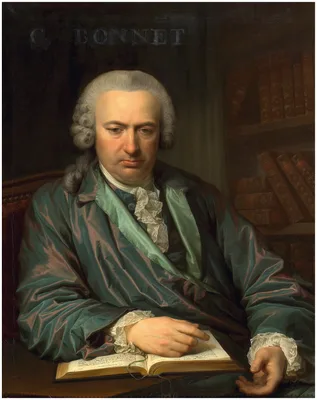
1987 RÉAUMUR, René Antoine Ferchault de (1683 – 1757); TREMBLEY, Abraham (1710 – 1784); BONNET, Charles (1720 – 1793); DAWSON, Virginia Parker (1943 – )
Nature's enigma: The problem of the polyp in the letters of Bonnet, Trembley and Réaumur
GMN 12124 · https://historyofmedicine.com/id/14333
1987 APPEL, Toby A. (1945 – )
The Cuvier-Geoffroy Debate: French biology in the decades before Darwin.
"...no event better represents the contest between form and function as the chief organizing principle of life as the debate between Georges Cuvier and Etienne Geoffroy Saint-Hilaire. This book presents the first comp…
GMN 12211 · https://historyofmedicine.com/id/14421
1987 KORNBERG, Roger David (1947 – ); LORCH, Yahli Deborah; LAPOINTE, Janice W.
Nucleosomes inhibit the initiation of transcription but allow chain elongation with the displacement of histones.
Within the nucleosome Kornberg found that roughly 200 bp of DNA are wrapped around an octamer of histone proteins. With Yahli Lorch, Kornberg showed that a nucleosome on a promoter prevents the initiation of transcrip…
GMN 13950 · https://historyofmedicine.com/id/16249