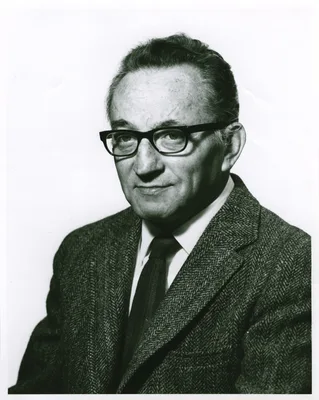
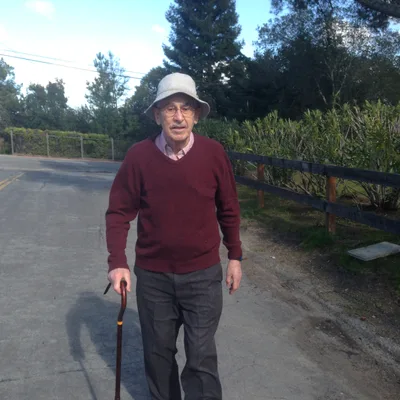
1965 SPIEGELMAN, Sol (1914 – 1983); ET AL
The synthesis of a self-propagating and infectious nucleic acid with a purified enzyme.
Spiegelman's Monster, the name given to an RNA chain of only 218 nucleotides that can be reproduced by the RNA replication enzyme RNA-dependent RNA polymerase, also called RNA replicase. Spiegelman achieved the first …
GMN 13992 · https://historyofmedicine.com/id/16296
1965 GIBBONS, Ian Read (1931 – 2018); ROWE, A. J.
Dynein: A protein with adenosine triphosphate activity from cilia.
IN 1963 Gibbons discovered a novel protein on microtubules. In 1965 he purified two regions of the protein, known as its two "arms" and named the protein dynein. This protein converts the chemical energy stored in ATP…
GMN 14174 · https://historyofmedicine.com/id/16489
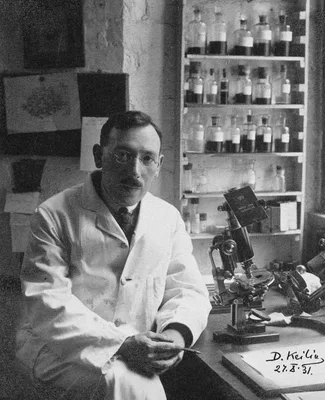
1966 KEILIN, David (1887 – 1963); KEILIN, Joan
The history of cell respiration and cytochrome
See No. 968.
GMN 1588.3 · https://historyofmedicine.com/id/1471
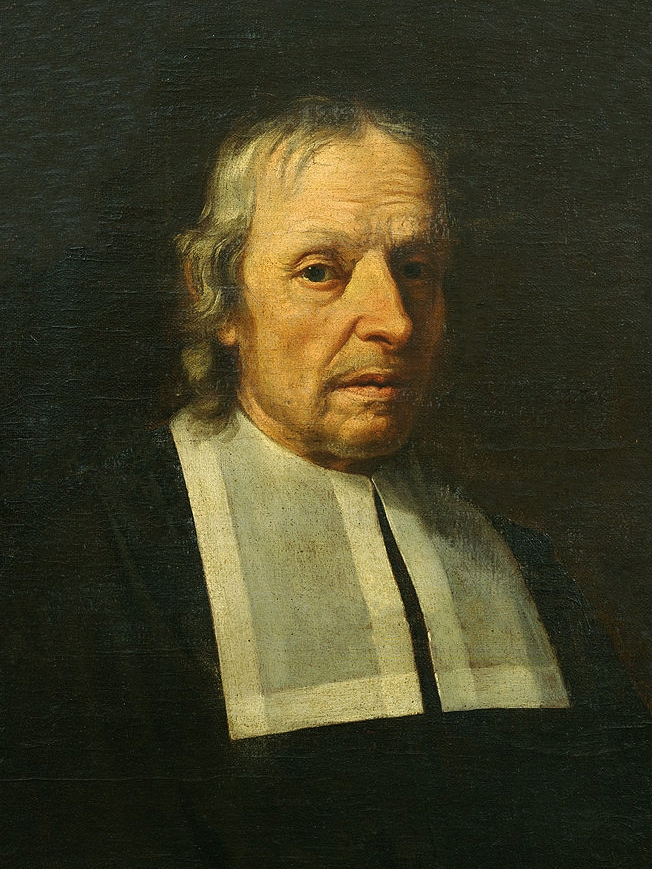
1966 MALPIGHI, Marcello (1628 – 1694); ADELMANN, Howard Bernhardt (1898 – 1988)
Marcello Malpighi and the evolution of embryology. 5 vols.
Vol. 1 is an exhaustive biography of Malpighi; the remaining 4 volumes provide an extensive account of the development of embryology, and annotated English translations of Nos. 468 & 469.
GMN 534.1 · https://historyofmedicine.com/id/1787
1966 WILLIAMS, George Christopher (1926 – 2010)
Adaptation and natural selection: A Critique of some current evolutionary thought.
GMN 8992 · https://historyofmedicine.com/id/11171
1966 WATSON, James Dewey (1928 – ); STENT, Gunther S. (1924 – 2008); CAIRNS, Hugh John Foster (1922 – )
Phage and the origins of molecular biology. Edited by John Cairns, G. Stent, and J. D. Watson.
Expanded edition, 1992. 40th anniversary edition, 2007.
GMN 9191 · https://historyofmedicine.com/id/11372
1966 MARCKER, Kjeld Adrian (1932 – 2018)
N-Formyl-methionyl-sRibonucleic acid and chain initiation in protein biosynthesis - polypeptide synthesis directed by a bacteriophage ribonucleic acid in a cell-free system.
Marcker discovered that the biosynthesis of proteins is always initiated by a tRNA molecule that carries the modified amino acid formyl-methionine.
GMN 13939 · https://historyofmedicine.com/id/16236
1966 GILBERT, Walter (1932 – ); MÜLLER-HILL, Benno (1933 – 2018)
Isolation of the LAC repressor.
With his Ph.D. student Benno Müller-Hill, Gilbert was the first to purify the lac repressor, just beating out Mark Ptashne for purifying the first gene regulatory protein.
GMN 13951 · https://historyofmedicine.com/id/16250
1966 CRICK, Francis Harry Compton (1916 – 2004)
Codon-anticodon pairing: The wobble hypothesis.
"In the genetic code, there are 43 = 64 possible codons (3 nucleotide sequences). For translation, each of these codons requires a tRNA molecule with an anticodon with which it can stably complement. If each tRNA mole…
GMN 13967 · https://historyofmedicine.com/id/16269
1966 GURDON, Sir John Bertrand (1933 – ); UEHLINGER, V.
"Fertile" intestine nuclei.
Gurdon and Uehlinger replaced the cell nucleus of frog ova with frog intestinal nuclei to generate tadpoles, some of which became fertile adult male and female frogs. In 2012 the Nobel Prize in Physiology or Medicine …
GMN 14064 · https://historyofmedicine.com/id/16375
1967 OPPENHEIMER, Jane Marion (1911 – 1996)
Essays in the history of embryology and biology.
GMN 534.3 · https://historyofmedicine.com/id/1790
1967 BERNAL, John Desmond (1901 – 1971)
The origin of life.
An outstanding illustrated synthesis of the topics as they stood in 1967, including Chapter 2: "Notions of the origins of life in the past," summarizing prior theories. Appendix 1 publishes the English translation of …
GMN 7466 · https://historyofmedicine.com/id/9638
1967 WILSON, Edward Osborne (1929 – 2021); MACARTHUR, Robert Helmer (1930 – 1972)
The theory of island biogeography.
MacArthur and Wilson showed that the species richness of an area could be predicted in terms of such factors as habitat area, immigration rate and extinction rate.
GMN 8155 · https://historyofmedicine.com/id/10331
1967 GRIFFITH, John Stanley (1928 – 1972)
Self replication and scrapie.
Griffith discussed complex physical chemistry mechanisms by which the scrapie agent could arise from information encoded in protein structure which could then be transferred to other protein molecules. He also conside…
GMN 12833 · https://historyofmedicine.com/id/15079
1967 ALPER, Tikvah (1909 – 1995); CRAMP, W. A.; HAIG, D. A.; ET AL
Does the agent of scrapie replicate without nucleic acids?
This paper, which predated Griffith's' paper (No. 12833), demonstrated that the scrapie agent replicates without nucleic acids. Alper and colleagues irradiated scrapie infected mouse brain extracts with lethal ultravi…
GMN 12834 · https://historyofmedicine.com/id/15080
1967 YANOFSKY, Charles (1925 – 2018); CARLTON, Bruce C.; GUEST, John Rodney (1935 – ); DRAPEAU, Gabriel R.
The complete amino acid sequence of the tryptophan synthesase a protein (α Subunit) and its colinear relationship with the genetic map of the gene.
Yanofsky showed that changes in DNA sequence can produce changes in protein sequence at corresponding positions. His work is considered the best evidence in favor of the one gene-one enzyme hypothesis. Order of author…
GMN 13945 · https://historyofmedicine.com/id/16243
1967 PTASHNE, Mark (1940 – )
Specific binding of the λ phage repressor to λ DNA.
Ptashne was the first to demonstrate specific binding between protein and DNA. Abstract for the paper: "Genetic experiments show that a group of genes may be switched off by the product of a regulator gene, called a r…
GMN 13988 · https://historyofmedicine.com/id/16291
1968 PERUTZ, Max Ferdinand (1914 – 2002)
Three-dimensional Fourier synthesis of horse oxyhaemoglobin at 2.8Å resolution: The atomic model.
Thirty years after beginning his research on hemoglobin Perutz solved the Fourier synthesis of hemoglobin at 2.8Å (high resolution) and built an atomic model of the molecule. With Hilary Muirhead, J. M. Cox & L. C. G.…
GMN 6913 · https://historyofmedicine.com/id/9078
1968 LEHMANN, Hermann (1910 – 1985); PERUTZ, Max Ferdinand (1914 – 2002)
Molecular pathology of human haemoglobin.
Perutz opened up "the field of 'molecular pathology,' relating a structural abnormality to a disease" (Aaron Klug, "Max Perutz 1914-2002," Science 295 ([2002] 2383). Specifically Perutz showed that hemoglobin molecule…
GMN 6916 · https://historyofmedicine.com/id/9081
1968 WATSON, James Dewey (1928 – )
The double helix. A personal account of the discovery of the structure of DNA.
Vivid first hand account of the discovery, renowned for its candor. See also the Norton Critical Edition of The double helix with supporting material, edited by Gunther Stent (1980), and The annotated and illustrated …
GMN 7139 · https://historyofmedicine.com/id/9306
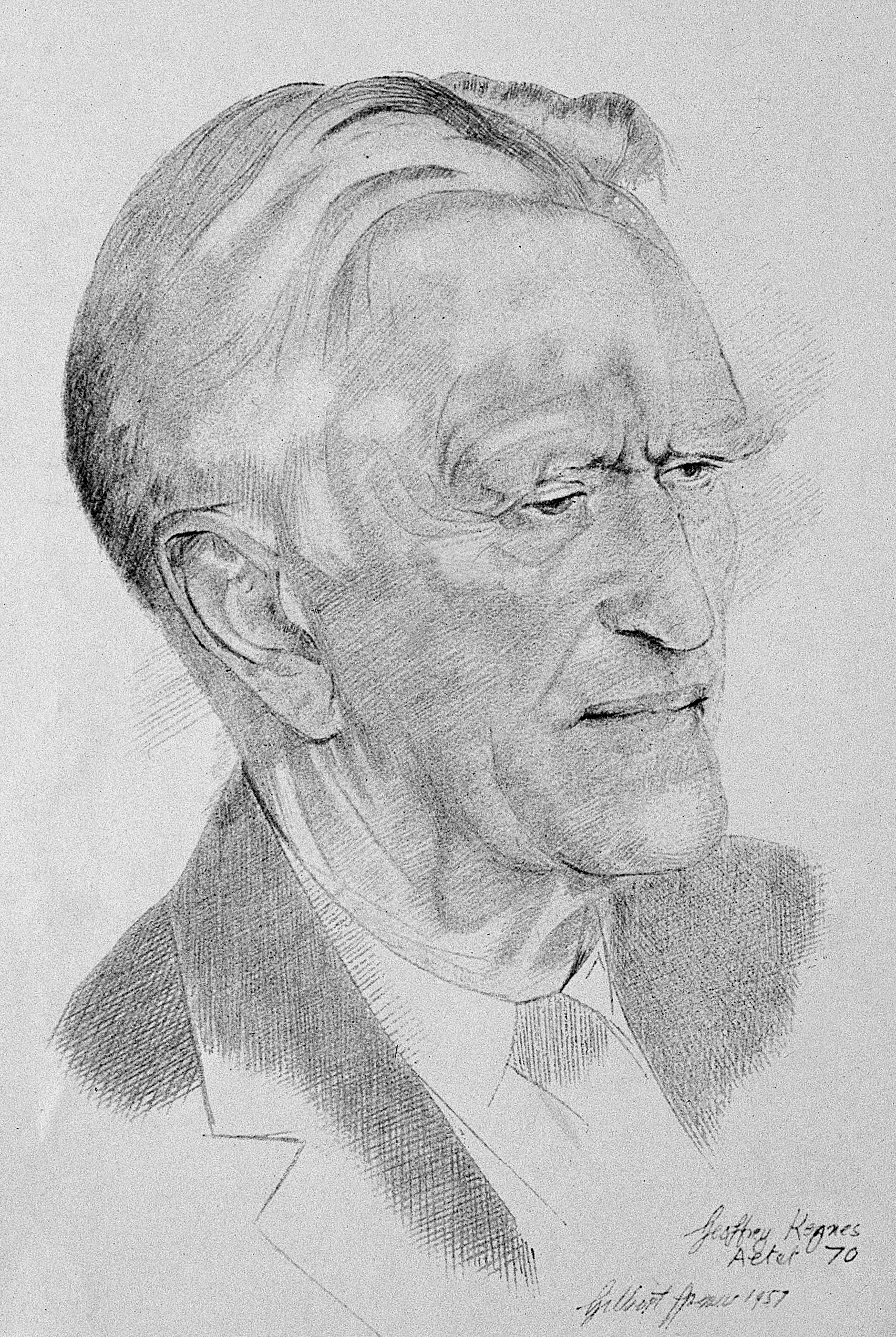
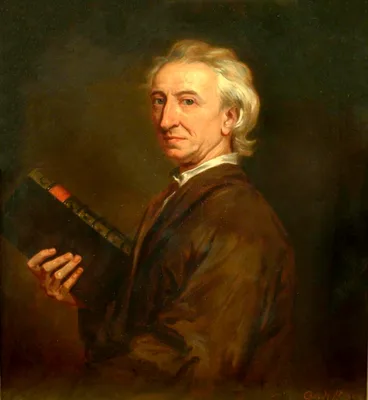
1968 KEYNES, Sir Geoffrey Langdon (1887 – 1982); EVELYN, John (1620 – 1706)
John Evelyn: A study in bibliopphily with a bibliography of his writings
Second edition, revised. First published in 1937 by The Grolier Club and Cambridge University Press.
GMN 11230 · https://historyofmedicine.com/id/13427
1968 WATSON, James Dewey (1928 – )
The double helix.
Portions of Watson's famous memoir appeared in the January and February issues of the Atlantic Monthly prior to their publication in book form in the Spring of 1968. (Thanks to Juan Weiss for this reference.)
GMN 12027 · https://historyofmedicine.com/id/14235
1968 ARBER, Werner (1929 – ); LINN, Stuart M.
Host specificity of DNA produced by Escherichia coli, X. In vitro restriction of phage FD replicative form.
Order of authorship in the original publication: Linn, Arber. Arber announced the discovery, with proof, of the first restriction endonuclease (restriction enzyme or restrictase)."These enzymes are found in bacteria a…
GMN 12028 · https://historyofmedicine.com/id/14236
1968 KIMURA, Motoo (Kimura Motō) (1924 – 1994)
Evolutionary rate at the molecular level.
Using complex mathematics, Motoo Kimura calculated that genomes constantly undergo a remarkably high number of mutations per unit of time. He wrote, "Calculating the rate of evolution in terms of nucleotide substituti…
GMN 13551 · https://historyofmedicine.com/id/15828
1968 KLUG, Sir Aaron (1926 – 2018); DEROSIER, David J.
Reconstruction of three-dimensional structures from electron micrographs.
Klug and deRosier invented methods for two-dimensional and three-dimensional digital image processing of electron microscope images. The latter method provided the theory behind the development of computed tomography …
GMN 13935 · https://historyofmedicine.com/id/16231
1968 OKAZAKI, Tsuneko (1933 – ); OKAZAKI, Reiji (1930 – 1975); ET AL
Mechanism of DNA chain growth, I. Possible discontinuity and unusual secondary structure of newly synthesized chains.
The Okazakis discovered what became known as Okazaki fragments, short sequences of DNA nucleotides (approximately 150 to 200 base pairs long in eukaryotes) which are synthesized discontinuously and later linked togeth…
GMN 13987 · https://historyofmedicine.com/id/16290
1969 BROCK, Thomas Dale (1926 – ); FREEZE, Hudson
Thermus aquaticus gen. n. and sp. n., a nonsporulating extreme thermophile.
Discovery of Thermus aquaticus, a species of bacteria that can tolerate high temperatures. This is one of several thermophilic bacteria that belong to the Deinococcus–Thermus group, and the source of the heat-resistan…
GMN 7967 · https://historyofmedicine.com/id/10143
1969 BECKWITH, Jonathan Roger (1935 – ); SHAPIRO, James Alan (1943 – ); ERON, Lawrence (1944 – ); MACHATTIE, Lorne; IHLER, Garret; IPPEN, Karen
Isolation of pure lac operon DNA.
Order of authorship in the original publication: Shapiro, MacHattie, Eron, Ihler, Ippen, Beckwith. Beckwith led the research group that in 1969 isolated the first gene from an organism, specifically a gene from a bact…
GMN 13971 · https://historyofmedicine.com/id/16273
1969 THE LUNAR SAMPLE PRELIMINARY EXAMINATION TEAM
Preliminary examination of lunar samples from Apollo 11: A physical, chemical, mineralogical, and biological analysis of 22 kilograms of lunar rocks and fines.
On p. 1226 the massive number of authors reported that "microscopic, culture, injection and inoculation studies on many different organisms to include mice, fish, invertebrates, insects, plants and lower animals such …
GMN 14055 · https://historyofmedicine.com/id/16365
1969 LIPMANN, Fritz Albert (1899 – 1986); TAO, Mariano (1938 – 2022)
Isolation of adenyl cyclase from Escherichia coli.
Lipmann and Tao isolated, purified, and characterized biochemically an enzyme which they called "adenyl cyclase." They stated that this enzyme is responsible for producing "cyclic AMP" in E. coli. Digital facsimile fr…
GMN 14142 · https://historyofmedicine.com/id/16456
1970 BALTIMORE, David (1938 – )
Viral RNA-dependent DNA polymerase: RNA-dependent DNA polymerase in virions of RNA tumour viruses.
In 1970 Baltimore and Temin discovered that certain viruses that have their genes in the form of RNA can copy the RNA "backward" into DNA in infected cells. The enyzme, reverse transcriptase, enables the manufacture o…
GMN 2660.22 · https://historyofmedicine.com/id/3429
1970 TEMIN, Howard Martin (1934 – 1994); MIZUTANI, Satoshi
RNA-dependent DNA polymerase in virions of Rous sarcoma virus.
Discovery of reverse transcriptase. "In 1969, Temin and a postdoctoral fellow, Satoshi Mizutani, began searching for the enzyme that was responsible for the phenomenon of viral RNA being transferred into proviral DNA.…
GMN 2660.23 · https://historyofmedicine.com/id/3432
1970 SMITH, Hamilton Othanel (1931 – ); KELLY, T. J.
A restriction endonuclease from Hemophilus influenzae. II. Base sequence of the recognition site.
Discovery of the first type II restriction enzyme (HindII). Smith shared the 1978 Nobel Prize in Physiology or Medicine with Werner Arber and Daniel Nathans "for the discovery of restriction enzymes and their applicat…
GMN 6889 · https://historyofmedicine.com/id/9053
1970 CRUTZEN, Paul Jozef (1933 – )
The influence of nitrogen oxides on the atmospheric ozone content.
Crutzen showed that nitrous oxide impacts the ozone layer by pointing out "that emissions of nitrous oxide (N2O), a stable, long-lived gas produced by soil bacteria, from the Earth's surface could affect the amount of…
GMN 8156 · https://historyofmedicine.com/id/10332
1970 KEELING, Charles David (1928 – 2005)
Is carbon dioxide from fossil fuel changing man's environment?
Keeling developed the first instrument that could measure carbon dioxide in atmospheric samples with consistently reliable accuracy, and in 1958 began collecting carbon dioxide samples from a base he established at Ma…
GMN 13559 · https://historyofmedicine.com/id/15836
1970 HARTWELL, Leland Harrison (1939 – ); CULOTTI, Joseph; REID, Brian J.
Genetic control of the cell-division cycle in yeast 1. Detection of mutants.
This was the first paper to describe cdc mutants. The authors also coined the term 'execution point' — the stage in the cell cycle when the gene function is required. In this paper, three cdc genes were described, whi…
GMN 13933 · https://historyofmedicine.com/id/16229
1971 ROGER, Jacques (1920 – 1990)
Les sciences de la vie dans la pensée française du XVIIIe siècle. Genération des animaux de Descartes à l’Encyclopédie. 2e ed.
Translated into English by Robert Ellrich as The life sciences in eighteenth-century French thought, edited by Keith R. Benson, Stanford: Stanford University Press, 1998.
GMN 534.4 · https://historyofmedicine.com/id/1792
1971 NATHANS, Daniel (1928 – 1999)
Specific cleavage of simian virus 40 DNA by restriction endonuclease of Hemophilus influenzae.
Nathans showed that the restriction enzyme discovered by Hamilton Smith cleaved SV40 DNA into 11 specific pieces. Nathans and his student Kathleen Danna wrote: "The availability of pieces of SV40 DNA from specific sit…
GMN 6890 · https://historyofmedicine.com/id/9054
1971 YOUNG, John Zachary (1907 – 1997)
The anatomy of the nervous system of Octopus vulgaris.
GMN 7159 · https://historyofmedicine.com/id/9326
1971 FORD, John (1910 – )
The role of the trypanosomiases in African ecology: A study of the Tsetse fly problem.
GMN 10678 · https://historyofmedicine.com/id/12871
1971 BOYER, Herbert Wayne (1936 – )
DNA restriction and modification mechanisms in bacteria.
In this single author paper Boyer isolated, characterized and named the enzyme that Arber No. 12028 had observed and described in terms of its basic action on DNA. Boyer called it the “fi R-factor restriction endonucl…
GMN 12029 · https://historyofmedicine.com/id/14237
1971 EDMONDS, Mary P. (1922 – 2005); NAKAZATO, Hiroshi; VAUGHAN, Maurice H.
Polyadenylic acid sequences in the heterogeneous nuclear RNA and rapidly-labeled polyribosomal RNA of HeLa cells: Possible evidence for a precursor relationship.
Edmonds discovered the poly-A tails on eukaryotic mRNA. The addition of a poly(A) tail to an RNA transcript, typically a messenger RNA (mRNA), is called polyadenylation. Poly(A)polymerase was first identified in 1960 …
GMN 13973 · https://historyofmedicine.com/id/16276
1972 JACKSON, David Archer (1942 – ); SYMONS, Robert Henry (1934 – 2006); BERG, Paul (1926 – )
Biochemical method for inserting new genetic information into DNA of simian virus 40: Circular SV40 DNA molecules containing Lambda phage genes and the galactose operon of Escherichia coli.
First recombinant DNA molecules generated. Digital facsimile from PubMedCentral at this link. In 1980 Berg was awarded half of the Nobel Prize in Chemistry "for his fundamental studies of the biochemistry of nucleic a…
GMN 257.3 · https://historyofmedicine.com/id/8713
1972 LINKLATER, Eric (1899 – 1974)
The voyage of the Challenger.
GMN 9628 · https://historyofmedicine.com/id/11815
1972 MERTZ, Janet E. (1949 – ); DAVIS, Ronald Wayne (1941 – )
Cleavage of DNA by R1 restriction endonuclease generates cohesive ends.
Order of authorship in the original publication: Mertz, Davis. Mertz discovered that DNA ends generated by cutting with the EcoRI restriction enzyme are “sticky”, permitting any two such DNAs to be readily “recombined…
GMN 12030 · https://historyofmedicine.com/id/14238
1973 LOBBAN, Peter E.; KAISER, Armin Dale (1927 – )
Enzymatic end-to-end joining of DNA molecules.
"The idea of recombinant DNA was first proposed by Peter Lobban, a graduate student of Prof. Dale Kaiser in the Biochemistry Department at Stanford University Medical School" (Wikipedia article recombinant DNA, access…
GMN 257.4 · https://historyofmedicine.com/id/8714
1973 COHEN, Stanley Norman (1935 – ); CHANG, Annie C.Y. (1936 – ); HELLING, Robert Bruce (1936 – 2006); BOYER, Herbert Wayne (1936 – )
Construction of biologically functional bacterial plasmids in vitro.
Cohen, Boyer and associates developed the first practical method for cloning genes, by the formation of recombinant plasmids which can be used to infect plasmid-free bacteria. The authors demonstrated that if DNA is f…
GMN 257.5 · https://historyofmedicine.com/id/8715
1973 STEINMAN, Ralph Marvin (1943 – 2011); COHN, Zanvil Alexander (1926 – 1993)
Identification of a novel cell type in peripheral lymphoid organs in mice. I. Morphology, quantitation, tissue distribution.
Order of authorship in the original publication: Steinman, Cohn. In this paper Steinman announced his discovery of the dendritic cell. Digital facsimile from PubMedCentral at this link. In 2011 Steinman received half …
GMN 11074 · https://historyofmedicine.com/id/13270
1973 RICH, Alexander (1924 – 2015); ROSENBERG, John M.; SEEMAN, Nadrian C.; ET AL
Double helix at atomic resolution.
Order of authorship in the original publication: Rosenberg, Seeman,...Rich. This paper was the first confirmation of the double-helix structure at atomic resolution. See also: Roberta Ogilvie Day, Nadrian C. Seeman,..…
GMN 13956 · https://historyofmedicine.com/id/16256
1974 SMIT, Pieter (1925 – )
History of the life sciences. An annotated bibliography.
Over 4,000 annotated citations of works dealing with all aspects of the history of medicine and biology, including a section on individual and collected biographies.
GMN 6451.8 · https://historyofmedicine.com/id/7574