1519 ABULCASIS (ABU AL-QASIM KHALAF IBN AL-ABBAS AL-ZAHRAWI; أبو القاسم خلف بن العباس الزهراوي), [Albucasis] (936 – 1013)
Liber theoricae nec non practicae Alsaharavii.
This is the first printing of the medical and therapeutic section of Abul Qasim’s medical encyclopedia or al-Tasrif. It contains what is probably the earliest description of hemophilia (fol. 145). Digital facsimile fr…
GMN 3048 · https://historyofmedicine.com/id/3653
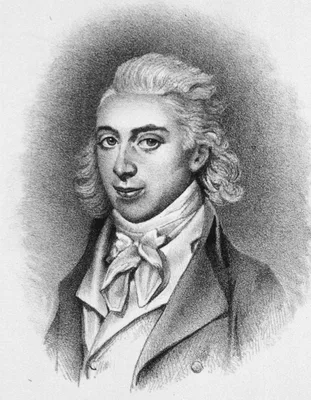
1803 OTTO, John Conrad (1774 – 1844)
An account of an haemorrhagic disposition existing in certain families.
Otto recognized and adequately described hemophilia, noting that females are not affected but may transmit the disease. His paper is one of the first great contributions to medicine in North America. Reproduced in Maj…
GMN 3054 · https://historyofmedicine.com/id/3680
1855 GRANDIDIER, Johann Ludwig (1810 – )
Die Haemophilie oder die Bluterkrankheit.
First full clinical description of hemophilia.
GMN 3063 · https://historyofmedicine.com/id/3715
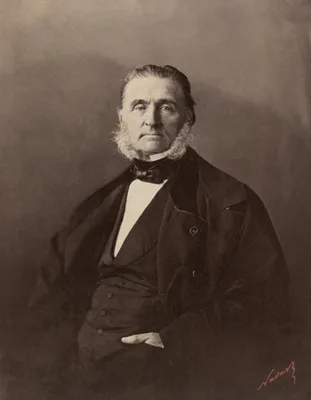
1865 TROUSSEAU, Armand (1801 – 1867)
Glycosurie, diabète sucré. In his Clinique médicale de l’Hôtel-Dieu, 2me. éd., 2, 663-98.
First description of hemochromatosis.
GMN 3915 · https://historyofmedicine.com/id/5031
1871 VANLAIR, Constant François (1839 – 1914); MASIUS, Jean-Baptiste-Nicolas-Voltaire (1836 – 1912)
De la microcythémie
Vanlair and Masius were the first to suggest the concept of hereditary hemolytic anemia. Their paper was republished in book form, Brussels, 1871.
GMN 3766.1 · https://historyofmedicine.com/id/4648
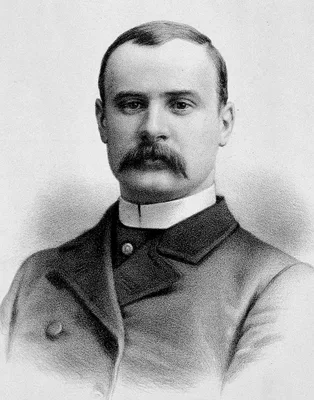
1886 TREVES, Sir Frederick (1853 – 1923)
A case of haemophilia: pedigree through five generations.
True hemophilia in a female. The family was the subject of several later investigations, the last being reported in Lancet, 1973, 2,734.
GMN 3067.1 · https://historyofmedicine.com/id/3721
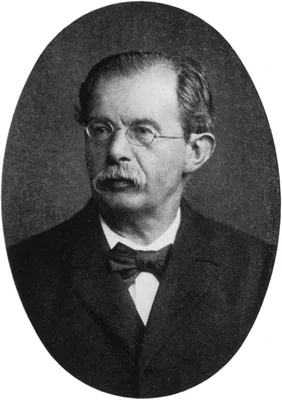
1889 RECKLINGHAUSEN, Friedrich Daniel von (1833 – 1910)
Ueber Haemochromatose.
Recklinghausen gave to hemochromatosis its present name.
GMN 3916 · https://historyofmedicine.com/id/5034
1890 KÖNIG, Franz (1832 – 1910)
Die Gelenkerkrankungen bei Blutern mit Berücksichtigung der Diagnose.
König gave a detailed description of joint involvement in hemophilia.
GMN 3069 · https://historyofmedicine.com/id/3723
1904 DRESBACH, M
Elliptical human red cell corpuscles.
Hereditary elliptocytosis.
GMN 3132.1 · https://historyofmedicine.com/id/3938
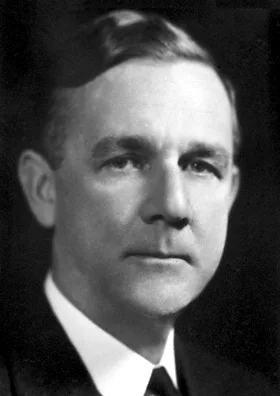
1910 HERRICK, James Bryan (1861 – 1954)
Peculiar elongated and sickle-shaped red blood corpuscles in a case of severe anemia.
Identification of the sickle-cell type of anemia. Abstract "This case is reported because of the unusual blood findings, no duplicate of which I have ever seen described. Whether the blood picture represents merely a …
GMN 3133 · https://historyofmedicine.com/id/3939
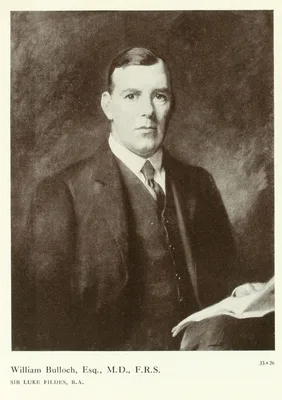
1911 BULLOCH, William (1868 – 1941); FILDES, Sir Paul Gordon (1882 – 1971)
Haemophilia.
Bulloch and Fildes, in their detailed account of hemophilia, claimed to have established immunity to the disease in females, and denied the authenticity of published cases of female hemophilia. They confirmed the law …
GMN 3081 · https://historyofmedicine.com/id/3741
1922 MASON, Verne Rheem (1889 – 1965)
Sickle-cell anemia.
Mason gave sickle-cell anemia its present name.
GMN 3136.1 · https://historyofmedicine.com/id/3943
1925 HART, Alfred Purvis (1887 – 1954)
Familial icterus gravis of the new-born and its treatment.
Successful exchange transfusion.
GMN 3087.1 · https://historyofmedicine.com/id/3757
1926 WILLEBRAND, Erik Adolf von (1870 – 1949)
Hereditär pseudohemofili.
Von Willebrand’s disease, pseudo-hemophilia type B, an hereditary bleeding disorder affecting both sexes.
GMN 3087.2 · https://historyofmedicine.com/id/3759
1927 COOLEY, Thomas Benton (1871 – 1945); ET AL
Anemia in children, with splenomegaly and peculiar changes in the bones.
“Cooley’s erythroblastic anemia”, thalassemia. With E. R. Witwer and O. P. Lee. An earlier brief account by Cooley and Lee appeared in Trans. Amer. Pediat. Soc.,1925, 37, 29.
GMN 3141 · https://historyofmedicine.com/id/3951
1927 FANCONI, Guido (1892 – 1979)
Familiäre infantile perniziösaartige Anämie (perniziöses Blutbild und Konstitution).
“Fanconi’s syndrome”, congenital hypoplasia of bone marrow with multiple congenital defects occurring as a familial disease.
GMN 3142 · https://historyofmedicine.com/id/3953
1934 MACFARLANE, Robert Gwyn (1907 – 1987); BARNETT, Burgess (1888 – 1944)
The haemostatic possibilities of snake-venom.
Snake venom used in the treatment of hemophilia.
GMN 3093 · https://historyofmedicine.com/id/3777
1935 QUICK, Armand James (1894 – 1977)
The prothrombin in hemophilia and in obstructive jaundice.
Quick’s method for determination of prothrombin clotting time. See also Amer. J. med. Sci.,1935, 190,501-11.
GMN 3095 · https://historyofmedicine.com/id/3782
1936 WHIPPLE, George Hoyt (1878 – 1976); BRADFORD, William Leslie (1898 – 1983)
Mediterranean disease – thalassemia (erythroblastic anemia of Cooley); associated pigment abnormalities simulating hemochromatosis.
Whipple and Bradford contributed a classic paper on the pathology of thalassemia, a name introduced by them.
GMN 3148.1 · https://historyofmedicine.com/id/3991
1937 PATEK, Arthur Jackson Jr. (1904 – 1991); TAYLOR, Francis Henry Laskey (1900 – 1959)
Hemophilia. II. Some properties of a substance obtained from normal human plasma effective in accelerating the coagulation of hemophilic blood.
Antihemophilic globulin (factor VIII).
GMN 3096.1 · https://historyofmedicine.com/id/3787
1938 CAMINOPETROS, J
Recherches sur l’anémie érythroblastique infantile des peuples de la Méditerranée orientale. Étude anthropologique, étiologique et pathogénique. La transmission héréditaire de la maladie.
First evidence that thalassemia is genetically determined. Earlier report in Kliniki, Athens, 1936, 12, No. 5.
GMN 3148.2 · https://historyofmedicine.com/id/3993
1948 GIBSON, Quentin Howieson (1918 – 2011)
The reduction of methaemoglobin in red blood cells and studies on the cause of idiopathic methaemoglobinaemia.
Cause of hereditary methemoglobinemia elucidated.
GMN 3107.2 · https://historyofmedicine.com/id/3819
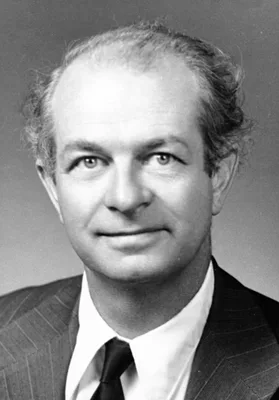
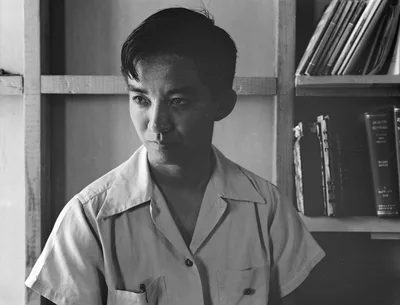
1949 PAULING, Linus Carl (1901 – 1994); ITANO, Harvey Akio (1920 – 2010); SINGER, Seymour Jonathan (1924 – 2017); WELLS, Ibert C. (1921 – 2011)
Sickle cell anemia, a molecular disease.
First recognition, by Pauling and colleagues, of a structural hemoglobin variant, and the beginning of the molecular approach to disease.
GMN 3154.1 · https://historyofmedicine.com/id/4015
1949 NEEL, James Van Gundia (1915 – 2000)
The inheritance of sickle cell anemia.
Genetic evidence that sickle-cell disease is inherited in a simple Mendelian manner.
GMN 3154.2 · https://historyofmedicine.com/id/4053
1952 BIGGS, Rosemary Peyton (1921 – 2001); ET AL
Christmas disease, a condition previously mistaken for haemophilia.
Christmas disease, hemophilia B, due to lack of Factor IX. Named after the patient whose case was the first recorded example. With six co-authors.
GMN 3108.1 · https://historyofmedicine.com/id/3824
1954 ALLISON, Anthony Clifford (1925 – 2014)
Protection afforded by sickle-cell trait against subtertian malarial infection.
Allison was the first to connect a hereditary disease (sickle cell disease) to an infectious disease (malaria). He proved that heterozygous and homozygous individuals to the sickle cell trait or disease respectively s…
GMN 11887 · https://historyofmedicine.com/id/14091
1957 INGRAM, Vernon Martin (1924 – 2006)
Gene mutations in human haemoglobin: the chemical difference between normal and sickle cell haemoglobin.
Sickle-cell hemoglobin differs from normal hemoglobin by a single amino acid (valine for glutamic acid).
GMN 3155.1 · https://historyofmedicine.com/id/4055
1959 INGRAM, Vernon Martin (1924 – 2006); STRETTON, Antony Oliver Ward (1936 – )
Genetic basis of the thalassaemia diseases.
GMN 3155.2 · https://historyofmedicine.com/id/4056
1961 LOCK, Stephen Penford (1929 – ); ET AL
Stomatocytosis: a hereditary red cell anomaly associated with haemolytic anaemia.
With R. Sephton Smith and R. M. Hardisty.
GMN 3155.3 · https://historyofmedicine.com/id/4090
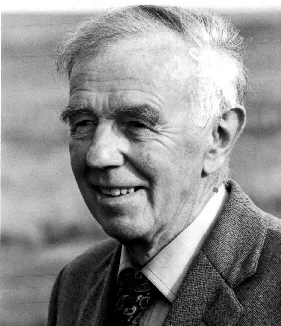
1966 LEHMANN, Hermann (1910 – 1985); HUNTSMAN, Richard George (1927 – 2015)
Man’s haemoglobins: including the haemoglobinopathies and their investigation.
Explains the current distribution of sickling throughout the world.
GMN 3155.4 · https://historyofmedicine.com/id/4091
1968 LEHMANN, Hermann (1910 – 1985); PERUTZ, Max Ferdinand (1914 – 2002)
Molecular pathology of human haemoglobin.
Perutz opened up "the field of 'molecular pathology,' relating a structural abnormality to a disease" (Aaron Klug, "Max Perutz 1914-2002," Science 295 ([2002] 2383). Specifically Perutz showed that hemoglobin molecule…
GMN 6916 · https://historyofmedicine.com/id/9081
1985 MULLIS, Kary Banks (1944 – 2019); ET AL
Enzymatic amplication of B-globin genomic sequences and restriction site analysis for diagnosis of sickle cell anemia.
Polymerase chain reaction first published. With Randall K. Saiki, Stephen Scharf, Fred Faloona et al. Order of authorship in the original paper was Saiki, Scharf, Faloona, Mullis.... In 1993 the Nobel Prize in Chemist…
GMN 10785 · https://historyofmedicine.com/id/12981
2001 WAILOO, Keith A. (1962 – )
Dying in the City of the Blues: Sickle cell anemia and the politics of race and health.
"Set in Memphis, home of one of the nation's first sickle cell clinics, Dying in the City of the Blues reveals how the recognition, treatment, social understanding, and symbolism of the disease evolved in the twentiet…
GMN 10335 · https://historyofmedicine.com/id/12527
2011 PEMBERTON, Stephen
The bleeding disease: Hemophilia and the unintended consequences of medical progress.
GMN 10972 · https://historyofmedicine.com/id/13168
2021 FRANGOUL, Haydar A.; ALTSHULER, David Matthew (1964 – ); CAPPELLINI, Maria Domenica; ET AL
CRISPR-Cas9 gene editing for sickle cell disease and ß-thalassemia.
First application of CRISPR gene editing in the successful cure of diseases. Order of authorship in the original publication: Frangoul, Altshuler, Cappellini. (Thanks to Juan Weiss for this reference and its interpret…
GMN 13478 · https://historyofmedicine.com/id/15752