1827 CAZAUVIELH, Jean-Baptiste [Cazauvielle] (1802 – 1849)
Recherches sur l’agénésie cérébrale et la paralysie congénitale.
“The first scientific paper on paralysis in children was published in 1827 by Jean Baptiste Cazauvieilh, who […] noted that congenital hemiplegia was associated with cerebral atrophy and differentiated those due to ‘l…
GMN 11126 · https://historyofmedicine.com/id/13322
1842 DUNGLISON, Robley (1798 – 1869); WATERS, Charles Oscar (1816 – 1892)
Practice of medicine: A treatise on special pathology and therapeutics. 2 vols.
A case of chronic hereditary chorea in adults (“Huntington’s chorea”, see No. 4699) is described on pp. 312-13 of vol. 2. This is in the form of a letter from one of Dunglison's recently graduated students at Jefferso…
GMN 4691 · https://historyofmedicine.com/id/974
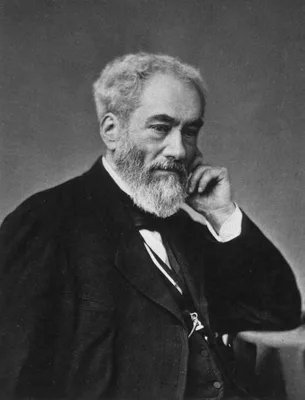
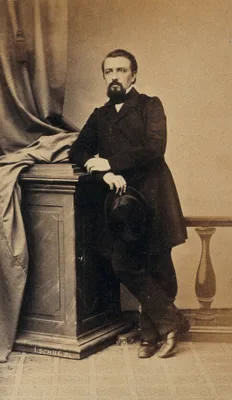
1863 FRIEDREICH, Nikolaus (1825 – 1882)
Ueber degenerative Atrophie der spinalen Hinterstränge.
Friedreich was the first to describe a form of ataxia (“Friedreich’s ataxia”), hereditary, attended with impairment of speech, lateral curvature of the spine, and with paralysis of the muscles of the lower limbs. The …
GMN 4696 · https://historyofmedicine.com/id/8889
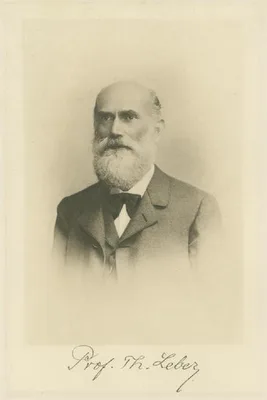
1871 LEBER, Theodor (1840 – 1917)
Ueber hereditäre und congenital-angelegte Sehnervenleiden.
First description of hereditary optic atrophy, “Leber’s optic atrophy”.
GMN 5906 · https://historyofmedicine.com/id/7420
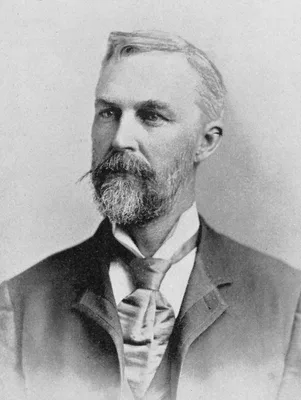
1872 HUNTINGTON, George (1850 – 1916)
On chorea.
The classic description by Huntington of the chronic degenerative hereditary type of chorea led to the eponym “Huntington’s chorea”. Earlier accounts of the disease were given by John Elliotson (Lancet, 1832, 1, 163),…
GMN 4699 · https://historyofmedicine.com/id/985
1876 THOMSEN, Asmus Julius Thomas (1815 – 1896)
Tonische Krämpfe in willkürlich beweglichen Muskeln in Folge von ererbter psychischer Disposition (Ataxia muscularis?).
Thomsen suffered from muscle weakness and cramps, an issue that all his sons inherited. Realizing that this was a hereditary disease, Thomsen managed to trace the disease for six generations, and found over 20 cases o…
GMN 4744 · https://historyofmedicine.com/id/1336
1886 STRÜMPELL, Ernst Adolf Gustav Gottfried (1853 – 1925)
Ueber eine bestimmte Form der primären combinirten Systemerkrankungen des Rückenmarks.
“Strümpell’s disease” – hereditary spastic spinal paralysis, previously described by Erb and by Charcot.
GMN 4704 · https://historyofmedicine.com/id/1128
1886 TOOTH, Howard Henry (1856 – 1925)
The peroneal type of progressive muscular atrophy. Thesis for the degree of M.D. in the University of Cambridge.
Tooth described peroneal muscular atrophym a hereditary motor and sensory neuropathy of the peripheral nervous system, independently of, and in the same year as, Charcot and Marie. Known as Charcot-Marie-Tooth (CMT) d…
GMN 4750 · https://historyofmedicine.com/id/1353
1893 MARIE, Pierre (1853 – 1940)
Sur l’hérédo-ataxie cérébelleuse.
Original description of hereditary cerebellar ataxia.
GMN 4708.1 · https://historyofmedicine.com/id/1146
1911 DAVENPORT, Charles Benedict (1866 – 1944); WEEKS, David Fairchild (1874 – 1929)
A first study of inheritance of epilepsy.
Davenport and Weeks produced strong evidence in support of the hereditary origin of epilepsy.
GMN 4822 · https://historyofmedicine.com/id/1630
1923 TREVES, Sir Frederick (1853 – 1923)
The elephant man and other reminiscences.
The story of Treves's patient, Joseph Carey Merrick (1862-1890), incorrected identified by Treves in these reminiscences as "John Merrick." The story was retold in The elephant man, Bernard Pomerance's 1977 play about…
GMN 7407 · https://historyofmedicine.com/id/9579
1974 BRUYN, George Willem (1928 – 2002)
A centennial bibliography of Huntington’s chorea, 1872-1972.
Over 2,000 references to original works. Chronological arrangement. Author, geographic and other indexes. With F. Baro and N. C. Myrianthopoulos.
GMN 5019.15 · https://historyofmedicine.com/id/6691
1993 GUSELLA, James Francis (1952 – ); THE HUNTINGTON'S DISEASE COLLABORATIVE RESEARCH GROUP; ET AL
A novel gene containing a trinucleotide repeat that is expanded and unstable on Huntington's disease chromosomes.
Identification by the many scientists in The Huntington's Disease Collaborative Research Group, including Gusella, of the single defective gene on chromosome 4 that causes the progressive brain disorder, Huntington's …
GMN 14008 · https://historyofmedicine.com/id/16313