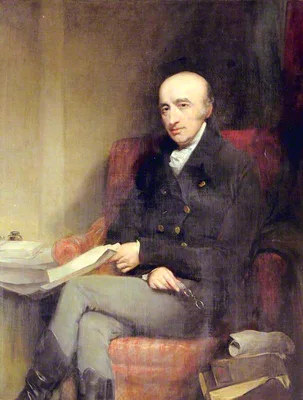
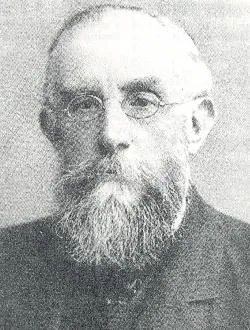
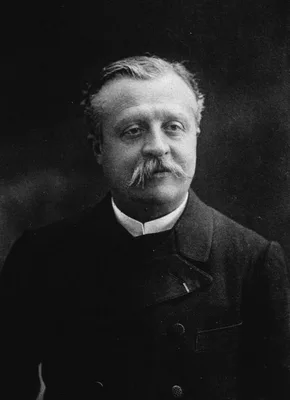
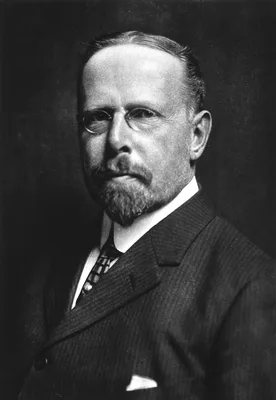
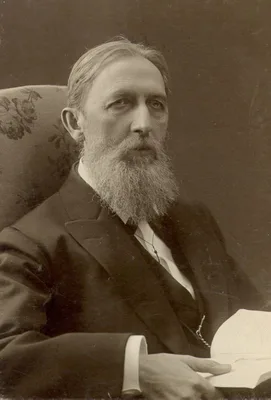
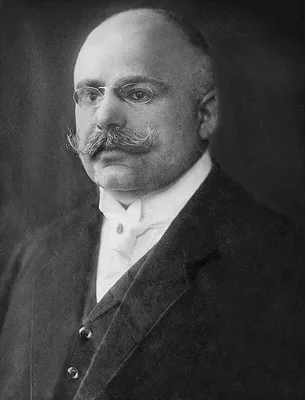
1810 WOLLASTON, William Hyde (1766 – 1828)
On cystic oxide, a new species of urinary calculus.
Cystine, the first amino-acid to be isolated, was prepared by Wollaston from a urinary calculus. This was also the first report of cystinuria.
GMN 668.1 · https://historyofmedicine.com/id/622
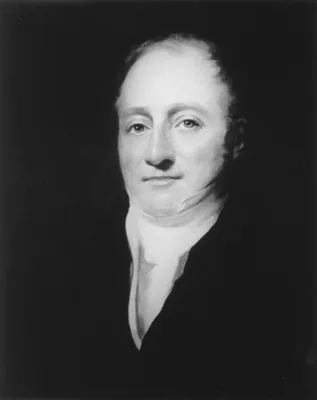
1822 –1823 MARCET, Alexander John Gaspard (1770 – 1822)
Account of a singular variety of urine, which turned black soon after being discharged; with some particulars respecting its chemical properties.
Alkaptonuria described.
GMN 3912 · https://historyofmedicine.com/id/5014
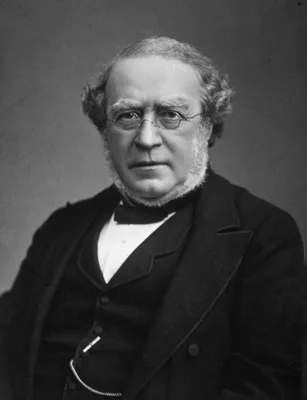
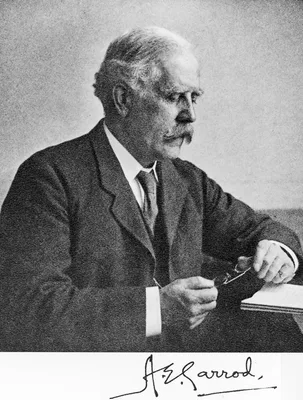
1846 –1848 GARROD, Sir Alfred Baring (1819 – 1907)
Several specimens of cystine exhibited, with the particulars of two cases in which this deposit occurred in the urine.
Cystinuria described.
GMN 3912.1 · https://historyofmedicine.com/id/5016
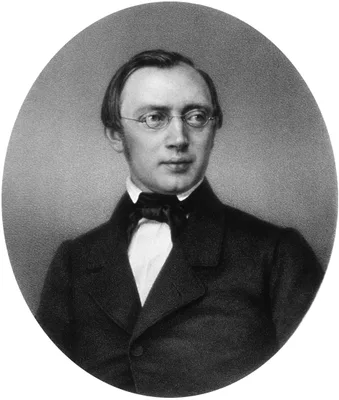
1859 BOEDEKER, Carl Wilhelm (1815 – 1895)
Lieber das Alcapton; ein neuer Beitrag zur Frage: welche Stoffe des Harns können Kupferreduction bewirken?
Excretion of homogentisic acid (in alkaptonuria) first described.
GMN 3913 · https://historyofmedicine.com/id/5024
1861 FRERICHS, Friedrich Theodor von (1819 – 1885)
Klinik der Leberkrankheiten. Bd. 2.
Pp. 62-64: First description of progressive familial hepatolenticular degeneration (“Kinnier Wilson’s disease”; see No. 4717).
GMN 4693 · https://historyofmedicine.com/id/978
1880 –1881 TAY, Waren (1843 – 1927)
Symmetrical changes in the region of the yellow spot in each eye of an infant.
Tay was the first to describe amaurotic familial idiocy, his paper dealing mainly with the ocular manifestations. The condition later became known as “Tay-Sachs’s disease” (see also No. 4705).
GMN 5918 · https://historyofmedicine.com/id/6822
1882 GAUCHER, Philippe Charles Ernest (1854 – 1918)
De l’epithélioma primitif de la rate; hypertrophie idiopathique de la rate sans leucémie.
“Gaucher’s disease” – familial splenic anemia. Digital facsimile from wellcomecollection.org at this link.
GMN 3127 · https://historyofmedicine.com/id/3917
1887 SACHS, Bernard (1858 – 1944)
On arrested cerebral development, with special reference to its cortical pathology.
Sachs described the cerebral changes in amaurotic familial idiocy. Earlier, Tay (No. 5918) had recorded the ocular manifestations of this condition, which became known as “Tay-Sachs’s disease”. Two further papers on t…
GMN 4705 · https://historyofmedicine.com/id/1129
1895 SALKOWSKI, Ernst Leopold (1844 – 1923)
Ueber die Pentosurie, eine neue Anomalie des Stoffwechsels.
Pentosuria first described.
GMN 3918 · https://historyofmedicine.com/id/5041
1909 GARROD, Sir Archibald Edward (1857 – 1936)
Inborn errors of metabolism.
Garrod established chemical individuality as a paradigm of Mendelian variation. His study, which he began around the turn of the 20th century, coincided with the rediscovery of Mendel's laws of inheritance in 1900. He…
GMN 244.1 · https://historyofmedicine.com/id/5049
1914 NIEMANN, Albert (1834 – 1861)
Ein unbekanntes Krankheitsbild.
First description of that form of xanthomatosis which Pick described more fully in 1926 (No. 3785) and to which the eponym “Niemann-Pick disease” has been applied.
GMN 3784 · https://historyofmedicine.com/id/4684
1926 PICK, Ludwig (1868 – 1935)
Der Morbus Gaucher und die ihm ähnlichen Erkrankungen. (Die lipoidzellige Splenohepatomegalie Typus Niemann und die diabetische Lipoidzellenhyperplasie der Milz.)
“Niemann-Pick disease” – a group of inherited, severe metabolic disorders, first noted by Albert Niemann in 1914, (No. 3784) in 1914. Pick’s account is of greater importance.
GMN 3785 · https://historyofmedicine.com/id/4686
1934 FØLLING, Ivar Asbjørn (1888 – 1973)
Utskillelse av fenylpyrodruesyre i urinen som stoffskifteanomali i forbindelse med imbecilletet.
Phenylketonuria (PKU) first described. This was the first hereditary metabolic disorder shown to be responsible for mental retardation. German translation in Hoppe-Seyl. Z. physiol. Chem., 1934, 227, 169-76. English t…
GMN 3924 · https://historyofmedicine.com/id/5067
1963 GUTHRIE, Robert (1916 – 1995); SUSI, Ada J. (1918 – 2002)
A simple phenylalanine method for detecting phenylketonuria in large populations of newborn infants.
Bacterial inhibition test for phenylketonuria.
GMN 3924.4 · https://historyofmedicine.com/id/5084