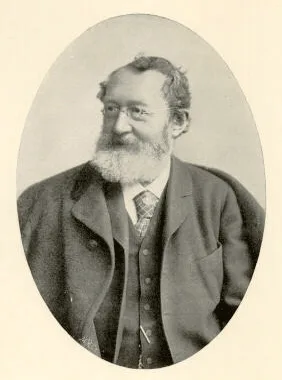
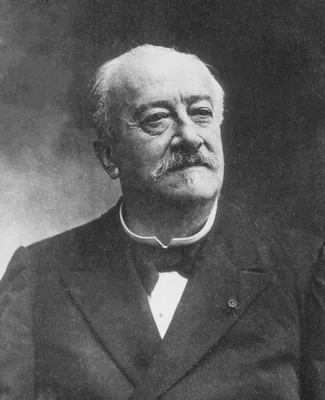
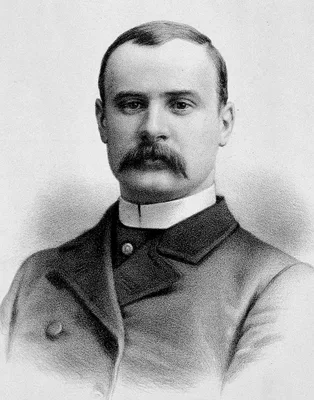
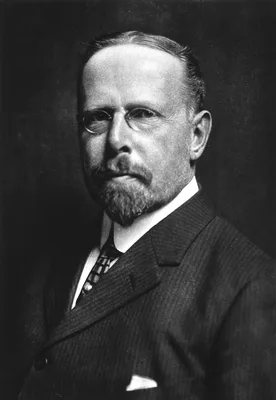
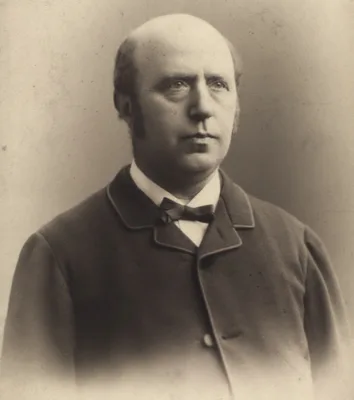
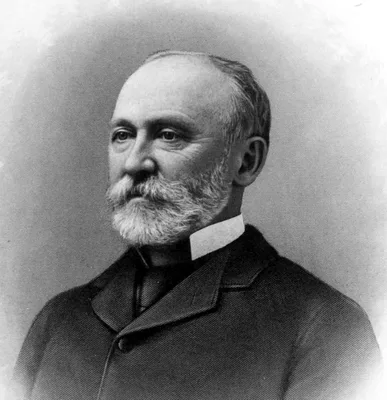
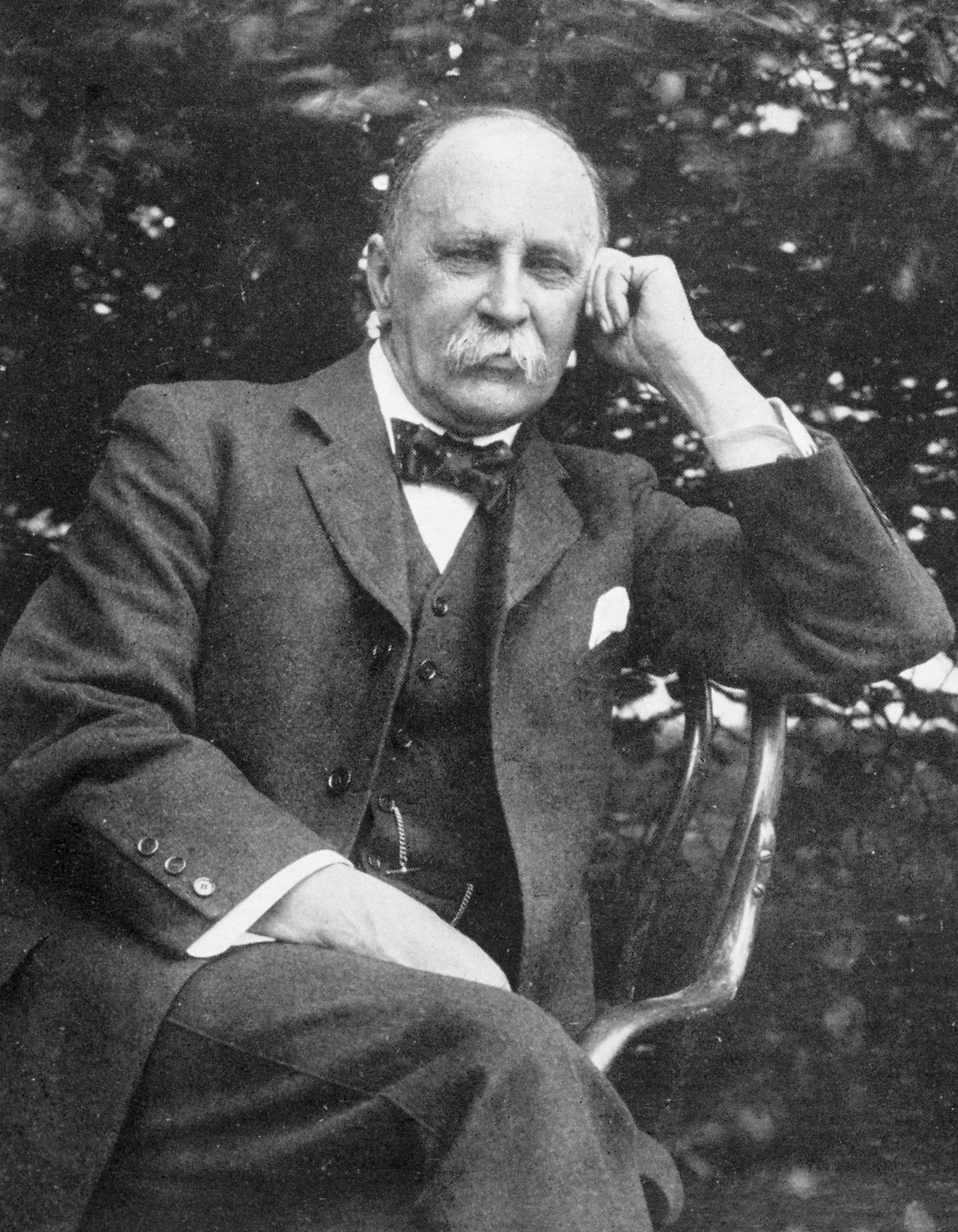
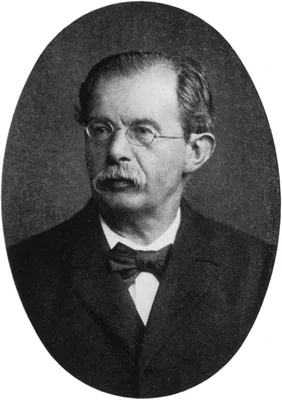
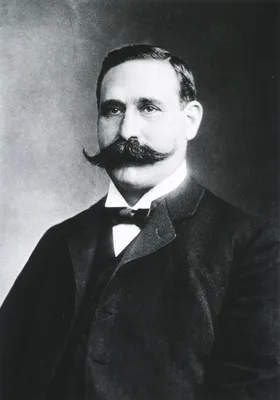
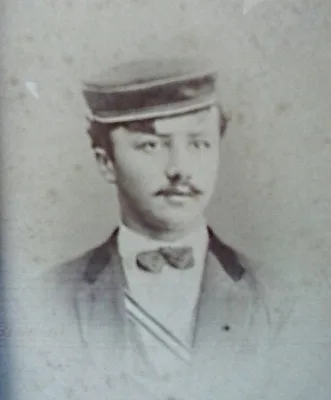
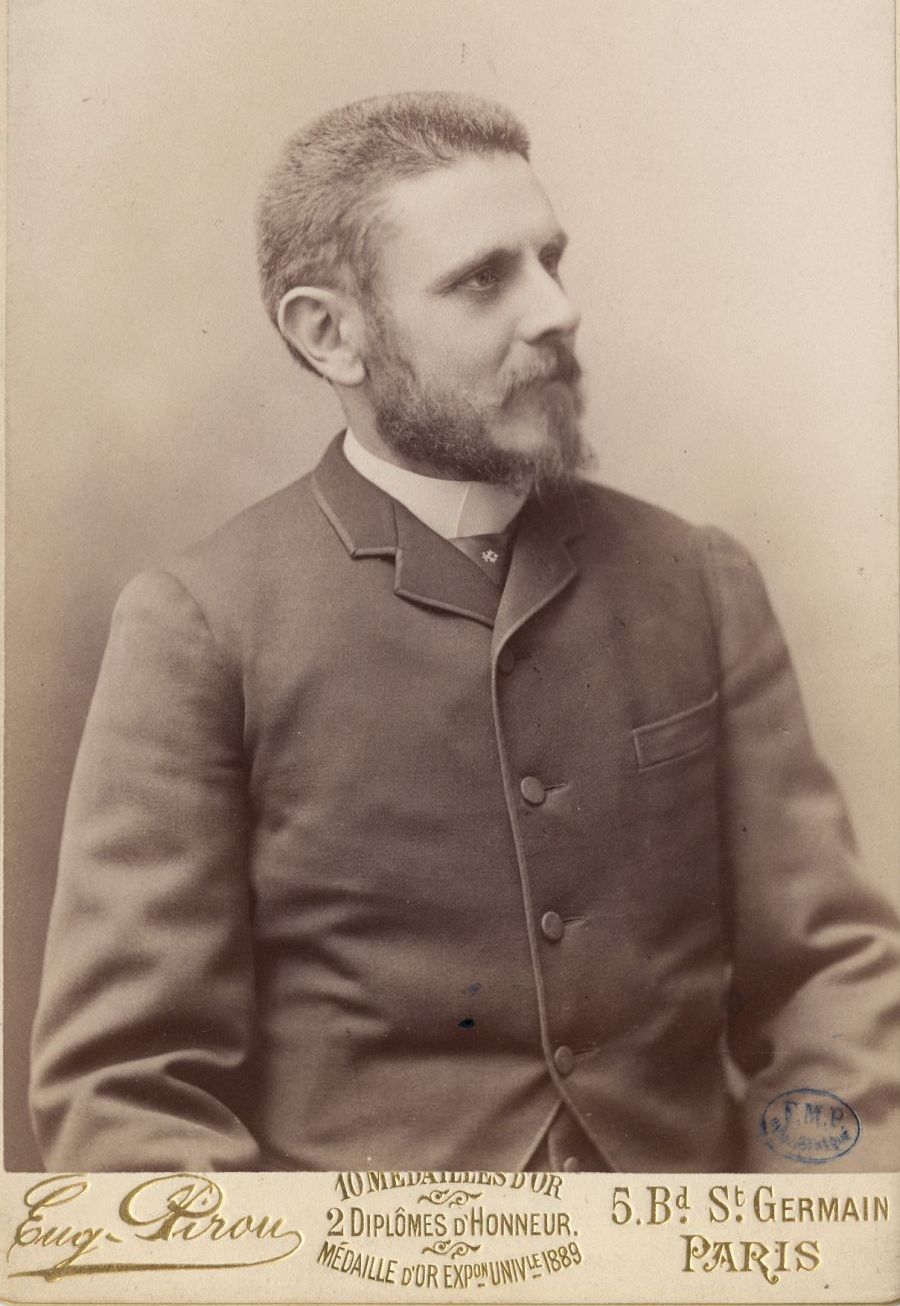
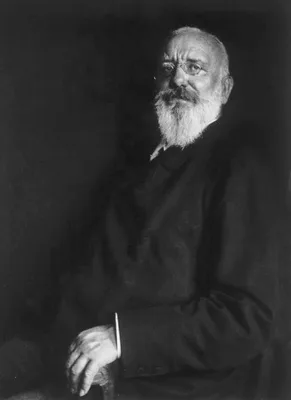
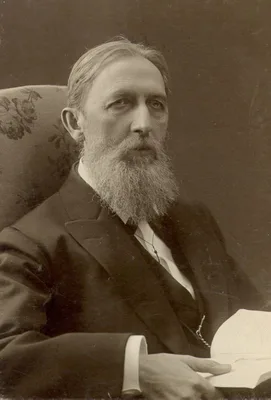
1868 ROTHMUND, August von (1830 – 1906)
Ueber Cataracten in Verbindung mit einer eigenthümlichen Haut-de-generation.
Poikiloderma congenitale (Rothmund).
GMN 4056.1 · https://historyofmedicine.com/id/5416
1869 FORT, Joseph-Auguste Aristide (1835 – 1920)
Des difformités congénitales et acquises des doigts et des moyens d’y remédier. Thèse présentée au concours pour l’agrégation (section de chirurgie).
This exceptionally long and comprehensive (246pp., 39 text illustrations) thesis was the first French work on hand surgery. Digital facsimile from Google Books at this link.
GMN 11144 · https://historyofmedicine.com/id/13341
1871 VANLAIR, Constant François (1839 – 1914); MASIUS, Jean-Baptiste-Nicolas-Voltaire (1836 – 1912)
De la microcythémie
Vanlair and Masius were the first to suggest the concept of hereditary hemolytic anemia. Their paper was republished in book form, Brussels, 1871.
GMN 3766.1 · https://historyofmedicine.com/id/4648
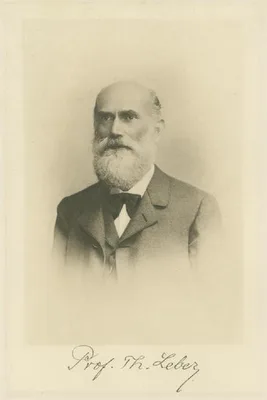
1871 LEBER, Theodor (1840 – 1917)
Ueber hereditäre und congenital-angelegte Sehnervenleiden.
First description of hereditary optic atrophy, “Leber’s optic atrophy”.
GMN 5906 · https://historyofmedicine.com/id/7420
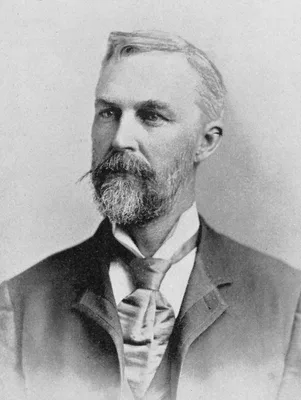
1872 HUNTINGTON, George (1850 – 1916)
On chorea.
The classic description by Huntington of the chronic degenerative hereditary type of chorea led to the eponym “Huntington’s chorea”. Earlier accounts of the disease were given by John Elliotson (Lancet, 1832, 1, 163),…
GMN 4699 · https://historyofmedicine.com/id/985
1874 HOLMGREN, Alarik Frithiof (1831 – 1897)
Om den medfödda, färgblindhetens diagnostic och teori.
Holmgren introduced the wool-skein test for the diagnosis of color-blindness.
GMN 5911 · https://historyofmedicine.com/id/6791
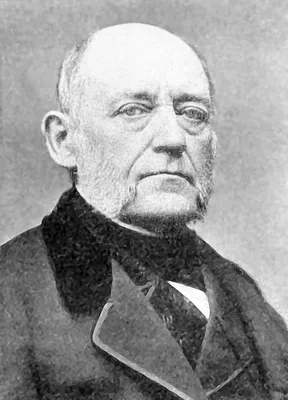
1875 ROKITANSKY, Carl Freiherr von (1804 – 1878)
Die Defecte der Scheidewände des Herzens.
Rokitansky’s memoir on defects of the septum of the heart was his last work, and possibly his greatest. It represented 14 years’ study of the subject.
GMN 2778 · https://historyofmedicine.com/id/4739
1876 THOMSEN, Asmus Julius Thomas (1815 – 1896)
Tonische Krämpfe in willkürlich beweglichen Muskeln in Folge von ererbter psychischer Disposition (Ataxia muscularis?).
Thomsen suffered from muscle weakness and cramps, an issue that all his sons inherited. Realizing that this was a hereditary disease, Thomsen managed to trace the disease for six generations, and found over 20 cases o…
GMN 4744 · https://historyofmedicine.com/id/1336
1876 –1877 MOON, Henry (1845 – 1892)
On irregular and defective tooth development.
“Moon’s molars”, the first molars in congenital syphilitics.
GMN 2391 · https://historyofmedicine.com/id/3320
1876 –1877 HOLMGREN, Alarik Frithiof (1831 – 1897)
Om färgblindheten i dess förhallande till jernvägstrafiken och sjöväsendet.
A serious railway accident in Sweden in 1875 was believed by Holmgren to be due to color-blindness, and resulted in the above important paper dealing with the condition and its relation to railway and maritime traffic…
GMN 5916 · https://historyofmedicine.com/id/6815
1877 DUROZIEZ, Paul Louis (1826 – 1897)
Du rétrécissement mitral pur.
First description of congenital mitral stenosis, “Duroziez’s disease.”
GMN 2780 · https://historyofmedicine.com/id/4743
1878 SQUIRE, Alexander John Balmanno (1836 – 1908)
On the treatment of psoriasis by an ointment of chrysophanic acid.
Introduction of chrysarobin in dermatology.
GMN 4075.1 · https://historyofmedicine.com/id/5512
1879 THOMSON, William (1833 – 1907)
On astigmatism as a cause for persistent headache and other nervous symptoms.
Thomson was a pioneer in the study of refraction. He was much interested in color-blindness and modified Holmgren’s wool-skein test. Himself affected with hypermetropia, he made important investigations on this condit…
GMN 5917 · https://historyofmedicine.com/id/6819
1880 BOURNEVILLE, Désiré-Magloire (1840 – 1909)
Contribution à l’étude de l’idiotàie.
“Bourneville’s disease”, tuberous sclerosis, epiloia (p. 81). Digital facsimile from biuSante.parisdescartes.fr at this link. For the history of the understanding of this disease see the remarkable Wikipedia Timeline …
GMN 4700 · https://historyofmedicine.com/id/987
1880 –1881 TAY, Waren (1843 – 1927)
Symmetrical changes in the region of the yellow spot in each eye of an infant.
Tay was the first to describe amaurotic familial idiocy, his paper dealing mainly with the ocular manifestations. The condition later became known as “Tay-Sachs’s disease” (see also No. 4705).
GMN 5918 · https://historyofmedicine.com/id/6822
1880 –1882 GUÉRIN, Jules
Recherches sur les difformités congénitales chez les monstres, le foetus et l'enfant.
Published as Vol. 1 of Oeuvres de Docteur Jules Guerin, of which this work was all published. Digital facsimile from Google Books at this link.
GMN 11153 · https://historyofmedicine.com/id/13350
1882 GAUCHER, Philippe Charles Ernest (1854 – 1918)
De l’epithélioma primitif de la rate; hypertrophie idiopathique de la rate sans leucémie.
“Gaucher’s disease” – familial splenic anemia. Digital facsimile from wellcomecollection.org at this link.
GMN 3127 · https://historyofmedicine.com/id/3917
1882 QUINCKE, Heinrich Irenaeus (1842 – 1922)
Ueber akutes umschriebenes Hautödem.
Hereditary angioedema is also known as Quincke’s edema, from the latter’s excellent description of it, but he was preceded by several other writers, including Donati (No. 4011.2) and Milton (No. 4070). It is also call…
GMN 4081 · https://historyofmedicine.com/id/5569
1882 –1883 WINSLOW, Ralph (1868 – 1924)
"A study of the malformations, variations, and anomalies of the circulatory apparatus in man," with a brief consideration of some of the principles governing their production.
A pioneering study of the embryology of the cardiovascular system and its relationship to congenital heart disease.
GMN 11737 · https://historyofmedicine.com/id/13938
1883 –1884 STRÜMPELL, Ernst Adolf Gustav Gottfried (1853 – 1925)
Lehrbuch der speciellen Pathologie und Therapie der inneren Krankheiten. 2 vols.
Strümpell gave an excellent description of ankylosing spondylitis (“Strümpell’s disease”, the “spondylose rhizomélique” of Pierre Marie, No. 4368) on p. 152 of his Lehrbuch. See No. 2229. He published an important pap…
GMN 2229 · https://historyofmedicine.com/id/3786
1886 STRÜMPELL, Ernst Adolf Gustav Gottfried (1853 – 1925)
Ueber eine bestimmte Form der primären combinirten Systemerkrankungen des Rückenmarks.
“Strümpell’s disease” – hereditary spastic spinal paralysis, previously described by Erb and by Charcot.
GMN 4704 · https://historyofmedicine.com/id/1128
1886 TOOTH, Howard Henry (1856 – 1925)
The peroneal type of progressive muscular atrophy. Thesis for the degree of M.D. in the University of Cambridge.
Tooth described peroneal muscular atrophym a hereditary motor and sensory neuropathy of the peripheral nervous system, independently of, and in the same year as, Charcot and Marie. Known as Charcot-Marie-Tooth (CMT) d…
GMN 4750 · https://historyofmedicine.com/id/1353
1886 FOURNIER, Jean Alfred (1832 – 1915)
La syphilis héréditaire tardive.
Fournier, one of the greatest syphilologists, did more than any other person to develop the knowledge regarding congenital syphilis. Through his writings, the importance of syphilis as a cause of degenerative diseases…
GMN 2393 · https://historyofmedicine.com/id/3329
1886 TREVES, Sir Frederick (1853 – 1923)
A case of haemophilia: pedigree through five generations.
True hemophilia in a female. The family was the subject of several later investigations, the last being reported in Lancet, 1973, 2,734.
GMN 3067.1 · https://historyofmedicine.com/id/3721
1887 SACHS, Bernard (1858 – 1944)
On arrested cerebral development, with special reference to its cortical pathology.
Sachs described the cerebral changes in amaurotic familial idiocy. Earlier, Tay (No. 5918) had recorded the ocular manifestations of this condition, which became known as “Tay-Sachs’s disease”. Two further papers on t…
GMN 4705 · https://historyofmedicine.com/id/1129
1887 –1888 HIRSCHSPRUNG, Harald (1830 – 1916)
Stuhlträgheit Neuegeborener in Folge von Dilatation und Hypertrophie des Colons.
Hirschsprung’s diseases (congenital megacolon).
GMN 3489 · https://historyofmedicine.com/id/3886
1887 WHITE, James Clarke (1833 – 1916)
Dermatitis venenata: An account of the action of external irritants upon the skin.
White, a pupil of Hebra, was an outstanding personality in American dermatology; he held the first chair in that subject in the U.S.A. The eponym “White’s disease” refers to his description of keratosis follicularis i…
GMN 4093 · https://historyofmedicine.com/id/5601
1888 FALLOT, Étienne Louis Arthur (1850 – 1911)
Contribution à l’anatomie pathologique de la maladie bleu (cyanose cardiaque).
The “tetralogy of Fallot.” He gave an important, but not the first, account of this condition (see Nos. 2726.1 & 2761). Abstract translation in Willius & Keys, Cardiac classics, 1941, pp. 689-90.
GMN 2792 · https://historyofmedicine.com/id/3401
1888 HIRSCHSPRUNG, Harald (1830 – 1916)
Fälle von angeborener Pylorusstenose, beobachtet bei Säuglingen.
Hirschsprung first made the medical world aware of congenital hypertrophic pyloric stenosis as a distinct clinical entity. In this paper he made no suggestions concerning therapy.
GMN 3489.1 · https://historyofmedicine.com/id/3888
1888 OSLER, Sir William (1849 – 1919)
Hereditary angio-neurotic oedema.
Osler was the first in the English-speaking world to describe what is now called hereditary angioedema. In this paper he presented "an interesting study of the heredity of a case, with a genealogical table" (Golden & …
GMN 11271 · https://historyofmedicine.com/id/13468
1889 RECKLINGHAUSEN, Friedrich Daniel von (1833 – 1910)
Ueber Haemochromatose.
Recklinghausen gave to hemochromatosis its present name.
GMN 3916 · https://historyofmedicine.com/id/5034
1890 KÖNIG, Franz (1832 – 1910)
Die Gelenkerkrankungen bei Blutern mit Berücksichtigung der Diagnose.
König gave a detailed description of joint involvement in hemophilia.
GMN 3069 · https://historyofmedicine.com/id/3723
1890 HOFFA, Albert (1859 – 1908)
Zur operativen Behandlung der angeborenen Hüftgelenksverrenkungen.
Hoffa’s method of operative treatment of congenital dislocation of the hip-joint.
GMN 4355 · https://historyofmedicine.com/id/5771
1891 SPRENGEL, Otto Gerhard Karl (1852 – 1915)
Die angeborene Verschiebung des Schulterblattes nach oben.
Classic description of “Sprengel’s deformity”, a congenital upward displacement of the scapula.
GMN 4359 · https://historyofmedicine.com/id/5797
1891 EDRIDGE-GREEN, Frederick William (1863 – 1953)
Colour-blindness and colour-perception.
Includes (p. 262 et seq.) description of Edridge-Green’s lantern test for color-blindness. This was officially adopted in Great Britain in 1915 in place of the Holmgren test.
GMN 5937 · https://historyofmedicine.com/id/6893
1893 MARIE, Pierre (1853 – 1940)
Sur l’hérédo-ataxie cérébelleuse.
Original description of hereditary cerebellar ataxia.
GMN 4708.1 · https://historyofmedicine.com/id/1146
1894 CURSCHMANN, Heinrich (1846 – 1910)
Klinische Abbildungen: Sammlung von Darstellungen der Veränderung der äusseren Körperform bei inneren Krankheiten.
Includes 57 fine heliogravure reproductions of artistic photographs of disease, including numerous congenital deformities. Digital facsimile from Google Books at this link.
GMN 10595 · https://historyofmedicine.com/id/12788
1895 SALKOWSKI, Ernst Leopold (1844 – 1923)
Ueber die Pentosurie, eine neue Anomalie des Stoffwechsels.
Pentosuria first described.
GMN 3918 · https://historyofmedicine.com/id/5041
1896 TUBBY, Alfred Herbert (1862 – 1930)
Deformities: A treatise on orthopaedic surgery.
Includes a valuable discussion of congenital anomalies of the bones and joints from the orthopedic point of view. Greatly expanded second edition, 2 vols., London, 1912.
GMN 4366 · https://historyofmedicine.com/id/5833
1897 EISENMENGER, Victor (1864 – 1932)
Die angeborenen Defecte der Kammerscheidewand des Herzens.
“Riding aorta”, patent interventricular septum and right ventricular enlargement – the “Eisenmenger syndrome”.
GMN 2806 · https://historyofmedicine.com/id/3444
1898 MARIE, Pierre (1853 – 1940); SAINTON, Paul (1868 – 1958)
Sur la dysostose cléido-crânienne héréditaire.
In their important description of cleido-cranial dysostosis, Marie and Sainton gave to it its present name. It was first described by Morand (No. 4302.1) in 1760. English translation in Bick, Classics of orthopaedics,…
GMN 4369 · https://historyofmedicine.com/id/5850
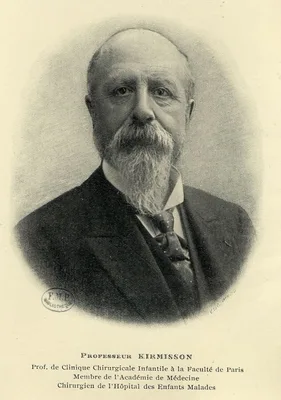
1898 KIRMISSON, Édouard François (1848 – 1927)
Traité des maladies chirurgicales d'origine congénitale.
The first book entirely devoted to the surgical treatment of congenital abnormalities. The work also contains pp. 593-698 an exposition of Kirmisson's staged reduction of congenital dislocations of the hip, and discus…
GMN 10269 · https://historyofmedicine.com/id/12460
1898 VIERORDT, Karl Hermann (1853 – 1943)
Die angeborenen Herzkrankheiten.
The first systematic treatise on congenital heart defects. Digital facsimile from the Internet Archive at this link.
GMN 11716 · https://historyofmedicine.com/id/13917
1899 MEIGE, Henri (1866 – 1940)
Le trophoedème chronique héréditaire.
“Meige’s disease” – first described by Nonne (No. 4106).
GMN 4129 · https://historyofmedicine.com/id/5743
1900 EDDOWES, Alfred (1850 – 1946)
Dark sclerotics and fragilitas ossium.
“Eddowes’s syndrome” – blue sclerotics and fragility of the bones, occurring as a familial syndrome; osteogenesis imperfecta. See also No. 6358.1.
GMN 6367 · https://historyofmedicine.com/id/8290
1900 COLLINS, Edward Treacher (1862 – 1932)
Cases with symmetrical congenital notches in the outer part of each lid and defective development of the malar bones.
Treacher Collins syndrome (TCS), a genetic disorder characterized by deformities of the ears, eyes, cheekbones, and chin. Also known as mandibulofacial dysostosis.
GMN 11360 · https://historyofmedicine.com/id/13559
1901 PEPPER, William Jr. (1843 – 1898)
A study of congenital sarcoma of the liver and suprarenal. With report of a case.
Pepper’s type of adrenal medullary tumor.
GMN 3866 · https://historyofmedicine.com/id/4917
1903 BONNET, L. M.
Sur la lésion dite sténose congénitale de l’aorte dans la région de l’isthme.
Distinction of infantile and adult types of coarctation of the aorta.
GMN 2814 · https://historyofmedicine.com/id/3483
1904 DRESBACH, M
Elliptical human red cell corpuscles.
Hereditary elliptocytosis.
GMN 3132.1 · https://historyofmedicine.com/id/3938
1904 NAU, Pierre
Les scolioses congénitales.
First description of platyspondylia.
GMN 4375 · https://historyofmedicine.com/id/5872