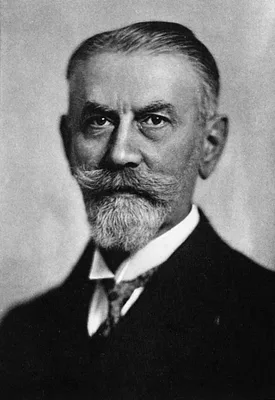
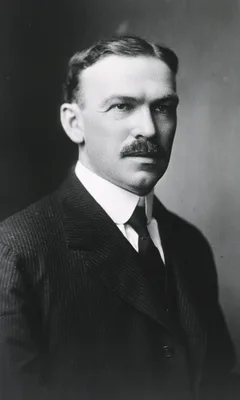
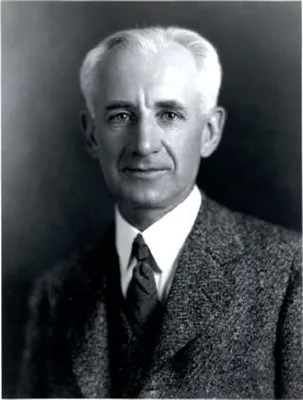
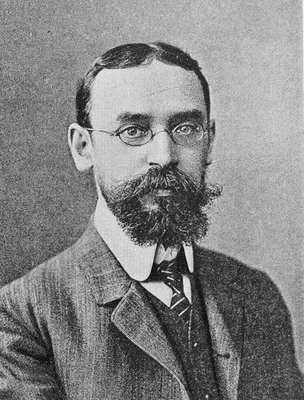
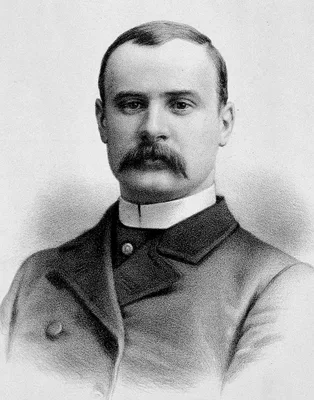
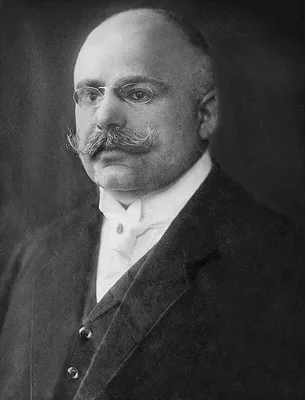
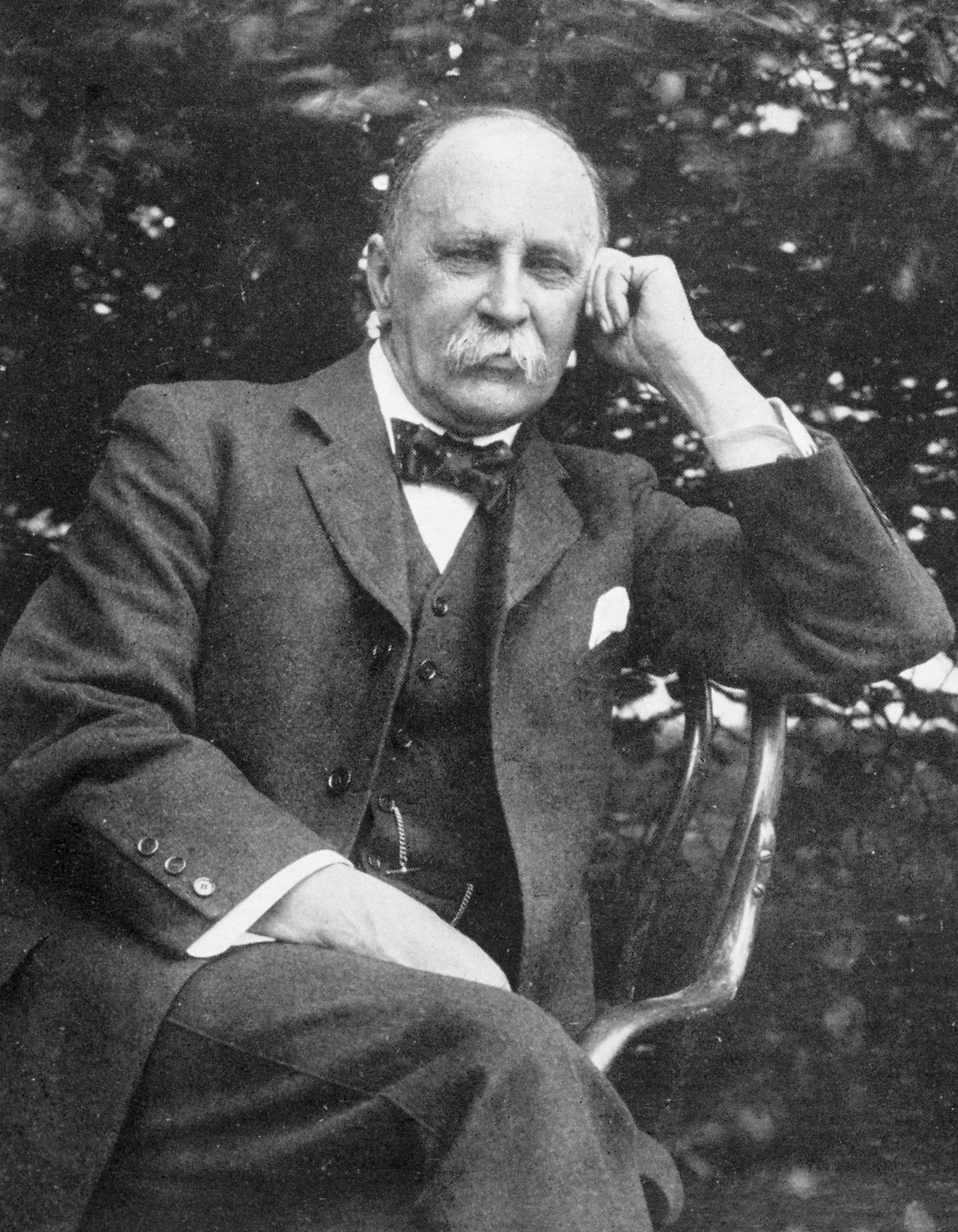
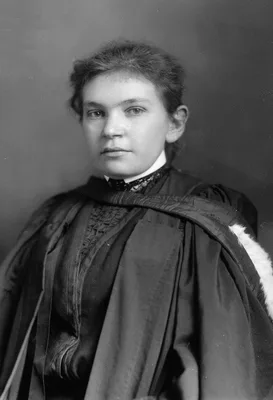
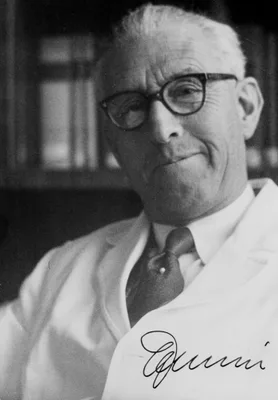
1904 HIPPEL, Eugen von (1867 – 1939)
Über eine sehr seltene Erkrankung der Netzhaut. Klinische Beobachtungen.
First description of angiomas in the eye (retinal hemangioblastomas), (Von Hippel-Lindau disease) (VHL). Von Hippel was preceded in his description of this disease by Edward Treacher Collins, "Two cases, brother and s…
GMN 14271 · https://historyofmedicine.com/id/16592
1906 APERT, Eugène Charles (1868 – 1940)
De l'acrocéphalosyndactylie.
"Apert syndrome", consisting of a triad of disorders: craniosynostosis, syndactyly and maxillary underdevelopment. Digital facsimile from Google Books at this link.
GMN 7733 · https://historyofmedicine.com/id/9905
1907 –1908 TYZZER, Ernest Edward (1875 – 1965)
A study of heredity in relation to the development of tumours in mice.
First experimental study of the heredity of mouse cancer.
GMN 2633 · https://historyofmedicine.com/id/3222
1907 MUNRO, John Cummings (1858 – 1910)
Ligation of the ductus arteriosus.
Munro was first to suggest the feasibility of ligation of a patent ductus arteriosus.
GMN 3025.3 · https://historyofmedicine.com/id/5492
1907 YERKES, Robert Means (1876 – 1956)
The dancing mouse: A study in animal behavior.
The first work to examine the characteristics of deaf mice, which became the most important model for the study of genetic deafness. Digital facsimile from the Biodiversity Heritage Library, Internet Archive at this l…
GMN 7226 · https://historyofmedicine.com/id/9394
1908 PFANNENSTIEL, Hermann Johann (1862 – 1909)
Ueber den habituellen Ikterus de Neugeborenen.
First detailed description of familial icterus gravis neonatorum.
GMN 3080.1 · https://historyofmedicine.com/id/3740
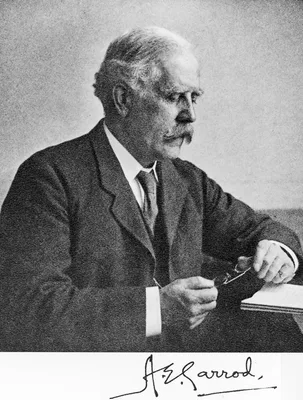
1909 GARROD, Sir Archibald Edward (1857 – 1936)
Inborn errors of metabolism.
Garrod established chemical individuality as a paradigm of Mendelian variation. His study, which he began around the turn of the 20th century, coincided with the rediscovery of Mendel's laws of inheritance in 1900. He…
GMN 244.1 · https://historyofmedicine.com/id/5049
1910 HERRICK, James Bryan (1861 – 1954)
Peculiar elongated and sickle-shaped red blood corpuscles in a case of severe anemia.
Identification of the sickle-cell type of anemia. Abstract "This case is reported because of the unusual blood findings, no duplicate of which I have ever seen described. Whether the blood picture represents merely a …
GMN 3133 · https://historyofmedicine.com/id/3939
1911 DAVENPORT, Charles Benedict (1866 – 1944); WEEKS, David Fairchild (1874 – 1929)
A first study of inheritance of epilepsy.
Davenport and Weeks produced strong evidence in support of the hereditary origin of epilepsy.
GMN 4822 · https://historyofmedicine.com/id/1630
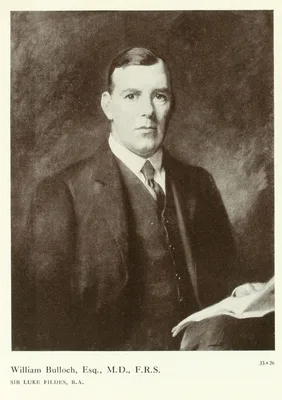
1911 BULLOCH, William (1868 – 1941); FILDES, Sir Paul Gordon (1882 – 1971)
Haemophilia.
Bulloch and Fildes, in their detailed account of hemophilia, claimed to have established immunity to the disease in females, and denied the authenticity of published cases of female hemophilia. They confirmed the law …
GMN 3081 · https://historyofmedicine.com/id/3741
1911 FOCKENS, P
Ein operativ geheilter Fall von kongenitaler Dünndarmatresie.
Treatment of congenital atresia of ileum by lateral anastomosis.
GMN 3536 · https://historyofmedicine.com/id/4036
1912 RAMMSTEDT, Wilhelm Conrad (Ramstedt) (1867 – 1963)
Zur Operation der angeborenen Pylorusstenose.
The first pyloromyotomy for pyloric stenosis, incising the pyloric muscle while leaving the mucosa intact and leaving the muscle to heal: “Rammstedt’s operation.” In 1920 Rammstedt discovered that the family name had …
GMN 3539 · https://historyofmedicine.com/id/4043
1912 CROUZON, Octave (1874 – 1938)
Dysostose cranio-faciale héréditaire.
First description of cranio-facial dysostosis, hypertelorism (Crouzon's syndrome).
GMN 4385 · https://historyofmedicine.com/id/5913
1913 DOYEN, Eugène-Louis (1859 – 1916)
Chirurgie des malformations congénitales ou acquises du coeur.
First attempt at surgical relief of valvular disease of the heart (congenital pulmonary stenosis). Experimental valvotomy.
GMN 3028.1 · https://historyofmedicine.com/id/5511
1913 WARTHIN, Aldred Scott (1866 – 1931)
Heredity with reference to carcinoma: As shown by the study of the cases examined in the pathological laboratory of the University of Michigan, 1895-1913.
"In 1895, a young seamstress of his [Warthin's] acquaintance told him about her family's long history of cancer deaths.[6] Intrigued, he researched her family's history, searching death records and administering quest…
GMN 9443 · https://historyofmedicine.com/id/11626
1914 NIEMANN, Albert (1834 – 1861)
Ein unbekanntes Krankheitsbild.
First description of that form of xanthomatosis which Pick described more fully in 1926 (No. 3785) and to which the eponym “Niemann-Pick disease” has been applied.
GMN 3784 · https://historyofmedicine.com/id/4684
1917 HINSELWOOD, James (1859 – 1919)
Congenital word-blindness.
GMN 4631 · https://historyofmedicine.com/id/691
1918 ROBERTS, John Bingham (1852 – 1924)
Congenital clefts of the face.
Roberts introduced the push-back procedure - backward displacement of the velum to ensure adequate speech.
GMN 5757.3 · https://historyofmedicine.com/id/6687
1921 LÉRI, André (1875 – 1930)
Une maladie congénitale et héréditaire de l’ossification: la pléonostéose familiale.
“Léri’s pleonosteosis” first described.
GMN 4388.1 · https://historyofmedicine.com/id/5952
1921 GILLIES, Sir Harold Delf (1882 – 1960); FRY, Sir William Kelsey (1889 – 1963)
A new principle in the surgical treatment of “congenital cleft palate”, and its mechanical counterpart.
Gillies’s operation for cleft palate.
GMN 5759 · https://historyofmedicine.com/id/6697
1922 MASON, Verne Rheem (1889 – 1965)
Sickle-cell anemia.
Mason gave sickle-cell anemia its present name.
GMN 3136.1 · https://historyofmedicine.com/id/3943
1922 HESS, Julius Hays (1876 – 1955)
Premature and congenitally diseased infants.
“The first book ever written dealing solely with premature and congenitally diseased infants” (Cone). Hess founded the first premature infant center in the United States at Michael Reese Hospital in Chicago.
GMN 6348.1 · https://historyofmedicine.com/id/8183
1922 CAMURATI, M
Di un raro caso di osteite simmetrica ereditaria degli arti inferior.
"Camurati-Engelmann disease", a very rare autosomal dominant genetic disorder that causes characteristic anomalies in the skeleton. It is a form of dysplasia. See No. 4395.1.
GMN 7832 · https://historyofmedicine.com/id/10004
1923 APERT, Eugène Charles (1868 – 1940); ET AL
Nouvelle observation d’acrocéphalosyndactylie.
With Tixier, Hue, and Kermorgant.
GMN 4390 · https://historyofmedicine.com/id/5961
1923 TREVES, Sir Frederick (1853 – 1923)
The elephant man and other reminiscences.
The story of Treves's patient, Joseph Carey Merrick (1862-1890), incorrected identified by Treves in these reminiscences as "John Merrick." The story was retold in The elephant man, Bernard Pomerance's 1977 play about…
GMN 7407 · https://historyofmedicine.com/id/9579
1924 GREIG, David Middleton (1864 – 1936)
Hypertelorism. A hitherto undifferentiated congenital cranio-facial deformity.
First description of hypertelorism as a separate entity.
GMN 4392 · https://historyofmedicine.com/id/5970
1925 HART, Alfred Purvis (1887 – 1954)
Familial icterus gravis of the new-born and its treatment.
Successful exchange transfusion.
GMN 3087.1 · https://historyofmedicine.com/id/3757
1926 SCHAFFER, Károly (1864 – 1939)
Über das morphologische Wesen und die Histopathologie der hereditaersystematischen Nervenkrankheiten.
Schaffer was a pioneer Hungarian neuropathologist. He laid down a triad of criteria for judging whether or not a neurological disease is hereditary.
GMN 4609 · https://historyofmedicine.com/id/575
1926 WILLEBRAND, Erik Adolf von (1870 – 1949)
Hereditär pseudohemofili.
Von Willebrand’s disease, pseudo-hemophilia type B, an hereditary bleeding disorder affecting both sexes.
GMN 3087.2 · https://historyofmedicine.com/id/3759
1926 PICK, Ludwig (1868 – 1935)
Der Morbus Gaucher und die ihm ähnlichen Erkrankungen. (Die lipoidzellige Splenohepatomegalie Typus Niemann und die diabetische Lipoidzellenhyperplasie der Milz.)
“Niemann-Pick disease” – a group of inherited, severe metabolic disorders, first noted by Albert Niemann in 1914, (No. 3784) in 1914. Pick’s account is of greater importance.
GMN 3785 · https://historyofmedicine.com/id/4686
1927 OSLER, Sir William (1849 – 1919); ABBOTT, Maude Elizabeth Seymour (1869 – 1940); MCCRAE, Thomas (1870 – 1935)
Congenital cardiac disease by Maude Abbott. IN: Modern medicine: Its theory and practice, edited by Sir William Osler, assisted by Thomas McCrae. 3rd ed., 4, 612-812.
GMN 2856 · https://historyofmedicine.com/id/3647
1927 COOLEY, Thomas Benton (1871 – 1945); ET AL
Anemia in children, with splenomegaly and peculiar changes in the bones.
“Cooley’s erythroblastic anemia”, thalassemia. With E. R. Witwer and O. P. Lee. An earlier brief account by Cooley and Lee appeared in Trans. Amer. Pediat. Soc.,1925, 37, 29.
GMN 3141 · https://historyofmedicine.com/id/3951
1927 FANCONI, Guido (1892 – 1979)
Familiäre infantile perniziösaartige Anämie (perniziöses Blutbild und Konstitution).
“Fanconi’s syndrome”, congenital hypoplasia of bone marrow with multiple congenital defects occurring as a familial disease.
GMN 3142 · https://historyofmedicine.com/id/3953
1927 LINDAU, Arvid Vilhelm (1892 – 1958)
Zur Frage der Angiomatosis Retinae und Ihrer Hirncomplikation.
Lindau described the angiomas of the cerebellum and spine found in Von Hippel-Lindau disease (VHL).
GMN 14272 · https://historyofmedicine.com/id/16594
1928 SLYE, Maud (1879 – 1954)
Cancer and heredity.
By selective breeding over a period of 15 years, Slye produced generations of mice absolutely resistant to, or particularly susceptible to, cancer. She demonstrated that resistance is a Mendelian dominant and suscepti…
GMN 2652 · https://historyofmedicine.com/id/3307
1928 ROESLER, Hugo (1899 – 1961)
Beiträge zur Lehre von den angeborenen Herzfehlern.
Roesler described the most important roentgenologic sign of aortic coarctation.
GMN 2856.1 · https://historyofmedicine.com/id/3649
1928 BROUSSEAU, Kate ( – 1938)
Mongolism. A study of the physical and mental characteristics of mongolian imbeciles. Revised by H. G. Brainerd.
Down syndrome.
GMN 4958 · https://historyofmedicine.com/id/6301
1929 ENGELMANN, Guido (1876 – 1959)
Ein Fall von Osteopathia hyperostotica (sclerotisans) multiplex infantilis.
“Engelmann’s disease”, also known as "Camurati-Engelmann disease" — a very rare autosomal dominant genetic disorder that causes characteristic anomalies in the skeleton. It is a form of dysplasia, causing osteoscleros…
GMN 4395.1 · https://historyofmedicine.com/id/5989
1929 MORQUIO, Luis (1867 – 1935)
Sur une forme de dystrophie osseuse familiale.
“Morquio’s disease”, eccentro-osteochondrodysplasia.
GMN 4397 · https://historyofmedicine.com/id/5998
1931 GARROD, Sir Archibald Edward (1857 – 1936)
The inborn factors in disease.
Garrod argued that chemical individuality could result in individuals having a predisposition to certain diseases. This view has become particularly significant in light of the establishment of recombinant DNA methods…
GMN 253.2 · https://historyofmedicine.com/id/8684
1932 DIAMOND, Louis Klein (1902 – 1999); BLACKFAN, Kenneth Daniel (1883 – 1941); BATY, James M.
Erythroblastosis fetalis and its association with universal edema of the fetus, icterus gravis neonatorum and anemia of the newborn.
The authors described and named this syndrome/illness of newborns for the first time, including pathological findings, clinical data, lab abnormalities, presentation and course of illness. Order of authorship in the o…
GMN 14087 · https://historyofmedicine.com/id/16398
1933 COCKAYNE, Edward Alfred (1880 – 1956)
Inherited abnormalities of the skin and its appendages.
GMN 4008 · https://historyofmedicine.com/id/5136
1934 MACFARLANE, Robert Gwyn (1907 – 1987); BARNETT, Burgess (1888 – 1944)
The haemostatic possibilities of snake-venom.
Snake venom used in the treatment of hemophilia.
GMN 3093 · https://historyofmedicine.com/id/3777
1934 FØLLING, Ivar Asbjørn (1888 – 1973)
Utskillelse av fenylpyrodruesyre i urinen som stoffskifteanomali i forbindelse med imbecilletet.
Phenylketonuria (PKU) first described. This was the first hereditary metabolic disorder shown to be responsible for mental retardation. German translation in Hoppe-Seyl. Z. physiol. Chem., 1934, 227, 169-76. English t…
GMN 3924 · https://historyofmedicine.com/id/5067
1935 QUICK, Armand James (1894 – 1977)
The prothrombin in hemophilia and in obstructive jaundice.
Quick’s method for determination of prothrombin clotting time. See also Amer. J. med. Sci.,1935, 190,501-11.
GMN 3095 · https://historyofmedicine.com/id/3782
1935 PUTTI, Vittorio (1880 – 1940)
Anatomia della lussazione congenita dell'anca.
Putti made many contributions to the understanding of congenital dislocation of the hip, a condition which was then endemic in Northern Italy.
GMN 7798 · https://historyofmedicine.com/id/9970
1936 WHIPPLE, George Hoyt (1878 – 1976); BRADFORD, William Leslie (1898 – 1983)
Mediterranean disease – thalassemia (erythroblastic anemia of Cooley); associated pigment abnormalities simulating hemochromatosis.
Whipple and Bradford contributed a classic paper on the pathology of thalassemia, a name introduced by them.
GMN 3148.1 · https://historyofmedicine.com/id/3991
1936 ABBOTT, Maude Elizabeth Seymour (1869 – 1940)
Atlas of congenital cardiac disease.
GMN 2865 · https://historyofmedicine.com/id/4156
1937 PATEK, Arthur Jackson Jr. (1904 – 1991); TAYLOR, Francis Henry Laskey (1900 – 1959)
Hemophilia. II. Some properties of a substance obtained from normal human plasma effective in accelerating the coagulation of hemophilic blood.
Antihemophilic globulin (factor VIII).
GMN 3096.1 · https://historyofmedicine.com/id/3787
1937 BEHÇET, Hulusi (1889 – 1948)
Über rezidivierende, aphthöse, durch ein Virus verursachte Geschwüre am Mund, am Auge und an den Genitalien.
Behçet’s disease, previously described by H. Planner and F. Remenovsky, Arch. Derm. Syph. (Berlin), 1922, 140, 162-88.
GMN 6374 · https://historyofmedicine.com/id/8313