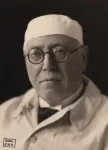
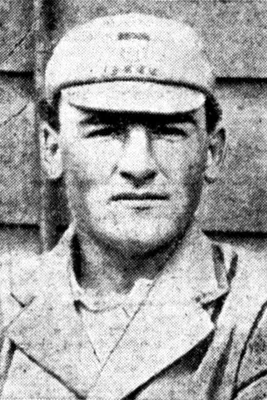
1938 CAMINOPETROS, J
Recherches sur l’anémie érythroblastique infantile des peuples de la Méditerranée orientale. Étude anthropologique, étiologique et pathogénique. La transmission héréditaire de la maladie.
First evidence that thalassemia is genetically determined. Earlier report in Kliniki, Athens, 1936, 12, No. 5.
GMN 3148.2 · https://historyofmedicine.com/id/3993
1938 PENROSE, Lionel Sharples (1898 – 1972)
A clinical and genetic study of 1,280 cases of mental defect.
In this exhaustive study Penrose showed (p. 36) the significance of maternal age in the etiology of Down syndrome.
GMN 4962.1 · https://historyofmedicine.com/id/6325
1938 MCINDOE, Sir Archibald Hector (1900 – 1960); BANISTER, John Bright (1880 – 1938)
An operation for the cure of congenital absence of the vagina.
Mclndoe’s operation for the construction of an artificial vagina.
GMN 6133 · https://historyofmedicine.com/id/7657
1938 DARROW, Ruth Renter (1895 – 1956)
Icterus gravis (erythroblastosis) neonatorum.
Darrow was the first to identify the cause of hemolytic disease of the newborn (HDN). Three years prior to the discovery of antibodies against the Rh antigen, Darrow correctly hypothesized that the disease was caused …
GMN 14088 · https://historyofmedicine.com/id/16399
1939 GROSS, Robert Edward (1905 – 1988); HUBBARD, John Perry (1903 – 1990)
Surgical ligation of a patent ductus arteriosus: Report of first successful case.
One of the earliest successful surgical repairs for congenital heart disease. See also later paper in Ann. Surg.,1939, 110, 321-56.
GMN 3039 · https://historyofmedicine.com/id/3459
1939 KITE, Joseph Hiram (1891 – 1986)
Principles involved in the treatment of congenital clubfoot.
Kite’s method, involving “a series of plaster casts and wedgings, without the use of anesthetics, forcible manipulations, or operative procedures”, became standard practice.
GMN 4403.1 · https://historyofmedicine.com/id/6049
1940 LAUBRY, Charles (1872 – 1960); ET AL
Grosse pulmonaire. Petite aorte. Affection congénitale.
Idiopathic dilatation of the pulmonary artery reported. With D. Routier and R. Heim de Balsac.
GMN 2923 · https://historyofmedicine.com/id/4919
1941 LEVINE, Philip (1900 – 1987); ET AL
The rôle of iso-immunization in the pathogenesis of erythroblastosis fetalis.
Erythroblastosis fetalis due to rhesus incompatibility (Rh disease) between mother and child. With L. Burnham, E. M. Katzin, and P. Vogel.
GMN 3100 · https://historyofmedicine.com/id/3796
1941 MORCH, Ernst Trier (1908 – 1996)
Chondrodystrophic dwarfs in Denmark (supplemented with investigations from Sweden and Norway) with special reference to the inheritance of chondrodystrophy.
Morch established the fact that chondrodystrophy may be inherited.
GMN 4404 · https://historyofmedicine.com/id/6063
1941 GREGG, Sir Norman McAlister (1892 – 1966)
Congenital cataract following German measles in the mother.
Gregg drew attention to congenital defects in infants following rubella in the mother during the early part of pregnancy.
GMN 5507 · https://historyofmedicine.com/id/6499
1943 SWAN, Charles Spencer (1912 – 1963)
Congenital defects in infants following infectious diseases during pregnancy.
Figures demonstrating that rubella in the first or second month of pregnancy always results in an abnormal infant. With A. L. Tostevin, B. Moore, H. Mayo, and G. H. B. Black.
GMN 5509 · https://historyofmedicine.com/id/6503
1943 HAIGHT, Cameron (1901 – 1970); TOWSLEY, Harry Albert (1906 – 1993)
Congenital atresia of the esophagus with tracheo-esophageal fistula. Extrapleural ligation of fistula and end-to-end anastomosis of esophageal segments.
Ablation of the tracheo-oesophageal fistula and primary end-to-end oesophageal anastomosis, first achieved in 1941.
GMN 6357.58 · https://historyofmedicine.com/id/8250
1945 BLALOCK, Alfred (1899 – 1964); TAUSSIG, Helen Brooke (1898 – 1986)
The surgical treatment of malformations of the heart in which there is pulmonary stenosis or pulmonary atresia.
The “Blalock-Taussig operation” for the relief of congenital defects of the pulmonary artery, Tetralogy of Fallot ("blue baby syndrome"). "The first surgical repair was carried out in 1944 at Johns Hopkins.[70] The pr…
GMN 3043 · https://historyofmedicine.com/id/3475
1945 GROSS, Robert Edward (1905 – 1988)
Surgical correction for coarctation of the aorta.
Resection of coarctation and direct anastomosis of remaining ends. See also his report of 60 cases in J. Amer.med.Assoc.,1949, 139,285-92.
GMN 3044.1 · https://historyofmedicine.com/id/3490
1945 BRANNON, Emmett S.; WARREN, James Vaughn (1915 – 1990); WEENS, H. Stephen
Atrial septal defect: Study of hemodynamics by the technique of right heart catheterization.
The first description of the use of a cardiac catheter as a diagnostic tool, in this case a congenital heart defect. The authors worked in the laboratory of Eugene Stead, Jr. at Grady Memorial Hospital, Atlanta, Georgia.
GMN 10653 · https://historyofmedicine.com/id/12846
1946 POTTS, Willis John (1895 – 1968); ET AL
Anastomosis of the aorta to a pulmonary artery. Certain types in congenital heart disease.
With S. Smith and S. Gibson.
GMN 3045 · https://historyofmedicine.com/id/3495
1946 REFSUM, Sigvald Bernhard (1907 – 1991)
Heredopathia atactica polyneuritiformis; a familial syndrome not hitherto described.
“Refsum’s syndrome”, an inherited disorder of lipid metabolism.
GMN 3924.2 · https://historyofmedicine.com/id/5074
1947 TAUSSIG, Helen Brooke (1898 – 1986)
Congenital malformations of the heart.
This 618-page work, which required ten years to write, was the first "definitive textbook" of congenital heart defects, a subspecialty of pediatrics that Taussig created. The second edition, published in 1960, was ess…
GMN 2878 · https://historyofmedicine.com/id/4208
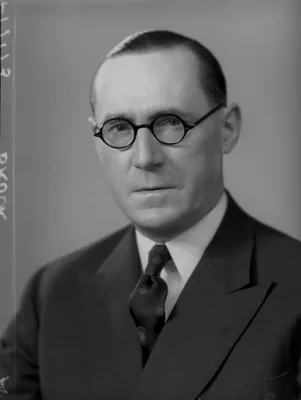
1948 BROCK, Russell Claude (1903 – 1980)
Pulmonary valvulotomy for the relief of congenital pulmonary stenosis. Report of three cases.
"Brock performed the first successful valvotomies for isolated pulmonary stenosis in 1948. He gained access to the blood-filled beating heart through a small incision in the right ventricle through which he passed a v…
GMN 3046 · https://historyofmedicine.com/id/3497
1948 DIAMOND, Louis Klein (1902 – 1999)
Replacement transfusion as a treatment for erythroblastosis fetalis.
Exchange transfusion.
GMN 3107.1 · https://historyofmedicine.com/id/3816
1948 GIBSON, Quentin Howieson (1918 – 2011)
The reduction of methaemoglobin in red blood cells and studies on the cause of idiopathic methaemoglobinaemia.
Cause of hereditary methemoglobinemia elucidated.
GMN 3107.2 · https://historyofmedicine.com/id/3819
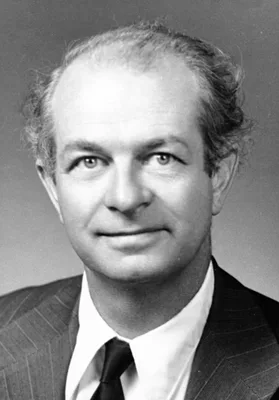
1949 PAULING, Linus Carl (1901 – 1994); ITANO, Harvey Akio (1920 – 2010); SINGER, Seymour Jonathan (1924 – 2017); WELLS, Ibert C. (1921 – 2011)
Sickle cell anemia, a molecular disease.
First recognition, by Pauling and colleagues, of a structural hemoglobin variant, and the beginning of the molecular approach to disease.
GMN 3154.1 · https://historyofmedicine.com/id/4015
1949 NEEL, James Van Gundia (1915 – 2000)
The inheritance of sickle cell anemia.
Genetic evidence that sickle-cell disease is inherited in a simple Mendelian manner.
GMN 3154.2 · https://historyofmedicine.com/id/4053
1949 SEEDORFF, Knud Stakemann (1915 – 1991)
Osteogenesis imperfecta: A study of clinical features and heredity based on 55 Danish families comprising 180 affected members.
Includes a translation of Ekman’s thesis (No. 4304.1). Also gives a case reported in 1678.
GMN 4404.1 · https://historyofmedicine.com/id/6075
1950 WOOD, Paul Hamilton (1907 – 1962)
Congenital heart disease.
A new classification proposed.
GMN 2882 · https://historyofmedicine.com/id/4232
1951 WAARDENBURG, Petrus Johannes (1886 – 1979)
A new syndrome combining developmental anomalies of the eyelids, eyebrows and nose root with pigmentary defects of the iris and head hair with congenital deafness.
“Waardenburg’s syndrome”.
GMN 4154.4 · https://historyofmedicine.com/id/5883
1952 BIGGS, Rosemary Peyton (1921 – 2001); ET AL
Christmas disease, a condition previously mistaken for haemophilia.
Christmas disease, hemophilia B, due to lack of Factor IX. Named after the patient whose case was the first recorded example. With six co-authors.
GMN 3108.1 · https://historyofmedicine.com/id/3824
1952 BRUTON, Ogden Carr (1908 – 2003)
Agammaglobulinemia.
First report.
GMN 2578.9 · https://historyofmedicine.com/id/4146
1954 WARDEN, Herbert Edgar (1920 – 2002); LILLEHEI, Clarence Walton (1918 – 1999); ET AL
Controlled cross circulation for open intracardiac surgery; physiologic studies and results of creation and closure of ventricular septal defects.
Warden and colleagues undertook the first repair of various cardiac anomalies. With M. Cohen, and R.C. Read.
GMN 3047.6 · https://historyofmedicine.com/id/3568
1954 ALLISON, Anthony Clifford (1925 – 2014)
Protection afforded by sickle-cell trait against subtertian malarial infection.
Allison was the first to connect a hereditary disease (sickle cell disease) to an infectious disease (malaria). He proved that heterozygous and homozygous individuals to the sickle cell trait or disease respectively s…
GMN 11887 · https://historyofmedicine.com/id/14091
1957 INGRAM, Vernon Martin (1924 – 2006)
Gene mutations in human haemoglobin: the chemical difference between normal and sickle cell haemoglobin.
Sickle-cell hemoglobin differs from normal hemoglobin by a single amino acid (valine for glutamic acid).
GMN 3155.1 · https://historyofmedicine.com/id/4055
1958 FRANÇOIS, Jules (1907 – 1984)
L’Hérédité en ophtalmologie.
English translation St. Louis: C.V. Mosby, 1961.
GMN 7401 · https://historyofmedicine.com/id/9573
1958 CREMER, Richard J.; PERRYMAN, P. W.; RICHARDS, D. H.
Influence of light on the hyperbilirubinaemia of infants.
In 1956 Sister Jean Ward of the Premature Unit of the Rochford General Hospital in Essex, England noted the benefit of phototherapy when she took infants outside because she assumed that fresh air had healing benefits…
GMN 12971 · https://historyofmedicine.com/id/15219
1959 INGRAM, Vernon Martin (1924 – 2006); STRETTON, Antony Oliver Ward (1936 – )
Genetic basis of the thalassaemia diseases.
GMN 3155.2 · https://historyofmedicine.com/id/4056
1959 FRANÇOIS, Jules (1907 – 1984)
Les cataractes congénitales.
GMN 7402 · https://historyofmedicine.com/id/9574
1961 LOCK, Stephen Penford (1929 – ); ET AL
Stomatocytosis: a hereditary red cell anomaly associated with haemolytic anaemia.
With R. Sephton Smith and R. M. Hardisty.
GMN 3155.3 · https://historyofmedicine.com/id/4090
1963 GUTHRIE, Robert (1916 – 1995); SUSI, Ada J. (1918 – 2002)
A simple phenylalanine method for detecting phenylketonuria in large populations of newborn infants.
Bacterial inhibition test for phenylketonuria.
GMN 3924.4 · https://historyofmedicine.com/id/5084
1964 PFEIFFER, Rudolf Arthur (1921 – 2012)
Dominant erbliche Akrocephalosyndaktylie.
Pfeiffer syndrome, a rare genetic disorder characterized by the premature fusion of certain bones of the skull (craniosynostosis) which affects the shape of the head and face. In addition, the syndrome includes abnorm…
GMN 11372 · https://historyofmedicine.com/id/13571
1965 WELLS, Robert Stuart; KERR, Charles Baldwin (1933 – )
Genetic classification of ichthyosis.
Sex-linked recessive ichthyosis shown to be an important but not uncommon entity. See also Kerr & Wells: Sex-linked ichthyosis. Ann. hum. Genet., 1965, 29, 33-50.
GMN 4154.8 · https://historyofmedicine.com/id/5916
1966 LEHMANN, Hermann (1910 – 1985); HUNTSMAN, Richard George (1927 – 2015)
Man’s haemoglobins: including the haemoglobinopathies and their investigation.
Explains the current distribution of sickling throughout the world.
GMN 3155.4 · https://historyofmedicine.com/id/4091
1967 TESSIER, Paul Louis (1917 – 2008)
Osteotomies totales de la face: Syndrome de Crouzon, syndrome d'Apert: oxcephalies, scaphocephalies, turricephalies.
GMN 7732 · https://historyofmedicine.com/id/9904
1968 LEHMANN, Hermann (1910 – 1985); PERUTZ, Max Ferdinand (1914 – 2002)
Molecular pathology of human haemoglobin.
Perutz opened up "the field of 'molecular pathology,' relating a structural abnormality to a disease" (Aaron Klug, "Max Perutz 1914-2002," Science 295 ([2002] 2383). Specifically Perutz showed that hemoglobin molecule…
GMN 6916 · https://historyofmedicine.com/id/9081
1971 KNUDSON, JR., Alfred George (1922 – 2016)
Mutation and cancer: Statistical study of retinoblastoma.
In this paper Knudson first described his "two-hit hypothesis," also known as the "Knudson hypothesis," which explains the incidence of hereditary cancers, such as retinoblastoma. "Humans inherit two copies of every g…
GMN 13964 · https://historyofmedicine.com/id/16266
1973 ZIMMERMAN, David R.
Rh: The intimate history of a disease and its conquest.
GMN 14089 · https://historyofmedicine.com/id/16400
1974 BRUYN, George Willem (1928 – 2002)
A centennial bibliography of Huntington’s chorea, 1872-1972.
Over 2,000 references to original works. Chronological arrangement. Author, geographic and other indexes. With F. Baro and N. C. Myrianthopoulos.
GMN 5019.15 · https://historyofmedicine.com/id/6691
1976 VARMUS, Harold Eliot (1942 – ); BISHOP, John Michael (1936 – ); STEHELIN, Dominique (1943 – 2019); VOGT, Peter K. (1932 – )
DNA related to the transforming gene(s) of avian sarcoma viruses is present in normal avian DNA.
Discovery of the first “oncogene. In 1989 Varmus and Bishop shared the Nobel Prize for in Physiology or Medicine "for their discovery of the cellular origin of retroviral oncogenes."
GMN 2660.28 · https://historyofmedicine.com/id/3441
1985 MULLIS, Kary Banks (1944 – 2019); ET AL
Enzymatic amplication of B-globin genomic sequences and restriction site analysis for diagnosis of sickle cell anemia.
Polymerase chain reaction first published. With Randall K. Saiki, Stephen Scharf, Fred Faloona et al. Order of authorship in the original paper was Saiki, Scharf, Faloona, Mullis.... In 1993 the Nobel Prize in Chemist…
GMN 10785 · https://historyofmedicine.com/id/12981
1986 BEIGHTON, Peter H. (1934 – ); BEIGHTON, Greta
The man behind the syndrome.
Portraits and biographies, emphasizing genetic syndromes. Followed by the authors' The person behind the syndrome (1997).
GMN 8606 · https://historyofmedicine.com/id/10783
1986 ALBERT, Daniel Myron (1936 – ); DRYJA, Thaddeus P.; FRIEND, Stephen H.; BERNARDS, René (1953 – ); ROGELI, Snezna; WEINBERG, Robert A. (1942 – ); RAPAPORT, Joyce M.
A human DNA segment with properties of the gene that predisposes to retinoblastoma and osteosarcoma.
Isolation of the first human tumor suppressor gene. Order of authorship in the original publication: Friend, Bernards, Rogeli, Weinberg, Rapaport, Albert, Dryja.
GMN 13974 · https://historyofmedicine.com/id/16277
1990 KING, Mary-Claire (1946 – )
Linkage of early-onset familial breast cancer to Chromosome 17q21.
King showed that breast cancer can be inherited due to mutations in the Breast cancer type 1 susceptibility protein, a protein that in humans is encoded by the BRAC1 gene. BRCA1 is a human tumor suppressor gene (also …
GMN 13966 · https://historyofmedicine.com/id/16268