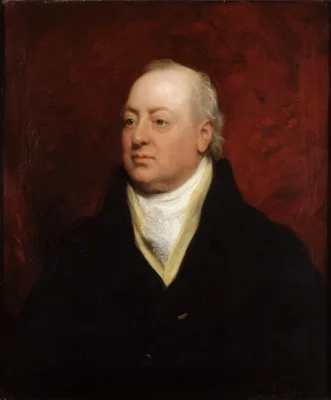
1786 HOME, Sir Everard (1756 – 1832)
An account of Mr. Hunter’s method of performing the operation for the popliteal aneurism.
First description of John Hunter’s method of treating popliteal aneurysm. This consisted in a single ligature of the artery at a distance high in the healthy tissues. Recorded by his brother-in law. See also Trans. So…
GMN 2925 · https://historyofmedicine.com/id/4935
1790 KAST, Thomas (1755 – 1820)
An account of an aneurism in the thigh, perfectly cured by the operation.
The first femoral ligation reported in America, and the first paper on a surgical topic to be published in an American medical periodical.
GMN 2925.1 · https://historyofmedicine.com/id/4938
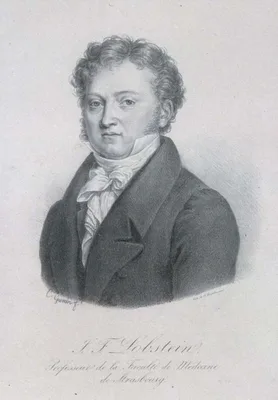
1829 –1833 LOBSTEIN, Jean Georges Chrétien Frédéric Martin (1777 – 1835)
Traité d’anatomie pathologique. 2 vols. and atlas.
Includes a historical review of the subject from the time of the Ancient Egyptians to Corvisart, and a summary of the advances in pathology during the preceding 50 years. Vol. 2, pp. 553-600 deals with diseases of the…
GMN 2288 · https://historyofmedicine.com/id/2915
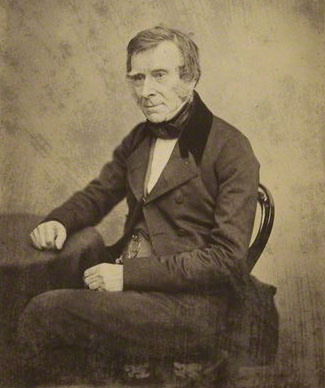
1846 BRODIE, Sir Benjamin Collins (1783 – 1862)
Lectures illustrative of various subjects in pathology and surgery.
Page 361 contains the first description of intermittent claudication in man. This was first reported (in the horse) by “Boullay” [?J. Bouley] in Arch. gén. Méd.,1831, 27, 425. P. 186: Brodie's test for insufficiency o…
GMN 2902 · https://historyofmedicine.com/id/4851
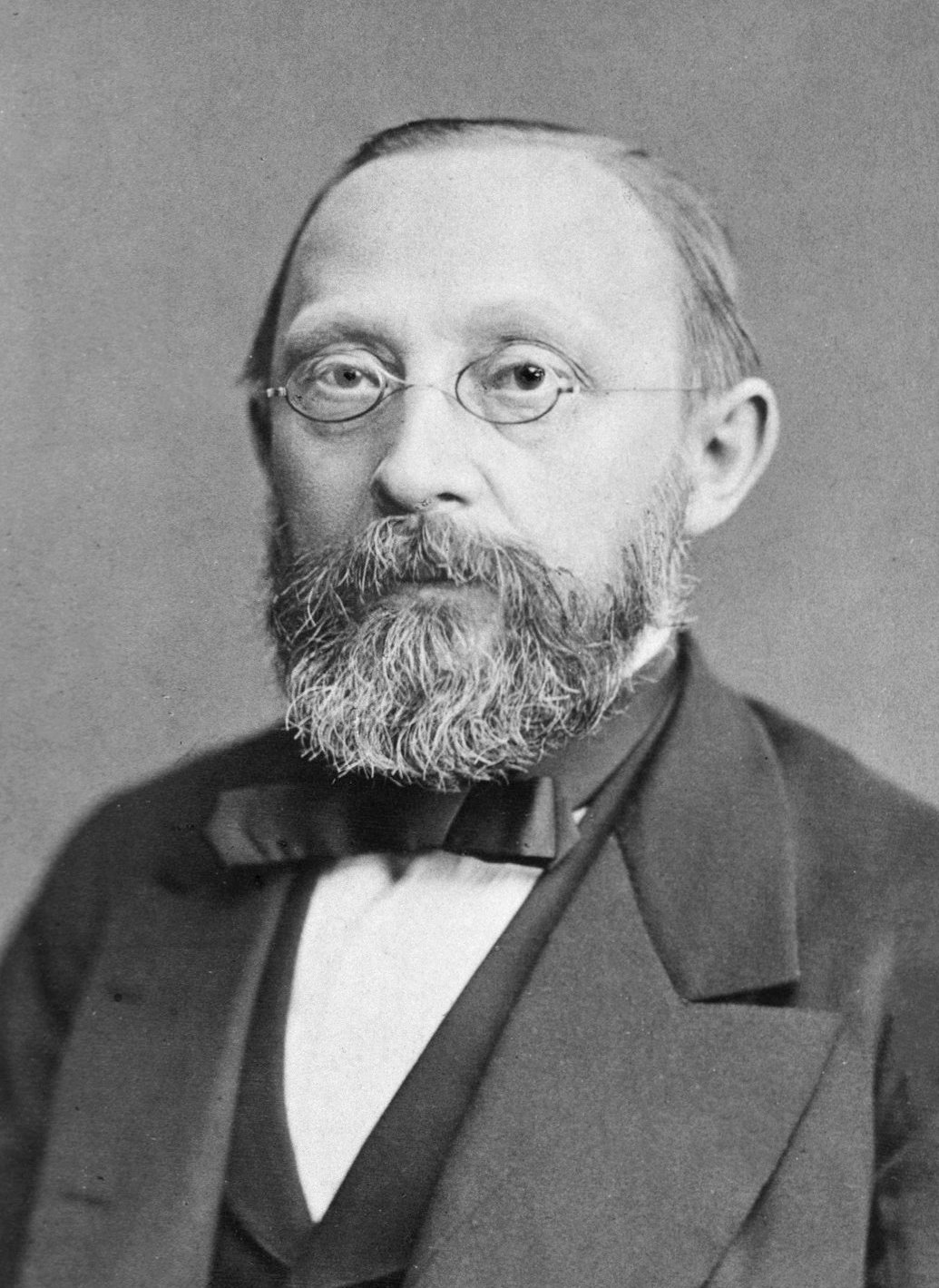
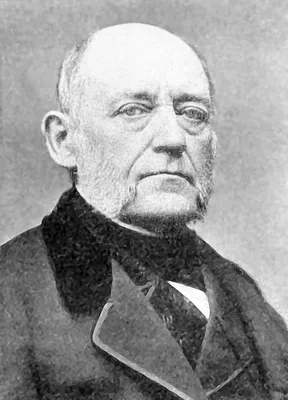
1847 VIRCHOW, Rudolf Ludwig Karl (1821 – 1902)
Ueber die acute Entzündung der Arterien.
GMN 2903 · https://historyofmedicine.com/id/4853
1852 ROKITANSKY, Carl Freiherr von (1804 – 1878)
Ueber einige der wichtigsen Krankheiten der Arterien.
One of Rokitansky’s best works. He described atheroma and calcification in the intima of arteries, and various congenital malformations. Rokitansky "is credited with the initial case report of polyarteritis nodosa in …
GMN 2904 · https://historyofmedicine.com/id/4855
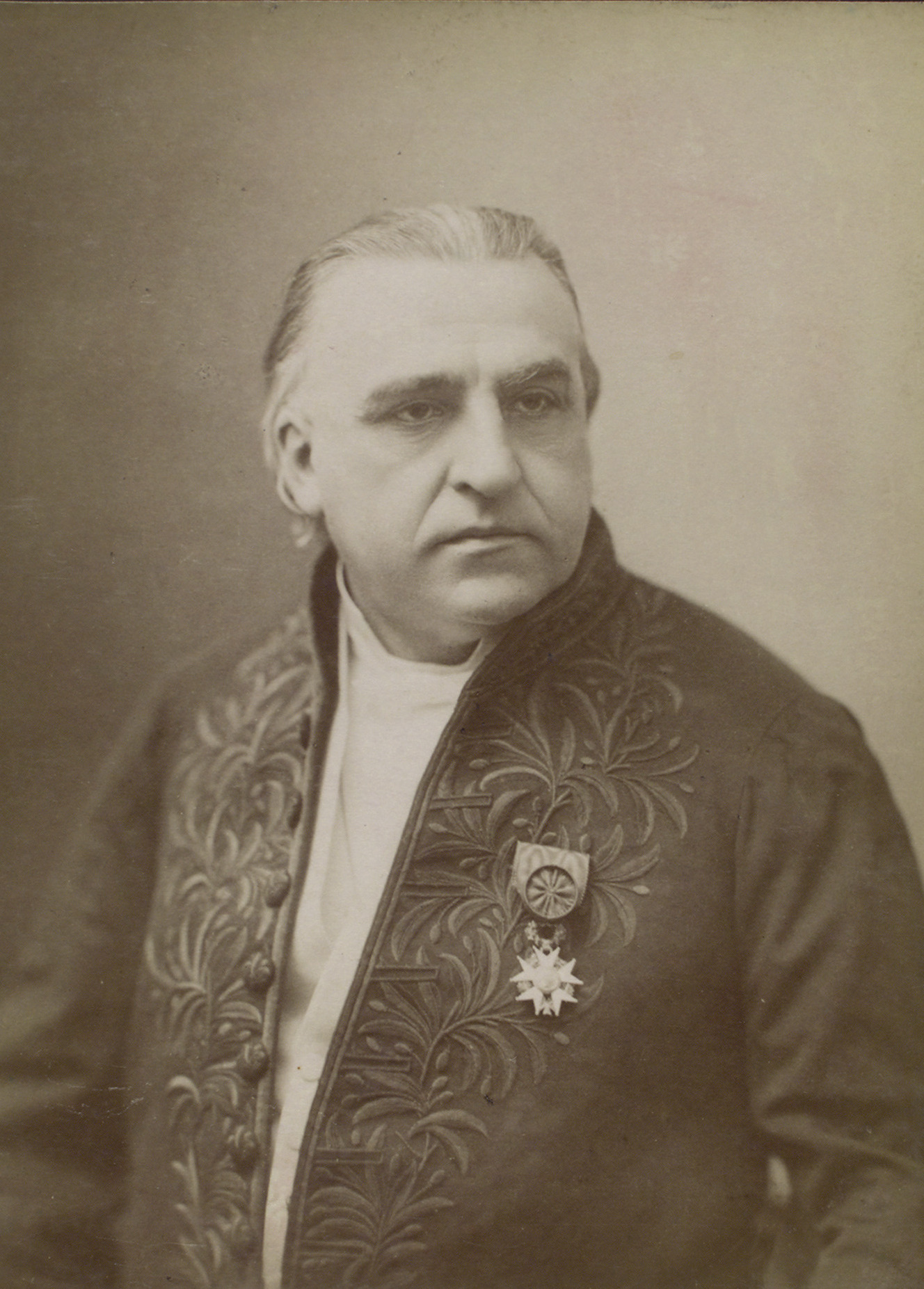
1859 CHARCOT, Jean Martin (1825 – 1893)
Sur la claudication intermittente.
Charcot was among the first to report intermittent claudication in man.
GMN 2905 · https://historyofmedicine.com/id/4858
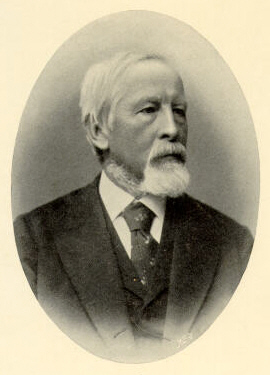
1866 KUSSMAUL, Adolf (1822 – 1902); MAIER, Rudolf Robert (1824 – 1888)
Ueber eine bisher noch nicht beschriebene eigenthümliche Arterienerkrankung (Periarteritis nodosa), die mit Morbus Brightii und rapid fortschreitender allgemeiner Muskellähmung einhergeht.
First description of periarteritis nodosa.
GMN 2906 · https://historyofmedicine.com/id/4861
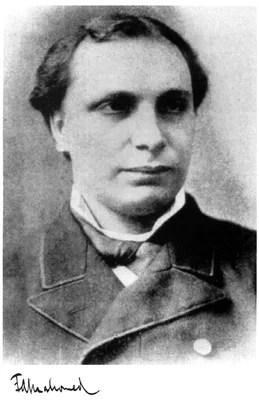
1874 MAHOMED, Frederick Horatio Akbar (1849 – 1884)
The etiology of Bright’s disease and the prealbuminuric stage.
Mahomed proved that cases of “arteriocapillary fibrosis” were hypertensive, and showed that they may occur without renal involvement.
GMN 2906.1 · https://historyofmedicine.com/id/4863
1879 WINIWARTER, Felix von (1852 – 1931)
Ueber eine eigenthümliche Form von Endarteriitis und Endophlebitis mit Gangrän des Fusses.
Early description of thromboangiitis obliterans (Buerger’s disease, No. 2912).
GMN 2907 · https://historyofmedicine.com/id/4865
1887 HUCHARD, Henri (1844 – 1910)
L’artério-sclérose subaiguë dans ses rapports avec les spasmes vasculaires et son traitement par la trinitrine (nitroglycérine).
“Huchard’s disease” – continued hypertension causing arteriosclerosis. Huchard did much to develop the knowledge concerning arteriosclerosis and summarized his work in a classic monograph published in 1909.
GMN 2908 · https://historyofmedicine.com/id/4869
1888 –1889 STEELL, Graham (1851 – 1942)
The murmur of high-pressure in the pulmonary artery.
First description of the pulmonary diastolic murmur – the “Graham Steell murmur.” Reproduced in Willius & Keys, Cardiac Classics, 1941, pp. 680-85.
GMN 2794 · https://historyofmedicine.com/id/3408
1891 JASSINOWSKY, Alexander (1864 – )
Ein Beitrag zur Lehre von der Gefässnaht.
Jassinowsky experimented with arterial sutures on animals. His thesis, Die Arteriennaht: Eine experimentell-chirurgische Studie, Dorpat, 1889, was an experimental-surgical study of the subject.
GMN 2908.1 · https://historyofmedicine.com/id/4871
1897 OSLER, Sir William (1849 – 1919)
Lectures on angina pectoris and allied states.
"This monograph, based on seven lectures Osler delivered at Johns Hopkins, is his longest publication dealing with heart disease. He discusses the history of the recognition of angina, the pathophysiology of coronary …
GMN 11651 · https://historyofmedicine.com/id/13852
1899 DÖRFLER, Julius
Ueber Arteriennaht.
All-layer intima-to-intima arterial anastomosis.
GMN 2908.2 · https://historyofmedicine.com/id/4873
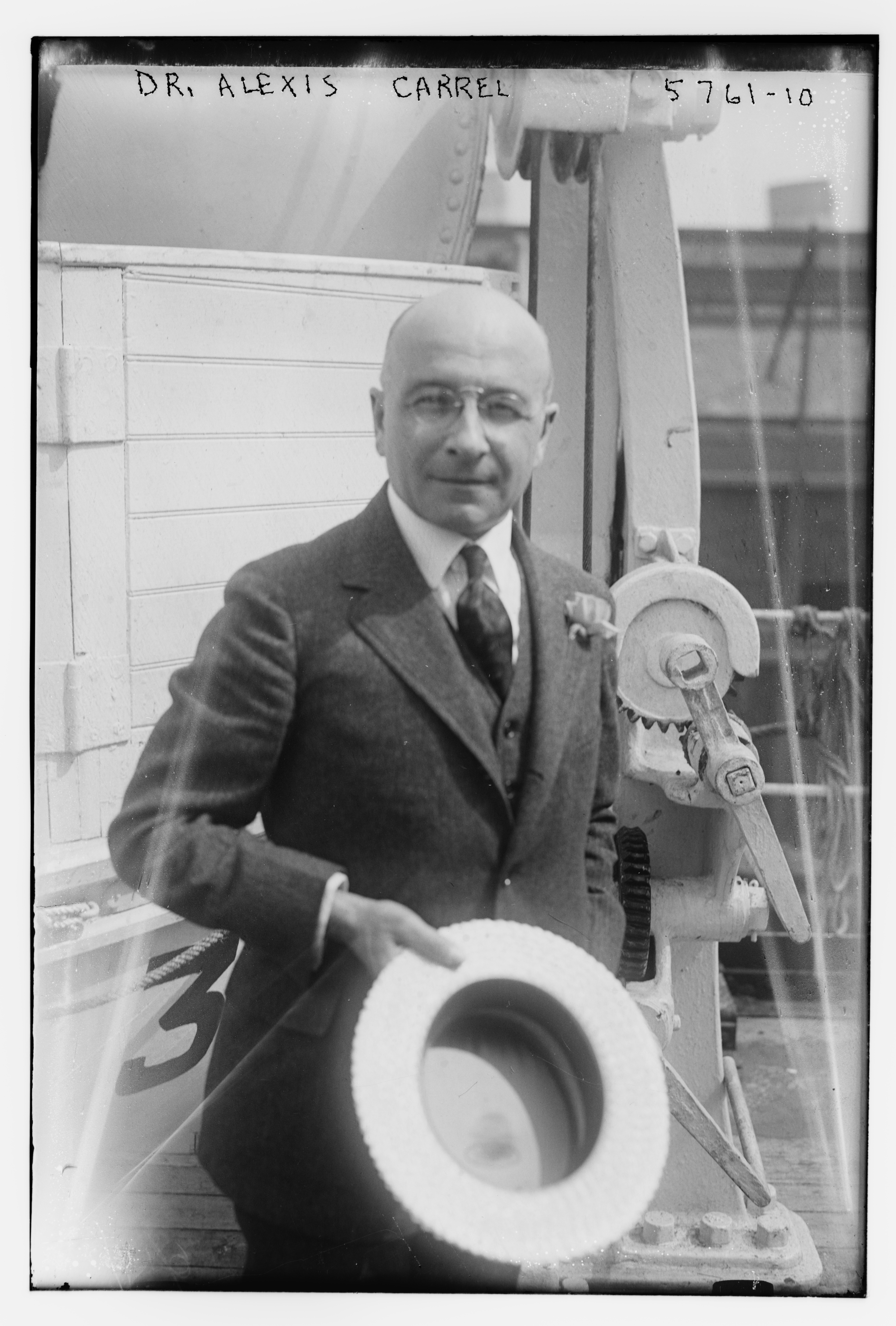
1902 CARREL, Alexis (1873 – 1944)
La technique opératoire des anastomoses vasculaires et la transplantation des viscères.
Carrel perfected the operation of arterial suture, end-to-end anastomosis of severed vessels with triple-threaded sutures. See also No. 3026.
GMN 2909 · https://historyofmedicine.com/id/4877
1903 JOSUÉ, Otto (1869 – 1923)
Athérôme aortique expérimental par injections répétées d’adrénaline dans les veines.
Experimental production of arteriosclerosis.
GMN 2910 · https://historyofmedicine.com/id/4879
1903 MÖNCKEBERG, Johann Georg (1877 – 1925)
Ueber die reine Mediaverkalkung der Extremitätenartien und ihr Verhalten zur Arteriosklerose.
“Mönckeberg’s sclerosis”. He described a form of medial sclerosis of the blood-vessels of the extremities. See also his later papers in Klin. Wschr.,1942, 52,1473-78, 1521-26.
GMN 2911 · https://historyofmedicine.com/id/4882
1907 MUNRO, John Cummings (1858 – 1910)
Ligation of the ductus arteriosus.
Munro was first to suggest the feasibility of ligation of a patent ductus arteriosus.
GMN 3025.3 · https://historyofmedicine.com/id/5492
1908 BUERGER, Leo (1879 – 1943)
Thrombo-angiitis obliterans; a study of the vascular lesions leading to presenile spontaneous gangrene.
Buerger’s important paper on thrombo-angiitis obliterans gives the first comprehensive report of the clinical and pathological aspects of the disease. Buerger gave the condition its present name; it is also known as “…
GMN 2912 · https://historyofmedicine.com/id/4884
1908 IGNATOVSKI, Alexander I. (1875 – 1955)
[In Russian:] Changes in parenchymatous organs and in the aorta of rabbits under the influence of animal protein.
Experimental atherosclerosis produced by a cholesterol-rich diet of whole milk, egg yolks, and meat. French translation as" Influence de la nourriture animale sur l'organisme des lapins," Arch. Méd. exp. Anat. path.,1…
GMN 2913 · https://historyofmedicine.com/id/4886
1912 ARRILLAGA, Francisco C.
Esclerosis secundaria de la arteria pulmonar y su cuadro clinico (Cardiacos negros).
A classical description of “Ayerza’s syndrome or disease” (cor pulmonale), to which Arrillaga named after Abel Ayerza, who first mentioned the disease in a lecture given in 1901. Corvisart mentioned the condition in 1…
GMN 2914 · https://historyofmedicine.com/id/4888
1913 ANICHKOV, Nikolai Nikolaevich (Anitschkow) (1885 – 1964); CHALATOV, Semen Sergeevich (1884 – 1951)
Ueber experimentelle Cholesterinsteatose und ihre Bedeutung für die Entstehung einiger pathologischer Prozesse.
Anichkov and Chalatov of St. Petersburg, Russia, discovered that atherosclerosis of large arteries is critically dependent on cholesterol. (Translated in Arteriosclerosis, 1983, 3, 178-182). The inflammatory nature of…
GMN 2915 · https://historyofmedicine.com/id/4890
1923 BERBERICH, Josef (1897 – ); HIRSCH, S
Die Röntgenographische Darstellung der Arterien und Venen am lebenden Menschen.
Arteriography. First angiogram of a living patient.
GMN 2916 · https://historyofmedicine.com/id/4895
1924 SPALTEHOLZ, Karl Werner (1861 – 1940)
Die Arterien der Herzwand.
GMN 856 · https://historyofmedicine.com/id/715
1924 BROOKS, Barney (1884 – 1952); JOSTES, F. A.
A clinical study of diseases of the circulation of the extremities; a description of a new method of examination.
Femoral arteriography.
GMN 2916.2 · https://historyofmedicine.com/id/4898
1925 AYERZA, Luis
Consideraciones sobre la denominación de “Enfermedad de Ayerza”.
In 1901 Argentinian physician Abel Ayerza (1861-1918) lectured on the syndrome of chronic cyanosis, dyspnoea, erythremia, and sclerosis of the pulmonary artery, “Ayerza’s disease” (cor pulmonale). He did not publish t…
GMN 2917 · https://historyofmedicine.com/id/4899
1925 –1926 KLOTZ, Oskar (1878 – 1936)
Concerning the pathology of some arterial diseases.
Klotz, eminent Canadian pathologist, is particularly remembered for his contributions to the subject of arteriosclerosis.
GMN 2918 · https://historyofmedicine.com/id/4902
1931 PEARSE, Herman Elwyn (1899 – ); WARREN, Stafford Leak (1896 – 1981)
The roentgenographic visualization of the arteries of the extremities in peripheral vascular disease.
GMN 2919.1 · https://historyofmedicine.com/id/4906
1933 WEISS, Soma (1898 – 1942); BAKER, James Porter (1913 – 1988)
The carotid sinus in health and disease: its rôle in the causation of fainting and convulsions.
The carotid sinus syndrome.
GMN 2921 · https://historyofmedicine.com/id/4910
1937 LERICHE, Henri Marie René (1879 – 1955); ET AL
Arterectomy.
Arterectomy in arterial thrombosis. With R. Fontaine and S. M. Dupertuis.
GMN 3038 · https://historyofmedicine.com/id/3450
1939 KEITH, Norman Macdonnell (1885 – 1976); WAGENER, Henry Patrick (1890 – 1961)
Diffuse arteriolar disease with hypertension and the associated retinal lesions.
The Keith–Wagener classification of fundal lesions. They classified essential hypertension into four groups.
GMN 2723 · https://historyofmedicine.com/id/4454
1940 LERICHE, Henri Marie René (1879 – 1955)
De la résection du carrefour aortico-iliaque avec double sympathectomie lombaire pour thrombose artéritique de l’aorte; le syndrome de l’oblitération termino-aortique par artérite.
Obliteration of the abdominal aorta.
GMN 3040 · https://historyofmedicine.com/id/3464
1940 LAUBRY, Charles (1872 – 1960); ET AL
Grosse pulmonaire. Petite aorte. Affection congénitale.
Idiopathic dilatation of the pulmonary artery reported. With D. Routier and R. Heim de Balsac.
GMN 2923 · https://historyofmedicine.com/id/4919
1942 RICH, Arnold Rice (1893 – 1968)
The rôle of hypersensitivity in periarteritis nodosa; as indicated by seven cases developing during serum sickness and sulfonamide therapy.
Rich considered hypersensitivity to be an important factor in the aetiology of periarteritis nodosa.
GMN 2924 · https://historyofmedicine.com/id/4922
1949 KUNLIN, Jean (1904 – 1991)
Le traitement de l’artérite oblitérante parla greffe veineuse.
Kunlin, an associate of R. Leriche, first reported the use of a bypass venous graft for femoropopliteal occlusive arterial disease.
GMN 2924.1 · https://historyofmedicine.com/id/4925
1952 VOORHEES, Arthur Jr. (1921 – 1992); ET AL
The use of tubes constructed from Vinyon “N” cloth in bridging arterial defects.
Introduction of plastic material to repair arterial defects. Voorhees later abandoned this material in favour of Dacron. With A. Jaretzki and A. W. Blakemore.
GMN 3047.3 · https://historyofmedicine.com/id/3556
1953 SELDINGER, Sven Ivar (1921 – 1998)
Catheter replacement of the needle in percutaneous angiography. A new technique.
Percutaneous arterial catheterization.
GMN 2924.2 · https://historyofmedicine.com/id/4927
1955 GOFMAN, John William (1918 – 2007); LINDGREN, Frank T. (1924 – 2007); ET AL
The serum lipoprotein transport system in health, metabolic disorders, atherosclerosis and coronary artery disease.
Gofman, a nuclear and physical chemist as well as a physician, has been called the "father of clinical lipidology." He discovered and described the major classes of plasma lipoproteins: intermediate-density lipoprotei…
GMN 7757 · https://historyofmedicine.com/id/9929
1958 SZILAGYI, D. Emerick (1910 – 2009); ET AL
Clinical use of an elastic Dacron prosthesis.
Arterial prosthesis. With L. C. France, R. F. Smith, and J. G. Whitcomb.
GMN 3047.12 · https://historyofmedicine.com/id/3607
1964 DOTTER, Charles Theodore (1920 – 1985); JUDKINS, Melvin Paul (1922 – 1985)
Transluminal treatment of arterioschlerotic obstruction; description of a new technic and a preliminary report of its application.
Percutaneous transluminal coronary angioplasty.
GMN 2924.4 · https://historyofmedicine.com/id/4931
1997 POSTEL-VINAY, Nicholas
A century of arterial hypertension: 1896-1996. Edited by Nicholas Postel-Vinay in collaboration with the International Society of Hypertension. Translated by Richard Edelstein and Christopher Coffin.
GMN 12367 · https://historyofmedicine.com/id/14591