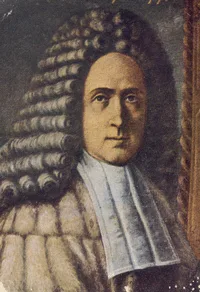
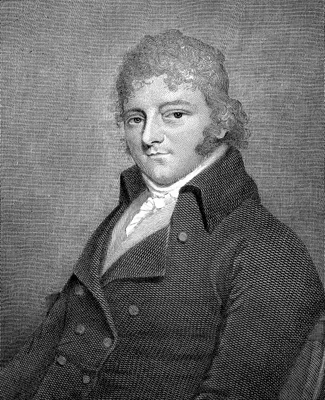
1759 HYDE, Edward, Earl of Clarendon (1609 – 1674)
The life of Edward, Earl of Clarendon: Lord High Chancellor of England and Chancellor of the University of Oxford. Containing, I. An Account of the chancellor's life from his birth to the restoration in 1660. II. A Continuation of the same, and of his history of the grand rebellion, from the restoration to his banishment in 1667. Written by himself. Printed from his original manuscripts, given to the University of Oxford by the Heirs of the late Earl of Clarendon. 3 vols.
From the description given by the Earl of Clarendon in his autobiography, on vol. 1, p. 16, his father, Henry Hyde, almost certainly suffered from, and died of, angina pectoris. If this is really so, it is the first r…
GMN 2884 · https://historyofmedicine.com/id/4294
1761 MORGAGNI, Giovanni Battista (1682 – 1771)
De sedibus, et causis morborum per anatomen indagatis libri quinque. 2 vols.
Morgagni was the founder of modern pathological anatomy. The work was completed in Morgagni’s 79th year and consists of a series of 70 letters reporting about 700 cases and necropsies. As best he could, he correlated …
GMN 2276 · https://historyofmedicine.com/id/2846
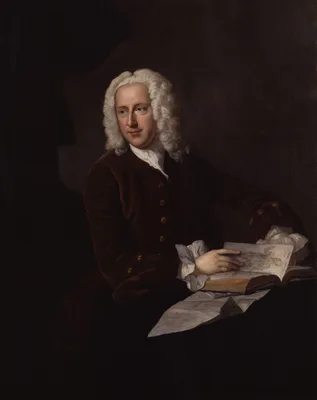
1762 NICHOLLS, Frank (1699 – 1778)
Observations concerning the body of his late Majesty, October 26, 1760.
Nicholls was the first to describe dissecting aneurysm of the aorta, the patient being King George II, to whom he was physician from 1753-60. Nicholls was also the first to give a correct description of the mode of pr…
GMN 2734.1 · https://historyofmedicine.com/id/4518
1768 ROUGNON DE MAGNY, Nicolas François (1727 – 1799)
Lettre de M. Rougnon à M. Lorry, touchant les causes de la mort de feu Monsieur Charles, ancien capitaine de cavalerie, arrivé à Besançon le 23 février 1768.
Osler, Allbutt, and several other authorities believe this to be the description of an authentic case of angina, thus preceding Heberden’s classic account. Other eminent authorities consider the patient to have suffer…
GMN 2886 · https://historyofmedicine.com/id/4305
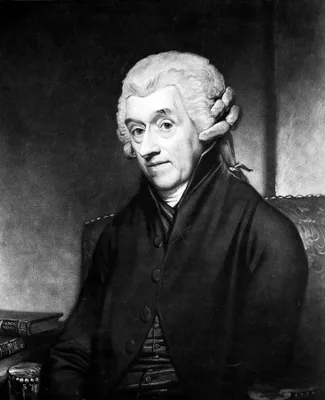
1772 HEBERDEN, William Sr. (1710 – 1801)
Some account of a disorder of the breast.
This classic description of angina pectoris is the substance of a paper read on July 21, 1768. Although descriptions of angina are to be found in the works of earlier writers, these mention only dyspnoea in their case…
GMN 2887 · https://historyofmedicine.com/id/4309
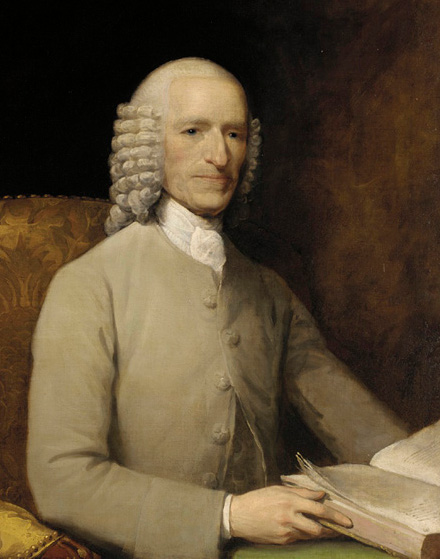
1776 FOTHERGILL, John (1712 – 1780)
Case of an angina pectoris, with remarks. Farther account of the angina pectoris.
Fothergill was "the first physician to suspect on clinical grounds that the heart might be affected in this condition [angina pectoris] and he was the first to record abnormalities of the myocardium and coronary arter…
GMN 11600 · https://historyofmedicine.com/id/13799
1781 FOTHERGILL, John (1712 – 1780); ELLIOT, John (1747 – 1787)
A complete collection of the medical and philosophical works of John Fothergill. With an account of his life; and occasional notes, by John Elliot.
Digital facsimile from Google Books at this link.
GMN 11601 · https://historyofmedicine.com/id/13800
1799 PARRY, Caleb Hillier (1755 – 1822)
An inquiry into the symptoms and causes of the syncope anginosa commonly called angina pectoris.
This was a paper read before the Gloucester Medical Society in 1788, but not published until 1799. Largely confirming the earlier work of Heberden on the condition, Parry stated his conclusion that disease of the coro…
GMN 2888 · https://historyofmedicine.com/id/4318
1802 HEBERDEN, William Sr. (1710 – 1801)
Commentarii de morborum historia et curatione.
Samuel Johnson called Heberden “the last of our learned physicians”. The above work included all his important papers, which had earned him his great reputation, and which are dealt with elsewhere in this database (se…
GMN 2207 · https://historyofmedicine.com/id/3677
1809 BURNS, Allan (1781 – 1813)
Observations on some of the most frequent and important diseases of the heart.
Burns described endocarditis and reported three cases of mitral stenosis. He recognized the thrill present in the latter condition and seems to have understood the mechanism of a cardiac murmur. He also described unil…
GMN 2738 · https://historyofmedicine.com/id/8654
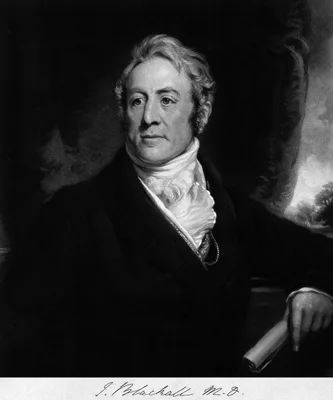
1813 BLACKALL, John (1771 – 1860)
Observations on the nature and cure of dropsies.
Blackall predated Bright in detecting albuminuria in association with edema. His book, of which the second edition is more important than the first, includes reports on cases of angina pectoris.
GMN 2209 · https://historyofmedicine.com/id/1673
1825 PARRY, Caleb Hillier (1755 – 1822); PARRY, Charles Henry (1779 – 1860)
Collections from the unpublished writings of the late Caleb Hillier Parry. 3 vols.
Includes Parry’s interesting description of eight cases of exophthalmic goitre, the first of which was observed in 1786, and his notes on four cases of angina pectoris. Parry's paper, "Enlargement of the thyroid gland…
GMN 2210 · https://historyofmedicine.com/id/1678
1859 MALMSTEN, Pehr Henrik (1811 – 1883); DÜBEN, Gustav Wilhelm Johann (1822 – 1892)
Fall af ruptura cordis.
An important account of myocardial infarction, with a histological finding of myocardial necrosis. Abbreviated translation, in German, in Acta med. scand., 1930, 73, 448-50.
GMN 2761.1 · https://historyofmedicine.com/id/4683
1867 BRUNTON, Sir Thomas Lauder (1844 – 1916)
On the use of nitrite of amyl in angina pectoris.
Lauder Brunton was responsible for the introduction of amyl nitrite for the alleviation of angina. Reprinted in F. A. Willius & T. E. Keys: Cardiac classics, 1941, pp. 561-64.
GMN 2890 · https://historyofmedicine.com/id/4329
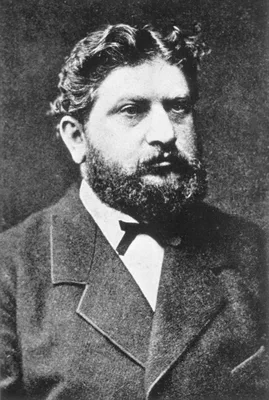
1867 NOTHNAGEL, Carl Wilhelm Hermann (1841 – 1905)
Angina pectoris vasomotoria.
Nothnagel, himself a victim of angina, described the vasomotor form of the disease.
GMN 2891 · https://historyofmedicine.com/id/4335
1872 COHNHEIM, Julius Friedrich (1839 – 1884)
Untersuchungen über die embolischen Processe.
Cohnheim developed the doctrine of infarction as a result of occlusion of terminal arteries. He explained the haemorrhagic nature of certain infarcts on the basis of a reflux flow and diapedesis through the altered ca…
GMN 3010 · https://historyofmedicine.com/id/5370
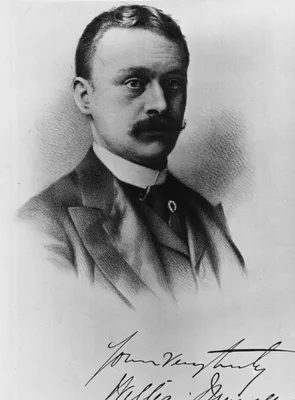
1879 MURRELL, William (1853 – 1912)
Nitro-glycerine as a remedy for angina pectoris.
Murrell introduced trinitrin (nitroglycerin, glyceryl trinitrate) in the treatment of angina.
GMN 2892 · https://historyofmedicine.com/id/4338
1879 BURNETT, James Compton (1840 – 1901)
Gold as a remedy in disease, notably in some forms of organic heart disease, angina pectoris, melancholy, tedium vitae, scrofula, syphilis, skin disease, & as an antidote to the ill effects of mercury.
Burnett, a homeopath, provided an excellent summary of the history of gold as it was used in medicine, with extensive references to the historical literature. Digital facsimile from the Hathi Trust at this link.
GMN 8852 · https://historyofmedicine.com/id/11030
1880 WEIGERT, Carl (1845 – 1904)
Ueber die pathologische Gerinnungs-Vorgänge.
First description (p. 106) of myocardial infarction. Leibowitz called this "the most significant contribution by a pathologist to the history of coronary heart disease." He also wrote, "This work not only provides a g…
GMN 2783 · https://historyofmedicine.com/id/3379
1884 LEYDEN, Ernst Viktor von (1832 – 1910)
Ueber die Sclerose der coronar-Arterien und die davon abhängigen Krankheitszustände.
A comprehensive account of the schlerosis of the coronary arteries and the morbid states arising from them, including a historical review of the problems.
GMN 2907.1 · https://historyofmedicine.com/id/4867
1885 BRUNTON, Sir Thomas Lauder (1844 – 1916)
A text-book of pharmacology, therapeutics and materia medica.
Brunton was physician to St. Bartholomew’s Hospital and an eminent pharmacologist. He is notable for his introduction of amyl nitrite in the treatment of angina pectoris and for a vast amount of other work concerning …
GMN 1881 · https://historyofmedicine.com/id/2519
1893 PORTER, William Townsend (1862 – 1949)
On the results of ligation of the coronary arteries.
“Following coronary ligation Porter noted that the procedure frequently resulted in fibrillary contractions of the heart and sudden death. However, death did not always occur and this led him to conclude that Cohnheim…
GMN 786 · https://historyofmedicine.com/id/1772
1895 ASKANAZY, S
Klinisches über Diuretin.
In 1895 Askanazy proposed diuretin as a remedy for anginal pain.
GMN 2893 · https://historyofmedicine.com/id/4365
1896 DOCK, George (1860 – 1951)
Notes on the coronary arteries.
Dock recorded one of the earliest diagnoses of myocardial infaction in a living patient: "The diagnosis was mymalacia folling coronary sclerosis with secondary pericarditis. This was based on the history of increasing…
GMN 11584 · https://historyofmedicine.com/id/13783
1897 OSLER, Sir William (1849 – 1919)
Lectures on angina pectoris and allied states.
"This monograph, based on seven lectures Osler delivered at Johns Hopkins, is his longest publication dealing with heart disease. He discusses the history of the recognition of angina, the pathophysiology of coronary …
GMN 11651 · https://historyofmedicine.com/id/13852
1899 –1903 HUCHARD, Henri (1844 – 1910)
Traité cliniques des maladies du coeur et de l’aorte. 3 vols.
Third and best edition. "Huchard, physician to the Necker Hospital was a foremost teacher in Paris at the end of the 19th century, and a great authority on angina pectoris and arteriosclerosis. He was a powerful advoc…
GMN 2811 · https://historyofmedicine.com/id/3470
1906 EHRLICH, Paul (1854 – 1915); WEIGERT, Carl (1845 – 1904); EDINGER, Ludwig (1855 – 1918); RIEDER, Robert
Carl Weigert Gesammelte Abhandlungen unter Mitwirkung von Ludwig Edinger und Paul Ehrlich. Herausgegeben und Eingeleitet von Robert Rieder. 2 vols.
GMN 11731 · https://historyofmedicine.com/id/13932
1913 ANICHKOV, Nikolai Nikolaevich (Anitschkow) (1885 – 1964); CHALATOV, Semen Sergeevich (1884 – 1951)
Ueber experimentelle Cholesterinsteatose und ihre Bedeutung für die Entstehung einiger pathologischer Prozesse.
Anichkov and Chalatov of St. Petersburg, Russia, discovered that atherosclerosis of large arteries is critically dependent on cholesterol. (Translated in Arteriosclerosis, 1983, 3, 178-182). The inflammatory nature of…
GMN 2915 · https://historyofmedicine.com/id/4890
1915 ALLBUTT, Sir Thomas Clifford (1836 – 1925)
Diseases of the arteries, including angina pectoris. 2 vols.
Includes his suggestion of the aortic genesis of angina pectoris, and (vol. 2, p. 368) his mechanical theory of cardiac pain in coronary occlusion.
GMN 2894 · https://historyofmedicine.com/id/4368
1918 SMITH, Fred M. (1888 – 1946)
The ligation of coronary arteries with electrocardiographic study.
GMN 852 · https://historyofmedicine.com/id/667
1918 BOUSFIELD, Guy William John (1893 – 1974)
Angina pectoris: changes in electrocardiogram during paroxysm.
First electrocardiogram recorded (1917) from a patient with angina pectoris.
GMN 2894.1 · https://historyofmedicine.com/id/4370
1919 HERRICK, James Bryan (1861 – 1954)
Thrombosis of the coronary arteries.
"...includes electrocardiographic tracings of a 42-year-old physician who died "after coronary obstructive symptoms" and of a dog following experimental ligation of a coronary artery. This finding "led Herrick to conc…
GMN 12248 · https://historyofmedicine.com/id/14463
1920 PARDEE, Harold Ensign Bennett (1886 – 1972)
An electrocardiographic sign of coronary artery obstruction.
First description of the typical changes in the electrocardiogram in coronary thrombosis.
GMN 2852 · https://historyofmedicine.com/id/3633
1920 JONNESCO, Thomas (Thoma Ionescu) (1860 – 1926)
Angine de poitrine guérie par la résection du sympathique cervicothoracique.
Cervical sympathectomy for the treatment of angina pectoris was first carried out by Jonnesco in 1916.
GMN 2895 · https://historyofmedicine.com/id/4376
1922 LAEWEN, Arthur (1876 – 1958)
Paravertebrale Novokaininjektionen zur Differentialdiagnose intra-abdomineller Erkrankungen.
First paravertebral injection for the treatment of angina pectoris.
GMN 2896 · https://historyofmedicine.com/id/4379
1923 MACKENZIE, Sir James (1853 – 1925)
Angina pectoris.
A classic description of angina by “the beloved physician”, one of the greatest of all cardiologists. Mackenzie considered the disease to be due to cardiac failure.
GMN 2897 · https://historyofmedicine.com/id/4383
1933 BLUMGART, Hermann Ludwig (1895 – 1977); LEVINE, Samuel Albert (1891 – 1966); ET AL
Congestive heart failure and angina pectoris: The therapeutic effect of thyroidectomy on patients without clinical or pathologic evidence of thyroid toxicity.
Thyroidectomy for congestive heart failure and angina pectoris. With D. D. Berlin.
GMN 2899 · https://historyofmedicine.com/id/4387
1933 HYMAN, Albert S. (1893 – 1972); PARSONNET, Aaron E. (1889 – 1951)
The failing heart of middle life: The myocardiosis syndrome, coronary thrombosis, and angina pectoris with a section upon the medico-legal aspects of sudden death from heart disease.
"This pioneering monograph on the pathophysiology of coronary artery disease includes a detailed discussion of the recently recognized electrocardiographic features of myocardial infarction. Hyman invented a [external…
GMN 11668 · https://historyofmedicine.com/id/13869
1936 O’SHAUGHNESSY, Laurence Frederick (1900 – 1940)
An experimental method of providing a collateral circulation to the heart.
By attaching a pedicled omental graft to the surface of the heart (cardio-omentopexy), thus providing a collateral circulation to that organ, O’Shaughnessy made an important advance in the treatment of angina and card…
GMN 3037 · https://historyofmedicine.com/id/3447
1937 ROLLESTON, Sir Humphrey Davy (1862 – 1944)
The history of angina pectoris.
GMN 3157 · https://historyofmedicine.com/id/4093
1945 RAAB, Wilhelm (1895 – 1970)
Thiouracil treatment of angina pectoris; rationale and results.
GMN 2900 · https://historyofmedicine.com/id/4847
1948 WRIGHT, Irving Sherwood (1901 – 1997); ET AL
Report of the Committee for the Evaluation of Anticoagulants in the Treatment of Coronary Thrombosis with Myocardial Infarction.
With C. D. Marple and D. F. Beck.
GMN 3020 · https://historyofmedicine.com/id/5425
1955 LADUE, John Samuel (1911 – 1980); WROBLEWSKI, Felix (1921 – 2013)
The significance of the serum glutamic oxalacetic transaminase activity following acute myocardial infarction.
Diagnostic test for myocardial infarction.
GMN 2883.1 · https://historyofmedicine.com/id/4246
1955 GOFMAN, John William (1918 – 2007); LINDGREN, Frank T. (1924 – 2007); ET AL
The serum lipoprotein transport system in health, metabolic disorders, atherosclerosis and coronary artery disease.
Gofman, a nuclear and physical chemist as well as a physician, has been called the "father of clinical lipidology." He discovered and described the major classes of plasma lipoproteins: intermediate-density lipoprotei…
GMN 7757 · https://historyofmedicine.com/id/9929
1959 COOLEY, Denton Arthur (1920 – 2016); ET AL
Ventricular aneurysm following myocardial infarction: Results of surgical treatment.
Cardiopulmonary bypass and open excision of the aneurysm. With W.S. Henly, K.H. Amad, & D.W. Chapman.
GMN 3047.13 · https://historyofmedicine.com/id/3611
1959 PRINZMETAL, Myron (1908 – 1987); KENNAMER, Rexford (1920 – 2013); BOR, Naci (1928 – ); ET AL
Angina pectoris.I. A variant form of angina pectoris. Preliminary report.
Prinzmetal angina. "Dr. Prinzmetal and his collaborators focus upon an interesting variant of angina pectoris which appears to be associated with temporary, recurrent spasm of a partially occluded coronary artery. In …
GMN 12277 · https://historyofmedicine.com/id/14496
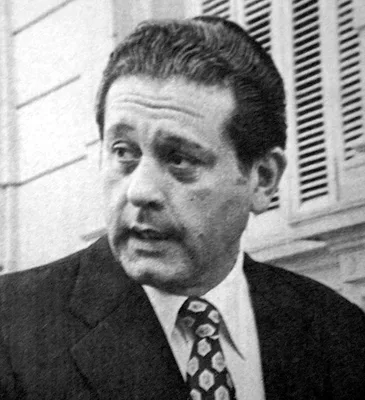
1968 FAVALORO, René Gerónimo (1923 – 2000)
Saphenous vein autograft replacement of severe segmental coronary artery occlusion: Operative technique.
First report on bypass of a human coronary artery. See No. 3047.25. Two years later Favoloro published a monograph on the topic: Surgical treatment of coronary arteriosclerosis (Baltimore, 1970). Digital facsimile fro…
GMN 3047.21 · https://historyofmedicine.com/id/3640
1968 CHAPMAN, Carelton B. (1915 – 2000); SALTIN, Bengt (1935 – 2014); BLOMQVIST, Gunnar; MITCHELL, Jere H.; JOHNSON, R. L. Jr.; WILDENTHAL, Kern
Response to exercise after bed rest and after training.
Order of authorship in the original publication: Saltin, Blomqvist, Mitchell, Johnson, Wildenthal, Chapman. Chapman planned the Dallas Bed Rest and Training Study, which defined the degree to which the level of habitu…
GMN 12282 · https://historyofmedicine.com/id/14503
1974 KOBAYASHI, Noboru (1927 – 2019); MATSUYA, Shoji; YANAGISAWA, Masayoshi
Myocardial infarction due to coronary thromboarteritis following acute febrile mucocutaneous lymph node syndrome (MLNS) in an infant.
The authors reported the case of a 6 month old baby who died from a myocardiac infarction after "recovering" from Kawasaki disease. Autopsy showed that the baby died from classical coronary artery thrombosis accompani…
GMN 12718 · https://historyofmedicine.com/id/14964
1979 SENNING, Åke (1915 – 2000); GRÜNTZIG, Andreas Roland (1939 – 1985); SIEGENTHALER, Walter E. (1923 – 2010)
Nonoperative dilatation of coronary-artery stenosis: Percutaneous transluminal coronary angioplasty.
Grüntzig developed the first successful balloon angioplasty for expanding lumens of narrowed arteries. Abstract "In percutaneous transluminal coronary angioplasty, a catheter system is introduced through a systemic ar…
GMN 12239 · https://historyofmedicine.com/id/14453