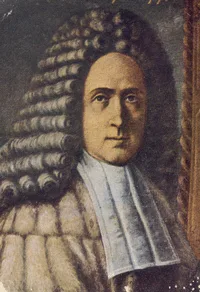
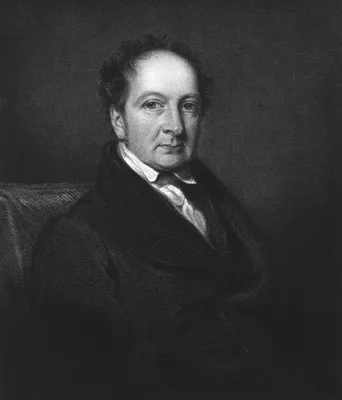
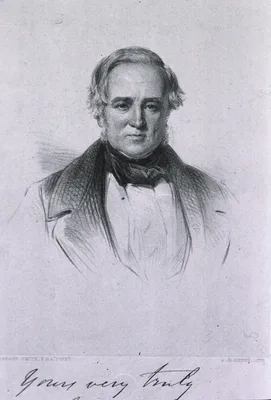
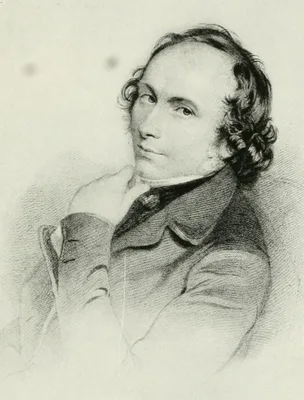
1603 SASSONIA, Ercole [HERCULES DE SAXONIA] (1551 – 1607)
De pulsibus libri tres nunc primum in lucem editi.
Sassonia emphasized the importance of the pulse in diagnosis, and provided the first recorded description of heart block. Pages 57-61 contain graphic representations of the pulse using dashes of unequal length. Digita…
GMN 2726 · https://historyofmedicine.com/id/4465
1691 GERBEC, Marko [GERZEBIUS] (1658 – 1718)
Pulsus mira inconstantia.
First reported case of temporary cardiac arrest with syncopal attacks, the syndrome to which the names of Stokes (No. 2756) and Adams (No. 2745) were later attached.
GMN 2728 · https://historyofmedicine.com/id/4482
1761 MORGAGNI, Giovanni Battista (1682 – 1771)
De sedibus, et causis morborum per anatomen indagatis libri quinque. 2 vols.
Morgagni was the founder of modern pathological anatomy. The work was completed in Morgagni’s 79th year and consists of a series of 70 letters reporting about 700 cases and necropsies. As best he could, he correlated …
GMN 2276 · https://historyofmedicine.com/id/2846
1793 SPENS, Thomas (1764 – 1842)
History of a case in which there took place a remarkable slowness of the pulse.
Morgagni described a case of “epilepsy with slow pulse” (see No. 2734), but Adams has been given the credit for reporting the first clear case of heart block (No. 2745). There is no doubt that Spens reported such a ca…
GMN 2735 · https://historyofmedicine.com/id/4539
1818 CHEYNE, John (1777 – 1836)
A case of apoplexy in which the fleshy part of the heart was converted into fat.
First accurate description of the condition which later became known as “Cheyne–Stokes respiration.” Reprinted in F. A. Willius & T. E. Keys: Cardiac classics, 1941, pp. 317-20.
GMN 2743 · https://historyofmedicine.com/id/4594
1827 ADAMS, Robert (1791 – 1875)
Cases of diseases of the heart, accompanied by pathological observations.
On p. 396 commences a classic account of heart block with syncopal attacks, the first complete description of this condition. Following the paper by Stokes (No. 2756) the eponym “Stokes–Adams syndrome” was employed to…
GMN 2745 · https://historyofmedicine.com/id/4604
1846 STOKES, William (1804 – 1878)
Observations on some cases of permanently slow pulse.
Stokes’s celebrated account of heart block with syncopal attacks – the Stokes–Adams syndrome (see also No. 2745). Stokes was most interested in the diagnostic value of this condition. The paper is reprinted in Med. Cl…
GMN 2756 · https://historyofmedicine.com/id/4658
1850 HOFFA, Moritz (1816 – 1895)
Einige neue Versuche über Herzbewegung.
Experimental ventricular fibrillation.
GMN 810 · https://historyofmedicine.com/id/199
1863 MAREY, Étienne Jules (1830 – 1904)
Physiologie médicale de la circulation du sang basée sur l'étude graphique des mouvements du coeur et du pouls artériel avec application aux maladies du l'appareil circulatoire.
Marey first recorded atrial fibrillation in this work work in which he used pulse tracings to establish the interelationship of heart rate and blood pressure. The work also includes the first detailed description of t…
GMN 11690 · https://historyofmedicine.com/id/13891
1872 TRAUBE, Ludwig (1818 – 1876)
Ein Fall von Pulsus bigeminus nebst Bemerkungen über die Leberschwellungen bei Klappenfehlern und über acute Leberatrophie.
First clear description of pulsus bigeminus. Translated in Willius & Keys, Cardiac classics, 1941, pp. 590-99.
GMN 2775 · https://historyofmedicine.com/id/4724
1875 GALABIN, Alfred Lewis (1843 – 1913)
On the interpretation of cardiographic tracings, and the evidence which they afford as to the causation of the murmurs attendant upon mitral stenosis.
"The first case of heart block in a human documented graphically was reported in 1875 by British physician Alfred Galabin. He published an apical pulse tracing from a 34-year-old man with a two-year history of lighthe…
GMN 12235 · https://historyofmedicine.com/id/14449
1876 POTAIN, Pierre Charles Édouard (1825 – 1901)
Du rhythme cardiaque appelé bruit de galop, de son mécanisme et de sa valeur séméiologique.
Analysis of “gallop rhythm.” Partial English translation in No. 2241 and No. 3160.1.
GMN 2777 · https://historyofmedicine.com/id/4733
1882 GASKELL, Walter Holbrook (1847 – 1914)
On the rhythm of the heart of the frog, and on the nature of the action of the vagus nerve.
Croonian Lectures, 1881. Gaskell’s classical memoir on the muscles and nerves of the heart included a description of “Gaskell’s nerves”, the accelerator nerves of the heart. He showed that the motor impulses from the …
GMN 829 · https://historyofmedicine.com/id/309
1887 MACWILLIAM, John Alexander (1857 – 1937)
Fibrillar contraction of the heart.
MacWilliam discovered that fibrillar contraction of the heart is due to “a rapid succession of incoordinated peristaltic contractions.” He clearly described auricular and ventricular fibrillation, and showed that vent…
GMN 2791 · https://historyofmedicine.com/id/3398
1889 BOUVERET, Léon (1851 – 1929)
De la tachycardie essentielle paroxystique.
Bouveret introduced the term “Paroxysmal tachycardia”. Partial English translation in No. 2241.
GMN 2795 · https://historyofmedicine.com/id/3411
1889 HUCHARD, Henri (1844 – 1910)
Maladies du coeur et des vaisseaux.
In his important monograph on disorders of the cardiovascular system, Huchard was apparently the first to use the designation “Stokes–Adams disease”.
GMN 2796 · https://historyofmedicine.com/id/3413
1889 MACWILLIAM, John Alexander (1857 – 1937)
Cardiac failure and sudden death from ventricular fibrillation.
First description of a case of death from ventricular fibrillation.
GMN 2797 · https://historyofmedicine.com/id/3417
1889 MACWILLIAM, John Alexander (1857 – 1937)
Electrical stimulation of the heart in man.
MacWilliams described experiments in which application of an electrical impulse to the human heart in asystole caused a ventricular contraction, and that a heart rhythm of 60–70 beats per minute could be evoked by imp…
GMN 7996 · https://historyofmedicine.com/id/10172
1899 PRÉVOST, Jean-Louis (1790 – 1850); BATTELLI, Federico
La mort par les décharges électriques.
The first defibrillation. “Prévost and Battelli produced ventricular fibrillation in dogs by shocking with weak currents. They then shocked the fibrillating heart with a stronger current—the second, or counter, shock.…
GMN 838.1 · https://historyofmedicine.com/id/606
1899 WENCKEBACH, Karel Frederik (1864 – 1940)
Zur Analyse des unregelmässigen Pulses.
“Wenckebach phenomenon”, a form of arrhythmia.
GMN 2809.1 · https://historyofmedicine.com/id/3457
1903 WENCKEBACH, Karel Frederik (1864 – 1940)
Die Arrhythmie, als Austruck bestimmter Funktionsstörungen der Herzens: Eine physiologische-klinische Studie.
This monograph contains Wenckebach's obserations on the physiological bases of arrhythmias, along with accounts of their clinical manifestations. Wenckbach was the first to describe extracystoles in man, demonstrating…
GMN 11732 · https://historyofmedicine.com/id/13933
1903 HERING, Heinrich Ewald (1866 – 1948)
Analyse des Pulsus irregularis perpetuus.
Later called auricular fibrillation.
GMN 12247 · https://historyofmedicine.com/id/14462
1905 MACKENZIE, Sir James (1853 – 1925)
New methods of studying affections of the heart.
Mackenzie established the remarkable action of digitalis in auricular fibrillation.
GMN 2819 · https://historyofmedicine.com/id/3501
1905 –1906 RITCHIE, William Thomas (1873 – 1945)
Complete heart-block, with dissociation of the action of the auricles and ventricles.
Auricular flutter in man first recognized.
GMN 2821 · https://historyofmedicine.com/id/3513
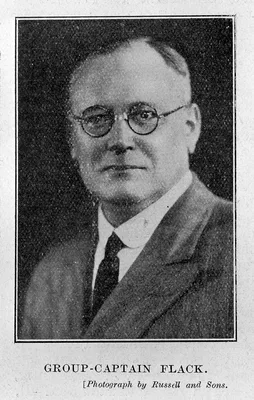
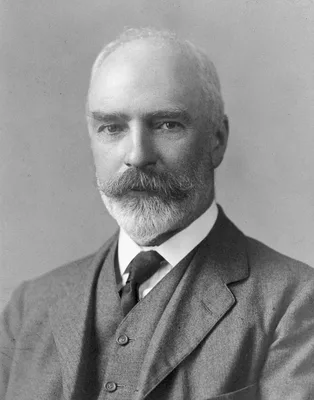
1906 –1907 KEITH, Sir Arthur (1866 – 1955); FLACK, Martin William (1882 – 1931)
The form and nature of the muscular connections between the primary divisions of the vertebrate heart.
Discovery of the sinoatrial node, the “pacemaker of the heart”. Reprinted in Willius & Keys, Cardiac classics, 1941, pp. 747-62.
GMN 844 · https://historyofmedicine.com/id/627
1906 CUSHNY, Arthur Robertson (1866 – 1926); EDMUNDS, Charles Wallis (1873 – 1941)
Paroxysmal irregularity of the heart and auricular fibrillation.
First recognition of auricular fibrillation in man. Cushny and Edmunds had a case under their care in 1901. Hering described the condition in man in Prag. med. Wschr.,1903, 28, 377. The Cushing & Edmunds paper was als…
GMN 2822 · https://historyofmedicine.com/id/3523
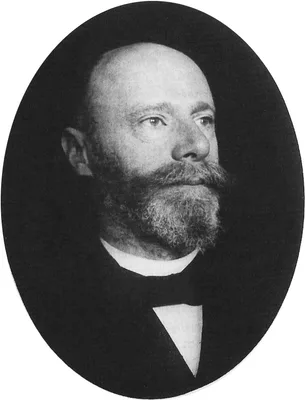
1906 EINTHOVEN, Willem (1860 – 1927)
Het telecardiogram.
This paper includes the first published ECG tracing of atrial fibrillation. See W. Bruce Fye, "Tracing atrial fibrillation - 100 years," New Eng. J. Med., 355 (2006) 1412.
GMN 11589 · https://historyofmedicine.com/id/13788
1908 MACKENZIE, Sir James (1853 – 1925)
Diseases of the heart.
Chapter 30 of the third edition (1914) includes Mackenzie’s classic description of the clinical picture of “nodal rhythm” (auricular fibrillation). Reprinted in Willius & Keys, Cardiac classics, 1941, pp. 769-93.
GMN 2826 · https://historyofmedicine.com/id/3535
1909 LEWIS, Sir Thomas (1881 – 1945)
Auricular fibrillation; a common clinical condition.
First description of auricular fibrillation as a cause of clinical perpetual arrhythmia. See also the paper in Heart, London, 1909-10, 1,306-72.
GMN 2830 · https://historyofmedicine.com/id/3548
1909 ROTHBERGER, Carl Julius (1871 – 1945); WINTERBERG, Heinrich (1867 – 1929)
Vorhofflimmern und Arhythmia perpetua.
Independently of Lewis (No. 2830) these workers claimed auricular fibrillation to be the cause of perpetual arrhythmia.
GMN 2831 · https://historyofmedicine.com/id/3550
1910 EPPINGER, Hans (1879 – 1946); STOERK, Oscar (1870 – 1926)
Zur Klinik des Elektrokardiogramms.
First clinical and pathological description of bundle-branch block.
GMN 2832 · https://historyofmedicine.com/id/3554
1910 RITCHIE, William Thomas (1873 – 1945); JOLLY, William Adam (1878 – 1939)
Auricular flutter and fibrillation.
Auricular flutter first described.
GMN 2833 · https://historyofmedicine.com/id/3557
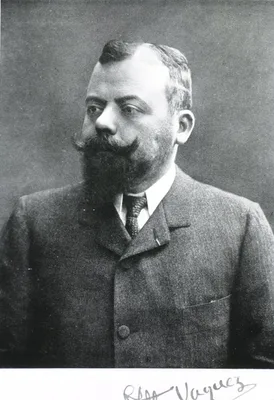
1911 VAQUEZ, Louis Henri (1860 – 1936)
Les arythmies.
GMN 2837 · https://historyofmedicine.com/id/3572
1914 RITCHIE, William Thomas (1873 – 1945)
Auricular flutter.
GMN 2843 · https://historyofmedicine.com/id/3599
1914 WENCKEBACH, Karel Frederik (1864 – 1940)
Die unregelmässige Herztätigkeit und ihre klinische Bedeutung.
Wenckebach was the first to demonstrate (pp. 173-75) the value of quinine (“Wenckebach’s pills”) in the treatment of paroxysmal fibrillation. The same work contains a number of excellent descriptions of various forms …
GMN 2844 · https://historyofmedicine.com/id/3605
1918 FREY, Walter (1884 – 1972)
Ueber Vorhofflimmern beim Menschen und seine Beseitigung durch Chinidin.
Following Wenckebach’s discovery of the efficacy of quinine in the restoration of normal rhythm in auricular fibrillation. Frey showed that quinidine was the most effective of the cinchona alkaloids in this respect.
GMN 2848 · https://historyofmedicine.com/id/3617
1930 WOLFF, Louis (1898 – 1972); PARKINSON, Sir John (1885 – 1976); WHITE, Paul Dudley (1886 – 1973)
Bundle-branch block with short P-R interval in healthy young people prone to paroxysmal tachycardia.
Wolff–Parkinson–White syndrome, the best-known of the “pre-excitation syndromes”.
GMN 2860 · https://historyofmedicine.com/id/3660
1947 BECK, Claude Schaeffer (1894 – 1971); PRITCHARD, Walter Herbert (1910 – 1982); ET AL
Ventricular fibrillation of long duration abolished by electric shock.
The first successful defibrillation of a surgical patient, with the chest opened, and the paddles applied directly to the heart. With H.S. Feil.
GMN 2878.1 · https://historyofmedicine.com/id/4214
1950 PRINZMETAL, Myron (1908 – 1987); ET AL
Mechanism of the auricular arrythmias.
With E. Corday, I. C. Brill, A. L. Seller, R. W. Oblath, W. A. Flieg, and H. E. Kruger.
GMN 2881 · https://historyofmedicine.com/id/4228
1952 ZOLL, Paul Maurice (1911 – 1999)
Resuscitation of the heart in ventricular standstill by external electric stimulation.
External cardiac pacemaker. "The medical world took notice when Zoll announced in 1952 that he had successfully kept a patient alive through numerous episodes of ventricular standstill using a bedside device that deli…
GMN 2883 · https://historyofmedicine.com/id/4237
1958 LILLEHEI, Clarence Walton (1918 – 1999); WEIRICH, William L. (1924 – 2014); GOTT, Vincent Lynn (1927 – )
The treatment of complete heart block by the combined use of a myocardial electrode and artificial pacemaker.
Order of authorship in the original publication: Weirich, Gott, Lillehei. Attachment of a wire to the ventricular epicardium, and bringing it out percutaneously to an external pacemaker. This was a key development lea…
GMN 3047.11 · https://historyofmedicine.com/id/3603
1959 FURMAN, Seymour (1931 – 2006); ROBINSON, George (1922 – )
The use of intracardiac pacemaker in the correction of total heart block.
First use of pacemaker for Stokes–Adams syndrome, using dogs as subjects. External power source. See also Furman and Scawadel, John B., "An intracardiac pacemaker for Stokes–Adams seizures ," New Engl. J. Med.,1959, 2…
GMN 3047.10 · https://historyofmedicine.com/id/3591
1959 HUNTER, Samuel Wynne (1921 – 2008); ET AL
A bipolar myocardial electrode for complete heart block.
With N. A. Roth, D. Bernardez, and J. L. Noble.
GMN 2883.3 · https://historyofmedicine.com/id/4261
1960 CHARDACK, William M. (1914 – 2006); GREATBATCH, Wilson (1919 – 2011); GAGE, Andrew A.
A transistorized, self-contained, implantable pacemaker for the long-term correction of complete heart block.
The first fully-implantable pacemaker.
GMN 3047.15 · https://historyofmedicine.com/id/3618
1960 ELMQVIST, Rune (1906 – 1996); SENNING, Åke (1915 – 2000)
An implantable pacemaker in the heart. IN: Medical electronics: Proceedings of the Second International Conference on Medical Electronics, Paris 24-27 June 1959. Edited by C. N. Smyth.
"This is the original report of the first fully implantable pacemaker that was designed by Elmqvist and surgically inserted under the skin of a patient in October 1958. It is an abstract of their presentation that sig…
GMN 11590 · https://historyofmedicine.com/id/13789
1961 KOUWENHOVEN, William Bennett (1886 – 1975); JUDE, James R. (1928 – 2015); KNICKERBOCKER, G. Guy (1932 – 2022)
A new approach to cardiac resuscitation.
"The pioneers of modern cardiopulmonary resucitation describe their breakthrough technique of combining mouth-to-mouth ventilation, closed chest compressions, and transthoracic defibrillation to treat cardiac arrest" …
GMN 11671 · https://historyofmedicine.com/id/13872
1962 LOWN, Bernard (1921 – ); AMARASINGHAM, Raghavan; NEUMAN, Jose
New method for terminating cardiac arrythmias; use of synchronized capacitor discharge.
Use of transthoracic direct current countershock of very short duration to avoid the vulnerable period in the cardiac cycle.
GMN 2883.5 · https://historyofmedicine.com/id/4272
1963 HARKEN, Dwight Emary (1910 – 1993); LOWN, Bernard (1921 – ); ABE, Tadaaki
"Cardioversion" of atrial fibrillation: A report on the treatment of 65 episodes in 50 patients.
"In 1959 Bernard Lown commenced research in his animal laboratory in collaboration with engineer Barouh Berkovits into a technique which involved charging of a bank of capacitors to approximately 1000 volts with an en…
GMN 12259 · https://historyofmedicine.com/id/14475
1964 CRANEFIELD, Paul Frederick (1925 – 2003); HOFFMAN, Brian Francis (1925 – 2013)
The physiological basis of cardiac arrhythmias.
GMN 2883.7 · https://historyofmedicine.com/id/4281
1967 HARKEN, Dwight Emary (1910 – 1993); MATLOFF, Jack Morton (1933 – 2015); BERKOVITS, Barouh (1926 – 2012); ET AL
Clinical experiences with a new implantable demand pacemaker.
Harken and colleagues reported "the first clinical use of an implantable noncompetitive pacer" (Jeffrey, Machines in Our Hearts. Baltimore, 2001, 134.) Berkovits, an engineer working for Medtronic, was an inventor of …
GMN 12242 · https://historyofmedicine.com/id/14456