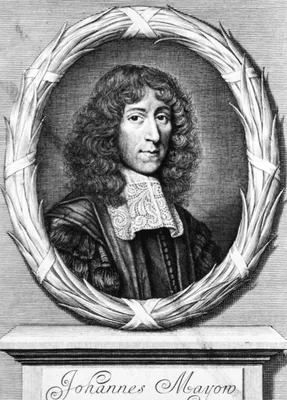
1674 MAYOW, John (1643 – 1679)
Tractatus quinque medico-physici.
Mayow was the first to locate the seat of animal heat in the muscles; he discovered the double articulation of the ribs with the spine and came near to discovering oxygen in his suggestion that the object of breathing…
GMN 2726.2 · https://historyofmedicine.com/id/366
1705 VIEUSSENS, Raymond (1641 – 1715)
Novum vasorum corporis humani systema.
Vieussens was among the first to describe the morbid changes in mitral stenosis, the throbbing pulse in aortic insufficiency, and the first correctly to describe the structure of the left ventricle, the course of the …
GMN 2729 · https://historyofmedicine.com/id/4484
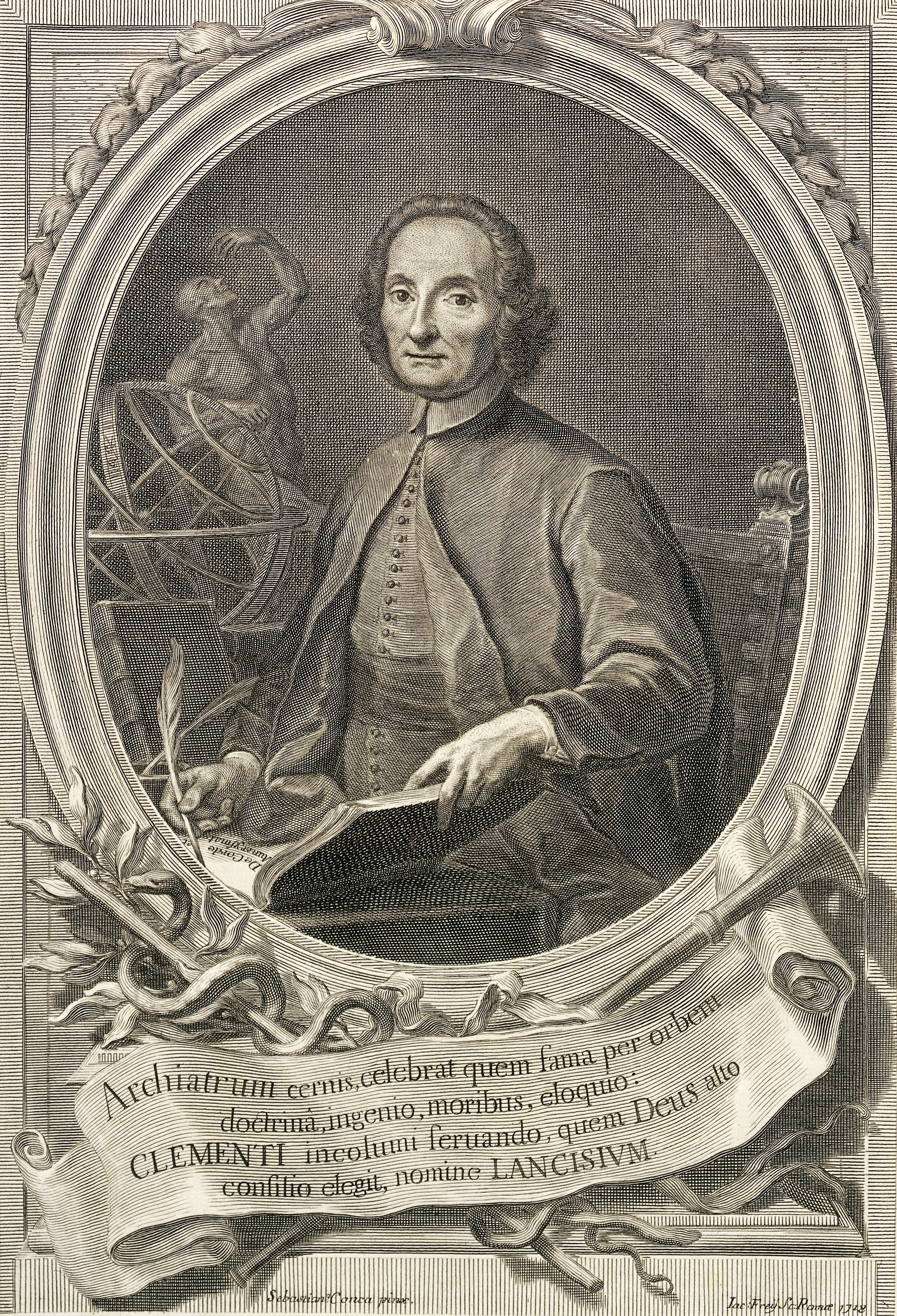
1707 LANCISI, Giovanni Maria (1654 – 1720)
De subitaneis mortibus libri duo.
In the above work Lancisi noted cardiac hypertrophy and dilatation as causes of sudden death. He was the first to describe valvular vegetation, and his book gives a classification of the cardiac diseases then recogniz…
GMN 2731 · https://historyofmedicine.com/id/4492
1715 VIEUSSENS, Raymond (1641 – 1715)
Traité nouveau de la structure et des causes du mouvement naturel du coeur. IN: Oeuvres françoises de M. Vieussens dédiées a nosseigneurs des états de la province de Languedoc.
The first work on cardiac anatomy and pathology. Vieussens was the first to describe the course of the coronary arteries and the coronary sinus. He also described collateral vessels connecting the left anterior descen…
GMN 7247 · https://historyofmedicine.com/id/9416
1761 MORGAGNI, Giovanni Battista (1682 – 1771)
De sedibus, et causis morborum per anatomen indagatis libri quinque. 2 vols.
Morgagni was the founder of modern pathological anatomy. The work was completed in Morgagni’s 79th year and consists of a series of 70 letters reporting about 700 cases and necropsies. As best he could, he correlated …
GMN 2276 · https://historyofmedicine.com/id/2846
1827 ADAMS, Robert (1791 – 1875)
Cases of diseases of the heart, accompanied by pathological observations.
On p. 396 commences a classic account of heart block with syncopal attacks, the first complete description of this condition. Following the paper by Stokes (No. 2756) the eponym “Stokes–Adams syndrome” was employed to…
GMN 2745 · https://historyofmedicine.com/id/4604
1832 HOPE, James (1801 – 1841)
A treatise on the diseases of the heart and great vessels.
Hope did much to advance the knowledge of heart murmurs, valvular disease, and aneurysm; he described the second sound of the left side of the sternum in mitral stenosis as “altered” – losing its short, flat clear sou…
GMN 2747 · https://historyofmedicine.com/id/4618
1843 FAUVEL, Sulpice Antoine (1813 – 1884)
Mémoire sur les signes stethoscopiques du rétrécissement de l’orifice auriculo-ventriculaire gauches du coeur.
First description of the presystolic murmur in mitral stenosis. Partial English translation in No. 2241.
GMN 2754 · https://historyofmedicine.com/id/4647
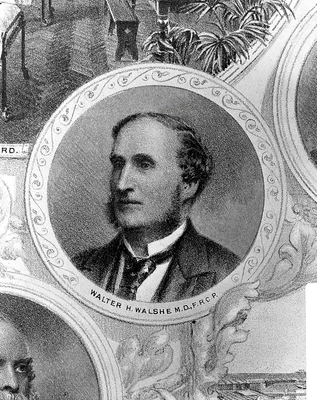
1851 WALSHE, Walter Hayle (1812 – 1892)
A practical treatise on the diseases of the lungs and heart, including the principles of physical diagnosis.
Walshe, physician to University College Hospital, London, was one of the first to recognize the presystolic character of the direct mitral murmur in mitral stenosis.
GMN 2757 · https://historyofmedicine.com/id/4661
1877 DUROZIEZ, Paul Louis (1826 – 1897)
Du rétrécissement mitral pur.
First description of congenital mitral stenosis, “Duroziez’s disease.”
GMN 2780 · https://historyofmedicine.com/id/4743
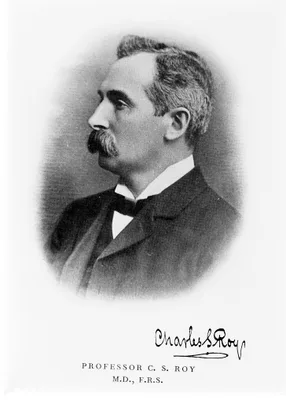
1888 ROY, Charles Smart (1854 – 1897); ADAMI, John George (1862 – 1926)
Remarks on failure of the heart from overstrain.
Important experimental work on cardiac overstrain was carried out by Roy and Adami who considered that mechanical overstrain caused chronic thickening of the cardiac valves.
GMN 2793 · https://historyofmedicine.com/id/3405
1913 DOYEN, Eugène-Louis (1859 – 1916)
Chirurgie des malformations congénitales ou acquises du coeur.
First attempt at surgical relief of valvular disease of the heart (congenital pulmonary stenosis). Experimental valvotomy.
GMN 3028.1 · https://historyofmedicine.com/id/5511
1914 TUFFIER, Théodore (1857 – 1929)
Etude expérimentelle sur la chirurgie des valvules du coeur.
Tuffier carried out the first successful experimental operation for the relief of chronic valvular disease. He also operated successfully in a case of aortic stenosis.
GMN 3029 · https://historyofmedicine.com/id/5516
1916 LUTEMBACHER, René (1884 – 1968)
De la sténose mitrale avec communication interauriculaire.
“Lutembacher syndrome”.
GMN 2846 · https://historyofmedicine.com/id/3612
1917 LEWIS, Sir Thomas (1881 – 1945)
Report upon soldiers returned as cases of “disordered action of the heart” (D.A.H.) or “valvular disease of the heart” (V.D.H.).
Medical Research Committee Special Rept. No. 8. Sir Thomas Lewis described as “effort syndrome” the condition of disordered action of the heart known as “Da Costa’s syndrome”.
GMN 2847 · https://historyofmedicine.com/id/3615
1923 CUTLER, Elliott Carr (1888 – 1947); LEVINE, Samuel Albert (1891 – 1966)
Cardiotomy and valvulotomy for mitral stenosis. Experimental observations and clinical notes concerning an operated case with recovery.
Successful section of mitral valve for relief of mitral stenosis.
GMN 3030.1 · https://historyofmedicine.com/id/5525
1924 LIBMAN, Emanuel (1872 – 1946); SACKS, Benjamin (1896 – 1939)
A hitherto undescribed form of valvular and mural endocarditis.
“Libman–Sacks disease”.
GMN 2855 · https://historyofmedicine.com/id/3645
1924 BECK, Claude Schaeffer (1894 – 1971); CUTLER, Elliott Carr (1888 – 1947); LEVINE, Samuel Albert (1891 – 1966)
The surgical treatment of mitral stenosis: Experimental and clinical studies.
The first successful operations on the mitral valves, published in a paper of monograph length. As Surgeon-in-Chief of Peter Bent Brigham Hospital, under whom Beck, Cutler, and Levine worked, Harvey Cushing reported, …
GMN 10592 · https://historyofmedicine.com/id/12785
1925 SOUTTAR, Sir Henry Sessions (1875 – 1964)
The surgical treatment of mitral stenosis.
Mitral valvotomy; report of a successful case.
GMN 3032 · https://historyofmedicine.com/id/5529
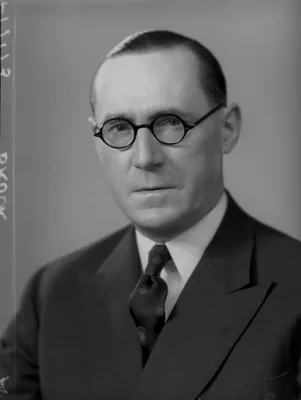
1948 BROCK, Russell Claude (1903 – 1980)
Pulmonary valvulotomy for the relief of congenital pulmonary stenosis. Report of three cases.
"Brock performed the first successful valvotomies for isolated pulmonary stenosis in 1948. He gained access to the blood-filled beating heart through a small incision in the right ventricle through which he passed a v…
GMN 3046 · https://historyofmedicine.com/id/3497
1948 HARKEN, Dwight Emary (1910 – 1993); ZARSKY, Leona Norman (1923 – 2013); ET AL
The surgical treatment of mitral stenosis. 1. Valvuloplasty.
Valvuloplasty for mitral stenosis. Harken reported the first successful intracardiac operation for treatment of this lesion--a procedure was first attempted in the 1920s. Charles Bailey in Philadelphia undertook a sim…
GMN 3046.1 · https://historyofmedicine.com/id/3527
1948 SELLORS, Sir Thomas Homes (1902 – 1987)
Surgery of pulmonary stenosis. A case in which the pulmonary valve was successfully divided.
Operation Dec. 4, 1947.
GMN 3046.2 · https://historyofmedicine.com/id/3532
1948 BLAND, Edward Franklin (1901 – 1992); SWEET, Richard Harwood (1901 – 1962)
A venous shunt for marked mitral stenosis.
First pulmonary-azygos shunt operation for relief of mitral stenosis. Two further patients were operated upon later the same year; all three are reported in J. Amer. med. Ass.,1949, 140, 1259. A similar procedure was …
GMN 3047 · https://historyofmedicine.com/id/3537
1949 BAILEY, Charles Philamore (1910 – 1993)
The surgical treatment of mitral stenosis (mitral commissurotomy).
Pioneering work in mitral valve surgery.
GMN 10654 · https://historyofmedicine.com/id/12847
1951 HUFNAGEL, Charles Anthony (1916 – 1989)
Aortic plastic valvular prosthesis.
Hufnagel designed and inserted the first workable prosthetic heart valve in man.
GMN 3047.2 · https://historyofmedicine.com/id/3551
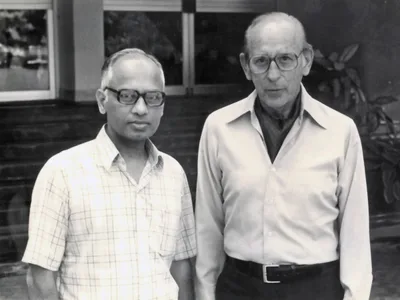
1951 GORLIN, Richard (1926 – 1997); GORLIN, S. G.
Hydraulic formula for calculation of the area of the stenotic mitral valve; other cardiac valves, and central circulatory shunts.
In collaboration with his father, S. G. Gorlin, a mechanical engineer who designed hydraulic systems for gasoline engines at the beginning of the century, Richard Gorlin developed a formula to calculate the area of st…
GMN 12238 · https://historyofmedicine.com/id/14452
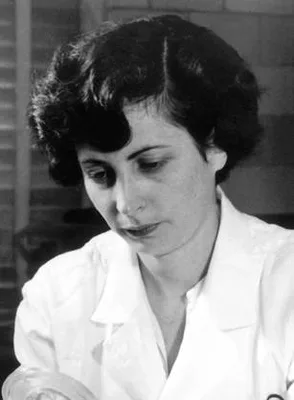
1960 BRAUNWALD, Nina Starr (1928 – 1992); COOPER, Theodore (1929 – 1993); MORROW, Andrew G. (1922 – 1982)
Complete replacement of the mitral valve. Successful clinical application of a flexible polyurethane prosthesis.
Braunwald was the first woman to perform open heart surgery. She was the first woman surgeon certified by the American Board of Thoracic Surgery, and the first woman elected to the American Association for Thoracic Su…
GMN 12221 · https://historyofmedicine.com/id/14433
1961 STARR, Albert (1926 – ); EDWARDS, Miles Lowell (1898 – 1982)
Mitral replacement: The shielded ball valve prothesis.
On September 21, 1960, Starr successfully inserted a “ball-in-cage” prosthetic valve (the Starr-Edwards heart valve) into a patient’s mitral valve, which was severely diseased as a result of rheumatic fever. This was …
GMN 3047.16 · https://historyofmedicine.com/id/3624
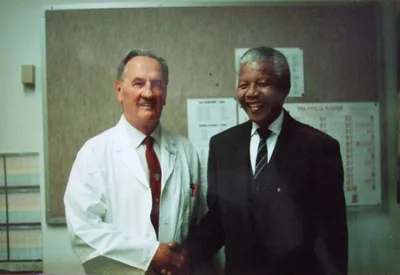
1962 ROSS, Donald Nixon (1922 – 2014)
Homograft replacement of the aortic valve.
Homograft valve placed below coronary orifice, a single page report. The first complete report on the "Ross procedure" was "Homotransplantation of the aortic valve in the subcoronary posittion," J. thorac. cardiovasc.…
GMN 3047.17 · https://historyofmedicine.com/id/3626
1963 BARLOW, John Brereton (1924 – 2008); POCOCK, Wendy A.
The significance of late systolic murmurs and mid-late systolic clicks.
See also J. B. Barlow, W.A. Pocock P. Marchand, M. Denny, "The significance of late systolic murmurs," Am Heart J., 66 (1963) 443- 452 Barlow revolutionized thinking about the pathophysiology of mitral regurgitation w…
GMN 12217 · https://historyofmedicine.com/id/14428