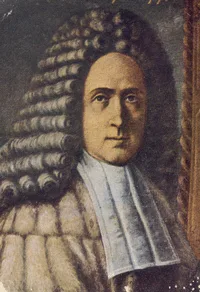
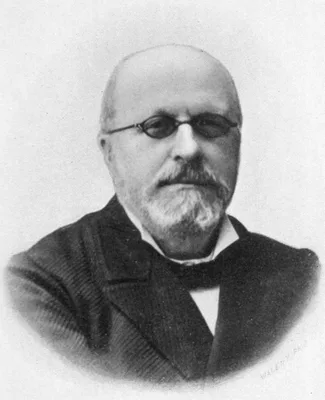
1674 RIVIÈRE, Lazare [RIVERIUS] (1589 – 1655)
Opera medica universa.
Riverius was the first to note aortic stenosis (p. 638 of the above).
GMN 2727 · https://historyofmedicine.com/id/4479
1705 VIEUSSENS, Raymond (1641 – 1715)
Novum vasorum corporis humani systema.
Vieussens was among the first to describe the morbid changes in mitral stenosis, the throbbing pulse in aortic insufficiency, and the first correctly to describe the structure of the left ventricle, the course of the …
GMN 2729 · https://historyofmedicine.com/id/4484
1706 COWPER, William (1666 – 1709)
Of ossifications or petrifications in the coats of arteries, particularly in the valves of the great artery.
First description of aortic insufficiency. Reproduced in Willius & Keys: Cardiac classics, 1941, pp. 109-14.
GMN 2730 · https://historyofmedicine.com/id/4488
1715 VIEUSSENS, Raymond (1641 – 1715)
Traité nouveau de la structure et des causes du mouvement naturel du coeur. IN: Oeuvres françoises de M. Vieussens dédiées a nosseigneurs des états de la province de Languedoc.
The first work on cardiac anatomy and pathology. Vieussens was the first to describe the course of the coronary arteries and the coronary sinus. He also described collateral vessels connecting the left anterior descen…
GMN 7247 · https://historyofmedicine.com/id/9416
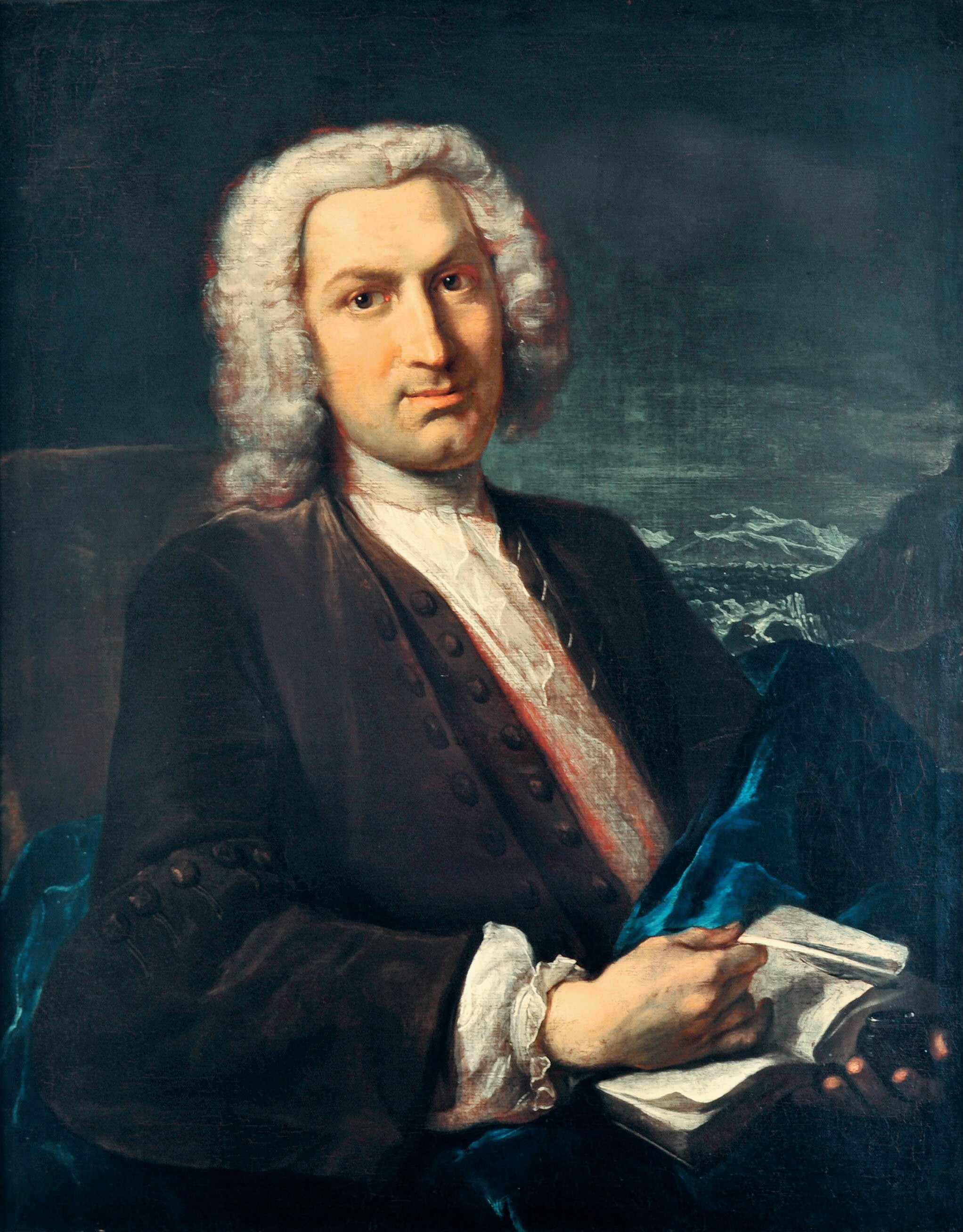
1749 HALLER, Albrecht von (1708 – 1777)
De aortae venaeque cavae gravioribus quibusdam morbis.
GMN 2732 · https://historyofmedicine.com/id/4501
1761 MORGAGNI, Giovanni Battista (1682 – 1771)
De sedibus, et causis morborum per anatomen indagatis libri quinque. 2 vols.
Morgagni was the founder of modern pathological anatomy. The work was completed in Morgagni’s 79th year and consists of a series of 70 letters reporting about 700 cases and necropsies. As best he could, he correlated …
GMN 2276 · https://historyofmedicine.com/id/2846
1815 HODGSON, Joseph (1788 – 1869)
A treatise on the diseases of arteries and veins. 1 vol. and atlas.
Includes the best illustrations of aneurysms and of aortic valvular endocarditis so far published, and the first description on non-sacculated dilatation of the aortic arch (“Hodgson’s disease”).
GMN 2741 · https://historyofmedicine.com/id/4588
1828 –1829 HODGKIN, Thomas (1798 – 1866)
On the retroversion of the valves of the aorta.
Aortic insufficiency is usually associated with the name of Corrigan, but Hodgkin’s account antedates Corrigan by three years.
GMN 2746 · https://historyofmedicine.com/id/4611
1832 CORRIGAN, Sir Dominic John (1802 – 1880)
On permanent patency of the mouth of the aorta, or inadequacy of the aortic valves.
In his wonderfully clear account of aortic insufficiency, Corrigan described the “water-hammer pulse” now commonly known as “Corrigan’s pulse.” He recognized that the hypertrophy of the heart present in this condition…
GMN 2748 · https://historyofmedicine.com/id/4623
1839 MERCIER, Louis-Auguste (1811 – 1882)
Rétrécissement avec oblitération presque complète de la portion thoracique de l’aorte.
Diagnosis of coarctation of aorta during life. Translation in Amer. J. Cardiol, 1965, 16, 253-55.
GMN 2750.1 · https://historyofmedicine.com/id/4639
1842 CHEEVERS, Norman (1818 – 1886)
Observations on the diseases of the orifice and valves of the aorta.
First clear account of chronic constrictive pericarditis.
GMN 2752 · https://historyofmedicine.com/id/4643
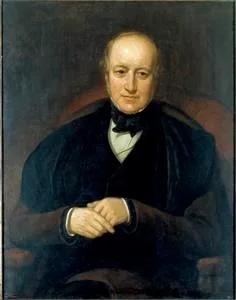
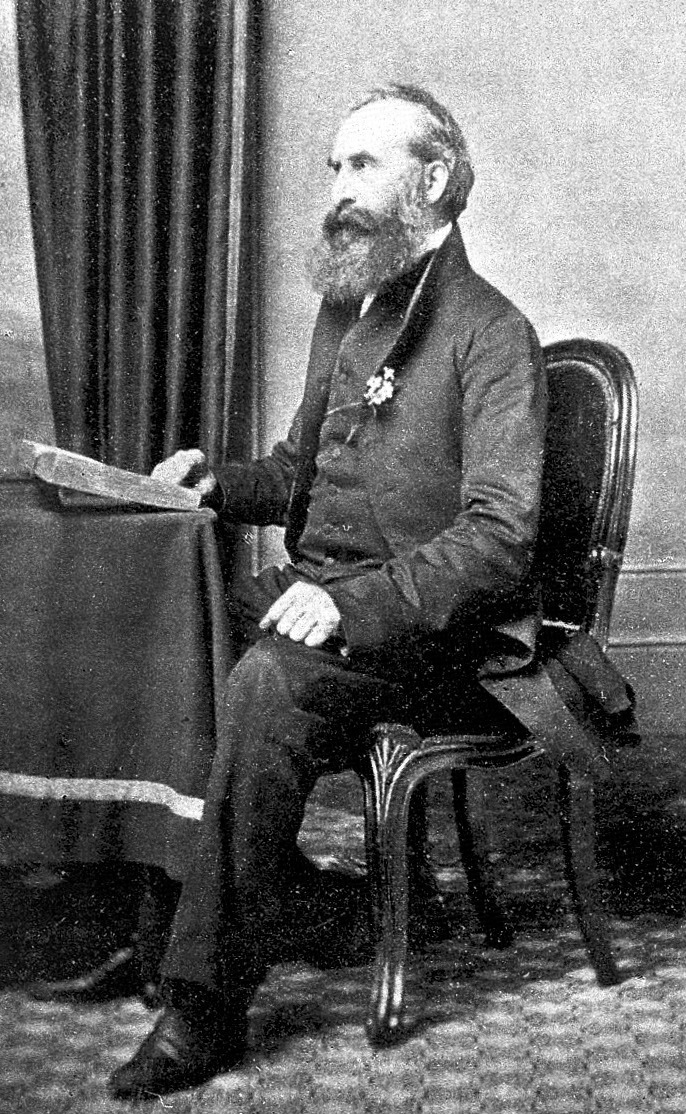
1854 STOKES, William (1804 – 1878)
The diseases of the heart and aorta.
On pp. 320-27 is to be found Stokes’s account of fatty degeneration of the heart, in which he so well described the periodic form of respiration now known as “Cheyne–Stokes breathing.” Stokes also gave the first descr…
GMN 2760 · https://historyofmedicine.com/id/4678
1861 DUROZIEZ, Paul Louis (1826 – 1897)
Du double souffle intermittent crural, comme signe de l’insuffisance aortique.
The double intermittent murmur over the femoral arteries, diagnostic of aortic insufficiency, has become known as “Duroziez’s sign.” Partial English translation in No. 2241.
GMN 2762 · https://historyofmedicine.com/id/4685
1862 FLINT (ELDER), Austin (1812 – 1886)
On cardiac murmurs.
First description of the “Austin Flint murmur,” present at the apex beat in aortic regurgitation. Reprinted in Med. Classics, 1940, 4, 864-900.
GMN 2764 · https://historyofmedicine.com/id/4689
1872 COHNHEIM, Julius Friedrich (1839 – 1884)
Untersuchungen über die embolischen Processe.
Cohnheim developed the doctrine of infarction as a result of occlusion of terminal arteries. He explained the haemorrhagic nature of certain infarcts on the basis of a reflux flow and diapedesis through the altered ca…
GMN 3010 · https://historyofmedicine.com/id/5370
1897 BÉCLÈRE, Antoine Louis Gustave (1856 – 1939); OUDIN, Paul Marie (1851 – 1923); BARTHÉLEMY, Toussaint (1850 – 1906)
Application de la méthode Roentgen à l'examen d'un anéurisme de la crosse aortique. Présentation du malade et de la preuve radiographique.
With the help of Oudin and Barthélemy Béclère established the first laboratory of radiology in Paris. This was among the first applications of x-rays for the diagnosis of aortic disease, and also one of the first pape…
GMN 12218 · https://historyofmedicine.com/id/14429
1899 –1903 HUCHARD, Henri (1844 – 1910)
Traité cliniques des maladies du coeur et de l’aorte. 3 vols.
Third and best edition. "Huchard, physician to the Necker Hospital was a foremost teacher in Paris at the end of the 19th century, and a great authority on angina pectoris and arteriosclerosis. He was a powerful advoc…
GMN 2811 · https://historyofmedicine.com/id/3470
1903 BONNET, L. M.
Sur la lésion dite sténose congénitale de l’aorte dans la région de l’isthme.
Distinction of infantile and adult types of coarctation of the aorta.
GMN 2814 · https://historyofmedicine.com/id/3483
1906 REUTER, Karl
Ueber Spirochaeta pallida in der Aortenwand bei Hellerscher Aortitis.
Treponema pallidum first discovered in the diseased aorta.
GMN 2824 · https://historyofmedicine.com/id/3531
1929 ERDHEIM, Jakob (1874 – 1937)
Medionecrosis aortae idiopathica (cystica).
Classic description of aortic medionecrosis.
GMN 2857 · https://historyofmedicine.com/id/3652
1929 SANTOS, Reynaldo dos (1880 – 1970); ET AL
L’artériographie des membres de l’aorte et de ses branches abdominales.
Aortography. With A. C. Lamas and J. Pereira Caldas. Also published in Bull. Soc.méd.chir. Paris, 1929, 55,587-601.
GMN 2859 · https://historyofmedicine.com/id/3656
1948 BRODÉN, Bror Leonhardt Johan (1910 – ); ET AL
Thoracic aortography. Preliminary report.
With H. E. Hanson and J. Karnell.
GMN 2879 · https://historyofmedicine.com/id/4220
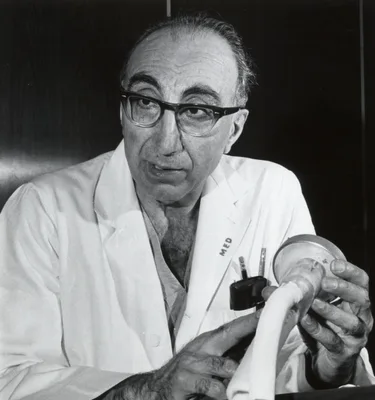
1953 DEBAKEY, Michael Ellis (1908 – 2008); COOLEY, Denton Arthur (1920 – 2016)
Successful resection of aneurysm of thoracic aorta and replacement by graft.
GMN 3047.4 · https://historyofmedicine.com/id/3559
1956 MURRAY, Donald Walter Gordon (1894 – 1976)
Homologous aortic-valve-segment transplants as surgical treatment for aortic and mitral insufficiency.
First successful aortic valve homograft. For report of six-year follow-up, see A. J. Kerwin, et al., New Engl. J. Med.,1962, 266,852.
GMN 3047.8 · https://historyofmedicine.com/id/3579
1973 DEBAKEY, Michael Ellis (1908 – 2008); GARRETT, H. Edward (1926 – 1996); DENNIS, Edward W. (1923 – 1975); ET AL
Aortocoronary bypass with saphenous vein graft: seven year follow-up.
"Probably the first successful saphenous bypass graft was by Edward Garrett (1964), whilst he was working with DeBakey. He performed the bypass graft in order to wean a patient from cardiopulmonary bypass, and the lon…
GMN 3047.25 · https://historyofmedicine.com/id/3648
1992 ANDERSEN, Henning Rud; KNUDSEN, L. L.; HASENKAM, J. M.
Transluminal implantation of artificial heart valves. Description of a new expandable aortic valve and initial results with implantation by catheter technique in closed chest pigs.
Andersen and colleagues invented percutaneous aortic valve replacement (PAVR), also known as percutaneous aortic valve implantation (PAVI), transcatheter aortic valve implantation (TAVI) or transcatheter aortic valve …
GMN 13893 · https://historyofmedicine.com/id/16185