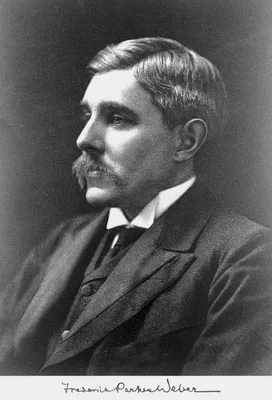
1922 WEBER, Frederick Parkes (1863 – 1962)
Right-sided hemi-hypertrophy resulting from right-sided congenital spastic hemiplegia, with a morbid condition of the left side of the brain, revealed by radiograms.
Sturge–Weber syndrome (see No. 4560.1).
GMN 4605.2 · https://historyofmedicine.com/id/564
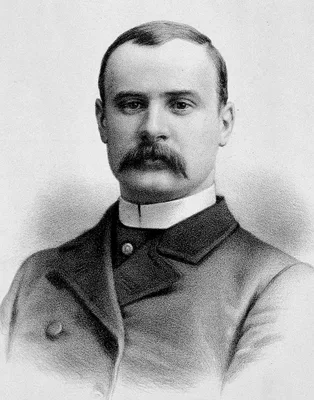
1923 TREVES, Sir Frederick (1853 – 1923)
The elephant man and other reminiscences.
The story of Treves's patient, Joseph Carey Merrick (1862-1890), incorrected identified by Treves in these reminiscences as "John Merrick." The story was retold in The elephant man, Bernard Pomerance's 1977 play about…
GMN 7407 · https://historyofmedicine.com/id/9579
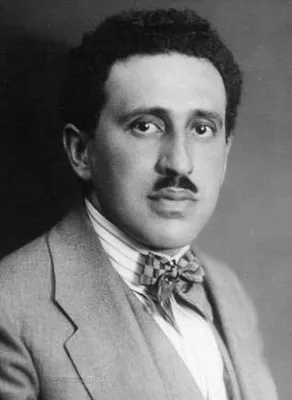
1924 GERSTMANN, Josef (1887 – 1969)
Fingeragnosie. Eine umschriebene Störung der Orientierung am eigenen Körper.
Gerstmann’s syndrome, due to cerebral lesion. Translation in Arch. Neurol. Psychiat., 1971, 24, 475-76.
GMN 4605.3 · https://historyofmedicine.com/id/565
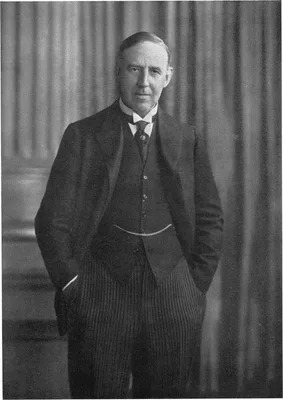
1924 WILSON, Samuel Alexander Kinnier (1878 – 1937)
Some problems in neurology. No. 2. Pathological laughing and crying.
An important paper on the pathology of facial movements.
GMN 4606 · https://historyofmedicine.com/id/566
1926 CUSHING, Harvey Williams (1869 – 1939); BAILEY, Percival (1892 – 1973)
A classification of the tumors of the glioma group on a histogenetic basis with a correlated study of prognosis.
From 1922 to 1925 Bailey undertook extensive pathological and histological studies of brain tumors, and based on cellular configuration, he created a classification system of thirteen categories. In 1927 he reduced th…
GMN 4608 · https://historyofmedicine.com/id/568
1926 ADIE, William John (1886 – 1935)
Idiopathic narcolepsy: a disease sui generis; with remarks on the mechanism of sleep.
Adie’s description of narcolepsy is called “maladie d’Adie” by some French writers.
GMN 4607 · https://historyofmedicine.com/id/8928
1931 ADIE, William John (1886 – 1935)
Pseudo-Argyll Robertson pupils with absent tendon reflexes; a benign disorder simulating tabes dorsalis.
“Adie’s syndrome”; see also his later paper in Brain, 1932, 55, 98-113. It was earlier reported by J. Strasberger, by A. Saenger and by M. Nonne in Neurol. Zbl., 1902, 21, 738, 837, and 1000. See also No. 5950.
GMN 4611 · https://historyofmedicine.com/id/584
1942 THÉVENARD, André (1898 – 1959)
L’acropathie ulcéro-mutilante familiale.
“Thévenard’s disease” – hereditary sensory neuropathy, earlier reported by Auguste Nélaton: Affection singulière des os du pied. Gaz. Hôp. Paris, 1852, 4, 13.
GMN 4614.2 · https://historyofmedicine.com/id/596
1944 STEINHAUSEN, Theodore Behn (1914 – 1999); ET AL
Iodinated organic compounds as contrast media for radiographic diagnoses. III. Experimental and clinical myelography with ethyl iodophenylundecylate (pantopaque).
Introduction of “pantopaque” for diagnosis of cerebral tumors. With C. E. Dungan, J. B. Furst, J. T. Plati, S. W. Smith, A. P. Darling, and E. C. Wolcott.
GMN 4615 · https://historyofmedicine.com/id/597
1953 CRITCHLEY, MacDonald (1900 – 1997)
The parietal lobes.
Defines for the first time the various functions of the parietal lobes.
GMN 4615.3 · https://historyofmedicine.com/id/644