1632 SEVERINO, Marco Aurelio [SEVERINUS] (1580 – 1656)
De recondita abscessuum natura.
The first textbook of surgical pathology. It treats of all kinds of swelling under the term “abscess” and describes neoplasms of the genital organs and sarcoma of bones. Tumors of the breast are classified into four g…
GMN 2273 · https://historyofmedicine.com/id/2841
1689 HARRIS, Walter (1647 – 1732)
De morbis acutis infantum.
Harris was physician to William and Mary. His book served for nearly a century as a standard work on pediatrics. He anticipated the modern treatment of tetany by using calcium salts in infantile convulsions. For a stu…
GMN 6321 · https://historyofmedicine.com/id/8089
1798 CRICHTON, Alexander (1763 – 1856)
An inquiry into the nature and origin of mental derangement: comprehending a concise system of the physiology and pathology of the human mind, and a history of the passions and their effects. 2 vols.
In chapter 2 of vol. 1, pp. 254-90, “On Attention and its Diseases” Crichton described a mental state much like the inattentive subtype of Attention Deficit Hyperactivity Disorder (ADHD). He did not mention any sympto…
GMN 7978 · https://historyofmedicine.com/id/10154
1815 –1818 GOELIS, Leopold Anton [GÖLIS] (1765 – 1827)
Praktische Abhandlungen über die vorzüglichen Krankheiten des Kindesalters. Vol. 1: Von der hitzigen Gehirnhöhlen-Wassersucht; Vol. 2: Vom inneren chronischen Wasserkopfe....
"In 1818, Leopold Anton Gölis (1765-1827, Austrian physician and pathologist), a paediatrician and dissector in the Institute for the Sick Children of the Poor in Vienna, described the clinical and autopsy findings of…
GMN 6329 · https://historyofmedicine.com/id/8112
1827 CAZAUVIELH, Jean-Baptiste [Cazauvielle] (1802 – 1849)
Recherches sur l’agénésie cérébrale et la paralysie congénitale.
“The first scientific paper on paralysis in children was published in 1827 by Jean Baptiste Cazauvieilh, who […] noted that congenital hemiplegia was associated with cerebral atrophy and differentiated those due to ‘l…
GMN 11126 · https://historyofmedicine.com/id/13322
1835 BADHAM, John (1807 – 1840)
Paralysis in childhood. Four remarkable cases of suddenly induced paralysis in the extremities, occurring in children, without any apparent cerebral or cerebro-spinal lesion.
Important clinical description.
GMN 4663 · https://historyofmedicine.com/id/794
1838 VALLEIX, François Louis Isidore (1807 – 1855)
Clinique des maladies des enfants nouveau-nes.
The first work on the diseases of newborns and the first work on child neurology and pediatric neurosurgery.
GMN 13150 · https://historyofmedicine.com/id/15409
1844 MAUTHNER (RITTER) VON MAUTHSTEIN, Ludwig Wilhelm (1806 – 1858)
Die Krankheit des Gehirn’s und Rückenmark’s bei Kindern, durch Krankheitsfälle aus dem ersten Kinderspitale erläutert.
The first book on child neurology. Unusual for a medical book of this type, it includes a lithographed frontispiece, a lithographed title page, and four hand-colored plates.
GMN 10749 · https://historyofmedicine.com/id/12945
1870 CHARCOT, Jean Martin (1825 – 1893); JOFFROY, Alex (1844 – 1908)
Une observation de paralysie infantile s’accompagnant d’une altération des cornes antérieures de la substance grise de la moëlle.
First demonstration of the atrophy of the anterior horns of the spinal cord in infantile paralysis, confirming earlier suggestions of von Heine and Duchenne.
GMN 4665 · https://historyofmedicine.com/id/801
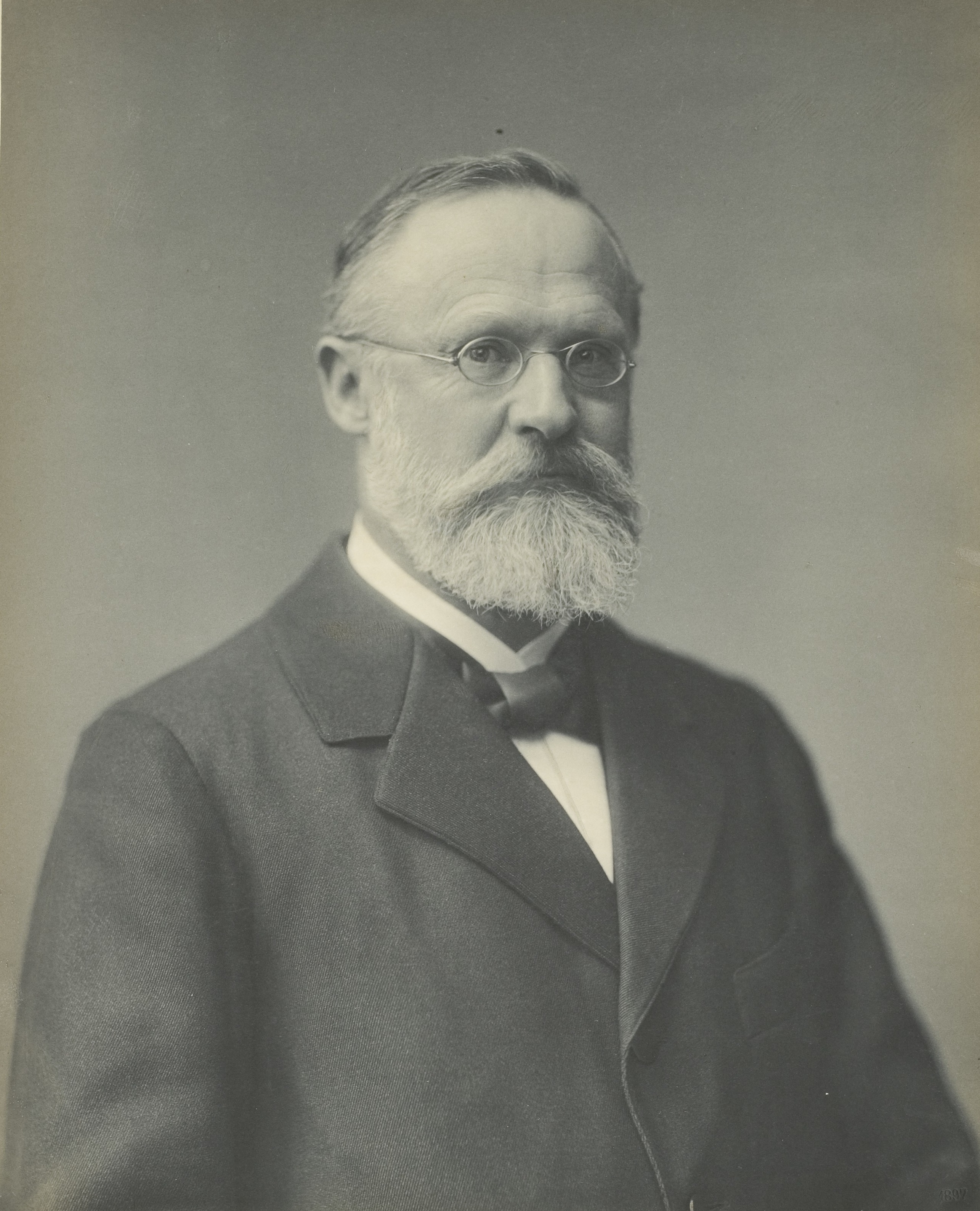
1884 ERB, Wilhelm Heinrich (1840 – 1921)
Ueber die juvenile Form der progressiven Muskelatrophie und ihre Beziehungen zur sogenannten Pseudohypertrophie der Muskeln.
Progressive muscular dystrophy (“Erb’s muscular atrophy”). Erb did much to establish the modern conception of the muscular dystrophies.
GMN 4747 · https://historyofmedicine.com/id/1344
1885 STRÜMPELL, Ernst Adolf Gustav Gottfried (1853 – 1925)
Ueber die akute Encephalitis der Kinder (Polioencephalitis acuta, cerebrale Kinderlähmung).
“Strumpell’s disease” – polioencephalomyelitis.
GMN 4643 · https://historyofmedicine.com/id/721
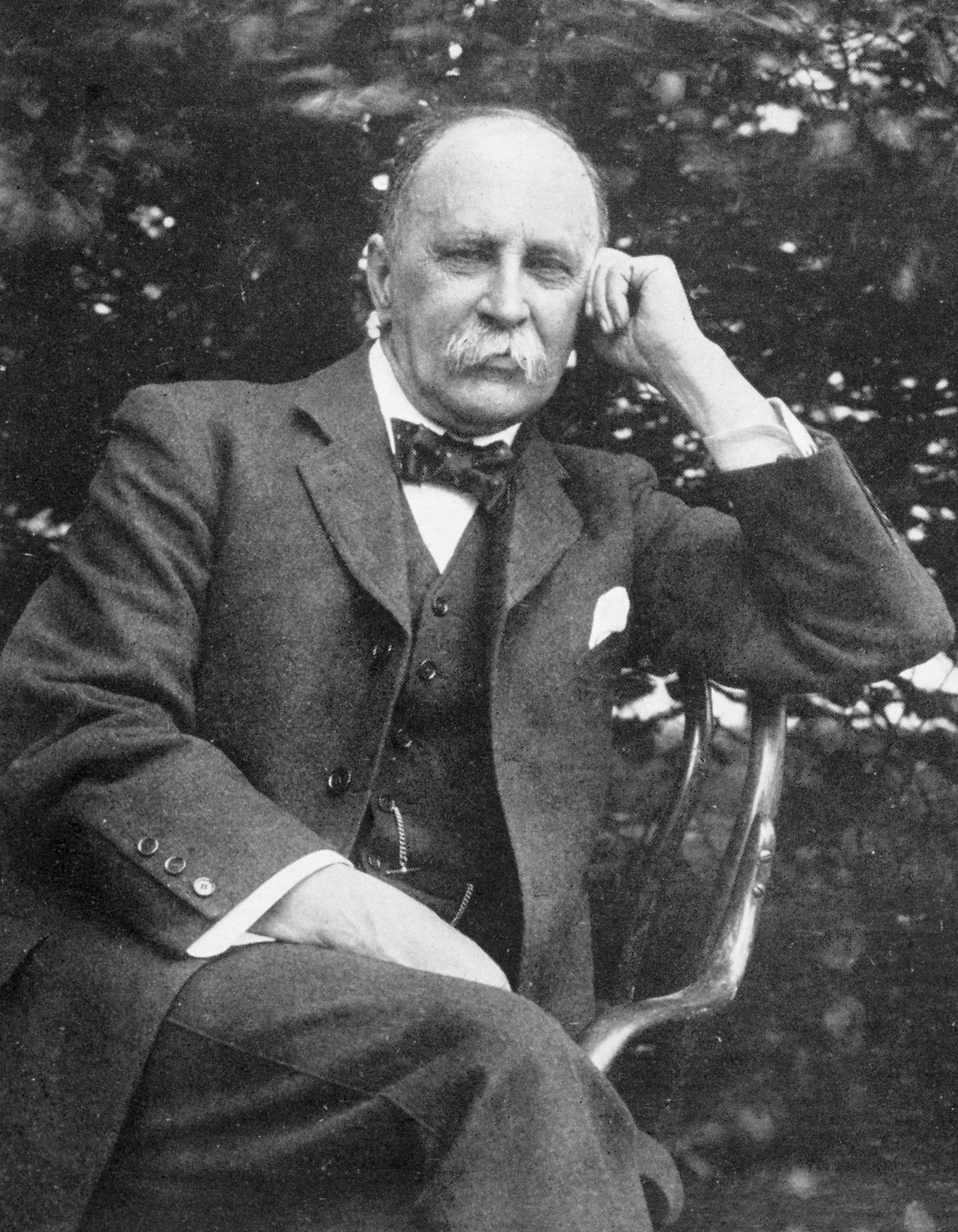
1889 OSLER, Sir William (1849 – 1919)
The cerebral palsies of children.
Osler's monograph on cerebral palsy helped define this condition. "Osler emphasized the diverse causes of childhood hemiplegia. Osler classified his patients with nonprogressive upper motor neuron dysfunction accordin…
GMN 11276 · https://historyofmedicine.com/id/13473
1890 MEDIN, Karl Oskar (1847 – 1927)
En epidemi af infantil paralysi.
The epidemic character of poliomyelitis was first noted by Medin. The disease is also known as “Heine–Medin disease” from the descriptions given by these two writers (see also No. 4664). German version in Verh. X. Int…
GMN 4667 · https://historyofmedicine.com/id/822
1891 WERDNIG, Guido (1844 – 1919)
Zwei frühinfantile hereditäre Fälle von progressiver Muskelatrophie unter dem Bilde der Dystrophie, aber auf neurotischer Grundlage.
“Werdnig-Hoffmann muscular atrophy”, an infantile familial form of progressive muscular atrophy. Hoffmann independently described it (see No. 4756).
GMN 4755 · https://historyofmedicine.com/id/1392
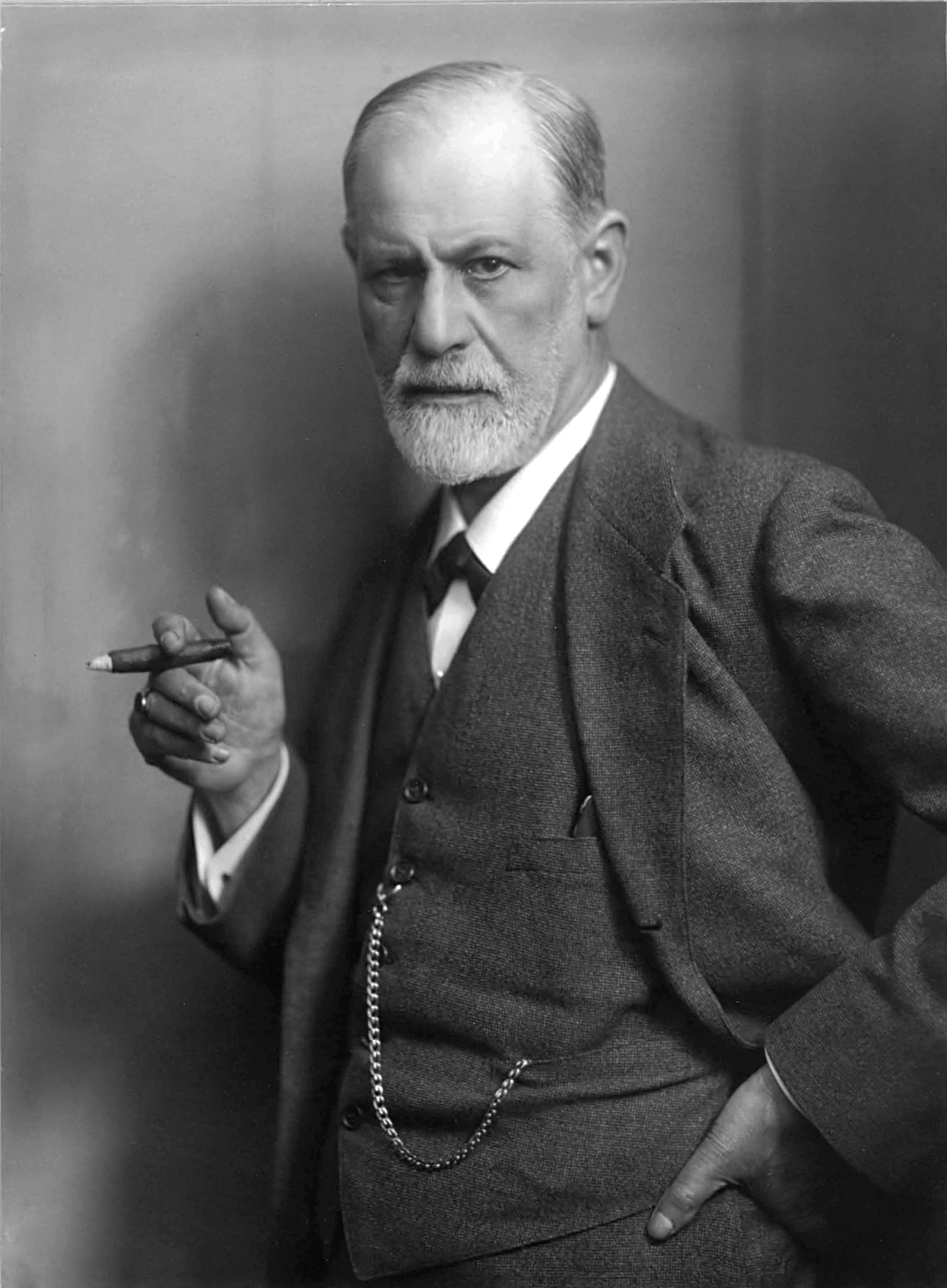
1897 FREUD, Sigmund (1856 – 1939)
Die infantile Cerebrallähmung.
Freud gave an excellent description of the various forms of cerebral palsy, with precise classification of the different spastic symptoms; he also mentioned the extra-pyramidal symptoms. This work forms Bd. IX, II The…
GMN 4708.2 · https://historyofmedicine.com/id/1160
1902 STILL, Sir George Frederic (1868 – 1941)
The Goulstonian lectures on some abnormal psychical conditions in children. Delivered before the Royal College of Physicians of London on March 4th, 6th, and 11th, 1902.
Considered by many historians to be the scientific starting point of the study of Attention Deficit Hyperactivity Disorder (ADHD). Digital facsimile of the separate offprint from the Internet Archive at this link.
GMN 7979 · https://historyofmedicine.com/id/10155
1903 BATTEN, Frederick Eustace (1865 – 1918)
Cerebral degeneration with symmetrical changes in the maculae in two members of a family.
Batten disease, a fatal disease of the nervous system that typically begins in childhood. Onset of symptoms is usually between 5 and 10 years of age. Often, it is autosomal recessive. It is the common name for a group…
GMN 4712 · https://historyofmedicine.com/id/1175
1904 MAYOU, Marmaduke Stephen (1876 – 1934)
Cerebral degeneration, with symmetrical changes in the maculae, in three members of a family.
“Batten-Mayou disease”, juvenile amaurotic idiocy (see also No. 4712).
GMN 4713 · https://historyofmedicine.com/id/1178
1905 VOGT, Heinrich (1875 – 1936)
Über familiäre amaurotische Idiotie und verwandte Krankheitsbilder.
Spielmayer-Vogt disease, or Spielmeyer-Vogt-Sjögren-Batten disease, the juvenile form of cerebromacular degeneration.
GMN 4713.1 · https://historyofmedicine.com/id/1180
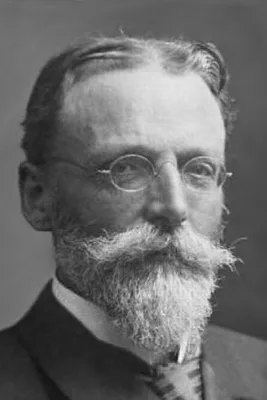
1909 ESCHERICH, Theodor (1857 – 1911)
Die Tetanie der Kinder.
GMN 4835 · https://historyofmedicine.com/id/3590
1912 KLING, Carl (1887 – 1967)
Experimental and pathological investigation. In: Investigations on epidemic infantile paralysis, report from the State Medical Institute of Sweden to the XVth International Congress on Hygiene and Demography.
Kling, A. Pettersson, and W. Wernstedt recovered the poliomyelitis virus from the intestinal wall and contents, disproving the contention of Flexner that it was exclusively neurotropic.
GMN 4670.4 · https://historyofmedicine.com/id/857
1914 DANDY, Walter Edward (1886 – 1946); BLACKFAN, Kenneth Daniel (1883 – 1941)
Internal hydrocephalus.
Dandy and the pediatrician Blackfan published two papers on the production, circulation, and absorption of CSF in the brain and on the causes and potential treatments of hydrocephalus. Hydrocephalus is the buildup of …
GMN 4597 · https://historyofmedicine.com/id/8926
1918 FRIDERICHSEN, Carl (1886 – 1982)
Nebennierenapoplexie bei kleinen Kindern.
See No. 4685.
GMN 4686 · https://historyofmedicine.com/id/963
1923 JONES, William Henry Samuel (1876 – 1963); HIPPOCRATES, [Ἱπποκράτης; Hippocrates of Kos] (-460 – -370)
The sacred disease. In [Works]…edited with an English translation by W.H.S. Jones. 2, 127-83
This includes the first mention of epilepsy in children. Hippocrates grouped all convulsive attacks together as ερα νο̂σος, the sacred disease. He did not employ the word έπίληψις, (which seems first to have been used…
GMN 4807 · https://historyofmedicine.com/id/8898
1937 BRADLEY, Charles (1902 – 1979)
Behavior of children receiving benzedrine.
Bradley showed that racemic amphetamine, that is, the 50:50 mixture of d- and l-amphetamine isomers (Benzedrine®), was shown to reduce the impulsivity, distractibility, and inattention characteristic of Attention Defi…
GMN 7980 · https://historyofmedicine.com/id/10156
1943 KANNER, Leo (1894 – 1981)
Autistic disturbances of affective contact.
The first description of “early infantile autism” as a disorder marked by extreme detachment, self-isolation, inability to form relationships, frequent failure to acquire communicative abilities, and preoccupation wit…
GMN 7625 · https://historyofmedicine.com/id/9797
1944 ASPERGER, Hans (1906 – 1980)
Die "Autistischen Psychopathen" im Kindesalter.
Early infantile autism (Asperberger's syndrome).
GMN 7626 · https://historyofmedicine.com/id/9798
1990 ASHWAL, Stephen (1945 – )
The founders of child neurology. Edited by Stephen Ashwal.
125 biographical essays, with portraits and bibliographies, documenting the history of child neurology from the 17th century to the present.
GMN 5019.22 · https://historyofmedicine.com/id/6715
1998 SWEDO, Susan E.; LEONARD, Henrietta L. (1954 – 2007); GARVEY, Marjory; ET AL
Pediatric autoimmune neuropsychiatric disorders associated with streptococcal infections: Clinical description of the first 50 cases.
Order of authorship in the original publication: Swedo, Leonard, Garvey.... Pediatric autoimmune neuropsychiatric disorders associated with streptococcal infections (PANDAS), "an hypothesis that there exists a subset …
GMN 11079 · https://historyofmedicine.com/id/13275
2014 PASTULA, David M.; ALIABADI, Negar; MILLER, Lisa Ann; ET AL
Acute neurologic illness of unknown etiology in children - Colorado, August-September 2014.
The authors reported a cluster of 9 children seen at Colorado Children's Hospital with an acute neurologic illness characterized by extremity weakness, cranial nerve dysfunction, diplopia (double vision), facial droop…
GMN 12713 · https://historyofmedicine.com/id/14959
2015 VAN HAREN, Keith; AYSCUE, Patrick; WAUBANT, Emmanuelle L.; ET AL
Acute flaccid myelitis of unknown etiology in California, 2012-2015
The authors presented a retrospective study based on demographics, race, ethnicity, signs, lab results, MRI results of 59 patients identified between June 2012 and July 2015 who presented symptoms that they characteri…
GMN 12714 · https://historyofmedicine.com/id/14960
2019 UPRETY, Priyanka; CURTIS, Darcy; ELKAN, Michael; GRAF, Erin H.; ET AL
Association of enterovirus D68 with Acute flaccid myelitis, Philadelphia, Pennsylvania, USA, 2009-2018.
The authors correlated increases of Acute Flaccid Myelitis (AFM) with EV-D68 outbreaks. They noted that EV-D68 infected mice exhibited paralyzed limbs, and they reported that EV-D68 had undergone genome evolutiion tha…
GMN 12715 · https://historyofmedicine.com/id/14961

![HIPPOCRATES, [Ἱπποκράτης; Hippocrates of Kos] (-460 – -370)](/media/portraits/50)