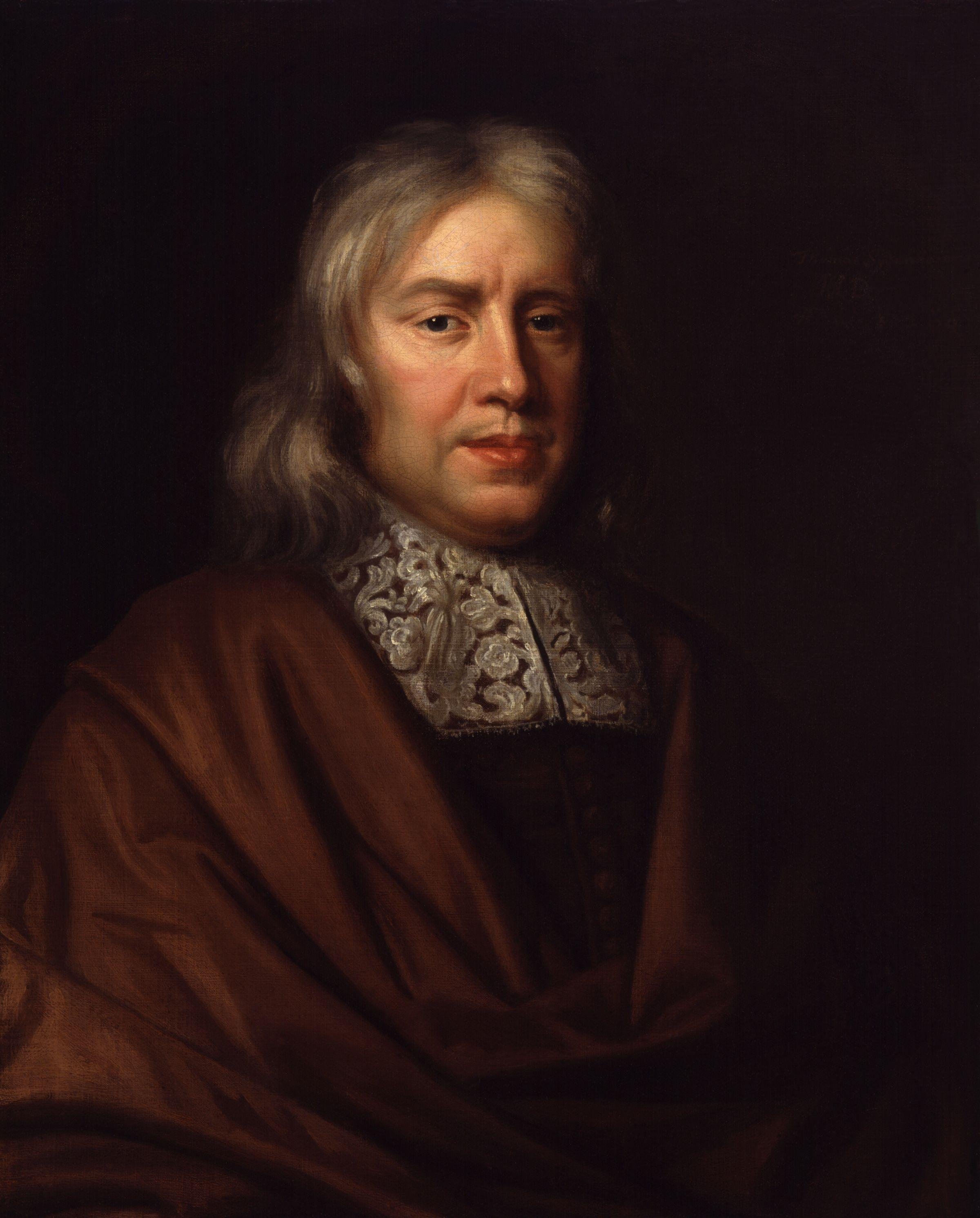
1686 SYDENHAM, Thomas (1624 – 1689)
Schedula monitoria de novae febris ingressu.
Includes (pp. 25-28) his classic description of chorea minor (“Sydenham’s chorea”). Reprinted in Med. Classics, 1939, 4, 327-53. In the Sydenham Society translation (see No. 64) the passage occurs in vol. 2, pp. 198-99.
GMN 4514 · https://historyofmedicine.com/id/361
1817 PARKINSON, James (1755 – 1824)
An essay on the shaking palsy.
“Parkinson’s disease”–paralysis agitans. Reprinted in Med. Classics, 1938, 2, 946-97. Facsimile edition, with biography of Parkinson by Macdonald Critchley, London, 1955. Digital facsimile from the Internet Archive at…
GMN 4690 · https://historyofmedicine.com/id/972
1842 DUNGLISON, Robley (1798 – 1869); WATERS, Charles Oscar (1816 – 1892)
Practice of medicine: A treatise on special pathology and therapeutics. 2 vols.
A case of chronic hereditary chorea in adults (“Huntington’s chorea”, see No. 4699) is described on pp. 312-13 of vol. 2. This is in the form of a letter from one of Dunglison's recently graduated students at Jefferso…
GMN 4691 · https://historyofmedicine.com/id/974
1846 DUBINI, Angelo (1813 – 1902)
Primi cenni sulla corea elettrica.
First description of electric chorea, “Dubini’s chorea”, the myoclonic form of epidemic encephalitis.
GMN 4637 · https://historyofmedicine.com/id/702
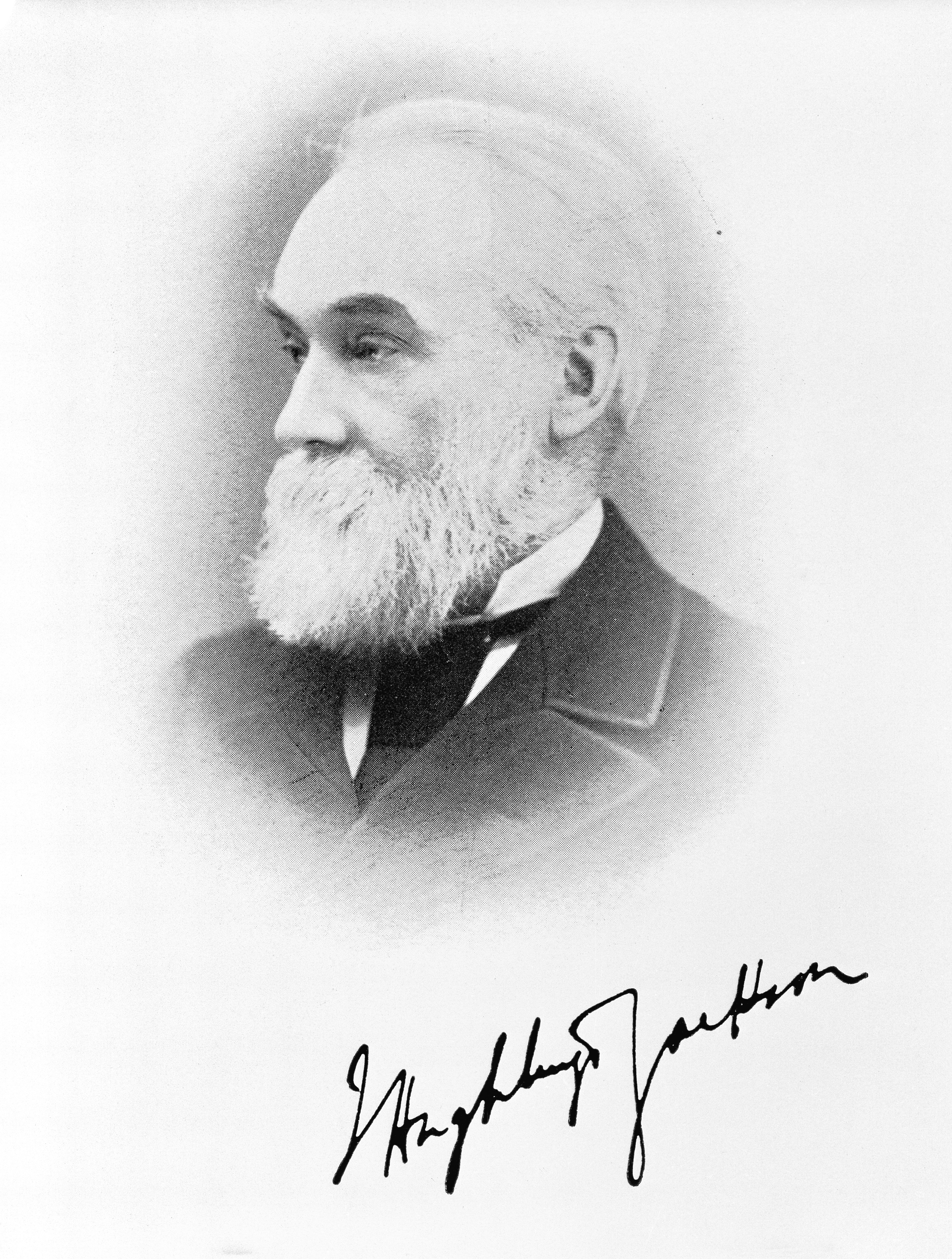
1864 JACKSON, John Hughlings (1835 – 1911)
Loss of speech: its association with valvular disease of the heart, and with hemiplegia on the right side. Defects of smell. Defects of speech in chorea. Arterial regions in epilepsy.
Jackson studied aphasia for 30 years. He emphasized its psychological aspects and laid the foundation for present knowledge of the condition, but he was ahead of his time and the value of his work was not recognized f…
GMN 4620 · https://historyofmedicine.com/id/658
1867 DUCHENNE DE BOULOGNE, Guillaume Benjamin Armand (1806 – 1875)
Physiologie des mouvements demontrée à l’aide de l’expérimentation électrique et de l’observation clinique, et applicable à l’étude des paralysies et des déformations.
A monumental work, the result of twenty years’ study of electro-muscular stimulation “to determine the proper action which the muscles possess in life”. The book contains an excellent record of the kinesiology of the …
GMN 624 · https://historyofmedicine.com/id/507
1868 ORDENSTEIN, Leopold (1835 – 1902)
Sur la paralysie agitante et la sclérose en plaques généralisée.
In his doctoral thesis Ordenstein, a pupil of Charcot, first defined the clinical features of multiple schlerosis in detail, with pathologic confirmation, and distinguished the main symptoms and pathologic findings of…
GMN 13813 · https://historyofmedicine.com/id/16102
1872 HUNTINGTON, George (1850 – 1916)
On chorea.
The classic description by Huntington of the chronic degenerative hereditary type of chorea led to the eponym “Huntington’s chorea”. Earlier accounts of the disease were given by John Elliotson (Lancet, 1832, 1, 163),…
GMN 4699 · https://historyofmedicine.com/id/985
1874 MITCHELL, Silas Weir (1829 – 1914)
Post-paralytic chorea.
First description.
GMN 4552 · https://historyofmedicine.com/id/412
1884 GILLES DE LA TOURETTE, Georges Albert Édouard Brutus (1857 – 1904)
Jumping, latah, myriachit.
Latah, motor incoordination associated with echolalia and coprolalia, is named “Gilles de la Tourette’s disease” after his classic description of it.
GMN 4848 · https://historyofmedicine.com/id/8908
1889 OSLER, Sir William (1849 – 1919)
The cerebral palsies of children.
Osler's monograph on cerebral palsy helped define this condition. "Osler emphasized the diverse causes of childhood hemiplegia. Osler classified his patients with nonprogressive upper motor neuron dysfunction accordin…
GMN 11276 · https://historyofmedicine.com/id/13473
1894 OSLER, Sir William (1849 – 1919)
On chorea and choreiform affections.
"One year after Charcot's death, Osler published On Chorea and Choreiform Affectations (1894), and in this pithy monograph, Osler offered a particularly useful evaluation of Charcot's neurological contributions. Where…
GMN 11273 · https://historyofmedicine.com/id/13470
1899 MARINESCU, Gheorghe [Georges Marinesco] (1863 – 1938)
Les troubles de la marche dans l'hémiplégie organique étudiés à l'aide du cinématographe.
Between July 1898 and 1902 Romanian neurologist Gheorghe Marinescu (Georges Marinesco) made the world's first documentary films in his clinic in Bucharest. "Marinescu perfected the use of cinematography as a research …
GMN 11293 · https://historyofmedicine.com/id/13490
1920 FOIX, Charles (1882 – 1927)
Les lésions anatomiques de la maladie de Parkinson.
Foix and his colleagues showed that the specific lesion in Parkinson’s disease is in the substantia nigra of the mid-brain.
GMN 4721 · https://historyofmedicine.com/id/1218
1921 SOUQUES, Achille Alexandre (1860 – 1944)
Rapport sur les syndromes parkinsoniens.
Souques recognized the importance of encephalitis lethargica as a cause of Parkinsonism; more than any other neurologist he was responsible for unifying its diverse manifestations.
GMN 4723 · https://historyofmedicine.com/id/1225
1923 JAKOB, Afons Maria (1884 – 1931)
Die Extrapyramidalen Erkrankungen: Mit Besonderer Berücksichtigung der pathologischen Anatomie und Histologie und der Pathophysiologie der Bewegungsstörungen.
Pages 218-245 represent Jakob's full clinical-pathologic description of the fifth patient that he first described in this work.The symptoms of this patient and the histopathopathologic illustrations correspond fully w…
GMN 12594 · https://historyofmedicine.com/id/14834
1946 GRÜNTHAL, Ernst (1894 – 1972)
Ueber Parpanit, einen neuen estrapyramidal-motorische Störungen beeinflussenden Stoff.
Introduction of caramiphen (“parpanit”) in the treatment of Parkinson’s disease.
GMN 4726 · https://historyofmedicine.com/id/1240
1946 SIGWALD, Jean (1903 – ); ET AL
Le traitement de la maladie de Parkinson par le chlorhydrate de diéthylaminoéthyl-N-thiodiphénylamine (2987 R.P.). Premiers résultats.
Introduction of “diparcol” in the treatment of Parkinson’s disease. With D. Boyet and G. Dumont.
GMN 4727 · https://historyofmedicine.com/id/1242
1949 SIGWALD, Jean (1903 – )
Un nouveau médicament symptomatique des syndromes parkinsoniens: le chlorhydrate de [(diéthylamino-2’-methyl-2’) éthyl-1-’] N-dibenzoparathiazine.
Introduction of ethopropazine (“lysivane”) in the treatment of Parkinson’s disease.
GMN 4728 · https://historyofmedicine.com/id/1244
1949 CORBIN, Kendall Brooks (1907 – 1999)
Trihexyphenidyl. Evaluation of the new agent in the treatment of parkinsonism.
Clinical introduction of benzhexol (“artane”) in Parkinson’s disease.
GMN 4729 · https://historyofmedicine.com/id/1247
1974 BRUYN, George Willem (1928 – 2002)
A centennial bibliography of Huntington’s chorea, 1872-1972.
Over 2,000 references to original works. Chronological arrangement. Author, geographic and other indexes. With F. Baro and N. C. Myrianthopoulos.
GMN 5019.15 · https://historyofmedicine.com/id/6691