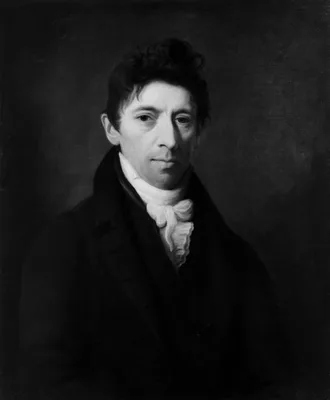
1810 THELWALL, John (1764 – 1834)
A letter to Henry Cline, Esq. on imperfect developements (sic) of the faculties mental and moral, as well as constitutional and organic; and on on the treatment of impediments of speech.
The first book on mental deficiency. Thelwall recognized that sensory deprivation could be a cause of apparent mental defect through his work with handicapped children. He established criteria for distinguishing betwe…
GMN 4969.2 · https://historyofmedicine.com/id/6384
1846 SÉGUIN, Édouard (1812 – 1880)
Traitement moral, hygiène et education des idiots…
Séguin was the first to outline a complete plan for the training of mental defectives. A pupil of Itard and Esquirol, he subsequently worked in America, where he published Idiocy: and its treatment by the physiologica…
GMN 4937 · https://historyofmedicine.com/id/6188
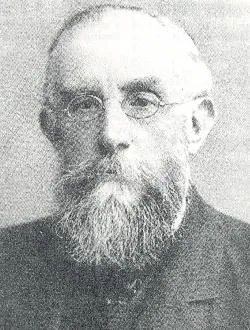
1880 –1881 TAY, Waren (1843 – 1927)
Symmetrical changes in the region of the yellow spot in each eye of an infant.
Tay was the first to describe amaurotic familial idiocy, his paper dealing mainly with the ocular manifestations. The condition later became known as “Tay-Sachs’s disease” (see also No. 4705).
GMN 5918 · https://historyofmedicine.com/id/6822
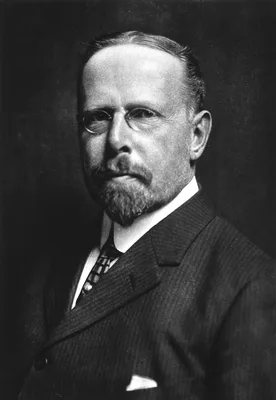
1887 SACHS, Bernard (1858 – 1944)
On arrested cerebral development, with special reference to its cortical pathology.
Sachs described the cerebral changes in amaurotic familial idiocy. Earlier, Tay (No. 5918) had recorded the ocular manifestations of this condition, which became known as “Tay-Sachs’s disease”. Two further papers on t…
GMN 4705 · https://historyofmedicine.com/id/1129
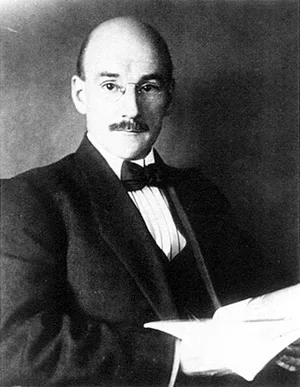
1912 GODDARD, Henry Herbert (1866 – 1957)
The Kallikak family: A study in the heredity of feeble-mindedness.
When this book was published Goddard was Director of the Research Laboratory of the Training School at Vineland, New Jersey, for Feeble-minded Girls and Boys. Though this work drew wide attention to the problems of pe…
GMN 11535 · https://historyofmedicine.com/id/13734
1934 FØLLING, Ivar Asbjørn (1888 – 1973)
Utskillelse av fenylpyrodruesyre i urinen som stoffskifteanomali i forbindelse med imbecilletet.
Phenylketonuria (PKU) first described. This was the first hereditary metabolic disorder shown to be responsible for mental retardation. German translation in Hoppe-Seyl. Z. physiol. Chem., 1934, 227, 169-76. English t…
GMN 3924 · https://historyofmedicine.com/id/5067
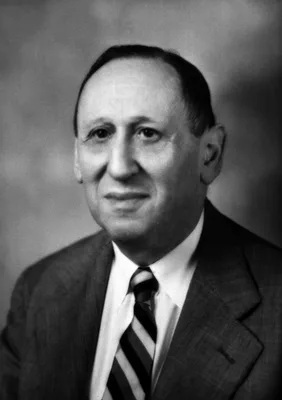
1943 KANNER, Leo (1894 – 1981)
Autistic disturbances of affective contact.
The first description of “early infantile autism” as a disorder marked by extreme detachment, self-isolation, inability to form relationships, frequent failure to acquire communicative abilities, and preoccupation wit…
GMN 7625 · https://historyofmedicine.com/id/9797
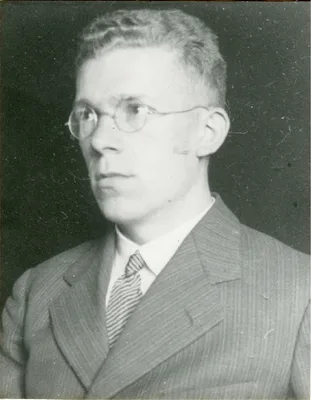
1944 ASPERGER, Hans (1906 – 1980)
Die "Autistischen Psychopathen" im Kindesalter.
Early infantile autism (Asperberger's syndrome).
GMN 7626 · https://historyofmedicine.com/id/9798
1949 BECK, Claude Schaeffer (1894 – 1971); ET AL
Revascularization of the brain through establishment of a cervical arteriovenous fistula. Effects in children with mental retardation and convulsive disorders.
With C. F. McKhann and W. D. Belnap.
GMN 4914 · https://historyofmedicine.com/id/6009
1994 TRENT, James W. Jr.
Inventing the feeble mind: A history of mental retardation in the United States.
GMN 10500 · https://historyofmedicine.com/id/12693
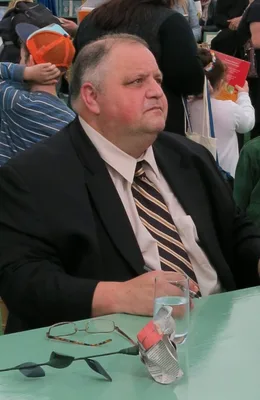
2015 SILBERMAN, Steve (1957 – )
NeuroTribes: The legacy of autism and the future of neurodiversity. Foreward by Oliver Sacks.
A very well written semi-popular historical account of autism.
GMN 8159 · https://historyofmedicine.com/id/10335