1480 BERNARD DE GORDON, (Bernardus de Gordonio) (1250 – 1330)
Practica, seu Lilium medicinae.
Includes descriptions of plague, tuberculosis, scabies, epilepsy, anthrax, and leprosy. ISTC No. ib00447000.
GMN 8369 · https://historyofmedicine.com/id/10546
1529 CAELIUS AURELIANUS (500 – ); SORANUS OF EPHESUS (ΣΩΡΑΝΌΣ) (100 – 150); ORIBASIUS (ὈΡΕΙΒΆΣΙΟΣ), [Oreibasius] (320 – 403); SICARD, Johannes [Sichardt;Sichardus] (1499 – 1552)
Caelii Aureliani Siccensis Tardarum passionum libri V. D. Oribasii Sardi Iuliani Caesaris archiatri Euporiston lib: III. Medicinae comperi: lib: 1. Curationum lib: 1. Trochiscoru confect: lib: 1.
From a clinical point of view, the two works of Caelius Aurelianus, which were translated into Latin from Greek originals by Soranus of Ephesus that were later lost, represent the high-point of Graeco-Roman medical ac…
GMN 1959.1 · https://historyofmedicine.com/id/6052
1567 PARACELSUS, [Philippus Aureolus Theophrastus Bombastus von Hohenheim] (1493 – 1541)
Von den Kranckheyten so die vernunfft berauben als da sein S. Veyts Thantz…
In this work on the “diseases that deprive man of his reason” Paracelsus anticipated the descriptive method in psychiatry, giving a purely medical account of the clinical manifestations of epilepsy, mania, and hysteri…
GMN 4916.1 · https://historyofmedicine.com/id/6060
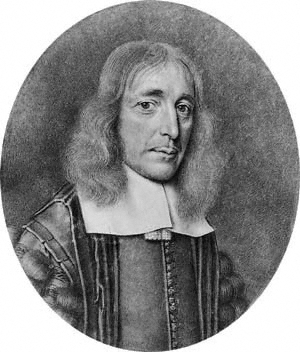
1670 WILLIS, Thomas (1621 – 1675)
Affectionum quae dicuntur hystericae e hypochondriacae pathologia spasmodica vindicata…
In this treatise on hysteria and hypochondria, Willis showed that hysteria was a nervous disease and not a uterine disorder as had been traditionally believed. He compared hysteria in women to hypochondria in men. He …
GMN 4839 · https://historyofmedicine.com/id/3606
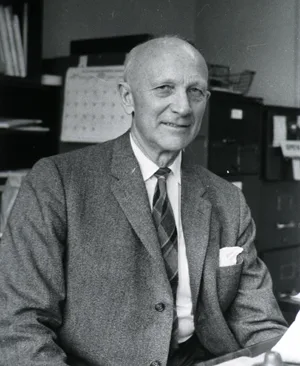
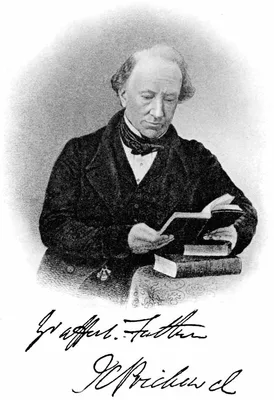
1822 PRICHARD, James Cowles (1786 – 1848)
A treatise on diseases of the nervous system.
Includes the best early account of epilepsy after Willis.
GMN 4809 · https://historyofmedicine.com/id/1582
1827 BRAVAIS, Louis François (1801 – 1843)
Recherches sur les symptômes et le traitement de l’épilepsie hémiplégique. Thèse [pour le doctorat en médecin] No. 118
First description of hemiplegic epilepsy so well depicted by Jackson (No. 4816), and referred to by Charcot as “Bravais–Jacksonian épilepsie”. Digital facsimile from the Internet Archive at this link.
GMN 4810 · https://historyofmedicine.com/id/1584
1836 BRIGHT, Richard (1789 – 1858)
Fatal epilepsy, from suppuration between the dura mater and arachnoid, in consequence of blood having been effused in that situation.
Bright was the first to describe unilateral (“Jacksonian”) epilepsy.
GMN 4811 · https://historyofmedicine.com/id/1587
1851 HALL, Marshall (1790 – 1857)
Synopsis of cerebral and spinal seizures of inorganic origin and of paroxysmal form as a class; and of their pathology as involved in the structures and actions of the neck.
Hall was the first to suggest that the paroxysmal nervous discharges in epilepsy were produced by the spinal nervous system, first to notice the connection of anemia with epilepsy, and first to deduce that epilepsy wa…
GMN 4812 · https://historyofmedicine.com/id/1589
1856 BROWN-SÉQUARD, Charles Édouard (1817 – 1894)
Recherches expérimentales sur la production d’une affection convulsive épileptiforme, à la suite de lésions de la moëlle épiniére.
Experimental epilepsy (section of sciatic nerve). See also Arch. Physiol. norm. path., 1869, 2, 211-20, 422-38, 496-503; 1870, 3, 153-60.
GMN 4813 · https://historyofmedicine.com/id/1590
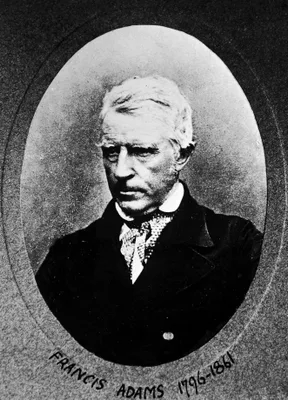
1856 ARETAEUS OF CAPPADOCIA, (Ἀρεταῖος Καππάδοκος) (80 – 140); ADAMS, Francis (1796 – 1861)
Тα ∑ωζομενα. The extant works of Aretaeus, the Cappadocian. Edited and translated by Francis Adams.
Aretaeus left many fine descriptions of disease; in fact Garrison ranks him second only to Hippocrates in this respect. In the printed editions of this bibliography, before the present online version, the Adams editio…
GMN 22 · https://historyofmedicine.com/id/8934
1857 LOCOCK, Sir Charles (1799 – 1875)
[Contribution to discussion on paper by E.H. Sieveking.]
Locock, physician accoucheur to Queen Victoria, recommended bromide of potassium in the treatment of epilepsy.
GMN 4813.1 · https://historyofmedicine.com/id/1595
1857 O’CONNOR, William ( – 1880)
Cases of epilepsy, associated with amenorrhoea and vicarious menstruation, successfully treated with the iodide of potassium.
O’Connor was apparently the first to use potassium bromide for the treatment of epilepsy.
GMN 4814 · https://historyofmedicine.com/id/1599
1859 SCHROEDER VAN DER KOLK, Jacob Ludwig Conrad (1797 – 1862)
Bau und Functionen der Medulla spinalis und oblongata, und nächste Ursache und rationelle Behandlung der Epilepsie.
The work of Schroeder van der Kolk brought histological examination to the forefront in connection with theories on the localization of function. His careful microscopical studies confirmed the medulla as being the ul…
GMN 4815 · https://historyofmedicine.com/id/1603
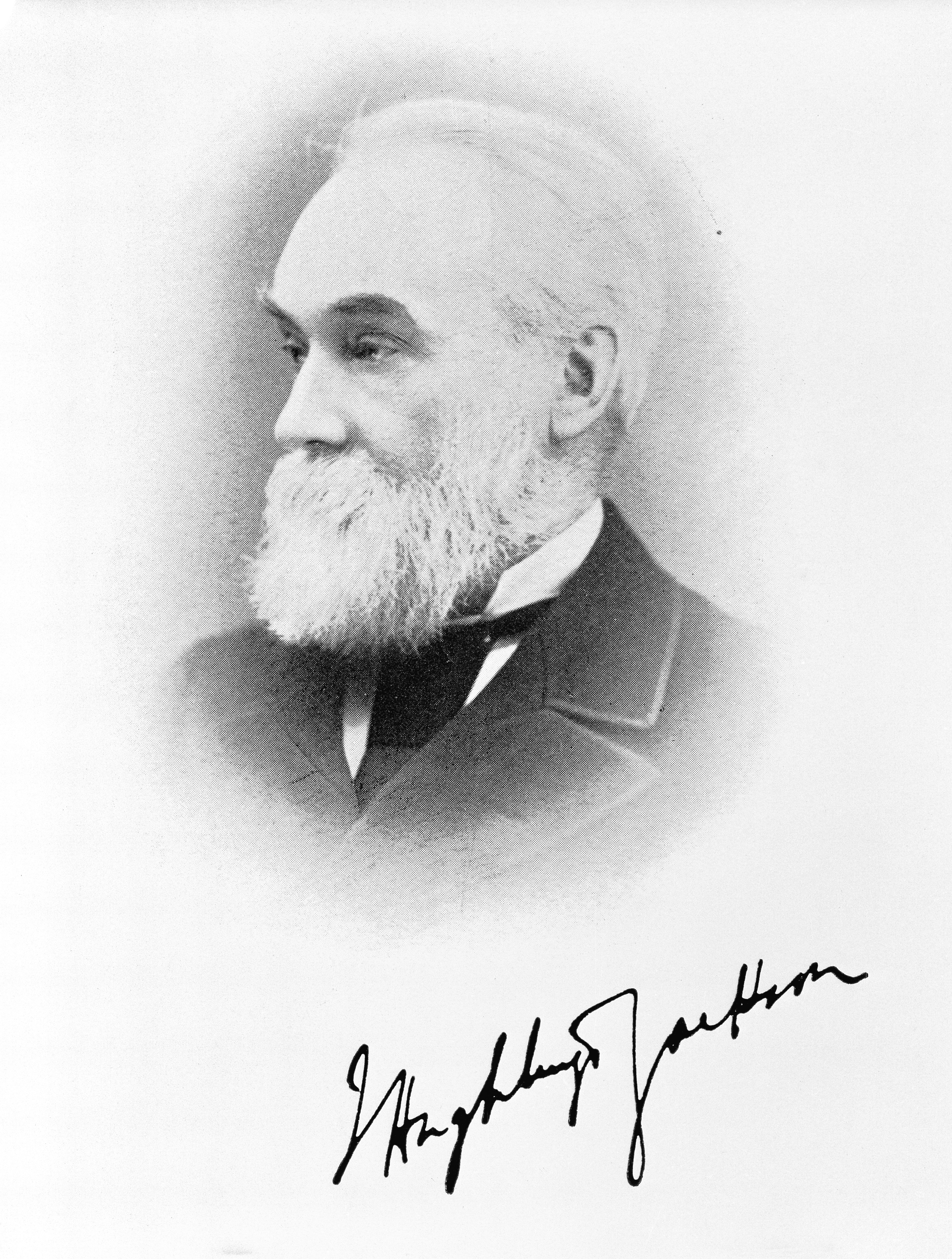
1863 JACKSON, John Hughlings (1835 – 1911)
Unilateral epileptiform seizures, attended by temporary defect of sight.
“Jacksonian epilepsy” is so called from the excellent account of unilateral epilepsy with spasm given by Jackson. Actually, Bravais (No. 4810) was first to note the condition.
GMN 4816 · https://historyofmedicine.com/id/1611
1873 LIVEING, Edward (1832 – 1919)
On megrim, sick-headache, and some allied disorders.
Liveing’s classic account of migraine showed the close association of this condition with tetany, asthma, and false angina pectoris, with epilepsy, and the alternation of all these conditions in the same subject or th…
GMN 2587 · https://historyofmedicine.com/id/409
1875 JACKSON, John Hughlings (1835 – 1911)
Case of hemikinesis.
GMN 4817 · https://historyofmedicine.com/id/1615
1876 –1880 CHARCOT, Jean Martin (1825 – 1893); BOURNEVILLE, Désiré-Magloire (1840 – 1909); REGNARD, Paul-Marie-Léon (1850 – 1927)
Iconographie photographique de la Salpêtrière. Service de M. Charcot. 3 vols.
A photographic atlas devoted to cases of hysteria and epilepsy, with case histories; the third volume includes discussions of hypnotism, somnambulism and magnetism. Bourneville was Charcot’s assistant at the Salpêtriè…
GMN 4558.1 · https://historyofmedicine.com/id/8918
1879 STURGE, William Allen (1850 – 1919)
A case of partial epilepsy, apparently due to a lesion of one of the vasomotor centres of the brain.
“Sturge–Weber syndrome” – association of a port-wine nevus in the skin of the face with a vascular abnormality of the meninges on the same side. See No. 4605.2.
GMN 4560.1 · https://historyofmedicine.com/id/426
1881 GOWERS, Sir William Richard (1845 – 1915)
Epilepsy and other chronic convulsive diseases.
Gowers left a classic account of epilepsy, a book which today is still one of the most important on the subject. He was first to note the tetanic nature of the epileptic convulsion.
GMN 4818 · https://historyofmedicine.com/id/1620
1889 ALEXANDER, William (1844 – 1919)
The treatment of epilepsy.
Alexander was the first to attempt the treatment of epilepsy by surgical means. He removed the superior cervical sympathetic ganglia. Digital facsimile from the Internet Archive at this link.
GMN 4861 · https://historyofmedicine.com/id/5643
1891 UNVERRICHT, Heinrich (1853 – 1912)
Die Myoclonie.
First description of “Unverricht’s disease” – familial myoclonus epilepsy.
GMN 4819 · https://historyofmedicine.com/id/1622
1894 KOŽEVNIKOV, Aleksei Yakovlevič (1836 – 1902)
Osobyj vid kortikal’noj epilepsii.
“Koževnikov’s epilepsy”, an atypical form of cortical origin. German translation by H. Heintel and H. Müller-Dietz, Hamburg, 1974.
GMN 4820 · https://historyofmedicine.com/id/1624
1906 FRIEDMANN, Max (1858 – 1925)
Ueber die nicht epileptischen Absencen oder kurzen narkoleptischen Anfälle.
First description of pyknolepsy.
GMN 4594.1 · https://historyofmedicine.com/id/483
1907 GOWERS, Sir William Richard (1845 – 1915)
The border-land of epilepsy. Faints, vagal attacks, vertigo, migraine, sleep symptoms, and their treatment.
GMN 4821 · https://historyofmedicine.com/id/1628
1911 DAVENPORT, Charles Benedict (1866 – 1944); WEEKS, David Fairchild (1874 – 1929)
A first study of inheritance of epilepsy.
Davenport and Weeks produced strong evidence in support of the hereditary origin of epilepsy.
GMN 4822 · https://historyofmedicine.com/id/1630
1912 HAUPTMANN, Alfred (1881 – 1948)
Luminal bei Epilepsie.
Introduction of phenobarbitone in the treatment of epilepsy.
GMN 4823 · https://historyofmedicine.com/id/1634
1923 JONES, William Henry Samuel (1876 – 1963); HIPPOCRATES, [Ἱπποκράτης; Hippocrates of Kos] (-460 – -370)
The sacred disease. In [Works]…edited with an English translation by W.H.S. Jones. 2, 127-83
This includes the first mention of epilepsy in children. Hippocrates grouped all convulsive attacks together as ερα νο̂σος, the sacred disease. He did not employ the word έπίληψις, (which seems first to have been used…
GMN 4807 · https://historyofmedicine.com/id/8898
1937 GOLLA, Frederick Lucien (1878 – 1968); ET AL
The electro-encephalogram in epilepsy.
Demonstration of the changes in the electro-encephalogram in epilepsy. With S. Graham and W. Grey Walter.
GMN 4824 · https://historyofmedicine.com/id/1637
1938 MERRITT, Hiram Houston (1902 – 1979); PUTNAM, Tracy Jackson (1894 – 1938)
Sodium diphenyl hydantoinate in the treatment of convulsive disorders.
Introduction of diphenylhydantoin.
GMN 4824.1 · https://historyofmedicine.com/id/1643
1941 PENFIELD, Wilder Graves (1891 – 1976); ERICKSON, Theodore
Epilepsy and cerebral localization: A study of the mechanism, treatment and prevention of epileptic seizures.
Penfield’s most widely recognized contribution was the gradual development of cortical excision as an accepted and valuable method of treating medically refractory focal epilepsy. See also No. 4914.2.
GMN 4910.1 · https://historyofmedicine.com/id/5992
1945 TEMKIN, Oswei (1902 – 2002)
The falling sickness: A history of epilepsy from the Greeks to the beginnings of modern neurology. Second edition.
Revised second edition. Baltimore, 1971.
GMN 5015 · https://historyofmedicine.com/id/6598
1954 PENFIELD, Wilder Graves (1891 – 1976); JASPER, Herbert Henri (1906 – 1999)
Epilepsy and the functional anatomy of the human brain.
This comprehensive monograph on the mechanism and surgical treatment of epileptic seizures remains Penfield’s most substantial scientific work. See also No. 4910.1.
GMN 4914.2 · https://historyofmedicine.com/id/6016
1993 STOL, Marten (1940 – )
Cuneiform Monographs II: Epilepsy in Babylonia.
GMN 8313 · https://historyofmedicine.com/id/10489
2003 HIPPOCRATES, [Ἱπποκράτης; Hippocrates of Kos] (-460 – -370); JOUANNA, Jacques (1935 – )
Hippocrate, Oeuvres complètes, Tome II, 3ème partie: La maladie sacrée. Texte établi, traduit et annoté par Jacques Jouanna. (Collection des universités de France).
Until Hippocrates epilepsy was believed to be religious in origin; Hippocrates provided the first medical description of the disease.
GMN 10018 · https://historyofmedicine.com/id/12207

![HIPPOCRATES, [Ἱπποκράτης; Hippocrates of Kos] (-460 – -370)](/media/portraits/50)