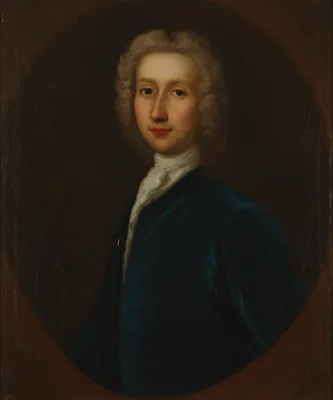
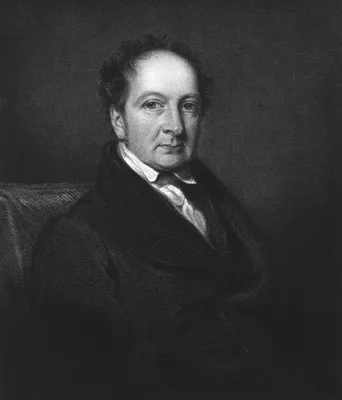
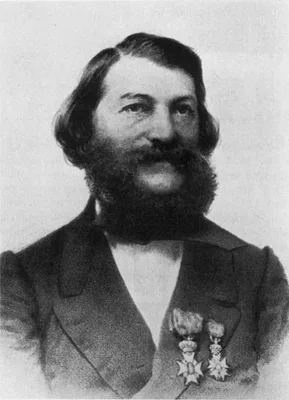
1768 WHYTT, Robert (1714 – 1766)
Observations on the dropsy in the brain.
The first account of the clinical course of tuberculous meningitis in children. This work is notable for its fullness of detail and its accuracy. Whytt divided the disease into three stages, according to the character…
GMN 4634 · https://historyofmedicine.com/id/696
1784 UNDERWOOD, Michael (1737 – 1820)
A treatise on the diseases of children.
Underwood laid the foundation of modern pediatrics. His work was superior to anything that had previously appeared and remained the most important book on the subject for sixty years, passing through many editions. Th…
GMN 2734.4 · https://historyofmedicine.com/id/8101
1805 VIEUSSEUX, Gaspard (1746 – 1814)
Mémoire sur la maladie qui a régné à Genève au printemps de 1805.
First definite description of cerebrospinal meningitis. Partial English translation in No. 2241.
GMN 4674 · https://historyofmedicine.com/id/940
1808 CHEYNE, John (1777 – 1836)
An essay on hydrocephalus acutus, or dropsy in the brain.
Acute hydrocephalus first described.
GMN 4635 · https://historyofmedicine.com/id/699
1810 STRONG, Nathan (1781 – 1837)
An inaugural dissertation on the disease termed petechial, or spotted fever. Submitted to the Examining Committee of the Medical Society of Connecticut, for the county of Hartford.
This graduation dissertation was the first published brochure on cerebrospinal meningitis. Digital facsimile from U.S. National Library of Medicine at this link.
GMN 4675 · https://historyofmedicine.com/id/942
1811 NORTH, Elisha (1771 – 1843)
A treatise on a malignant epidemic, commonly called spotted fever.
First book on cerebrospinal meningitis; in it North recommended the use of the clinical thermometer, not in general use until the time of Wunderlich. For more information on this book, see the article by F. L. Pleadwe…
GMN 4676 · https://historyofmedicine.com/id/944
1834 GERHARD, William Wood (1809 – 1872)
Cerebral affections of children.
Accurate clinical description of tuberculous meningitis.
GMN 4636 · https://historyofmedicine.com/id/701
1835 BADHAM, John (1807 – 1840)
Paralysis in childhood. Four remarkable cases of suddenly induced paralysis in the extremities, occurring in children, without any apparent cerebral or cerebro-spinal lesion.
Important clinical description.
GMN 4663 · https://historyofmedicine.com/id/794
1840 HEINE, Jacob (Jakob) (1799 – 1879)
Beobachtungen über Lähmungszustände der untem Extremitäten und deren Behandlung.
First description of acute anterior poliomyelitis, which Heine separated from other forms of paralysis; he described the deformities arising from the disease. He also called attention to congenital spastic paraplegia,…
GMN 4664 · https://historyofmedicine.com/id/796
1856 LEBERT, Hermann (1813 – 1878)
Ueber Gehirnabscesse.
First systematic account of brain abscess.
GMN 4638 · https://historyofmedicine.com/id/706
1859 LANDRY, Jean Baptiste Octave (1826 – 1865)
Note sur la paralysie ascendante aiguë
“Landry’s paralysis” – acute infective polyneuritis, more commonly known as Guillain-Barré syndrome. It is difficult to assess the claim of Landry as first to record this condition, since Adolf Kussmaul reported two c…
GMN 4639 · https://historyofmedicine.com/id/8863
1861 –1862 BÄRENSPRUNG, Friedrich Wilhelm Felix von (1822 – 1864)
Die Gürtelkrankheit.
Herpes zoster first ascribed to a lesion of the spinal ganglia.
GMN 4640 · https://historyofmedicine.com/id/8866
1870 CHARCOT, Jean Martin (1825 – 1893); JOFFROY, Alex (1844 – 1908)
Une observation de paralysie infantile s’accompagnant d’une altération des cornes antérieures de la substance grise de la moëlle.
First demonstration of the atrophy of the anterior horns of the spinal cord in infantile paralysis, confirming earlier suggestions of von Heine and Duchenne.
GMN 4665 · https://historyofmedicine.com/id/801
1875 GAYET, Alphonse-Charles (1833 – 1904)
Affection encéphalique (encéphalite diffuse probable) localisée aux étages supérieurs des pédoncules cérébraux et aux couches optiques.
First description of acute superior hemorrhagic polioencephalitis. Called also “Wernicke’s encephalopathy”, following the latter’s description in his Lehrbuch der Gehirnkrankheiten, Kassel, 1881, 2, 229-42.
GMN 4641 · https://historyofmedicine.com/id/710
1875 ERB, Wilhelm Heinrich (1840 – 1921)
Ueber acute Spinällahmung (Poliomyelitis anterior acuta) bei Erwachsenen und über verwandte spinale Erkrankungen.
Erb was first to use the term “acute anterior poliomyelitis”.
GMN 4665.1 · https://historyofmedicine.com/id/815
1879 –1880 LEYDEN, Ernst Viktor von (1832 – 1910)
Ueber Poliomyelitis und Neuritis.
Leyden enjoyed a great reputation as a neurologist and his paper on poliomyelitis and neuritis is one of his best works. He was one of the founders of the journal in which it appeared.
GMN 4666 · https://historyofmedicine.com/id/817
1882 KERNIG, Vladimir Mikhailovich (Woldemar) (1840 – 1917)
Ein Krankheitssymptom der acuten Meningitis.
Kernig drew attention to a flexor contracture of the leg on attempting to extend it on the thigh (“Kernig’s sign”), almost always present in cerebrospinal meningitis and an important diagnostic sign. A fuller descript…
GMN 4677 · https://historyofmedicine.com/id/947
1884 LANDOUZY, Louis Théophile Joseph (1845 – 1917)
Fièvre zoster etexanthèmes zosteriformes.
Landouzy first suggested the infective nature of herpes.
GMN 4642 · https://historyofmedicine.com/id/717
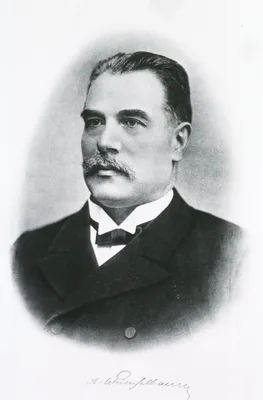
1887 WEICHSELBAUM, Anton (1845 – 1920)
Ueber die Aetiologie der akuten Meningitis cerebro-spinalis.
Weichselbaum discovered the meningococcus, Neisseria meningitidis, causative agent of cerebrospinal meningitis.
GMN 4678 · https://historyofmedicine.com/id/949
1890 MEDIN, Karl Oskar (1847 – 1927)
En epidemi af infantil paralysi.
The epidemic character of poliomyelitis was first noted by Medin. The disease is also known as “Heine–Medin disease” from the descriptions given by these two writers (see also No. 4664). German version in Verh. X. Int…
GMN 4667 · https://historyofmedicine.com/id/822
1895 VOELCKER, Arthur Francis (1861 – 1946)
First description of the Waterhouse–Friderichsen syndrome (Nos. 4685-86). Abstract of post mortem report, no title.
GMN 4679 · https://historyofmedicine.com/id/8873
1896 HEUBNER, Johann Otto Leonhard (1843 – 1926)
Beobachtungen und Versuche über den Meningokokkus intracellularis (Weichselbaum–Jaeger).
Heubner was the first to isolate meningococci from the cerebrospinal fluid of living beings.
GMN 4680 · https://historyofmedicine.com/id/952
1899 SLAWYK, Coelestin Wilhelm (1866 – )
Ein Fall von Allgemeininfection mit Influenzabacillen.
First description of influenzal meningitis.
GMN 4681 · https://historyofmedicine.com/id/954
1900 HEAD, Sir Henry (1861 – 1940); CAMPBELL, Alfred Walter (1868 – 1937)
The pathology of herpes zoster and its bearing on sensory localisation.
Head and Campbell showed herpes zoster to be a hemorrhagic inflammation of the posterior nerve roots and the homologous spinal ganglia.
GMN 4644 · https://historyofmedicine.com/id/724
1903 FROIN, Georges (1874 – 1932)
Inflammations meningées avec réactions chromatique, fibrineuse et cytologique du liquid cephalo-rachidien.
“Froin’s syndrome” – a coagulation of the cerebrospinal fluid.
GMN 4645 · https://historyofmedicine.com/id/727
1905 WICKMAN, Otto Ivar (1872 – 1914)
Studien über Poliomyelitis acuta.
Wickman was the first to produce evidence confirming the infectious nature of poliomyelitis.
GMN 4668 · https://historyofmedicine.com/id/826
1906 JOCHMANN, Georg (1874 – 1915)
Versuche zur Serodiagnostik und Serotherapie der epidemischen Genickstarre.
First attempts at the serum treatment of cerebrospinal meningitis.
GMN 4682 · https://historyofmedicine.com/id/955
1907 FLEXNER, Simon (1863 – 1946)
Concerning a serum therapy for experimental infection with Diplococcus intracellularis.
Flexner prepared an antiserum for use in cerebrospinal meningitis.
GMN 4683 · https://historyofmedicine.com/id/958
1908 FLEXNER, Simon (1863 – 1946); JOBLING, James Wesley (1876 – 1961)
Serum treatment of epidemic cerebrospinal meningitis.
GMN 4684 · https://historyofmedicine.com/id/960
1909 LANDSTEINER, Karl (1868 – 1943); POPPER, Erwin (1879 – 1955)
Uebertragung der Poliomyelitis acuta auf Affen.
Landsteiner and Popper were the first to isolate poliovirus and to transmit poliomyelitis to monkeys.
GMN 4669 · https://historyofmedicine.com/id/830
1910 FLEXNER, Simon (1863 – 1946); LEWIS, Paul Adin (1879 – 1929)
Experimental poliomyelitis in monkeys: Active immunization and passive serum protection.
Demonstration of antibodies in convalescent serum in monkeys.
GMN 4670 · https://historyofmedicine.com/id/834
1910 GAY, Frederick Parker (1874 – 1939); LUCAS, William Palmer (1880 – 1960)
Anterior poliomyelitis. Methods of diagnosis from spinal fluid and blood in monkeys and in human beings.
Gay and Lucas were the first to make accurate cell counts of the spinal fluid in poliomyelitis.
GMN 4670.1 · https://historyofmedicine.com/id/837
1910 NETTER, Arnold (1855 – 1936); LEVADITI, Constantin (1874 – 1953)
Action microbicide exercée sur la virus de la poliomyélite aiguë dans le sérum des sujets antérieurement atteints de paralysie infantile. Sa constatation dans le sérum d’un sujet qui a présenté une forme abortive.
Antibodies discovered in human convalescentserum. See also No. 4670.3.
GMN 4670.2 · https://historyofmedicine.com/id/844
1910 LANDSTEINER, Karl (1868 – 1943); LEVADITI, Constantin (1874 – 1953)
La poliomyélite experimental.
Serum from a monkey that had recovered from experimental poliomyelitis was mixed with an emulsion containing active polio virus; it failed to produce paralytic disease when injected into fresh monkeys.
GMN 4670.3 · https://historyofmedicine.com/id/853
1911 WATERHOUSE, Rupert (1873 – 1958)
A case of suprarenal apoplexy.
Waterhouse–Friderichsen (WFS) syndrome (see also Nos. 4679, 4686).
GMN 4685 · https://historyofmedicine.com/id/8875
1912 SCHILDER, Paul Ferdinand (1886 – 1940)
Zur Kenntnis der sogenannten diffusen Sklerose (über Encephalitis periaxialis diffusa).
“Schilder’s disease” – encephalitis periaxialis diffusa.
GMN 4646 · https://historyofmedicine.com/id/730
1912 KLING, Carl (1887 – 1967)
Experimental and pathological investigation. In: Investigations on epidemic infantile paralysis, report from the State Medical Institute of Sweden to the XVth International Congress on Hygiene and Demography.
Kling, A. Pettersson, and W. Wernstedt recovered the poliomyelitis virus from the intestinal wall and contents, disproving the contention of Flexner that it was exclusively neurotropic.
GMN 4670.4 · https://historyofmedicine.com/id/857
1916 GUILLAIN, Georges (1876 – 1961); ET AL
Sur un syndrome de radiculo-névrite avec hyperalbuminose du liquide céphalo-rachidien sans réaction cellulaire. Remarques sur les caractères cliniques et graphiques des réflexes tendineux.
“Guillain-Barré syndrome”, acute infective polyneuritis. With J. A. Barré and A. Strohl.
GMN 4647 · https://historyofmedicine.com/id/734
1917 ECONOMO, Constantin von (1876 – 1931)
Encephalitis lethargica.
Economo’s classic description of epidemic encephalitis (“von Economo’s disease”) was published on 10 May 1917; see No. 4649.
GMN 4650 · https://historyofmedicine.com/id/8868
1918 FRIDERICHSEN, Carl (1886 – 1982)
Nebennierenapoplexie bei kleinen Kindern.
See No. 4685.
GMN 4686 · https://historyofmedicine.com/id/963
1924 WALLGREN, Arvid Johann (1889 – 1973)
Une nouvelle maladie infectieuse du système nerveux central?
Acute lymphocytic choriomeningitis (aseptic meningitis syndrome) first described.
GMN 4687 · https://historyofmedicine.com/id/8877
1925 KUNDRATITZ, Karl (1889 – 1975)
Experimentelle Übertragung von Herpes zoster auf den Menschen und die Beziehungen von Herpes zoster zu Varicellen.
First demonstration of the infectivity of herpes.
GMN 4652 · https://historyofmedicine.com/id/753
1927 BALÓ, József Mátyas (1895 – 1979)
A leukoenkephalitis periaxialis concentricaról.
“Baló’s disease” – encephalitis periaxialis concentrica. Translation in Arch. Neurol. Psychiat. (Chicago), 1928, 19, 242-64.
GMN 4653 · https://historyofmedicine.com/id/755
1928 KANEKO, Renjiro (1886 – ); AOKI, Y
Ueber die Encephalitis epidemica in Japan.
Japanese encephalitis distinguished from encephalitis lethargica.
GMN 4654 · https://historyofmedicine.com/id/760
1929 DRINKER, Philip (1894 – 1972); MCKHANN, Charles Freemont (1930 – )
The use of a new apparatus for the prolonged administration of artificial respiration. I. A fatal case of poliomyelitis.
The Drinker respirator (“iron lung”).
GMN 1978 · https://historyofmedicine.com/id/3767
1931 BURNET, Sir Frank Macfarlane (1899 – 1985); MACNAMARA, Annie Jean Dame (1899 – 1968)
Immunological differences between strains of poliomyelitis virus.
GMN 4670.5 · https://historyofmedicine.com/id/861
1933 MUCKENFUSS, Ralph S. (1916 – )
Encephalitis: studies on experimental transmission.
Isolation of the St. Louis encephalitis virus. With C. Armstrong and H. A. McCordock.
GMN 4656 · https://historyofmedicine.com/id/765
1934 HAYASHI, Michitomo
Übertragung des Virus von Encephalitis epidemica auf Affen.
Experimental transmission of Japanese B encephalitis.
GMN 4657 · https://historyofmedicine.com/id/767
1934 SABIN, Albert Bruce (1906 – 1993); WRIGHT, Arthur M.
Acute ascending myelitis following a monkey bite, with the isolation of a virus capable of reproducing the disease.
Herpesvirus simiae (B virus) infection; isolation of the virus.
GMN 4658 · https://historyofmedicine.com/id/770
1934 ARMSTRONG, Charles (1886 – 1967); LILLIE, Ralph Dougall (1896 – 1979)
Experimental lymphocytic choriomeningitis of monkeys and mice produced by a virus encountered in studies of the 1933 St. Louis encephalitis epidemic.
Isolation of the virus of benign lymphocytic choriomeningits.
GMN 4688 · https://historyofmedicine.com/id/966