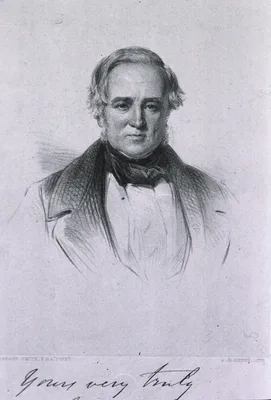
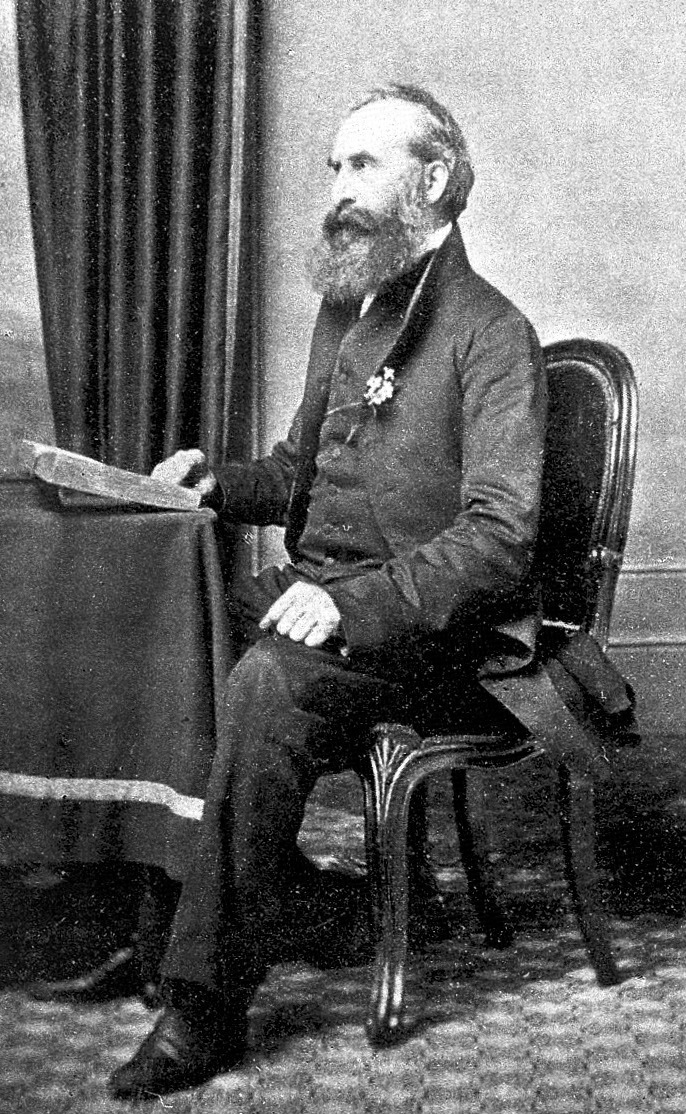
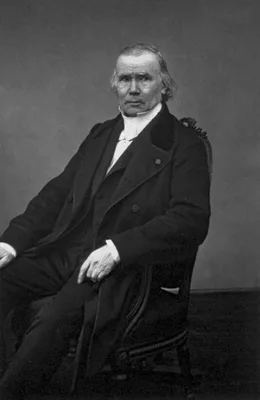
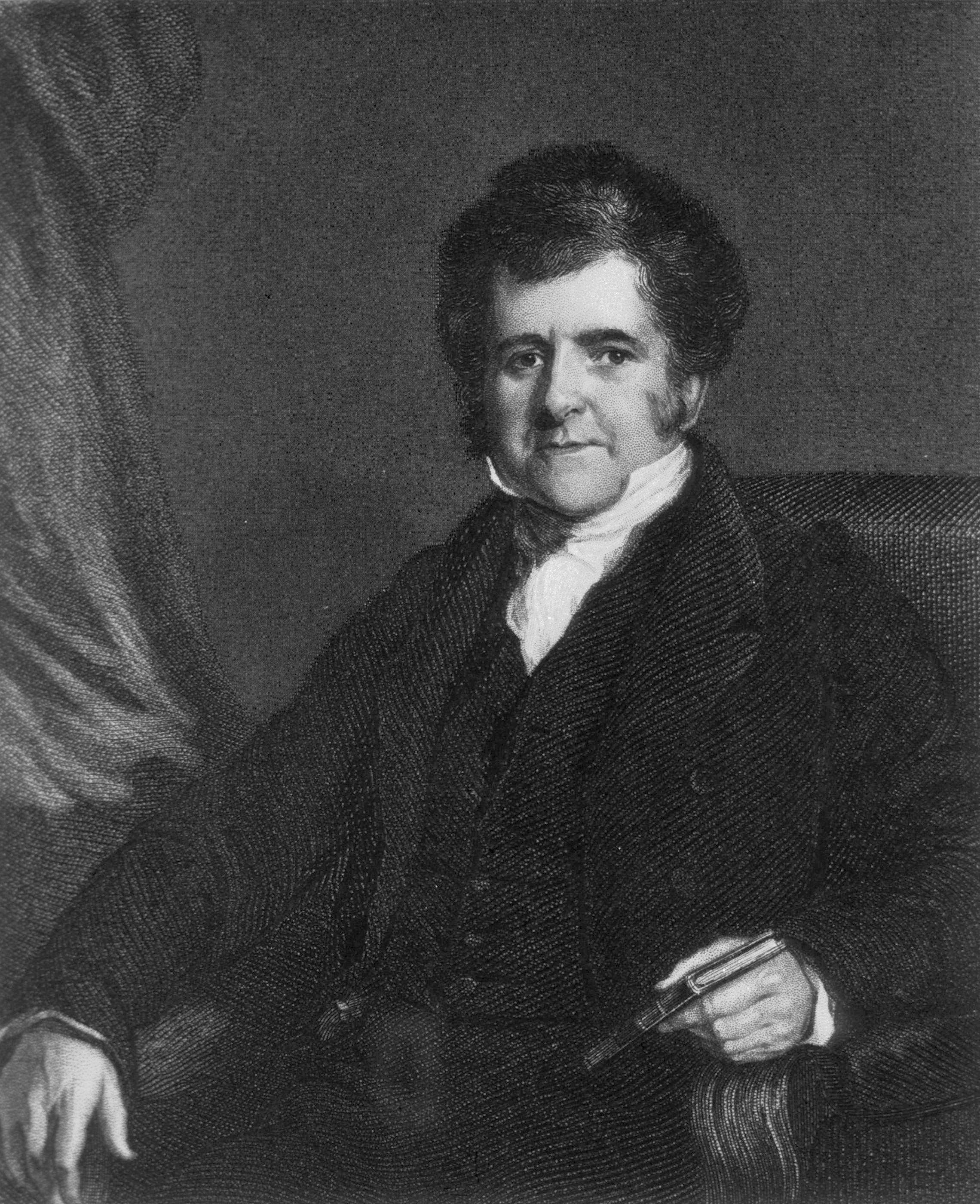
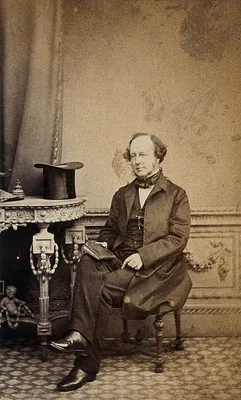
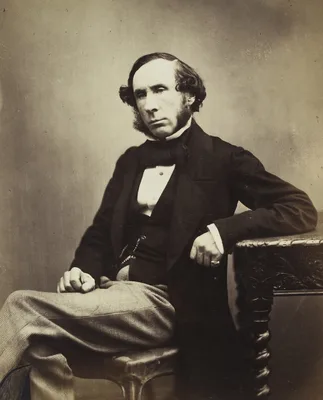
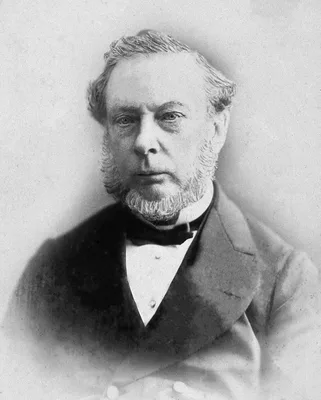
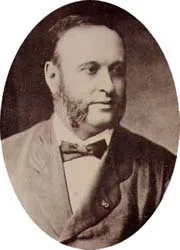
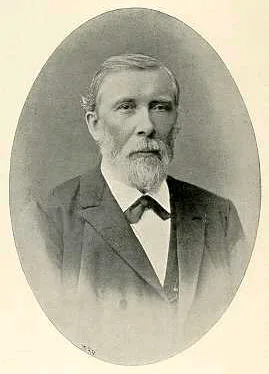
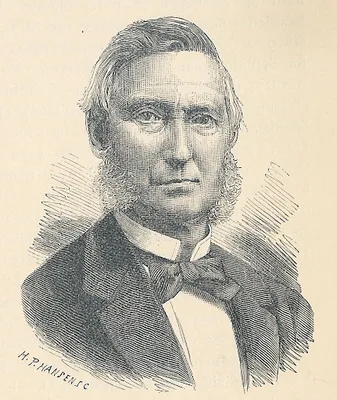
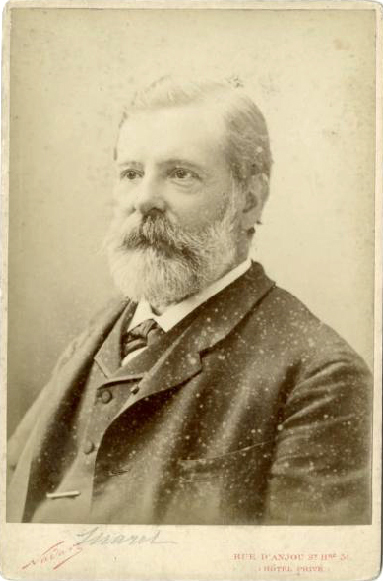
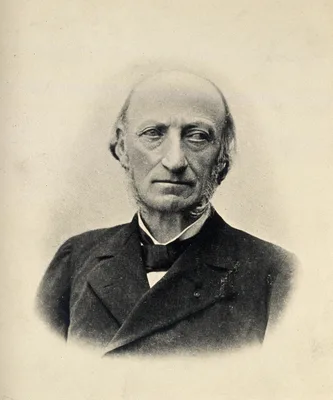
1826 PORTER, William Henry (1790 – 1861)
Observations on the surgical pathology of the larynx and trachea.
Porter was Professor of Surgery at the Royal College of Surgeons in Ireland. The above includes a description of “Porter’s sign”, tracheal tugging in aortic aneurysm.
GMN 3254 · https://historyofmedicine.com/id/3920
1827 ADAMS, Robert (1791 – 1875)
Cases of diseases of the heart, accompanied by pathological observations.
On p. 396 commences a classic account of heart block with syncopal attacks, the first complete description of this condition. Following the paper by Stokes (No. 2756) the eponym “Stokes–Adams syndrome” was employed to…
GMN 2745 · https://historyofmedicine.com/id/4604
1828 –1829 HODGKIN, Thomas (1798 – 1866)
On the retroversion of the valves of the aorta.
Aortic insufficiency is usually associated with the name of Corrigan, but Hodgkin’s account antedates Corrigan by three years.
GMN 2746 · https://historyofmedicine.com/id/4611
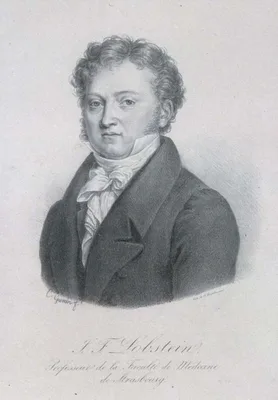
1829 –1833 LOBSTEIN, Jean Georges Chrétien Frédéric Martin (1777 – 1835)
Traité d’anatomie pathologique. 2 vols. and atlas.
Includes a historical review of the subject from the time of the Ancient Egyptians to Corvisart, and a summary of the advances in pathology during the preceding 50 years. Vol. 2, pp. 553-600 deals with diseases of the…
GMN 2288 · https://historyofmedicine.com/id/2915
1831 VELPEAU, Alfred Armand Louis Marie (1795 – 1867)
Mémoire sur la piqûre ou l’acupuncture des artères dans le traitement des anévrismes.
First attempt at operative treatment of aneurysm.
GMN 2977 · https://historyofmedicine.com/id/5123
1832 HOPE, James (1801 – 1841)
A treatise on the diseases of the heart and great vessels.
Hope did much to advance the knowledge of heart murmurs, valvular disease, and aneurysm; he described the second sound of the left side of the sternum in mitral stenosis as “altered” – losing its short, flat clear sou…
GMN 2747 · https://historyofmedicine.com/id/4618
1832 CORRIGAN, Sir Dominic John (1802 – 1880)
On permanent patency of the mouth of the aorta, or inadequacy of the aortic valves.
In his wonderfully clear account of aortic insufficiency, Corrigan described the “water-hammer pulse” now commonly known as “Corrigan’s pulse.” He recognized that the hypertrophy of the heart present in this condition…
GMN 2748 · https://historyofmedicine.com/id/4623
1835 BOUILLAUD, Jean Baptiste (1796 – 1881)
Traité cliniques des maladies du coeur. 2 vols.
Bouillaud applied Laennec's technique of auscultation to diseases of the heart. Vol. 2, page 238: “Bouillaud’s disease” – rheumatic endocarditis. Although not first to note the cardiac manifestations of acute rheumati…
GMN 2749 · https://historyofmedicine.com/id/4633
1836 BOUILLAUD, Jean Baptiste (1796 – 1881)
Nouvelles recherches sur le rhumatisme articulaire en général, et spécialement sur la loi de coincidence de la péricardite et de l'endocardite avec cette maladie, ainsi que sur l'efficacité de la formule des émissions sanguines coup sur coup dans son traitement.
"In this volume he [Bouillaud] irrevocably established the etiologic relationship between rheumatic fever and heart disease. Early reports on this relationship had been contributed by Pitcairn, Jenner, and Wells, but …
GMN 11556 · https://historyofmedicine.com/id/13755
1837 SOBERNHEIM, Joseph Friedrich (1803 – 1846)
Akute idiopathische Herzentzündung. In his: Praktische Diagnostik, pp. 118-20
Sobernheim first used the term “myocarditis.”
GMN 2750 · https://historyofmedicine.com/id/4637
1839 MERCIER, Louis-Auguste (1811 – 1882)
Rétrécissement avec oblitération presque complète de la portion thoracique de l’aorte.
Diagnosis of coarctation of aorta during life. Translation in Amer. J. Cardiol, 1965, 16, 253-55.
GMN 2750.1 · https://historyofmedicine.com/id/4639
1839 PIGEAUX, Antoine Louis Jules (1807 – )
Traité pratique des maladies du coeur.
GMN 2751 · https://historyofmedicine.com/id/4640
1839 AMUSSAT, Jean Zuléma (1796 – 1856)
Recherches sur l'introduction accidentelle de l'air dans les veines, et particulièrement sur cette question: L'air en s'Introduisant spontanément par une veine blessée pendant une opération chirurgicale, peut-il causer subitement la mort?
Amussat was one of the first to draw attention to the risks of the introduction of venous air embolism in surgery. Before the introduction of anesthesia surgery was particularly rapid by necessity, and veins were ofte…
GMN 11546 · https://historyofmedicine.com/id/13745
1839 BRIGHT, Richard (1789 – 1858)
Cases of spasmodic disease accompanying affections of the pericardium.
Digital facsimile of the separate offprint from wellcomecollection.org at this link.
GMN 12222 · https://historyofmedicine.com/id/14434
1842 CHEEVERS, Norman (1818 – 1886)
Observations on the diseases of the orifice and valves of the aorta.
First clear account of chronic constrictive pericarditis.
GMN 2752 · https://historyofmedicine.com/id/4643
1843 BARLOW, George Hilaro (1806 – 1866); REES, George Owen (1813 – 1889)
Account of observations… on patients whose urine was albuminous.
An early description of a case of subacute bacterial endocarditis is reported on pp. 227-32 (Case 8).
GMN 2753 · https://historyofmedicine.com/id/4645
1843 FAUVEL, Sulpice Antoine (1813 – 1884)
Mémoire sur les signes stethoscopiques du rétrécissement de l’orifice auriculo-ventriculaire gauches du coeur.
First description of the presystolic murmur in mitral stenosis. Partial English translation in No. 2241.
GMN 2754 · https://historyofmedicine.com/id/4647
1843 PEACOCK, Thomas Bevill (1812 – 1882)
Cases.
An important account of dissecting aneurysm. Peacock collected all previously published cases and added a few of his own to a total of 19.
GMN 2977.1 · https://historyofmedicine.com/id/5129
1844 BALARD, Antoine Jérôme (1802 – 1876)
Mémoire sur l’alcool amylique.
Discovery of amyl nitrite.
GMN 1859 · https://historyofmedicine.com/id/2387
1844 BRICHETEAU, Isidore (1789 – 1861)
Observation d’hydropneumopéricarde accompagnée d’un bruit de fluctuation perceptible à l’oreille.
First adequate description of pneumopericardium.
GMN 2755 · https://historyofmedicine.com/id/4649
1846 LATHAM, Peter Mere (1789 – 1875)
Lectures on subjects connected with clinical medicine, comprising disease of the heart. Second edition, 2 vols.
Includes (vol. 2, pp. 373-79) a classic description of coronary thrombosis, although not using the term. The patient was Thomas Arnold, the educationist, and the report was signed by Joseph Hodgson and by S. Bucknill,…
GMN 2755.1 · https://historyofmedicine.com/id/4655
1846 STOKES, William (1804 – 1878)
Observations on some cases of permanently slow pulse.
Stokes’s celebrated account of heart block with syncopal attacks – the Stokes–Adams syndrome (see also No. 2745). Stokes was most interested in the diagnostic value of this condition. The paper is reprinted in Med. Cl…
GMN 2756 · https://historyofmedicine.com/id/4658
1846 BRODIE, Sir Benjamin Collins (1783 – 1862)
Lectures illustrative of various subjects in pathology and surgery.
Page 361 contains the first description of intermittent claudication in man. This was first reported (in the horse) by “Boullay” [?J. Bouley] in Arch. gén. Méd.,1831, 27, 425. P. 186: Brodie's test for insufficiency o…
GMN 2902 · https://historyofmedicine.com/id/4851
1847 VIRCHOW, Rudolf Ludwig Karl (1821 – 1902)
Ueber die acute Entzündung der Arterien.
GMN 2903 · https://historyofmedicine.com/id/4853
1847 BELLINGHAM, O’Bryen (1805 – 1857)
Observations on aneurism, and its treatment by compression.
Bellingham introduced the “Dublin method” of treating aneurysm by slow compression.
GMN 2978 · https://historyofmedicine.com/id/5133
1848 DONDERS, Frans Cornelis (1818 – 1889); JANSEN, Jan Hissink (1816 – 1885)
Untersuchungen über die Natur der krankhaften Veränderungen der Arterienwände, die als Ursachen der spontanen Aneurysmen zu betrachten sind.
GMN 2979 · https://historyofmedicine.com/id/5140
1850 HOFFA, Moritz (1816 – 1895)
Einige neue Versuche über Herzbewegung.
Experimental ventricular fibrillation.
GMN 810 · https://historyofmedicine.com/id/199
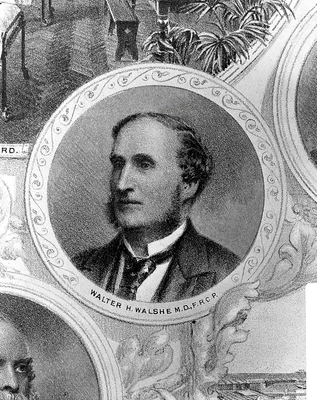
1851 WALSHE, Walter Hayle (1812 – 1892)
A practical treatise on the diseases of the lungs and heart, including the principles of physical diagnosis.
Walshe, physician to University College Hospital, London, was one of the first to recognize the presystolic character of the direct mitral murmur in mitral stenosis.
GMN 2757 · https://historyofmedicine.com/id/4661
1852 KIRKES, William Senhouse (1823 – 1864)
On some of the principal effects resulting from the detachment of fibrinous deposits from the interior of the heart, and their mixture with the circulating blood.
A classic description of embolism resulting from intracardiac coagula. Reprinted in Willius & Keys: Cardiac classics, 1941, pp. 474-82.
GMN 2758 · https://historyofmedicine.com/id/4670
1852 ROKITANSKY, Carl Freiherr von (1804 – 1878)
Ueber einige der wichtigsen Krankheiten der Arterien.
One of Rokitansky’s best works. He described atheroma and calcification in the intima of arteries, and various congenital malformations. Rokitansky "is credited with the initial case report of polyarteritis nodosa in …
GMN 2904 · https://historyofmedicine.com/id/4855
1854 STOKES, William (1804 – 1878)
The diseases of the heart and aorta.
On pp. 320-27 is to be found Stokes’s account of fatty degeneration of the heart, in which he so well described the periodic form of respiration now known as “Cheyne–Stokes breathing.” Stokes also gave the first descr…
GMN 2760 · https://historyofmedicine.com/id/4678
1856 VIRCHOW, Rudolf Ludwig Karl (1821 – 1902)
Thrombose und Embolie. Gefässentzündung und septische Infektion. In his Gesammelte Abhandlungen zur wissenschaftlichen Medicin.
Reprints of papers published between 1846 and 1853. Virchow gave the first clear description of thrombosis and embolism (see especially Beitr. exp. Path.,1846, 2,227-380). This work was translated into English by A. C…
GMN 3006 · https://historyofmedicine.com/id/5356
1859 MALMSTEN, Pehr Henrik (1811 – 1883); DÜBEN, Gustav Wilhelm Johann (1822 – 1892)
Fall af ruptura cordis.
An important account of myocardial infarction, with a histological finding of myocardial necrosis. Abbreviated translation, in German, in Acta med. scand., 1930, 73, 448-50.
GMN 2761.1 · https://historyofmedicine.com/id/4683
1859 CHARCOT, Jean Martin (1825 – 1893)
Sur la claudication intermittente.
Charcot was among the first to report intermittent claudication in man.
GMN 2905 · https://historyofmedicine.com/id/4858
1861 DUROZIEZ, Paul Louis (1826 – 1897)
Du double souffle intermittent crural, comme signe de l’insuffisance aortique.
The double intermittent murmur over the femoral arteries, diagnostic of aortic insufficiency, has become known as “Duroziez’s sign.” Partial English translation in No. 2241.
GMN 2762 · https://historyofmedicine.com/id/4685
1861 GAIRDNER, Sir William Tennant (1824 – 1907)
Short account of cardiac murmurs.
The murmur which Fauvel (No. 2754) had called “presystolic” was described by Gairdner, who called it “auricular-systolic.” This paper is important as being largely responsible for the recognition in Britain of the pre…
GMN 2763 · https://historyofmedicine.com/id/4687
1862 GOLTZ, Friedrich Leopold (1834 – 1902)
Ueber Reflexionen von und zum Herzen (Klopfversuch).
Rapidly-repeated blows on the belly of a frog caused cessation of the heart-beat, which Goltz concluded was brought about by reflex inhibition through the vagus, an important contribution to the knowledge of the mecha…
GMN 814 · https://historyofmedicine.com/id/221
1862 RAYNAUD, Maurice (1834 – 1881)
De l’asphyxie locale et de la gangrène symétrique des extrémités.
First description of “Raynaud’s disease.” Raynaud was the first to describe this disorder, which causes extreme constriction of the peripheral blood vessels resulting in discoloration of the fingers, toes and sometime…
GMN 2704 · https://historyofmedicine.com/id/4418
1862 FLINT (ELDER), Austin (1812 – 1886)
On cardiac murmurs.
First description of the “Austin Flint murmur,” present at the apex beat in aortic regurgitation. Reprinted in Med. Classics, 1940, 4, 864-900.
GMN 2764 · https://historyofmedicine.com/id/4689
1862 ZENKER, Friedrich Albert von (1825 – 1898)
Beiträge zur normalen und pathologischen Anatomie der Lungen.
First description of pulmonary fat embolism in man.
GMN 3007 · https://historyofmedicine.com/id/5361
1862 PANUM, Peter Ludvig (1820 – 1885)
Experimentelle Beiträge zur Lehre von der Embolie.
Experimental study of the effects of ligation of coronary vessels.
GMN 3008 · https://historyofmedicine.com/id/5365
1863 MAREY, Étienne Jules (1830 – 1904)
Physiologie médicale de la circulation du sang basée sur l'étude graphique des mouvements du coeur et du pouls artériel avec application aux maladies du l'appareil circulatoire.
Marey first recorded atrial fibrillation in this work work in which he used pulse tracings to establish the interelationship of heart rate and blood pressure. The work also includes the first detailed description of t…
GMN 11690 · https://historyofmedicine.com/id/13891
1864 MOORE, Charles Hewitt (1821 – 1870); MURCHISON, Charles (1830 – 1879)
On a new method of procuring the consolidation of fibrin in certain incurable aneurisms.
Moore and Murchison introduced the method of treating aneurysm by passing wire into the aneurysmal sac.
GMN 2980 · https://historyofmedicine.com/id/5146
1866 KUSSMAUL, Adolf (1822 – 1902); MAIER, Rudolf Robert (1824 – 1888)
Ueber eine bisher noch nicht beschriebene eigenthümliche Arterienerkrankung (Periarteritis nodosa), die mit Morbus Brightii und rapid fortschreitender allgemeiner Muskellähmung einhergeht.
First description of periarteritis nodosa.
GMN 2906 · https://historyofmedicine.com/id/4861
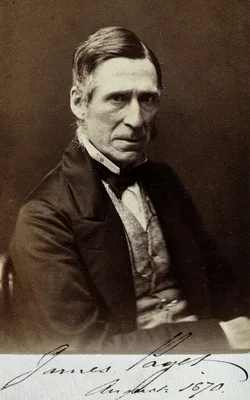
1866 PAGET, Sir James (1814 – 1899)
On gouty and some other forms of phlebitis
Paget-Schroetter syndrome, venous obstruction in the upper extremity.
GMN 2996 · https://historyofmedicine.com/id/5298
1867 BRUNTON, Sir Thomas Lauder (1844 – 1916)
On the use of nitrite of amyl in angina pectoris.
Lauder Brunton was responsible for the introduction of amyl nitrite for the alleviation of angina. Reprinted in F. A. Willius & T. E. Keys: Cardiac classics, 1941, pp. 561-64.
GMN 2890 · https://historyofmedicine.com/id/4329
1867 NOTHNAGEL, Carl Wilhelm Hermann (1841 – 1905)
Angina pectoris vasomotoria.
Nothnagel, himself a victim of angina, described the vasomotor form of the disease.
GMN 2891 · https://historyofmedicine.com/id/4335
1867 FRIEDREICH, Nikolaus (1825 – 1882)
Krankheiten des Herzens. 2te. Aufl.
First appeared in Virchow’s Handbuch der speciellen Pathologie und Therapie, Erlangen, 1854, 5, 1 Abt., 385-530.
GMN 2765 · https://historyofmedicine.com/id/4695
1867 POTAIN, Pierre Charles Édouard (1825 – 1901)
Des mouvements et des bruits qui se passent dans les veines jugulaires.
Classic account of the movements and murmurs in the jugular veins, important in the diagnosis of heart diseases. Potain’s writings were models of clarity and style. A translation of this paper is to be found in Williu…
GMN 2766 · https://historyofmedicine.com/id/4697
1868 RASMUSSEN, Fritz Valdemar (1833 – 1877)
Om Haemoptyse navnlig den lethale, i anatomisk og klinisk Henseende.
Tuberculous aneurysm of the lung (“Rasmussen’s aneurysm”). English translation in Edinb.med.J.,1868, 14,385-401, 486-503; 1869, 15,97-104, 228-36.
GMN 2981 · https://historyofmedicine.com/id/5154