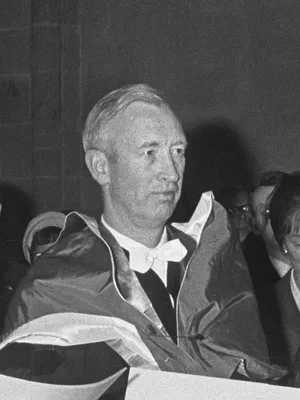
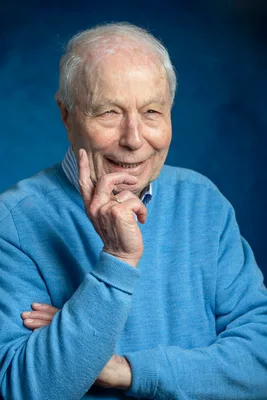
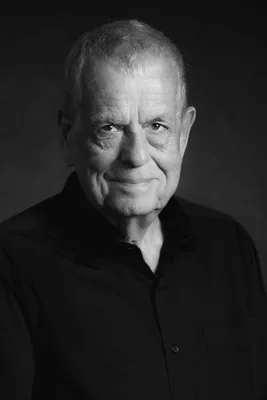
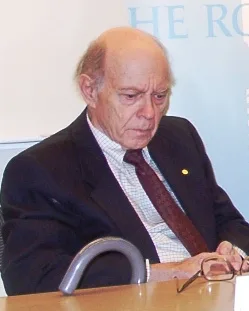
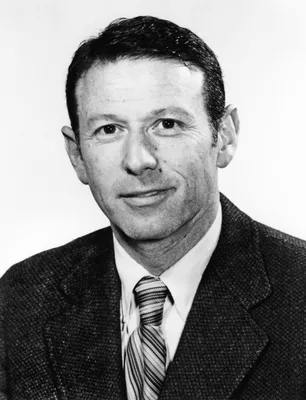
1974 OLBY, Robert Cecil (1933 – )
The path to the double helix: The discovery of DNA.
A well-documented history of molecular biology.
GMN 258.9 · https://historyofmedicine.com/id/8726
1974 MOLINA-PASQUEL HENRÍQUEZ, Mario José (1943 – ); ROWLAND, Frank Sherwood (1927 – 2012)
Stratospheric sink for chlorofluoromethanes: chlorine atom-catalysed destruction of ozone.
Rowland and his post-doctoral student, Molina, suggested that long-lived organic halogen compounds, such as chlorofluorocarbons (CFCs), could reach the stratosphere where they would be dissociated by UV light, releasi…
GMN 8157 · https://historyofmedicine.com/id/10333
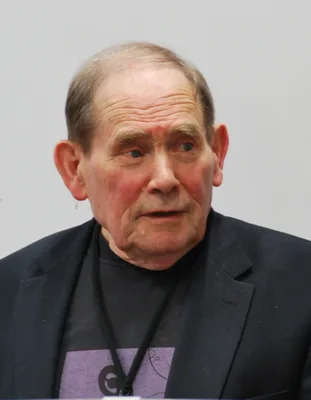
1974 BRENNER, Sydney (1927 – 2019)
The genetics of CAENORHABDITIS ELEGANS.
In 2002 Brenner shared the Nobel Prize in Physiology or Medicine in Physiology or Medicine with H. Robert Horvitz and John Sulston "for their discoveries concerning genetic regulation of organ development and programm…
GMN 9941 · https://historyofmedicine.com/id/12129
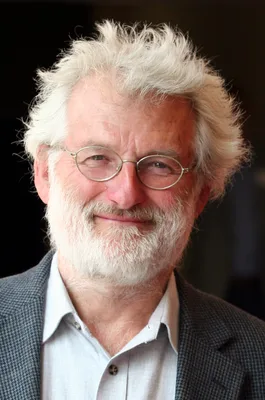
1974 BRENNER, Sydney (1927 – 2019); SULSTON, Sir John Edward (1942 – 2018)
The DNA of CAENORHABDITIS ELEGANS.
Digital facsimile from PubMedCentral at this link.
GMN 9942 · https://historyofmedicine.com/id/12130
1974 COHEN, Stanley Norman (1935 – ); CHANG, Annie C.Y. (1936 – )
Genome construction between bacterial species in vitro: Replication and expression of staphylococcus plasmid genes in Escherichia coli.
Creation of the first transgenic organism: expression of Staphylococcus aureus genes in Escherichia coli. Digital facsimile from pnas.org at this link.
GMN 10047 · https://historyofmedicine.com/id/12236
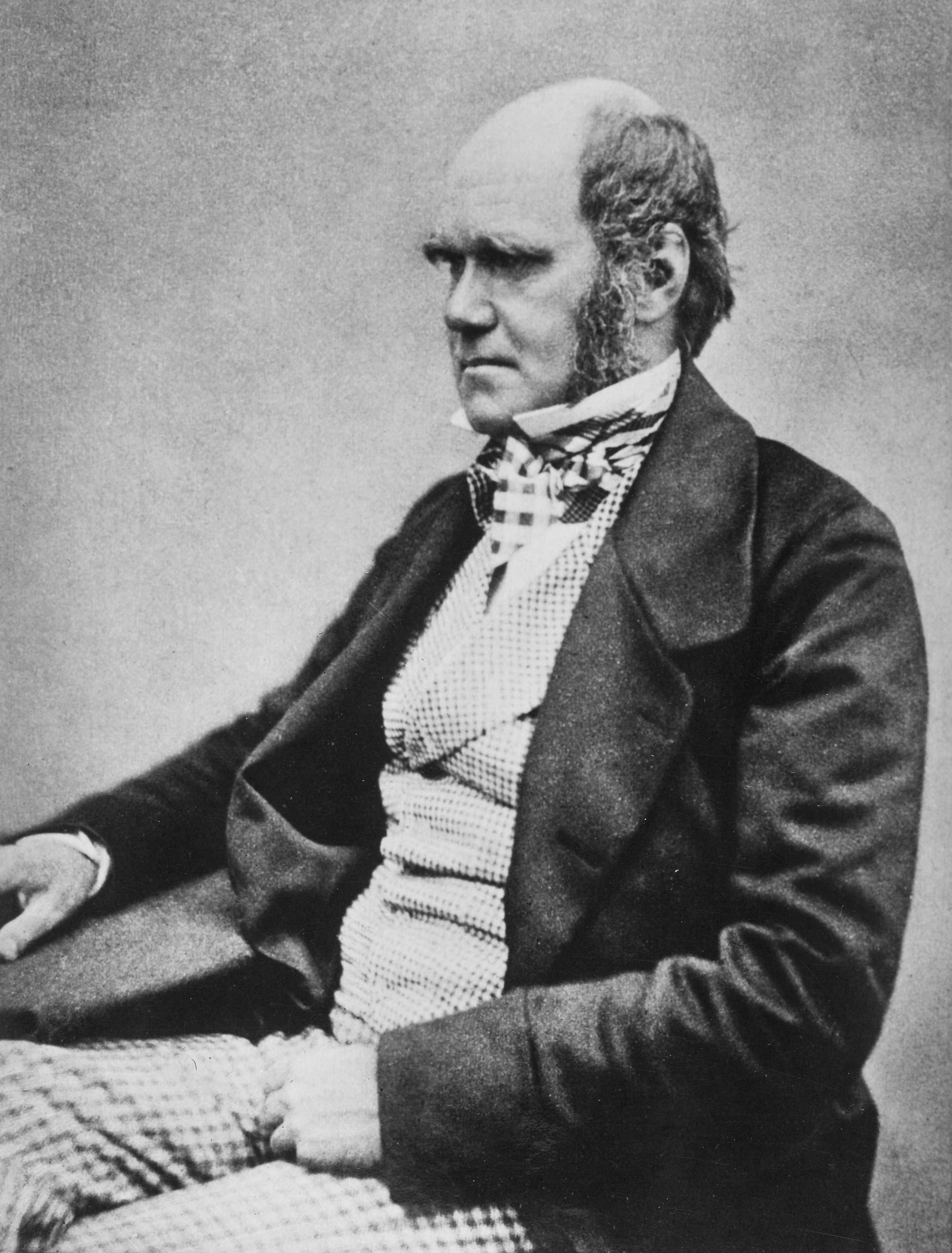
1974 DARWIN, Charles Robert (1809 – 1882)
The Darwin correspondence project.
http://www.darwinproject.ac.uk/" "Search over 12000 letters and articles..."
GMN 10551 · https://historyofmedicine.com/id/12744
1974 COHEN, Stanley Norman (1935 – ); CHANG, Annie C.Y. (1936 – )
Genome construction between bacterial species in vitro: Replication and expression of staphylococcus plasmid genes in Escherichia coli.
Confirmation of the success of methods outlined in No. 257.5. Abstract: "Genes carried by EcoRI endonuclease-generated fragments of Staphylococcus plasmid DNA have been covalently joined to the E. coli antibiotic-resi…
GMN 10963 · https://historyofmedicine.com/id/13159
1974 WHORTON, James C. (1942 – )
Before Silent Spring: Pesticides and public health in pre-DDT America.
GMN 12444 · https://historyofmedicine.com/id/14676
1974 HARTWELL, Leland Harrison (1939 – ); CULOTTI, Joseph; REID, Brian J.; PRINGLE, John R. (1943 – )
Genetic control of the cell division cycle in yeast.
In 2001 Hartwell shared the Nobel Prize in Physiology or Medicine with Tim Hunt and Sir Paul M. Nurse "for their discoveries of key regulators of the cell cycle." See also No. 13933. In this paper the authors demonstr…
GMN 13934 · https://historyofmedicine.com/id/16230
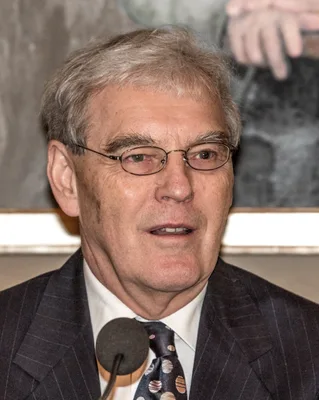
1974 KORNBERG, Roger David (1947 – )
Chromatin structure: A repeating unit of histones and DNA.
While a postdoctoral fellow working with Aaron Klug and Francis Crick at the MRC in the 1970s, Kornberg discovered the nucleosome as the basic protein complex packaging chromosomal DNA in the nucleus of eukaryotic cel…
GMN 13948 · https://historyofmedicine.com/id/16247
1974 BOYER, Paul Delos (1918 – 2018)
"Conformational Coupling in Biological Energy Transductions." In L. Ernster et al. (eds.), Dynamics of Energy-Transducing Membranes, pp. 289-301.
In 1997 Boyer shared the Nobel Prize in Chemistry with John Walker and Jens C. Skou “for their elucidation of the enzymatic mechanism underlying the synthesis of adenosine triphosphate (ATP).” The Nobel Prize committe…
GMN 14315 · https://historyofmedicine.com/id/16640
1975 DULBECCO, Renato (1914 – 2012)
From the molecular biology of oncogenic DNA viruses to cancer. Les Prix Nobel en 1975, pp. 172-80.
In 1975 Dulbecco shared the Nobel Prize in Physiology or Medicine with David Baltimore and Howard Martin Temin "for their discoveries concerning the interaction between tumour viruses and the genetic material of the c…
GMN 2660.27 · https://historyofmedicine.com/id/3440
1975 WILSON, Edward Osborne (1929 – 2021)
Sociobiology: The new synthesis.
Integration of biological and evolutionary theory with the study of social behavior and social organization of animal populations.
GMN 257.6 · https://historyofmedicine.com/id/8716
1975 PHILLIPS, James Charles (1933 – ); WLODAWER, Alexander; HODGSON, Keith O. (1947 – ); ET AL
Application of synchrotron radiation to protein crystallography: Preliminary results.
First report on the application of synchrotron radiation to protein crystallography. Order of authorship in the original publication: Phillips, Wlodwawer..., Hodgson. Digital facsimile from pnas.org at this link. "Syn…
GMN 14006 · https://historyofmedicine.com/id/16311
1975 HENDERSON, Richard (1945 – ); UNWIN, Peter Nigel Tripp
Three-dimensional model of purple membrane obtained by electron microscopy.
The invention of Cryogenic electron microscopy (cryo-EM). The novel technique was achieved by "by applying the method to tilted specimens, and using the principles put forward by De Rosier and Klug (GM - 13935), for t…
GMN 14182 · https://historyofmedicine.com/id/16497
1975 BLOBEL, Günter (1936 – 2018); DOBBERSTEIN, Bernhard (1944 – )
Transfer of proteins across membranes. I. Presence of proteolytically processed and unprocessed nascent immunoglobulin light chains on membrane-bound ribosomes of murine myeloma. II. Reconstitution of functional rough microsomes from heterologous components.
"In 1975 Günther Blobel showed that in certain cases amino acids in a protein serve as an address label that determines where a protein is to be delivered. Amino acid sequences determine whether a protein is to be pas…
GMN 14249 · https://historyofmedicine.com/id/16568
1976 VARMUS, Harold Eliot (1942 – ); BISHOP, John Michael (1936 – ); STEHELIN, Dominique (1943 – 2019); VOGT, Peter K. (1932 – )
DNA related to the transforming gene(s) of avian sarcoma viruses is present in normal avian DNA.
Discovery of the first “oncogene. In 1989 Varmus and Bishop shared the Nobel Prize for in Physiology or Medicine "for their discovery of the cellular origin of retroviral oncogenes."
GMN 2660.28 · https://historyofmedicine.com/id/3441
1976 CHIEN CHANG, Alice; EDGAR, David B.; TRELA, John M.
Deoxyribonucleic acid polymerase from the extreme thermophile Thermus aquaticus.
The authors showed that the heat resistant bacteria Thermus aquaticus discovered by Thomas Brock contained a vital polymerase enzyme that had evolved in this bacteria to allow it to metabolize and survive in exception…
GMN 11104 · https://historyofmedicine.com/id/13300
1976 CARBON, John B.; CLARKE, Louise B.
A colony bank containing synthetic Col El hybrid plasmids representative of the entire E. coli genome.
First description of a "complete" genomic library. This paper includes the Carbon-Clarke equation used for calculating the number of clones required when constructing a clone library to ensure a given probability (usu…
GMN 13972 · https://historyofmedicine.com/id/16275
1976 FURUICHI, Yashiro; SHATKIN, Aaron J. (1934 – 2012)
Reovirus messenger RNA contains a methylated, blocked 5'-terminal structure: m7G(5')ppp(5')GmpCp.
Furuichi, working in Shatkin's laboratory, discovered that the viral mRNAs synthesized in vitro by the virion-associated RNA polymerase of reovirus contain a unique 5′-terminal structure m7GpppNm or cap. The precise b…
GMN 13976 · https://historyofmedicine.com/id/16279
1976 GELLERT, Martin Frank (1929 – ); MIZUUCHI, Kiyoshi; O'DEA, Mary H.; NASH, Howard A. (1937 – 2011)
DNA gyrase: An enzyme that introduces superhelical turns into DNA (Escherichia coli / ATP-dependent reaction / superhelix density).
Order of authorship in the original publication: Gellert, Mizuuchi, O'Dea, Nash. Discovery of DNA gyrase, the first type II topoisomerase to be discovered. "It is the only type II enzyme to retain its historical name.…
GMN 13978 · https://historyofmedicine.com/id/16281
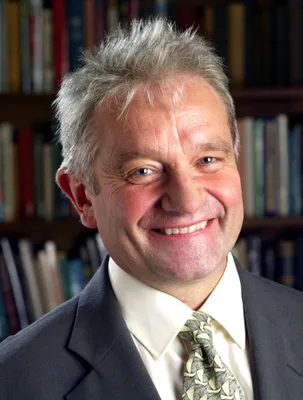
1976 NURSE, Sir Paul Maxime (1949 – ); THURIAUX, Pierre; NASMYTH, Kim Ashley (1952 – )
Genetic control of the cell division cycle in the fission yeast Schizosaccharomyces pombe.
"Beginning in 1976, Nurse identified the gene cdc2 in fission yeast (Schizosaccharomyces pombe). This gene controls the progression of the cell cycle from G1 phase to S phase and the transition from G2 phase to mitosi…
GMN 14253 · https://historyofmedicine.com/id/16573
1977 PORTUGAL, Franklin H.; COHEN, Jack S.
A century of DNA: A history of the discovery of the structure and function of the genetic substance.
GMN 258.10 · https://historyofmedicine.com/id/8727
1977 SANGER, Frederick (1918 – 2013)
DNA sequencing with chain-terminating inhibitors.
Sanger and colleagues developed methods for rapid sequencing of long sections of DNA molecules. Sanger’s method, and that developed by Gilbert and Maxam, made it possible to read the nucleotide sequence for entire gen…
GMN 6883 · https://historyofmedicine.com/id/9047
1977 SANGER, Frederick (1918 – 2013)
The nucleotide sequence of bacteriophage phi-X174.
Sanger and colleagues sequenced the first whole DNA genome—that of bacteriophage phi-X174 (5375 bases)
GMN 6884 · https://historyofmedicine.com/id/9048
1977 GILBERT, Walter (1932 – ); MAXAM, Allan M. (1942 – )
A new method for sequencing DNA.
The Gilbert-Maxam method for sequencing DNA. This paper is available from PNAS at this link. In 1980 Gilbert shared the 1980 Nobel Prize in Chemistry with Frederick Sanger and Paul Berg. Berg received half of the priz…
GMN 6926 · https://historyofmedicine.com/id/9091
1977 FARLEY, John (1936 – 2015)
The spontaneous generation controversy from Descartes to Oparin.
GMN 9261 · https://historyofmedicine.com/id/11443
1977 SULSTON, Sir John Edward (1942 – 2018); HORVITZ, Howard Robert (1947 – )
Post-embryonic cell lineages of the nematode Caenorhabditis elegans.
Complete map of the nematode's neurons. Sulston and Horvitz tracked every non-gonadal cell division that occurred during larval development, and published a complete description of these lineages in 1977.
GMN 9938 · https://historyofmedicine.com/id/12126
1977 BOYER, Herbert Wayne (1936 – ); ITAKURA, Keiichi (1942 – ); HIROSE, Tadaaki; CREA, Roberto; BOLÍVAR ZAPATA, Francisco Gonzalo (1948 – ); ET AL
Expression in Escherichia coli of a chemically synthesized gene for the hormone somatostatin.
Order of authorship in the original paper: Itakura, Hirose, Crea..., Bolivar, Boyer. Synthesis of the gene for somatostatin (growth hormone-inhibiting hormone (GHIH). This was the first demonstration of a foreign gene…
GMN 10964 · https://historyofmedicine.com/id/13160
1977 CHOW, Louise Tsi (1943 – ); GELINAS, Richard E.; BROKER, Thomas R.; ROBERTS, Richard John Sir (1943 – )
An amazing sequence arrangement at the 5' ends of adenovirus 2 messenger RNA.
Discovery of introns. In 1993 Roberts shared the Nobel Prize in Physiology or Medicine with Phillip A. Sharp "for their discoveries of split genes." It was frequently suggested that Chow deserved a share of that prize…
GMN 11043 · https://historyofmedicine.com/id/13239
1977 BERGET, Susan M.; MOORE, Claire; SHARP, Philip Allen (1944 – )
Spliced segments at the 5' terminus of adenovirus 2 late mRNA.
Discovery of introns simultaneously with Roberts, Chow, Broker (No. 11043). Sharp's electron microscopist, Berget, visualized the introns in the electron microscope. James D. Watson took note of the profound significa…
GMN 11044 · https://historyofmedicine.com/id/13240
1977 DARWIN, Charles Robert (1809 – 1882); FREEMAN, Richard Broke (1915 – 1986)
Charles Darwin: An annotated bibliographical handlist
This bibliography has been extensively supplemented by the Freeman Bibliographical Database at Darwin Online edited by John van Wyhe. "The database has been supplemented by the entries from unpublished manuscript corr…
GMN 11208 · https://historyofmedicine.com/id/13405
1977 BOYER, Herbert Wayne (1936 – ); BETLACH, Mary C.; RODRIGUEZ, Raymond L.; BOLÍVAR ZAPATA, Francisco Gonzalo (1948 – ); ET AL
The construction of molecular cloning vehicles. II. A multipurpose cloning system.
Order of authorship in the original publication Bolivar, Rodriguez, Betlach...Boyer...The authors describe the composition and molecular construction of pBR-322 (named after Bolivar and Rodriguez) and call it "the mos…
GMN 12031 · https://historyofmedicine.com/id/14239
1977 WOESE, Carl Richard (1928 – 2012); FOX, George Edward (1945 – )
Phylogenetic structure of the prokaryotic domain: The primary kingdoms.
(Order of authorship in the original publication: Woese, Fox.) Woese and Fox discovered a "third kingdom" in microbial life that they called "archaebacteria" (Archaea) as distinct from bacteria and eukaryotes. In thei…
GMN 12300 · https://historyofmedicine.com/id/14522
1977 GILMAN, Alfred Goodman (1941 – 2015); ROSS, Elliot M.
Resolution of some components of adenylate cyclase necessary for catalytic activity.
Goodman shared the 1994 Nobel Prize in Physiology or Medicine with Martin Rodbell "for their discovery of G-proteins and the role of these proteins in signal transduction in cells." In this paper Goodman and Ross show…
GMN 14143 · https://historyofmedicine.com/id/16457
1978 HUTCHINSON, George Evelyn (1903 – 1991)
An introduction to population ecology.
This elegantly written textbook by a pioneering authority is based on a carefully documented historical approach to the subject.
GMN 145.9 · https://historyofmedicine.com/id/2708
1978 GALL, Joseph Grafton (1928 – ); BLACKBURN, Elizabeth Helen (1948 – )
A tandemly repeated sequence at the termini of the extrachromosomal ribosomal RNA genes in Tetrahymena.
In 1975–1977, Blackburn, working as a postdoctoral fellow at Yale University with Gall, discovered the unusual nature of telomeres, with their simple repeated DNA sequences composing chromosome ends.
GMN 8387 · https://historyofmedicine.com/id/10564
1978 LEAR, John
Recombinant DNA: The untold story.
GMN 9720 · https://historyofmedicine.com/id/11907
1978 ZAMECNIK, Paul Charles (1912 – 2009); STEPHENSON, Mary Louise (1921 – 2009)
Inhibition of Rous sarcoma virus replication and cell transformation by a specific oligodeoxynucleotide (tridecamer deoxyribonucleotide/hybridization competitor/hybridon).
Zamecnick and Stephenson reported the first example of specific inhibition of gene expression by an oligonucleotide when they demonstrated that a short oligonucleotide inhibited Rous sarcoma virus replication in cell …
GMN 13969 · https://historyofmedicine.com/id/16271
1978 HUTCHISON, III, Clyde A.; SMITH, Michael (1932 – 2000); ET AL
Mutagenesis at a specific position in a DNA sequence.
Smith and Hutchison introduced site-directed mutagenesis, or oligonucleotide-directed mutagenesis, into molecular biology, resolving the problem of how to determine the effect of a single mutant gene with efficiency. …
GMN 13986 · https://historyofmedicine.com/id/16289
1978 GILMAN, Alfred Goodman (1941 – 2015); ROSS, Elliot M.; HOWLETT, Allyn C.; FERGUSON, Kenneth M.
Reconstitution of hormone-sensitive adenylate cyclase activity with resolved components of the enzyme.
Gilman and colleagues showed that G proteins are in the cell membrane and are stimulated once a ligand (adrenaline) binds the adrenergic receptor. This system can then activate adenyl cyclase to form cyclic AMP. Digit…
GMN 14144 · https://historyofmedicine.com/id/16458
1979 JUDSON, Horace Freeland (1931 – 2001)
The eighth day of creation. Makers of the revolution in biology.
GMN 258.11 · https://historyofmedicine.com/id/8728
1979 HERSHKO, Avram (1937 – ); CIECHANOVER, Aaron (1947 – ); ROSE, Irwin Allan (1926 – 2015)
Resolution of the ATP-dependent proteolytic system from reticulocytes: a component that interacts with ATP.
Discovery of ubiquitin-mediated protein degradation. The paper is available at doi:10.1073/pnas.76.7.3107,PMC 383772, PMID 290989. See also Hershko, A.; Ciechanover, A.; Heller, H.; Haas, A.L.; Rose, I.A. (1980), "Pro…
GMN 6901 · https://historyofmedicine.com/id/9065
1979 AXEL, Richard (1946 – ); SILVERSTEIN, Saul J.; WIGLER, Michael Howard (1947 – ); ET AL
Transformation of mammalian cells with genes from procaryotes and eucaryotes.
Axel, along with microbiologist Saul J. Silverstein and geneticist Michael H. Wigler, discovered a technique of cotransformation via transfection. This process, which allows foreign DNA to be inserted into a host cell…
GMN 13929 · https://historyofmedicine.com/id/16223
1979 GOEDDEL, David V. (1951 – ); KLEID, Dennis G.; CREA, Roberto; BOLÍVAR ZAPATA, Francisco Gonzalo (1948 – ); ET AL
Expression in Escherichia coli of chemically synthesized genes for human insulin (plasmid construction / lac operon / fused proteins / radioimmunoassay / peptide purification).
Working at Genentech, Kleid and Goeddel and colleagues were the first scientists to apply genetic engineering techniques, incorporating chemically synthesized DNA encoding human insulin into E. coli, that expressed, a…
GMN 13980 · https://historyofmedicine.com/id/16283
1979 LEVINE, Arnold Jay (1939 – ); LINZER, Daniel I. H. (1954 – )
Characterization of a 54K Dalton cellular SV40 tumor antigen present in SV40 transformed cells and uninfected embryonal carcinoma cells.
Levine discovered the tumor suppressor protein p53, also known as Tumor protein P53. Because it prevents cancer formation TP 53 is classified as a tumor suppressor gene. The discovery was completed in 1989 and recorde…
GMN 14007 · https://historyofmedicine.com/id/16312
1979 ALVAREZ, Luis Walter (1911 – 1988); ALVAREZ, Walter (1940 – ); ASARO, Frank (1927 – 2014); MICHEL, Helen Vaughan (1932 – )
Experimental evidence in support of an extra-terrestrial trigger for the Cretaceous-Tertiary extinctions. (Abstract).
Iridium is a very rare element in the Earth's crust, but is found in anomalously high concentrations (around 1000 times greater than normal) in a thin worldwide layer of clay marking the boundary between the Cretaceou…
GMN 14206 · https://historyofmedicine.com/id/16522
1980 SANGER, Frederick (1918 – 2013); ET AL
Cloning in single-stranded bacteriophage as an aid to rapid DNA sequencing.
Sanger and colleagues developed the random shotgun method to prepare templates for DNA sequencing. With A. R. Coulson, B. G. Barrell, A. J. H. Smith & B. A. Roe.
GMN 6893 · https://historyofmedicine.com/id/9057
1980 MERCHANT, Carolyn (1936 – )
The death of nature: Women, ecology and the scientific revolution.
Reprinted with addition of a new preface, 1990.
GMN 7970 · https://historyofmedicine.com/id/10146
1980 BERG, Paul (1926 – ); MULLIGAN, Richard C. (1954 – )
Expression of a bacterial gene in mammalian cells.
(Order of authorship in the original publication: Mulligan, Berg.) In an understated paper the authors suggested the potential of treating recessive diseases like Lesch-Nyhan syndrome by gene therapy. (Thanks to Juan …
GMN 12304 · https://historyofmedicine.com/id/14526