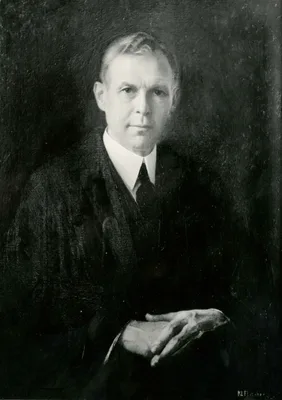
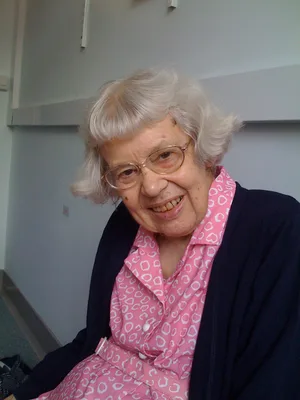
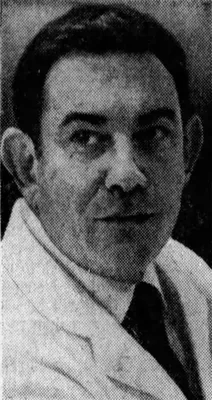
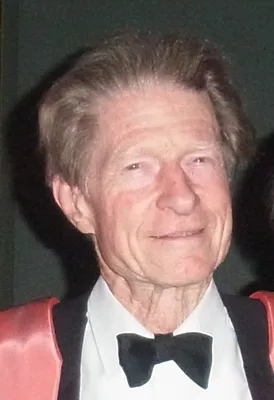
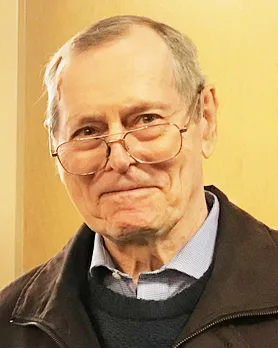
1931 LEWIS, Warren Harmon (1870 – 1964)
Pinocytosis.
Discovery of pinocytosis.
GMN 139.2 · https://historyofmedicine.com/id/2256
1937 –1938 KIRKMAN, Hadley (1901 – 1997); SEVERINGHAUS, Aura Edward (1894 – 1979)
A review of the Golgi apparatus.
GMN 1310 · https://historyofmedicine.com/id/1159
1948 SANFORD, Katherine Koontz (1915 – 2005); ET AL
The growth in vitro of single isolated tissue cells.
Sanford was the first to clone in vitro a single living cell of a mammal—in this instance, a rodent. She performed this feat in search of a means to research how cells transform into malignancy.
GMN 566.2 · https://historyofmedicine.com/id/300
1948 BAKER, John Randal (1900 – 1984)
The cell-theory: a restatement, history, and critique.
GMN 139.1 · https://historyofmedicine.com/id/2254
1952 ATERMAN, Kurt (1913 – 2002)
Some local factors in the restoration of the rat’s liver after partial hepatectomy. 1. Glycogin; the Golgi apparatus; sinusoidal cells; the basement membranes of the sinusoids.
First detailed account of lysosomes.
GMN 566.3 · https://historyofmedicine.com/id/304
1952 HSU, T. C. (1917 – 2003)
Mammalian chromosomes in vitro I: The karyotype of man.
Since the turn of the twentieth century, chromosomes prepared on microscope slides formed clumps that made it extremely difficult to distinguish them. Although the preparations made the identification of individual ch…
GMN 13941 · https://historyofmedicine.com/id/16238
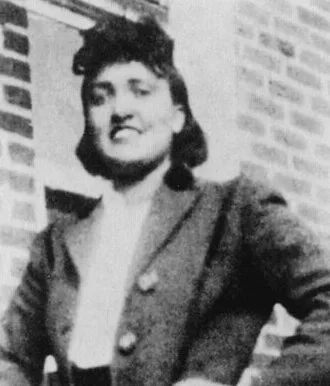
1952 GEY, George Otto (1899 – 1970); COFFMAN, Ward D.; KUBICEK, Mary T.; LACKS, Henrietta (1920 – 1951)
Tissue culture studies of the proliferative capacity of cervical carcinoma and normal epithelium.
A cell biologist at Johns Hopkins Hospital, Gey propagated the HeLa cell line from Henrietta Lacks' cervical tumor. This cell line, which maintained a continuous growth phase, was the first immortal human cell line to…
GMN 14100 · https://historyofmedicine.com/id/16411
1953 MURRAY, Margaret Ransome (1901 – ); KOPECH, Gertrude (1915 – )
A bibliography of the research in tissue culture 1884-1950. An index to the literature of the living cell cultivated in vitro.
GMN 567.1 · https://historyofmedicine.com/id/311
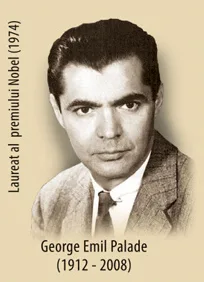
1955 PALADE, George Emil (1912 – 2008)
A small particulate component of the cytoplasm.
Palade first described the association of what were subsequently determined to ribosomes with membranes. He and Keith Porter subsequently named this structure the endoplasmic reticulum. Digital facsimile from PubMedCe…
GMN 13685 · https://historyofmedicine.com/id/15967
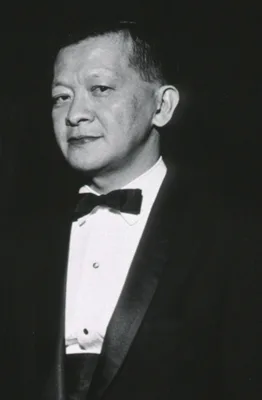
1956 TJIO, Joe Hin (1919 – 2001); LEVAN, Albert (1905 – 1998)
The chromosome number in man.
Proof that the normal chromosome number in man is 46.
GMN 256.5 · https://historyofmedicine.com/id/8702
1959 HUGHES, Arthur Frederick William (1908 – 1975)
A history of cytology.
Digital facsimile from the Internet Archive at this link.
GMN 145.1 · https://historyofmedicine.com/id/2415
1961 LYON, Mary Frances (1925 – 2014)
Gene action in the X-chromosome of the mouse (Mus musculus L).
Theory of differential inactivation of the X-chromosome. See also Amer. J. hum. Genet., 1962, 14, 135-48.
GMN 256.7 · https://historyofmedicine.com/id/8704
1961 HAYFLICK, Leonard (1928 – 2024); MOORHEAD, Paul Sidney (1924 – )
The serial cultivation of human diploid cell strains.
The Hayflick limit. Hayflick demonstrated that a population of normal human fetal cells in a cell culture will divide between 40 and 60 times. The population then enters a senescence phase.
GMN 8381 · https://historyofmedicine.com/id/10558
1962 GURDON, Sir John Bertrand (1933 – )
Adult frogs derived from the nuclei of single somatic cells.
Demonstration that somatic and germinal nuclei are genetically equivalent. Using somatic cell nuclear transfer (SCNT), Gurdon (Nobel Prize 2012) transplanted cell nuclei from mature intestinal tadpole cells into enucl…
GMN 256.12 · https://historyofmedicine.com/id/8709
1963 MCCULLOCH, Ernest Armstrong (1926 – 2011); TILL, James Edgar (1931 – ); BECKER, Andrew John (1935 – 2015)
Cytological demonstration of the clonal nature of spleen colonies derived from transplanted mouse marrow cells.
McCulloch and Till discovered the blood-forming stem cell, the hematopoietic stem cell (HSC), through their pioneering work in mice. McCulloch and Till began a series of experiments in which bone marrow cells were inj…
GMN 12427 · https://historyofmedicine.com/id/14658
1963 MCCULLOCH, Ernest Armstrong (1926 – 2011); TILL, James Edgar (1931 – ); SIMINOVITCH, Louis "Lou" (1920 – )
The distribution of colony-forming cells among spleen colonies.
Evidence that stem cells are capable of self-renewal. (Order of authorship in the original publication: Siminovitch, McCullch, Till). Digital facsimile from tspace.library.utoronto.ca at this link.
GMN 12428 · https://historyofmedicine.com/id/14659
1965 GIBBONS, Ian Read (1931 – 2018); ROWE, A. J.
Dynein: A protein with adenosine triphosphate activity from cilia.
IN 1963 Gibbons discovered a novel protein on microtubules. In 1965 he purified two regions of the protein, known as its two "arms" and named the protein dynein. This protein converts the chemical energy stored in ATP…
GMN 14174 · https://historyofmedicine.com/id/16489
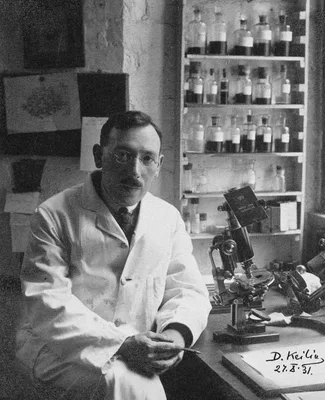
1966 KEILIN, David (1887 – 1963); KEILIN, Joan
The history of cell respiration and cytochrome
See No. 968.
GMN 1588.3 · https://historyofmedicine.com/id/1471
1966 GURDON, Sir John Bertrand (1933 – ); UEHLINGER, V.
"Fertile" intestine nuclei.
Gurdon and Uehlinger replaced the cell nucleus of frog ova with frog intestinal nuclei to generate tadpoles, some of which became fertile adult male and female frogs. In 2012 the Nobel Prize in Physiology or Medicine …
GMN 14064 · https://historyofmedicine.com/id/16375
1970 HARTWELL, Leland Harrison (1939 – ); CULOTTI, Joseph; REID, Brian J.
Genetic control of the cell-division cycle in yeast 1. Detection of mutants.
This was the first paper to describe cdc mutants. The authors also coined the term 'execution point' — the stage in the cell cycle when the gene function is required. In this paper, three cdc genes were described, whi…
GMN 13933 · https://historyofmedicine.com/id/16229
1973 STEINMAN, Ralph Marvin (1943 – 2011); COHN, Zanvil Alexander (1926 – 1993)
Identification of a novel cell type in peripheral lymphoid organs in mice. I. Morphology, quantitation, tissue distribution.
Order of authorship in the original publication: Steinman, Cohn. In this paper Steinman announced his discovery of the dendritic cell. Digital facsimile from PubMedCentral at this link. In 2011 Steinman received half …
GMN 11074 · https://historyofmedicine.com/id/13270
1974 BRENNER, Sydney (1927 – 2019)
The genetics of CAENORHABDITIS ELEGANS.
In 2002 Brenner shared the Nobel Prize in Physiology or Medicine in Physiology or Medicine with H. Robert Horvitz and John Sulston "for their discoveries concerning genetic regulation of organ development and programm…
GMN 9941 · https://historyofmedicine.com/id/12129
1974 HARTWELL, Leland Harrison (1939 – ); CULOTTI, Joseph; REID, Brian J.; PRINGLE, John R. (1943 – )
Genetic control of the cell division cycle in yeast.
In 2001 Hartwell shared the Nobel Prize in Physiology or Medicine with Tim Hunt and Sir Paul M. Nurse "for their discoveries of key regulators of the cell cycle." See also No. 13933. In this paper the authors demonstr…
GMN 13934 · https://historyofmedicine.com/id/16230
1974 KORNBERG, Roger David (1947 – )
Chromatin structure: A repeating unit of histones and DNA.
While a postdoctoral fellow working with Aaron Klug and Francis Crick at the MRC in the 1970s, Kornberg discovered the nucleosome as the basic protein complex packaging chromosomal DNA in the nucleus of eukaryotic cel…
GMN 13948 · https://historyofmedicine.com/id/16247
1975 BLOBEL, Günter (1936 – 2018); DOBBERSTEIN, Bernhard (1944 – )
Transfer of proteins across membranes. I. Presence of proteolytically processed and unprocessed nascent immunoglobulin light chains on membrane-bound ribosomes of murine myeloma. II. Reconstitution of functional rough microsomes from heterologous components.
"In 1975 Günther Blobel showed that in certain cases amino acids in a protein serve as an address label that determines where a protein is to be delivered. Amino acid sequences determine whether a protein is to be pas…
GMN 14249 · https://historyofmedicine.com/id/16568
1976 NURSE, Sir Paul Maxime (1949 – ); THURIAUX, Pierre; NASMYTH, Kim Ashley (1952 – )
Genetic control of the cell division cycle in the fission yeast Schizosaccharomyces pombe.
"Beginning in 1976, Nurse identified the gene cdc2 in fission yeast (Schizosaccharomyces pombe). This gene controls the progression of the cell cycle from G1 phase to S phase and the transition from G2 phase to mitosi…
GMN 14253 · https://historyofmedicine.com/id/16573
1978 GALL, Joseph Grafton (1928 – ); BLACKBURN, Elizabeth Helen (1948 – )
A tandemly repeated sequence at the termini of the extrachromosomal ribosomal RNA genes in Tetrahymena.
In 1975–1977, Blackburn, working as a postdoctoral fellow at Yale University with Gall, discovered the unusual nature of telomeres, with their simple repeated DNA sequences composing chromosome ends.
GMN 8387 · https://historyofmedicine.com/id/10564
1980 ROTHMAN, James Edward (1950 – ); FRIES, Erik
Transport of vesicular stomatitis virus glycoprotein in a cell-free extract.
See also: Fries & Rothman, "Transient activity of Golgi-like membranes as donors of vescular stomatitis viral glycoprotein in vitro," J. Cell. Biol., 90, 1981, 697-704. "Rothman's research[15] details how vesicles—tin…
GMN 14255 · https://historyofmedicine.com/id/16575
1980 SCHEKMAN, Randy Wayne (1948 – ); NOVICK, Peter; FIELD, C.
The identification of 23 complementation groups required for post-translational events in the yeast secretory pathway.
See also: Novick, P., Ferro, S. and Schekman, R. "Order of events in the yeast secretory pathway," Cell, 25, 1981, 461-469. In 1979 Schekman devised a genetic selection for temperature-conditional secretion-defective …
GMN 14256 · https://historyofmedicine.com/id/16576
1981 EVANS, Sir Martin John (1941 – ); KAUFFMAN, Matthew H. (1942 – 2013)
Establishment in culture of pluripotential cells from mouse embryos.
Evans and Kauffman were the first to identify, isolate and successfully culture embryonic stem cells using mouse blastocysts. This discovery opened the doors to the creation of “murine genetic models” -- mice that hav…
GMN 13285 · https://historyofmedicine.com/id/15551
1983 HUNT, Sir Richard Timothy (1943 – ); EVANS, Tom; ROSENTHAL, Eric T.; YOUNGBLOOM, Jim; DISTEL, Daniel
Cyclin: A protein specified by maternal mRNA in sea urchin eggs that is destroyed at each cleavage division.
"It was at Woods Hole around July 1982, using Arbacia sea urchin eggs as his model organism, that he discovered cyclin proteins.[12] Cyclins play a key role in regulating the cell-division cycle.[16] Hunt was observin…
GMN 14254 · https://historyofmedicine.com/id/16574
1985 BLACKBURN, Elizabeth Helen (1948 – ); GRIEDER, Carolyn Widney (1961 – )
Identification of a specific telomere terminal transferase activity in Tetrahymena extracts.
Blackburn and Grieder discovered telomerase in the ciliate Tetrahymena. In 2009 Blackburn and Grieder shared the Nobel Prize in Physiology or Medicine with Jack W. Szostak "for the discovery of how chromosomes are pro…
GMN 8388 · https://historyofmedicine.com/id/10565
1985 VALE, Ronald David (1959 – ); REESE, Thomas S.; SHEETZ, Michael Patrick
Identification of a novel force-generating protein, kinesin involved in microtubule based motility.
The authors discovered and named a second motor protein, and named it kinesin. Digital text from PubMedCentral at this link. Order of authorship in the original publication: Vale, Reese, Sheetz. (Thanks to Juan Weiss …
GMN 14175 · https://historyofmedicine.com/id/16490
1986 MCDOUGAL, J. S.; MADDON, P. J.; DALGLEISH, A. G.; ET AL
The T4 glycoprotein is a cell-surface receptor for the AIDS virus.
Order of authorship in the original paper: McDougal, Maddon, Dalgleish. The authors discovered that the T4 lymphocyte cell has an outer glycoprotein on its surface that specifically acts as the receptor for HIV. Witho…
GMN 11042 · https://historyofmedicine.com/id/13238
1987 KORNBERG, Roger David (1947 – ); LORCH, Yahli Deborah; LAPOINTE, Janice W.
Nucleosomes inhibit the initiation of transcription but allow chain elongation with the displacement of histones.
Within the nucleosome Kornberg found that roughly 200 bp of DNA are wrapped around an octamer of histone proteins. With Yahli Lorch, Kornberg showed that a nucleosome on a promoter prevents the initiation of transcrip…
GMN 13950 · https://historyofmedicine.com/id/16249
1991 HORVITZ, Howard Robert (1947 – ); ELLIS, Ronald E.; YUAN, Junying (1959 – )
Mechanisms and functions of cell death.
Horvitz and colleagues identified several key components in the molecular pathway of programmed cell death, including: EGL-1, a protein which activates apoptosis by inhibiting CED-9.
GMN 9940 · https://historyofmedicine.com/id/12128
1994 OHSUMI, Yoshinori (1945 – ); BABA, Misuzu; TAKESHIGE, K.; BABA, N.
Ultrastructural analysis of the autophagic process in yeast: detection of autophagosomes and their characterization.
Order of authorship in the original publication: Baba, M., Takeshige, Baba, N., Ohsumi. In 2016 Oshuni received the Nobel Prize in Physiology or Medicine "for his discoveries of mechanisms for autophagy."
GMN 14261 · https://historyofmedicine.com/id/16582
1995 KLEINZELLER, Arnost (1914 – 1997)
Exploring the cell membrane: Conceptual developments. Edited by A. Kleinzeller. (Comprehensive biochemistry, Neuberger & van Deenen, eds., vol. 39).
GMN 12430 · https://historyofmedicine.com/id/14661
1996 GALL, Joseph Grafton (1928 – )
Views of the cell. A pictorial history.
Sixty images (reproduced in color where appropriate) with detailed commentary and bibliographical references, arranged in chronological order, from the first images viewed through the microscope to electron micrographs.
GMN 6985 · https://historyofmedicine.com/id/9151
1997 ROBINSON, Joseph D.
Moving questions: A history of membrane transport and bioenergetics.
"This book describes half a century of progress in two mainstream areas of biological research: membrane transport, initially a focus of physiologists, and oxidative phosphorylation, initially a focus of biochemists. …
GMN 8749 · https://historyofmedicine.com/id/10927
1998 THOMSON, James Alexander (1958 – ); ITSKOVITZ-ELDOR, Joseph; SHAPIRO, Sander S.; ET AL
Embryonic stem cell lines derived from human blastocysts.
Thomson and collaborators first isolated embryonic stem cells from human blastocysts. Order of authorship in original publication: Thomson, Itskovitz-Eldor, Shapiro et al. Available online from science.sciencemag.org …
GMN 13286 · https://historyofmedicine.com/id/15552
1998 GEARHEART, John D. (1943 – 2020); SHAMBLOTT, Michael J.; AXELMAN, Joyce; ET AL
Derivation of pluripotent stem cells from cultured human primordial germ cells.
Order of authorship in the original publication: Shamblott, Axelman,... Gearheart. Gearheart led the team that successfully developed human embryonic germ cells, pluripotent stem cells derived from primordial germ cel…
GMN 13977 · https://historyofmedicine.com/id/16280
1999 HARRIS, Sir Henry (1925 – 2014)
The birth of the cell.
GMN 9193 · https://historyofmedicine.com/id/11374
2000 RAMAKRISHNAN, Venkatraman (1952 – ); ET AL
Structure of the 30S ribosomal subunit.
Ramakrishnan and colleagues determined the complete molecular structure of the 30S subunit of the ribosome and its complexes with several antibiotics. " The Abstract: "Genetic information encoded in messenger RNA is t…
GMN 13952 · https://historyofmedicine.com/id/16251
2005 SÜDHOF, Thomas Christian (1955 – ); MAXIMOV, Anton
Autonomous function of synaptotagmin 1 in triggering synchronous release independent of asynchronous release.
Südhof is credited with discovering much of the machinery mediating neurotransmitter release and presynaptic plasticity, beginning with the discovery of symaptotagmins and their role in neurostrasmitter release from t…
GMN 14257 · https://historyofmedicine.com/id/16577
2006 YAMANAKA, Shinya (1962 – ); TAKAHASHI, Kazutoshi
Induction of pluripotent stem cells from mouse embryonic and adult fibroblast cultures by defined factors.
Takahashi and Yamanaka reprogrammed mice fibroblast cells, which can produce only other fibroblast cells, to become pluripotent stem cells, which have the capacity to produce many different types of cells. This they a…
GMN 13287 · https://historyofmedicine.com/id/15553
2007 LANDECKER, Hannah
Culturing life: How cells became technologies.
A history of tissue culture.
GMN 7881 · https://historyofmedicine.com/id/10053
2007 YAMANAKA, Shinya (1962 – ); TAKAHASHI, Kazutoshi; TANABE, Koji; OHNUKI, Mari
Induction of pluripotent stem cells from adult human fibroblasts by defined factors.
Yamanaka (Nobel Prize 2012) and colleagues demonstrated the generation of Induced Pluripotent Stems Cells (iPS) from adult human dermal fibroblasts with the same 4 mice factors they used in GM 13287. By overexpressing…
GMN 14063 · https://historyofmedicine.com/id/16374
2013 ADEY, Andrew C.; BURTON, Joshua N.; KLITZMAN, Jacob O.; ET AL
The haplotype-resolved genome and epigenome of the aneuploidy HeLa cancer cell line.
Adey and colleagues sequenced the haplotype-resolved whole genome of the HeLa cancer cell line. This showed a highly rearranged region at chromosome 8q24.21, where an integration locus of the HPV (human papillomavirus…
GMN 14101 · https://historyofmedicine.com/id/16412
2017 HAYFLICK, Leonard (1928 – 2024); OLSHANSKY, Stuart Jay (1954 – )
The role of the WI-38 cell strain in saving lives and reducing morbidity.
In 1961 "Hayflick developed the first normal human diploid cell strains for studies on human aging and for research use throughout the world. Prior to his seminal research, all cultured cell lines were immortal and an…
GMN 14102 · https://historyofmedicine.com/id/16413