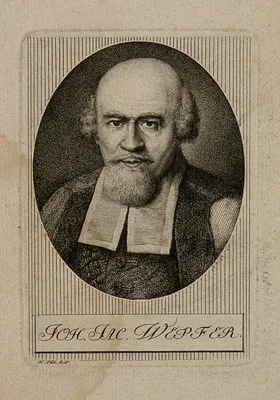
1658 WEPFER, Johann Jacob (1620 – 1695)
Observationes anatomicae, ex cadaveribus eorum, quos sustulit apoplexia.
Wepfer showed apoplexy to be a result of hemorrhage into the brain. He described four cases, with clinical and post mortem findings. He preceded Willis (No. 1378) in describing the “circle of Willis”. Partial English …
GMN 2703 · https://historyofmedicine.com/id/359
1801 HEBERDEN, William Jr. (1767 – 1845)
Observations on the increase and decrease of different disease, and particularly of the plague.
Heberden observed that the number of deaths from dysentery sharply decreased over the 18th century, but that deaths attributed to apoplexy increased. Digital facsimile from the Internet Archive at this link.
GMN 8372 · https://historyofmedicine.com/id/10549
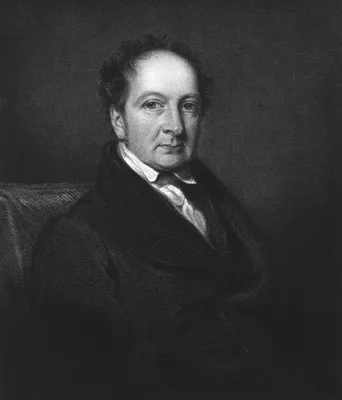
1812 CHEYNE, John (1777 – 1836)
Cases of apoplexy and lethargy: with observations upon the comatose diseases.
Cheyne believed that cerebral anemia might be the cause of apoplexy, and described pathological cases of cerebral infarction and of cerebral hemorrhage. The work contains the first illustration of a subarachnoid hemor…
GMN 4519.1 · https://historyofmedicine.com/id/378
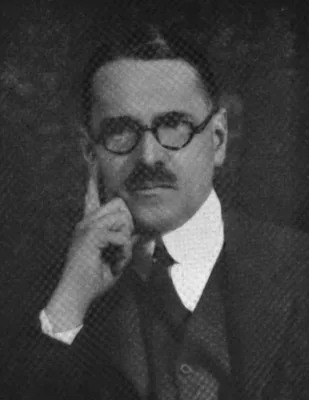
1914 HUNT, James Ramsay (1872 – 1937)
The role of the carotid arteries in the causation of vascular lesions of the brain, with remarks on certain special features of the symptomatology.
"In 1914, J. Ramsay Hunt, in an article considered to be another historical landmark in the recognition of the causes of cerebral ischemia, emphasized that strokes could be caused by extracranial occlusion of the cere…
GMN 12252 · https://historyofmedicine.com/id/14467
1974 HACHINSKI, Vladimir (1941 – ); LASSEN, Niels Alexander (1926 – 1997); MARSHALL, J.
Multi-infarct dementia. A cause of mental deterioration in the elderly.
The authors showed that contrary to the prevailing view that most dementias were caused by hardened brain arteries (cerebral atherosclerosis), most were multi-infarct dementias—dementias caused by multiple, small, oft…
GMN 14115 · https://historyofmedicine.com/id/16426
1989 LEMAK, Noreen Ann (1921 – 2013); FIELDS, William S.
A history of stroke: Its recognition and treatment.
GMN 10742 · https://historyofmedicine.com/id/12937
2012 HACHINSKI, Vladimir (1941 – ); SÖRÖS, Peter
Cardiovascular and neurological causes of sudden death after ischaemic stroke.
Hachinski and Sörös discovered that the control of the heart by the brain is asymmetric, with the fight/flight (sympathetic) response controlled by the right hemisphere and the rest and digest (parasympathetic) respon…
GMN 14114 · https://historyofmedicine.com/id/16425