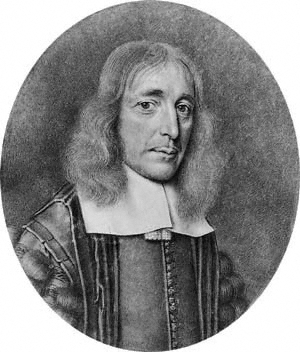
1672 WILLIS, Thomas (1621 – 1675)
De anima brutorum
Chap. XIV is devoted to the sense of hearing; in it Willis described the “paracusis of Willis” (p. 73). English translation, 1683. A probable description of myasthenia gravis is given in Pars. 2, Cap. IX. In Pars 2, C…
GMN 1544 · https://historyofmedicine.com/id/3644
1752 KNOLL, Johann Christian Friedrich (1726 – 1757)
Sendschreiben von den Wirkungen des Kafeetranks.
Discussing the consumption and reception of coffee from Britain to Turkey, Knoll dismissed criticisms of coffee, including that it reduced beauty and virility, or that it was contrary to Islam, instead promoting the m…
GMN 11719 · https://historyofmedicine.com/id/13920
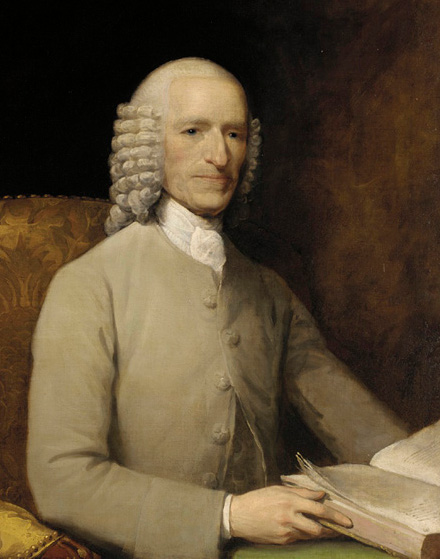
1777 –1784 FOTHERGILL, John (1712 – 1780)
Remarks on that complaint commonly known under the name of the sick head-ach.
First accurate description of migraine.
GMN 4517 · https://historyofmedicine.com/id/8904
1781 FOTHERGILL, John (1712 – 1780); ELLIOT, John (1747 – 1787)
A complete collection of the medical and philosophical works of John Fothergill. With an account of his life; and occasional notes, by John Elliot.
Digital facsimile from Google Books at this link.
GMN 11601 · https://historyofmedicine.com/id/13800
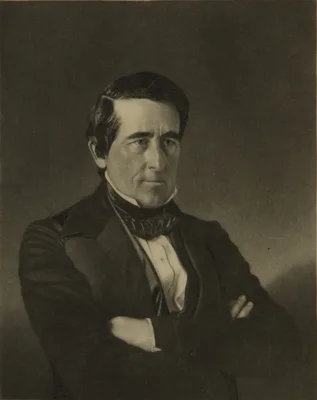
1826 BACHE, Franklin (1792 – 1864)
Cases illustrative of the remedial effects of acupuncturation.
The first original study of acupuncture published in North America, and one of the earliest American publications on the alleviation of pain. Franklin Bache, great-grandson of Benjamin Franklin, was the first American…
GMN 6828 · https://historyofmedicine.com/id/8992
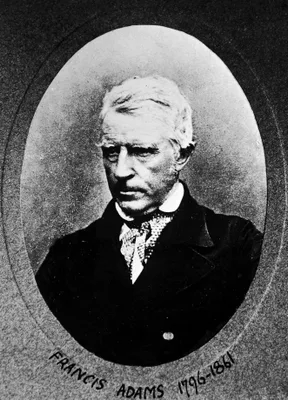
1856 ARETAEUS OF CAPPADOCIA, (Ἀρεταῖος Καππάδοκος) (80 – 140); ADAMS, Francis (1796 – 1861)
Тα ∑ωζομενα. The extant works of Aretaeus, the Cappadocian. Edited and translated by Francis Adams.
Aretaeus left many fine descriptions of disease; in fact Garrison ranks him second only to Hippocrates in this respect. In the printed editions of this bibliography, before the present online version, the Adams editio…
GMN 22 · https://historyofmedicine.com/id/8934
1873 LIVEING, Edward (1832 – 1919)
On megrim, sick-headache, and some allied disorders.
Liveing’s classic account of migraine showed the close association of this condition with tetany, asthma, and false angina pectoris, with epilepsy, and the alternation of all these conditions in the same subject or th…
GMN 2587 · https://historyofmedicine.com/id/409
1874 MITCHELL, Silas Weir (1829 – 1914)
Headaches, from heat-stroke, from fevers, after meningitis, from overuse of brain, from eyestrain.
Mitchell drew attention to the importance of eyestrain as a cause of headache.
GMN 4551 · https://historyofmedicine.com/id/411
1879 THOMSON, William (1833 – 1907)
On astigmatism as a cause for persistent headache and other nervous symptoms.
Thomson was a pioneer in the study of refraction. He was much interested in color-blindness and modified Holmgren’s wool-skein test. Himself affected with hypermetropia, he made important investigations on this condit…
GMN 5917 · https://historyofmedicine.com/id/6819
1884 MÖBIUS, Paul Julius (1853 – 1907)
Ueber periodisch wiederkehrende Oculomotoriuslähmung.
“Möbius’s disease” – ophthalmoplegic migraine.
GMN 4567 · https://historyofmedicine.com/id/435
1907 GOWERS, Sir William Richard (1845 – 1915)
The border-land of epilepsy. Faints, vagal attacks, vertigo, migraine, sleep symptoms, and their treatment.
GMN 4821 · https://historyofmedicine.com/id/1628
1912 FLATAU, Edward (1869 – 1932)
Die Migräne.
Flatau presented the full clinical picture of migraine and described the disease as an innate disposition to pathological metabolic processes in the nervous system. He described its distinguished characters - ocular, …
GMN 12888 · https://historyofmedicine.com/id/15135
1970 SACKS, Oliver Wolf (1933 – 2015)
Migraine: Evolution of a common disorder.
Revised edition, 1990.
GMN 9122 · https://historyofmedicine.com/id/11301
2012 EADIE, Mervyn John (1932 – )
Headache: Through the centuries.
The most comprehensive history to date.
GMN 6842 · https://historyofmedicine.com/id/9006