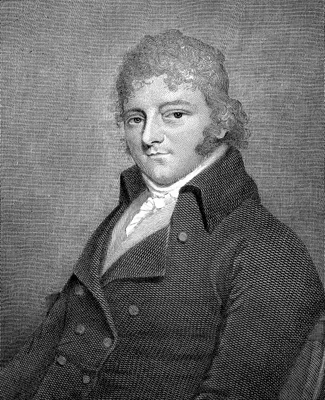
1821 CHURCHILL, James Morss (1796 – 1863)
A treatise on acupuncturation, being a description of a surgical operation originally peculiar to the Japonese and Chinese, and by them denominated zin-king, now introduced into European practice, with directions for its performance, and cases illustrating its success.
The first English monograph on acupuncture. Churchill had most success with rheumatic conditions, sciatica, back-pain, etc. Digital facsimile from the Internet Archive at this link. The German translation of Churchill…
GMN 6374.14 · https://historyofmedicine.com/id/8321
1822 JACKSON, James (1777 – 1867)
On a peculiar disease resulting from the use of ardent spirits.
Jackson drew attention to alcoholic neuritis – arthrodynia a potu. Jackson was professor at Boston Medical School.
GMN 4521 · https://historyofmedicine.com/id/383
1822 BAYLE, Antoine Laurent Jessé (1799 – 1858)
Recherches sur l’arachnitis chronique, la gastrite et la gastro-entérite chroniques, et la goutte: Considerées comme causes de l'aliénation mentale. Thèse No. 247.
First description of general paresis, or paralytic dementia, general paralysis of the insane, or "maladie de Bayle". This is considered the first demonstation of an organic cause for a "psychiatric" disorder; it was i…
GMN 4795 · https://historyofmedicine.com/id/1545
1822 PRICHARD, James Cowles (1786 – 1848)
A treatise on diseases of the nervous system.
Includes the best early account of epilepsy after Willis.
GMN 4809 · https://historyofmedicine.com/id/1582
1824 DELAYE, J. B.
Considérations sur une espèce de paralysie qui affecte particulièrement les aliénés. Thèse [pour le doctorat en médecin] No. 224.
Delaye, a pupil of Esquirol, selected for his thesis the subject of “incomplete general paralysis of the insane”, which he differentiated from other forms of paralysis. He recorded the early signs of the disease, emph…
GMN 4796 · https://historyofmedicine.com/id/1548
1824 GALEN, [Κλαύδιος Γαληνός; Galen of Pergamon] (129 – 216); KÜHN, Karl Gottlob (1754 – 1840)
De tremore, palpitatione, convulsione, et rigore. IN: Opera omnia ed. cur. C.G. Kühn, cur 7, 584-642.
Complete English translation by D. Sider and M. McVaugh in Trans. stud. Coll. Phys. Phila., 1979, 1, 183-210.
GMN 4511 · https://historyofmedicine.com/id/8893
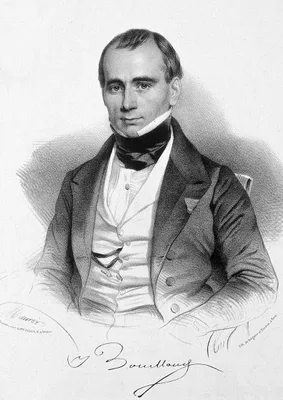
1825 BOUILLAUD, Jean Baptiste (1796 – 1881)
Recherches cliniques propres à démontrer que la perte de la parole correspond à la lésion des lobules antérieurs du cerveau.
Classic account of aphasia. Bouillaud was the first to suggest that injuries of the frontal lobe were a cause of aphasia.
GMN 4618 · https://historyofmedicine.com/id/651
1825 PARRY, Caleb Hillier (1755 – 1822); PARRY, Charles Henry (1779 – 1860)
Collections from the unpublished writings of the late Caleb Hillier Parry. 3 vols.
Includes Parry’s interesting description of eight cases of exophthalmic goitre, the first of which was observed in 1786, and his notes on four cases of angina pectoris. Parry's paper, "Enlargement of the thyroid gland…
GMN 2210 · https://historyofmedicine.com/id/1678
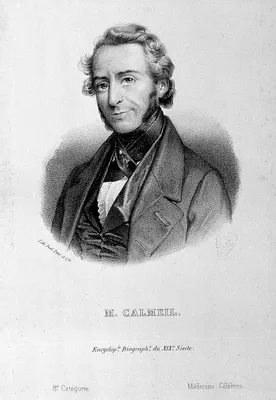
1826 CALMEIL, Louis-Florentin (1798 – 1895)
De la paralysie consideree chez les aliénés.
Classic description of general paralysis. Calmeil’s work complements Bayle’s earlier delineation of general paralysis (No. 4795). Between the two of them they established the clinical picture of general paralysis of t…
GMN 4797 · https://historyofmedicine.com/id/1552
1826 HOOPER, Robert (1773 – 1835)
The morbid anatomy of the human brain.
Based on over 4000 autopsies performed over 30 years, and illustrated with fine hand-colored plates.
GMN 2284.1 · https://historyofmedicine.com/id/2904
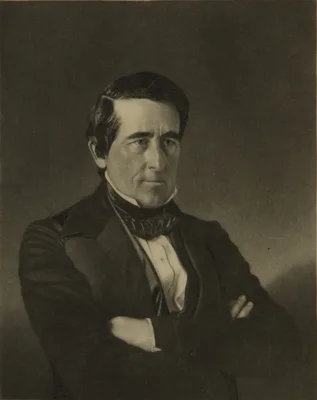
1826 BACHE, Franklin (1792 – 1864)
Cases illustrative of the remedial effects of acupuncturation.
The first original study of acupuncture published in North America, and one of the earliest American publications on the alleviation of pain. Franklin Bache, great-grandson of Benjamin Franklin, was the first American…
GMN 6828 · https://historyofmedicine.com/id/8992
1827 HORN, Wilhelm von (1803 – 1871)
De tabe dorsuali praelusio.
Gives the views of his father, Ernst Horn (1744-1848), on tabes.
GMN 4773 · https://historyofmedicine.com/id/1458
1827 BRAVAIS, Louis François (1801 – 1843)
Recherches sur les symptômes et le traitement de l’épilepsie hémiplégique. Thèse [pour le doctorat en médecin] No. 118
First description of hemiplegic epilepsy so well depicted by Jackson (No. 4816), and referred to by Charcot as “Bravais–Jacksonian épilepsie”. Digital facsimile from the Internet Archive at this link.
GMN 4810 · https://historyofmedicine.com/id/1584
1827 –1831 BRIGHT, Richard (1789 – 1858)
Reports of medical cases, selected with a view of illustrating the symptoms and cure of diseases by a reference to morbid anatomy. 2 vols. in 3.
Beside's Bright's classic description of chronic non-suppurative nephritis, known eponymically as “Bright’s disease”, the Reports contain numerous other outstanding contributions to general pathology, neuropathology, …
GMN 2285 · https://historyofmedicine.com/id/2906
1827 CAZAUVIELH, Jean-Baptiste [Cazauvielle] (1802 – 1849)
Recherches sur l’agénésie cérébrale et la paralysie congénitale.
“The first scientific paper on paralysis in children was published in 1827 by Jean Baptiste Cazauvieilh, who […] noted that congenital hemiplegia was associated with cerebral atrophy and differentiated those due to ‘l…
GMN 11126 · https://historyofmedicine.com/id/13322
1828 –1829 WOOD, William (1774 – 1857)
Observations on neuroma.
Neuroma first described.
GMN 4523 · https://historyofmedicine.com/id/384
1828 ABERCROMBIE, John (1781 – 1844)
Pathological and practical researches on diseases of the brain and spinal cord.
First textbook of neuropathology. Originally published in a series of articles in Edin. med. surg. J., 1818-19, and first collected into book form in the German translation, with appendix, by C. Nasse, Bonn, E. Weber,…
GMN 2285.2 · https://historyofmedicine.com/id/2910
1829 –1842 CRUVEILHIER, Jean (1791 – 1874)
Anatomie pathologique du corps humain. 2 vols.
The fine hand-colored lithographs of gross pathology make this one of the greatest works of its kind. Cruveilhier, first Professor of Pathological Anatomy in Paris, gave the first description of multiple sclerosis (in…
GMN 2286 · https://historyofmedicine.com/id/2912
1829 PALLONI, Gaitano (1776 – 1830)
Istoria di un sonnambulismo, con alcune riflessioni sopra questo fenomeno, e sul sonno; letta nella pubblica adunanza dell’Accademia Labronica.
This report on sleepwalking concerned Palloni’s treatment of a forty-year old peasant who for nine years would sleepwalk—often going into the fields, carrying his tools along, then returning later to the bed where he …
GMN 12679 · https://historyofmedicine.com/id/14924
1830 STEINHEIM, Salomon Levi (1789 – 1866)
Zwei seltene Formen von hitzigem Rheumatismus.
German writers usually credit Steinheim with the first description of parathyroid tetany.
GMN 4827 · https://historyofmedicine.com/id/1653
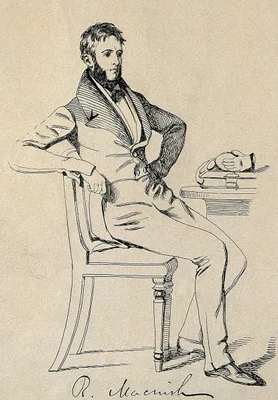
1830 MACNISH, Robert (1802 – 1837)
The philosophy of sleep.
An early attempt at a comprehensive analysis of sleep from the medical point of view, including topics such as "Night-Mare", "Day-Mare", "Sleep-Walking," Sleep-Talking," Sleeplessness, Waking Dreams, Drowiness, Trance…
GMN 12445 · https://historyofmedicine.com/id/14677
1831 DANCE, Jean Baptiste Hippolyte (1797 – 1832)
Observations sur une espèce de tétanos intermittent.
Dance’s important early description of parathyroid tetany followed closely on that of Steinheim.
GMN 4828 · https://historyofmedicine.com/id/1656
1834 GERHARD, William Wood (1809 – 1872)
Cerebral affections of children.
Accurate clinical description of tuberculous meningitis.
GMN 4636 · https://historyofmedicine.com/id/701
1835 BADHAM, John (1807 – 1840)
Paralysis in childhood. Four remarkable cases of suddenly induced paralysis in the extremities, occurring in children, without any apparent cerebral or cerebro-spinal lesion.
Important clinical description.
GMN 4663 · https://historyofmedicine.com/id/794
1835 PRICHARD, James Cowles (1786 – 1848)
A treatise on insanity and other disorders affecting the mind.
Prichard, better known for his work in the field of anthropology (No. 159), was the first to describe moral insanity. He described a syndrome he called incoherence or senile dementia. Alzheimer (No. 4956) may have des…
GMN 4928 · https://historyofmedicine.com/id/6141
1836 BRIGHT, Richard (1789 – 1858)
Fatal epilepsy, from suppuration between the dura mater and arachnoid, in consequence of blood having been effused in that situation.
Bright was the first to describe unilateral (“Jacksonian”) epilepsy.
GMN 4811 · https://historyofmedicine.com/id/1587
1837 ADDISON, Thomas (1793 – 1860)
On the influence of electricity, as a remedy in certain convulsive and spasmodic diseases.
First therapeutic employment of static electricity.
GMN 4524 · https://historyofmedicine.com/id/385
1838 CARSWELL, Sir Robert (1793 – 1857)
Illustrations of the elementary forms of disease.
Carswell was Professor of Morbid Anatomy at University College, London, and one of the leading English pathologists of his day. A fine artist, he personally painted 2,000 water-colours of pathological specimens. His g…
GMN 2291 · https://historyofmedicine.com/id/2920
1838 ESQUIROL, Jean Étienne Dominique (1772 – 1840)
Des maladies mentales. 2 vols. and atlas.
Esquirol succeeded Pinel at the Salpêtrière, and was the first lecturer on psychiatry. After Pinel he was a founder of the French School. This is the first modern textbook on psychiatry. It is notable for its striking…
GMN 4798 · https://historyofmedicine.com/id/6144
1838 VALLEIX, François Louis Isidore (1807 – 1855)
Clinique des maladies des enfants nouveau-nes.
The first work on the diseases of newborns and the first work on child neurology and pediatric neurosurgery.
GMN 13150 · https://historyofmedicine.com/id/15409
1839 –1840 STANLEY, Edward (1793 – 1862)
A case of disease in the posterior columns of the spinal cord.
Stanley was the first to describe disease of the posterior columns of the spinal cord.
GMN 4525 · https://historyofmedicine.com/id/386
1840 HEINE, Jacob (Jakob) (1799 – 1879)
Beobachtungen über Lähmungszustände der untem Extremitäten und deren Behandlung.
First description of acute anterior poliomyelitis, which Heine separated from other forms of paralysis; he described the deformities arising from the disease. He also called attention to congenital spastic paraplegia,…
GMN 4664 · https://historyofmedicine.com/id/796
1841 VALLEIX, François Louis Isidore (1807 – 1855)
Traité des néuralgies ou affections douloureuses des nerfs.
Includes (p. 40 et seq.) description of ”Valleix’s points”, tender points on the course of certain nerves in neuralgia.
GMN 4526 · https://historyofmedicine.com/id/389
1842 DUNGLISON, Robley (1798 – 1869); WATERS, Charles Oscar (1816 – 1892)
Practice of medicine: A treatise on special pathology and therapeutics. 2 vols.
A case of chronic hereditary chorea in adults (“Huntington’s chorea”, see No. 4699) is described on pp. 312-13 of vol. 2. This is in the form of a letter from one of Dunglison's recently graduated students at Jefferso…
GMN 4691 · https://historyofmedicine.com/id/974
1842 BINNS, Edward (1804 – 1851)
The anatomy of sleep; or, the art of procuring sound and refreshing slumber at will.
This semi-popular work was one of the first scientific studies of sleep. It was also the first book typeset by a mechanical typesetting machine, rather than hand-set type. Digital facsimile from Google Books at this l…
GMN 7001 · https://historyofmedicine.com/id/9167
1843 –1844 LITTLE, William John (1810 – 1894)
Course of lectures on the deformities of the human frame. Lecture IX.
Little’s description of congenital cerebral spastic diplegia resulted in the condition being named “Little’s disease”. See also No. 4735.
GMN 4691.1 · https://historyofmedicine.com/id/1125
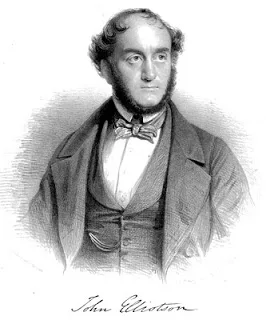
1843 –1856 ELLIOTSON, John (1791 – 1868); ESDAILE, James (1808 – 1859)
The Zoist: A journal of cerebral physiology & mesmerism, and their applications to human welfare. Edited by John Elliotson. 13 vols.
The most comprehensive source about British mesmerism of the period, and an invaluable reference for contemporary ideas and developments not only in mesmerism (hypnosis) but also in phrenology, neurology and psychiatr…
GMN 9256 · https://historyofmedicine.com/id/11438
1843 FRORIEP, Robert Friedrich (1804 – 1861)
Die rheumatische Schweile. Ein Beitrag zur Pathologie und Therapie des Rheumatismus.
Froriep described what would later be known as fibromyalgia, describing it as "rheumatism with painful, hard places" that could be felt in many locations on the body. He characterized the condition as muskelschwiele (…
GMN 12749 · https://historyofmedicine.com/id/14995
1844 MAUTHNER (RITTER) VON MAUTHSTEIN, Ludwig Wilhelm (1806 – 1858)
Die Krankheit des Gehirn’s und Rückenmark’s bei Kindern, durch Krankheitsfälle aus dem ersten Kinderspitale erläutert.
The first book on child neurology. Unusual for a medical book of this type, it includes a lithographed frontispiece, a lithographed title page, and four hand-colored plates.
GMN 10749 · https://historyofmedicine.com/id/12945
1844 WIGAN, Arthur Ladbroke (1785 – 1847)
A new view of insanity: The duality of the mind proved by the structure, functions and diseases of the brain and by the phenomena of mental derangement and shown to be essential to moral responsibility. With an appendix: 1. On the influence of religion on insanity. 2. Conjectures on the nature of the mental operations. 3. On the management of lunatic asylums.
"From the seventeenth century there were shifts in some of the basic assumptions about how the brain and mind functioned, and there are some useful markers along the way to an era of more systematic studies. Descartes…
GMN 11646 · https://historyofmedicine.com/id/13847
1846 ROMBERG, Moritz Heinrich (1795 – 1873)
Klinische Ergebnisse.
Includes (p. 75) a classic description of facial hemiatrophy – “Romberg’s disease”.
GMN 4527 · https://historyofmedicine.com/id/390
1846 DUBINI, Angelo (1813 – 1902)
Primi cenni sulla corea elettrica.
First description of electric chorea, “Dubini’s chorea”, the myoclonic form of epidemic encephalitis.
GMN 4637 · https://historyofmedicine.com/id/702
1846 SÉGUIN, Édouard (1812 – 1880)
Traitement moral, hygiène et education des idiots…
Séguin was the first to outline a complete plan for the training of mental defectives. A pupil of Itard and Esquirol, he subsequently worked in America, where he published Idiocy: and its treatment by the physiologica…
GMN 4937 · https://historyofmedicine.com/id/6188
1846 ROMBERG, Moritz Heinrich (1795 – 1873)
Lehrbuch der Nervenkrankheiten des Menschen. Bd. 1.
Romberg inaugurated the modern era in the study of diseases of the nervous system. His Lehrbuch is the first formal treatise in this field. On p. 795 is to be found the original description of “Romberg’s sign”, pathog…
GMN 4528 · https://historyofmedicine.com/id/8884
1846 BURROWS, Sir George (1801 – 1887)
On the disorders of the cerebral circulation; and on the connection between affections of the brain and diseases of the heart.
"Burrows was the first to indicate that the effects of cerebral anemia could be produced not only by obvious anemia itself, but also from a fall in blood pressure. He carried out some of the earliest studies of the ph…
GMN 11558 · https://historyofmedicine.com/id/13757
1849 SMITH, Robert William (1807 – 1873)
A treatise on the pathology, diagnosis, and treatment of neuroma.
Smith’s large and beautifully illustrated atlas contains the first clear description and illustration of neurofibromatosis, published 33 years before von Recklinghausen’s account of the disorder (see No. 4566). This d…
GMN 4529 · https://historyofmedicine.com/id/391
1849 FRERICHS, Friedrich Theodor von (1819 – 1885)
Ueber Hirnsklerose.
First important account of multiple sclerosis. Carswell (No. 2291) and Cruveilhier (No. 2286) both gave illustrations of the disease; the latter is also accredited with the first description.
GMN 4692 · https://historyofmedicine.com/id/976
1849 DUCHENNE DE BOULOGNE, Guillaume Benjamin Armand (1806 – 1875)
Recherches faites à l’aide du galvanisme sur l’état de la contractilité et de la sensibilité électro-musculaires dans les paralysies des membres superieures.
“Aran–Duchenne disease”, progressive muscular atrophy, with which the name of Cruveilhier is also associated. A fuller account is included in Duchenne’s Électrisation localisée, 1861, 437-547.
GMN 4732 · https://historyofmedicine.com/id/1274
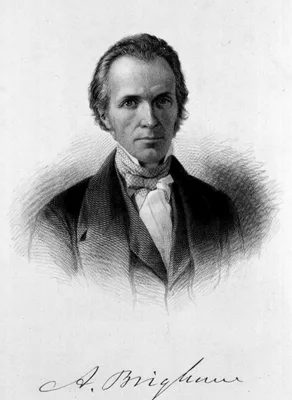
1849 BRIGHAM, Amariah (1798 – 1849)
An inquiry concerning the diseases and functions of the brain, spinal cord, and the nerves.
The first American book on neurology, with a lengthy discussion of neuropathology. Digital facsimile from the Internet Archive at this link.
GMN 10746 · https://historyofmedicine.com/id/12942
1849 DAY, George Edward (1815 – 1872)
A practical treatise on the domestic management and most important diseases of advanced life. With an appendix, containing a series of cases illustrative of a new and successful mode of treating lumbago and other forms of chronic rheumatism, sciatica and other neuralgic affections, and certain forms of paralysis.
Digital facsimile from wellcomelibrary.org at this link.
GMN 13167 · https://historyofmedicine.com/id/15427

![GALEN, [Κλαύδιος Γαληνός; Galen of Pergamon] (129 – 216)](/media/portraits/21)